


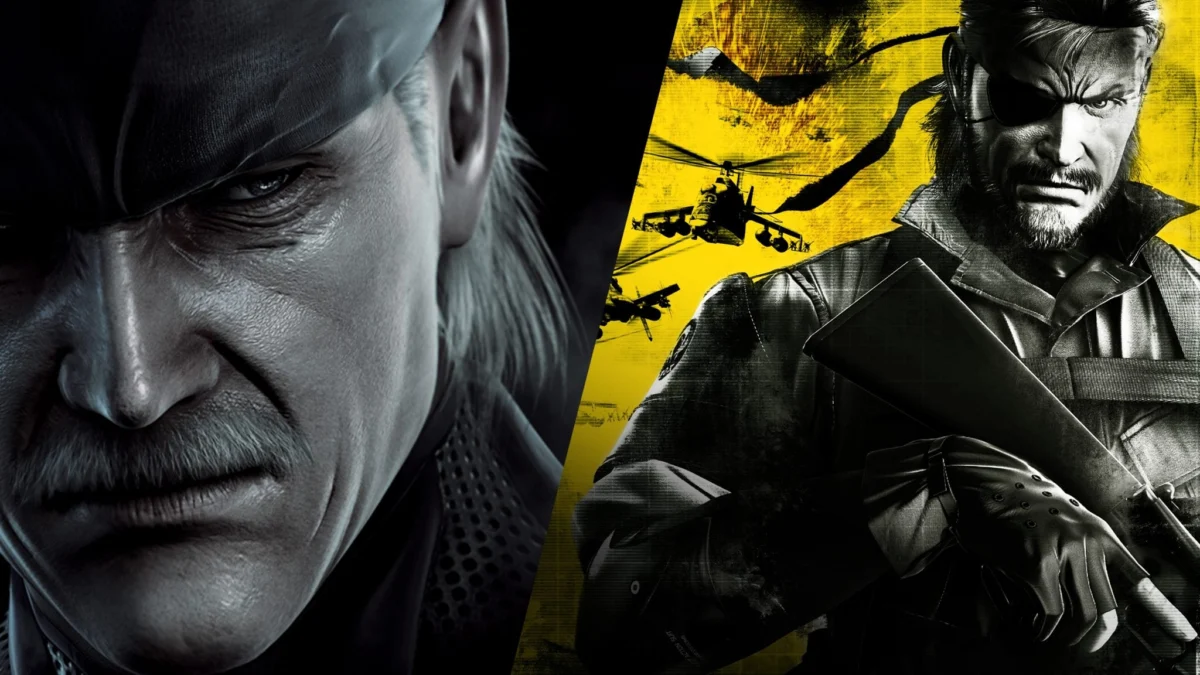
The Technical Liberation of Guns of the Patriots
Since its initial release in June 2008, Metal Gear Solid 4: Guns of the Patriots existed solely on the PlayStation 3. This exclusivity was not merely a marketing decision but a technical necessity of its era. The game was built specifically to utilize the PlayStation 3’s proprietary Cell Broadband Engine, an architecture defined by its unique PowerPC-based core and multiple Synergistic Processing Elements (SPEs). For over a decade, the complexity of the Cell architecture made porting MGS4 to other platforms a Herculean task, leading many to speculate that the game would remain "trapped" on its original hardware forever.

The inclusion of MGS4 in the Master Collection Vol.2 signifies a major breakthrough in Konami’s internal porting capabilities. While earlier efforts to emulate or port the game were stymied by the specific ways Kojima Productions utilized the PS3’s hardware for physics and audio processing, the new release demonstrates a stabilized environment that maintains the original’s cinematic ambition. Technical analysis reveals that the port manages to preserve the intricate graphical details of the 2008 release while offering the benefits of modern hardware, such as improved load times and more consistent frame rates.
A Chronology of the Metal Gear Legacy
To understand the impact of the Master Collection Vol.2, one must view it within the broader timeline of the franchise’s release history and narrative structure. The Metal Gear series, pioneered by Hideo Kojima, has always been characterized by its non-linear storytelling and its focus on the philosophical implications of warfare.

- 1987–1990: The original Metal Gear and Metal Gear 2: Solid Snake establish the foundation of stealth gameplay on the MSX2.
- 1998–2004: The series transitions to 3D with Metal Gear Solid (PS1), Metal Gear Solid 2: Sons of Liberty (PS2), and Metal Gear Solid 3: Snake Eater (PS2).
- 2008: Metal Gear Solid 4: Guns of the Patriots is released as the chronological conclusion to Solid Snake’s story.
- 2010: Metal Gear Solid: Peace Walker is released for the PlayStation Portable (PSP), serving as a direct sequel to MGS3 and a bridge to the later "Big Boss" era games.
- 2015: Metal Gear Solid V: The Phantom Pain marks the final entry directed by Hideo Kojima.
- 2023: Master Collection Vol.1 is released, focusing on the original trilogy and MSX titles.
- 2024/2025: Master Collection Vol.2 arrives, focusing on the transition between the Solid Snake and Big Boss eras.
By grouping MGS4 and Peace Walker, Konami provides players with two distinct perspectives on the series’ overarching theme: the transition from individual heroism to the industrialization of war.
Narrative Themes: The War Economy and Nanotechnology
Metal Gear Solid 4: Guns of the Patriots remains one of the most politically prescient games in the medium. Set in 2014, the game depicts a world where the "War Economy" has become the primary driver of global GDP. Private Military Companies (PMCs) have replaced national armies, and the battlefield is regulated by an artificial intelligence network known as "The System" (or SOP – Sons of the Patriots).

The protagonist, Solid Snake—now suffering from accelerated aging and dubbed "Old Snake"—must navigate a landscape where every soldier is embedded with nanomachines. These nanomachines regulate everything from emotional responses to the ability to fire a weapon. This thematic exploration of techno-fascism and the dehumanization of combatants serves as a heavy narrative backdrop to the gameplay.
The game is also famous for its cinematic density. It holds Guinness World Records for the longest cutscenes in a video game, with some sequences exceeding 25 minutes and the total cinematic runtime spanning several hours. In the Master Collection Vol.2, these sequences remain intact, offering the interactive "flashback" system that allows players to view archival footage from previous games by pressing specific buttons during dialogue, further cementing the collection’s role as a historical archive.

Peace Walker: The Bridge to Modern Mechanics
While MGS4 serves as the grand finale, Metal Gear Solid: Peace Walker represents a pivotal shift in the series’ mechanical evolution. Originally designed for the PSP, Peace Walker introduced the "Mother Base" management system, which would later become the core of Metal Gear Solid V.
In Peace Walker, players control Big Boss (Naked Snake) as he establishes "Militaires Sans Frontières" (Soldiers Without Borders) in Costa Rica during the 1970s. The game moves away from the continuous linear structure of MGS4 in favor of an episodic mission format. Key features include:

- The Fulton Recovery System: Players can capture enemy soldiers and extract them via balloon to join their cause.
- Research and Development: Captured personnel are assigned to various wings of Mother Base to develop new weapons and gadgets.
- Cooperative Play: Designed for the handheld experience, the game features co-op mechanics that allowed multiple players to tackle boss battles against AI-controlled nuclear tanks.
The Master Collection Vol.2 port of Peace Walker maintains the clean, comic-book-inspired aesthetic created by series artist Yoji Shinkawa, while upscaling the resolution to match modern display standards.
Technical Performance and Handheld Compatibility
One of the most notable aspects of the Master Collection Vol.2 is its performance on non-Windows environments and handheld gaming PCs. Reports from the user community and technical testers indicate that the collection runs with high stability on Linux-based operating systems, particularly those utilizing the Proton compatibility layer.

On devices such as the ROG Ally (Extreme edition) and the Steam Deck, Metal Gear Solid 4 has been observed running at full speed even at high settings. This is a significant achievement considering the game’s reputation for being difficult to emulate. Users running distributions like Fedora or Bazzite have reported a "plug-and-play" experience, with the collection’s internal launcher handling mouse, keyboard, and controller inputs seamlessly.
Data from initial benchmarks suggests that the "War Economy" of modern hardware is more than capable of handling the legacy of the PS3. On the ROG Ally, the game maintains a consistent framerate even during the particle-heavy sequences of Act 1 and Act 2. This portability transforms the MGS4 experience, allowing what was once a "living room exclusive" to be played in a mobile format for the first time.

Preservation and Historical Accuracy
Konami has taken a "museum-style" approach to the Master Collection Vol.2. This includes the retention of original licensed content that many feared would be removed due to expiring contracts. The game still features the various real-world brands that were integrated into the 2008 release, including the Sony Ericsson mobile phones, the Apple iPod (which Snake uses to listen to soundtracks from previous games), and various other period-accurate electronics.
However, the collection is not without its omissions. Metal Gear Online (MGO), the multiplayer component that originally shipped with MGS4, has not been revived for this release. Given that the original MGO servers were shut down in 2012, this was expected by most industry analysts, though it remains a point of nostalgia for long-time fans.

Broader Impact and Industry Implications
The release of METAL GEAR SOLID MASTER COLLECTION Vol.2 is more than a simple product launch; it is a vital act of software preservation. As the industry moves further away from the physical media era, games that are tied to specific hardware architectures run the risk of becoming "lost media." By investing in the engineering required to port MGS4, Konami has set a precedent for how other publishers might handle their own difficult-to-port legacy titles.
Furthermore, this release sets the stage for the future of the franchise. With the upcoming Metal Gear Solid Δ: Snake Eater (a remake of the third game) on the horizon, the Master Collection ensures that the original source material is accessible to a new generation of players. It allows the community to trace the lineage of the "Stealth-Action" genre from its humble 8-bit beginnings to the complex, philosophical, and cinematic heights achieved at the end of the Solid Snake era.

In conclusion, the Master Collection Vol.2 serves as a definitive bridge between the past and the present. By successfully porting Metal Gear Solid 4 and Peace Walker to modern hardware, Konami has ensured that the complex legacy of Solid Snake and Big Boss remains a living part of the gaming landscape, rather than a fading memory locked away on aging hardware.