


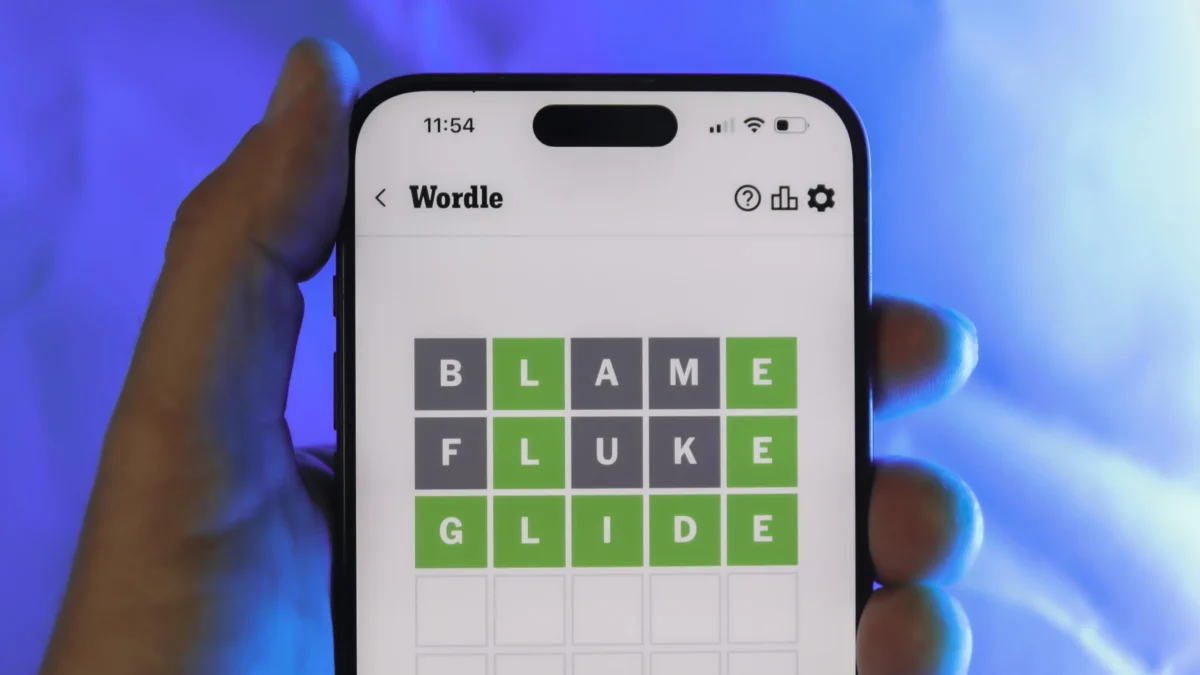
The highly anticipated daily Wordle challenge has unveiled its latest solution, with today’s answer, TRACE, proving to be a potentially straightforward solve for many enthusiasts. This five-letter word, characterized by its common letters and clear definition, offers a moment of triumph for players globally. The puzzle, implicitly Wordle No. 1889, continues the game’s tradition of engaging millions with its unique blend of linguistic challenge and accessible gameplay. This particular iteration underscores the careful balance Wordle maintains between difficulty and approachability, a key factor in its sustained popularity since its explosion onto the digital scene.
Dissecting Today’s Wordle: TRACE
For those who enjoy the methodical process of deduction, today’s Wordle, TRACE, provided several guiding clues that made the solution attainable. The initial hint indicated that the word contained no repeated letters, immediately narrowing the pool of possibilities. This is a crucial piece of information, as many five-letter English words do feature repeated characters, such as "APPLE" or "SENSE." By eliminating these, players could focus their efforts on unique letter combinations.
Further narrowing the options, the puzzle revealed that the word contained precisely two vowels. English language words are often categorized by their vowel-to-consonant ratio, and knowing this count helps players strategically place common vowels like A, E, I, O, U. In the case of TRACE, the vowels are ‘A’ and ‘E’, both frequently occurring in the English lexicon, which often contributes to a word’s perceived "easiness."
The positional hints were equally significant. The first letter was confirmed to be ‘T’, and the last letter ‘E’. These anchor points are invaluable, as they provide a strong framework for building the rest of the word. Combining ‘T’ at the start and ‘E’ at the end with the two-vowel, no-repeats rule, players could quickly start testing combinations. The letters T and E are among the most common in the English language, with ‘E’ being the most frequent overall, followed closely by ‘T’ and ‘A’. This prevalence further supported the assessment that TRACE was an accessible solution.
Finally, the semantic clue provided a definitive path to the answer: "Today’s Wordle answer can mean to copy a drawing by placing a see-through paper over it." This definition unmistakably points to "TRACE," solidifying the solution for those who had correctly identified the letters. The combination of structural and semantic clues exemplifies Wordle’s design philosophy, guiding players through a logical process of elimination and association.
The Genesis and Global Phenomenon of Wordle

Wordle’s journey from a personal project to a global sensation is a testament to the power of simple, engaging design. Created by software engineer Josh Wardle in October 2021, initially for his partner Palak Shah, the game quickly captivated a small circle of friends and family. Its public launch later that month saw a modest but steady growth in players. The game’s premise is disarmingly simple: guess a five-letter word in six tries, with feedback provided after each guess indicating correct letters in the correct position (green), correct letters in the wrong position (yellow), and incorrect letters (gray).
The true inflection point for Wordle came in January 2022, when its unique social sharing feature — allowing players to post their results as a grid of colored squares without revealing the word itself — went viral. This feature, designed to be spoiler-free yet instantly recognizable, transformed Wordle into a daily ritual and a shared cultural experience across social media platforms like Twitter. Overnight, millions discovered the game, and its player base surged from a few thousand to hundreds of thousands, then millions.
By February 2022, the game’s immense popularity attracted the attention of The New York Times, which acquired Wordle from Wardle for an undisclosed seven-figure sum. This acquisition marked a significant moment for both Wordle and The New York Times’ growing portfolio of digital games and puzzles. The Times aimed to integrate Wordle into its suite of popular brain teasers, including the iconic crossword puzzle, further cementing its position as a leading provider of intellectual entertainment. The transition was largely seamless, with The Times committing to keeping the game free for all players, at least initially, thus preserving its accessibility and broad appeal.
Strategic Approaches to Mastering Wordle
The virality of Wordle quickly led to a rich ecosystem of player strategies aimed at optimizing success rates. The video title "Winning Wordle: The Best Starting Words To Use and Why" points to one of the most debated aspects of the game: the optimal first guess. While personal preference plays a role, data-driven analysis has identified certain words as statistically superior starting points.
A common strategy involves choosing a first word that incorporates a high number of common vowels and frequently used consonants. Words like "ADIEU," "CRANE," "SLATE," or "TRACE" itself (if not today’s answer) are often cited. "ADIEU," for instance, uses four vowels, providing excellent early feedback on vowel placement. "CRANE" or "SLATE" offer a good mix of common consonants (C, R, N, S, L, T) and a couple of vowels, maximizing the chances of hitting green or yellow squares early on. The goal of the first word is not necessarily to guess the answer, but to gather the most information possible about the letters present and their positions.
Beyond the first guess, advanced strategies include:
- Vowel Maximization: Ensuring subsequent guesses introduce new vowels if the initial word didn’t reveal enough.
- Common Consonant Elimination: Systematically testing high-frequency consonants like R, S, T, L, N, D, P, M.
- Positional Play: Using the feedback from green and yellow squares to strategically place letters in subsequent guesses, often focusing on words that fit partial patterns.
- Avoiding Repetition (unless necessary): Only re-using letters that have been confirmed as correct or present, to maximize the introduction of new letters.
- "Hard Mode" Considerations: Wordle offers a "Hard Mode" where revealed hints must be used in subsequent guesses, preventing players from guessing words that contradict known information. This adds an extra layer of challenge and requires more careful word selection.
The choice of TRACE as today’s word aligns well with these strategic considerations, as it contains common letters and a straightforward structure, making it a good target for players employing well-established Wordle tactics.
Wordle’s Journey: A Brief Chronology
The timeline of Wordle’s rise to prominence is remarkably swift:
- October 2021: Josh Wardle creates Wordle for his partner and later releases it to the public, gaining a small but dedicated following.
- January 2022: Wordle’s unique share function goes viral, leading to an exponential surge in players globally. The game becomes a daily social media trend.
- February 2022: The New York Times Company acquires Wordle from Josh Wardle, integrating it into its portfolio of digital games and puzzles. The Times commits to keeping the game free for all players.
- March 2022 onwards: Wordle continues its daily release schedule under The New York Times, maintaining its strong player base and cultural relevance, despite minor controversies over word difficulty or perceived changes in curation.
- August 16, 202X (No. 1884): The answer was ASPIC.
- August 17, 202X (No. 1885): The answer was TRIBE.
- August 18, 202X (No. 1886): The answer was STRIP.
- August 19, 202X (No. 1887): The answer was GRILL.
- August 20, 202X (No. 1888): The answer was MURKY.
- August 21, 202X (No. 1889): Today’s answer is TRACE.
This chronology highlights how quickly a simple, well-designed game can capture the public imagination and establish itself as a daily staple for millions.
The New York Times’ Stewardship and Player Engagement
Under The New York Times’ stewardship, Wordle has largely retained its original charm and addictive quality. The Times has been careful to maintain the game’s core mechanics and daily release schedule, understanding that consistency is key to player retention. While there have been occasional debates among players regarding the perceived difficulty of certain words or slight alterations to the word list (e.g., removing obscure or sensitive terms), the overall sentiment remains positive.
The Times’ acquisition of Wordle also underscores a broader trend in digital media: the importance of engaging, interactive content to attract and retain subscribers. Wordle, like the Times’ other popular games such as Spelling Bee and The Mini Crossword, serves as a powerful engagement tool, drawing millions of daily users to its digital platforms. While the game remains free, it acts as a gateway, potentially introducing players to other subscription-based offerings and reinforcing the Times’ brand as a provider of quality intellectual content.
Player reactions to daily Wordle puzzles are diverse and often spirited. An "easy" word like TRACE typically elicits satisfaction and a quick win, often shared proudly on social media with fewer rows of green squares. Conversely, more challenging words can spark collective frustration and commiseration, fostering a sense of shared experience among players. This daily emotional rollercoaster, from triumphant success to challenging defeat, is integral to Wordle’s enduring appeal.
Recent Wordle Challenges: A Glimpse into Variety

The sequence of recent Wordle answers showcases the game’s commitment to variety in word selection, balancing common and less common words to keep players on their toes.
- August 16, No. 1884: ASPIC. A less common culinary term, this word might have proven a challenge for some, relying on specific vocabulary knowledge.
- August 17, No. 1885: TRIBE. A relatively common word, often guessable through strategic consonant and vowel placement.
- August 18, No. 1886: STRIP. Another common word, featuring frequently used consonants and a simple structure.
- August 19, No. 1887: GRILL. A familiar word, offering a good balance of common letters and a distinct double consonant, which can sometimes be tricky.
- August 20, No. 1888: MURKY. A descriptive adjective that, while not exceedingly rare, might require a broader vocabulary than some other words.
This pattern demonstrates Wordle’s ability to oscillate between words of varying difficulty, ensuring that the daily challenge remains fresh and engaging for its vast player base. Today’s word, TRACE, fits squarely into the category of more accessible solutions, likely providing a welcome win for many after a potentially more challenging "MURKY" yesterday.
Beyond the Puzzle: Wordle’s Broader Impact
Wordle’s impact extends beyond mere entertainment, subtly influencing digital literacy and community engagement. For many, it has become a gateway to daily puzzle-solving, encouraging mental agility and vocabulary expansion. The game’s simplicity makes it accessible across age groups and linguistic backgrounds, fostering a global community united by a shared daily challenge.
Experts in cognitive science often highlight the benefits of word puzzles for brain health, including improved vocabulary, critical thinking, and problem-solving skills. Wordle, with its structured feedback and daily engagement, serves as a mini-workout for the brain, contributing to cognitive well-being in a fun and non-intimidating manner. Its limited number of guesses also introduces an element of risk and reward, encouraging players to think strategically rather than randomly.
Furthermore, Wordle has inadvertently become a benchmark for game design: a reminder that sometimes the simplest concepts, executed flawlessly, can achieve the greatest reach. Its success has spawned numerous clones and inspired a new wave of daily, bite-sized digital games, demonstrating its profound influence on the casual gaming landscape. It has also cemented the role of interactive puzzles as vital components of modern news and media organizations, proving that intellectual engagement can coexist with mass appeal in the digital age.
In conclusion, today’s Wordle answer, TRACE, while perhaps an easier solve, contributes to the ongoing narrative of a game that has remarkably sustained its global appeal. Its elegant design, effective hints, and the communal aspect of its daily challenge ensure its continued relevance as a cultural touchstone and a beloved daily ritual for millions worldwide. The phenomenon of Wordle serves as a powerful reminder of the enduring human fascination with language, logic, and the simple joy of a puzzle well-solved.