


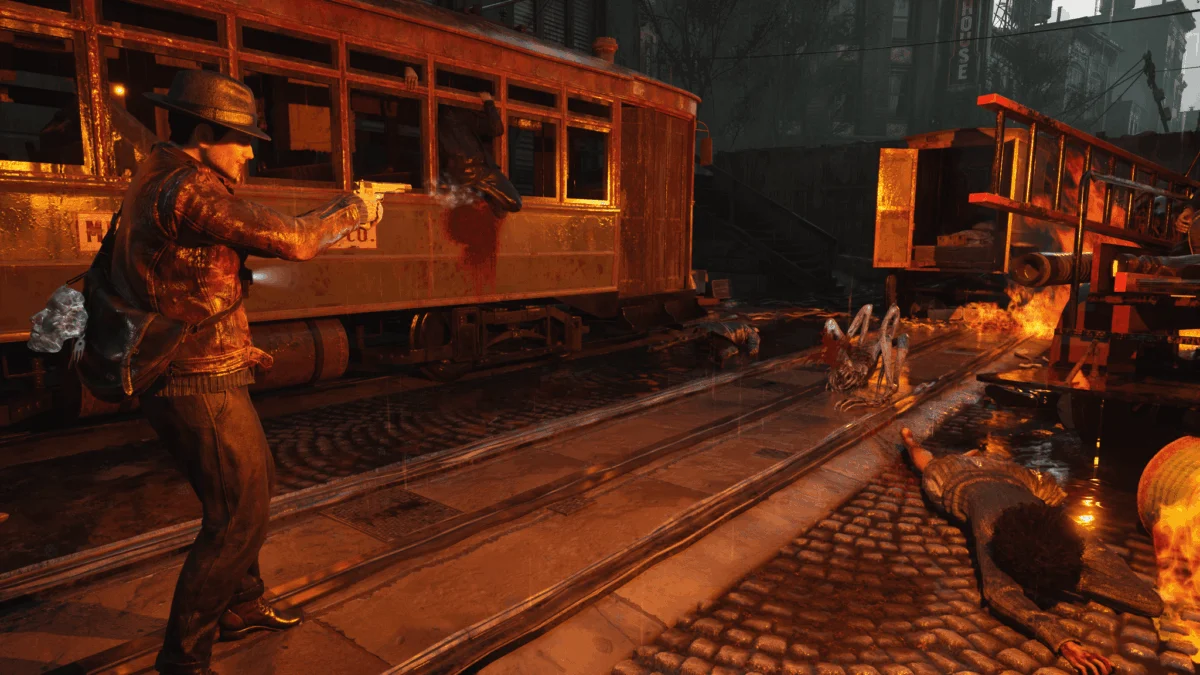
The Sinking City 2 represents a significant departure for the Irish-Ukrainian development team at Frogwares, transitioning from the experimental detective mechanics of its predecessor toward a polished, linear survival horror experience. Released in August 2026, the title serves as both a sequel in name and a complete mechanical reinvention of the franchise. By pivoting toward the established tropes of modern survival horror while maintaining a unique Lovecraftian aesthetic, Frogwares has produced a title that not only corrects the technical shortcomings of the 2019 original but also stands as a testament to the studio’s resilience during one of the most tumultuous development cycles in modern gaming history.

The Evolution of the Arkham Mythos
The original The Sinking City, released in 2019, was an ambitious attempt to fuse the investigation-heavy gameplay of Frogwares’ Adventures of Sherlock Holmes series with a sprawling, open-world Lovecraftian setting. While the narrative was praised for its atmosphere, the game suffered from repetitive combat, technical instability, and an open world that often felt hollow.

In The Sinking City 2, the developers have opted for a more focused, linear 15-hour experience. Set in 1929, the game moves the action to Arkham, Massachusetts, a city currently besieged by a supernatural flood that has brought with it an eldritch infestation known as "The Slither." Players take on the role of Calvin Rafferty, a charming occult adventurer who arrives in the city not to solve a crime, but to rescue his lover, Faye Bennett, from a mysterious, catatonic state.

This narrative shift allows for a more personal and emotionally resonant story. The chemistry between Rafferty and Bennett, supported by high-quality voice acting, provides a grounded anchor for the cosmic horror unfolding around them. Unlike the first game, which leaned heavily into the socio-political commentary often found in Lovecraft’s wake, the sequel focuses on a tighter narrative arc with clear conclusions, striking a balance between the "unknowable" nature of eldritch horrors and the structural requirements of a satisfying videogame plot.

A Timeline of Turbulent Development
The path to the release of The Sinking City 2 is a narrative of survival in its own right. To understand the achievement this game represents, one must look at the chronology of Frogwares’ operations over the last seven years:

- 2019: Release of the original The Sinking City.
- 2020-2021: A protracted legal and publisher dispute with Nacon (formerly Bigben Interactive) leads to the game being delisted and relisted across various platforms, causing significant financial and administrative strain on the studio.
- 2020-2022: The global COVID-19 pandemic forces the team into remote work, complicating the early conceptual phases of the sequel.
- February 2022: The Russian invasion of Ukraine begins. Frogwares, with its primary development hub in Kyiv, is forced to navigate the realities of active warfare.
- 2023-2025: Development continues under extreme conditions. The studio utilizes a Kickstarter campaign as a "safety net" to ensure the game’s completion despite fluctuating regional stability and power shortages.
- August 2026: The Sinking City 2 launches globally.
The human cost of this development is documented within the game itself. A launch splash screen notes that during the production cycle, 14 staff members were drafted into military service, 17 homes of employees were damaged or destroyed, and the team endured over 85,000 air raid sirens. Despite these conditions, the studio managed to deliver a product that exceeds the technical and artistic scope of their previous works.

Mechanical Reinvention and Combat Overhaul
The most immediate change in The Sinking City 2 is the complete overhaul of combat and exploration. Frogwares has moved away from the clunky third-person shooting of the original, adopting a refined over-the-shoulder perspective heavily influenced by the 2019 Resident Evil 2 remake. This shift is not merely cosmetic; it fundamentally alters the player’s interaction with the environment.

Combat is now characterized by tense resource management. Ammunition and healing items are scarce, forcing players to weigh the necessity of every encounter. The arsenal—including a pistol, shotgun, SMG, rifle, and grenade launcher—feels weighty and responsive. A standout feature is the weapon upgrade system, which allows for tactical customization. For instance, players can attach an axe blade to the shotgun for improved melee utility or implement timing-based boosts for the pistol.

The enemy variety has also seen a significant upgrade. While some "Slither" creatures return from the first game, they have been redesigned with complex hitboxes and unpredictable movement patterns. The "Harvesters," spider-like entities that require precise timing to defeat, exemplify the game’s increased difficulty curve. To mitigate the frustration of limited resources, the developers have included a robust dodge mechanic, allowing skilled players to bypass combat entirely through well-timed maneuvers.

Environmental Design and the "Puzzle Box" Philosophy
Arkham is divided into four sizable, discrete environments. Moving away from the "Ubisoft-style" open world of the first game, Frogwares has embraced a "puzzle box" design philosophy. Each district functions as a self-contained labyrinth where progression is tied to environmental storytelling and mechanical puzzles.

The first area utilizes a boat for navigation through flooded streets, creating a sense of scale while maintaining control over the player’s path. Puzzles range from traditional "lock and key" exploration to more complex tasks, such as managing power grids or deciphering codes hidden within the environment. The game’s map system assists by highlighting rooms where items or clues remain, a quality-of-life feature that prevents the exploration from becoming tedious.

Crucially, the game avoids the "invincible stalker" trope that has dominated recent horror titles. While one specific enemy pursues the player through a particular segment, it is handled with enough restraint to ensure it enhances the tension rather than obstructing the player’s ability to solve puzzles and explore the lore.

Technical Performance and Visual Fidelity
On the Xbox Series X, The Sinking City 2 demonstrates a significant leap in visual quality, likely attributed to a transition to Unreal Engine 5. The game offers two primary modes:

- Quality Mode: Targets 30fps with enhanced resolution and superior lighting effects. The water and rain shaders are particularly impressive, contributing to the "drowned" atmosphere of Arkham.
- Performance Mode: Targets a stable 60fps. While this mode sees a reduction in texture resolution and some "shimmering" on hair and fine details, it provides the fluidity necessary for the game’s more action-oriented segments.
The art direction successfully captures a 1920s aesthetic in decay. The contrast between the lingering glamour of the era and the encroaching eldritch rot is palpable. Furthermore, the audio design—despite occasional minor bugs—supports the sense of dread with a minimalist score and haunting ambient sounds.

Replayability and the "Eldritch Fears" System
Frogwares has integrated high replay value into the core experience, a hallmark of the survival horror genre. Upon completing the initial 10-to-12-hour campaign, players are ranked based on their performance, speed, and resource usage. This unlocks the "Eldritch Fears" system, which provides challenges for subsequent playthroughs.

Rewards for these challenges include:

- Infinite Ammunition: For those looking to experience the game as a pure action title.
- Early Weapon Access: Allowing for different tactical approaches to early-game bosses.
- Advanced Perks: The "Night Shade" mask system allows players to equip perks that boost damage, crafting efficiency, or health. In a second playthrough, more powerful versions of these perks become available.
- Ex Oblivione Mode: This narrative-focused mode adds new lore documents that provide deeper context into the city’s fall, incentivizing players who are more interested in the story than the combat.
Market Positioning and Industry Impact
Launching at a competitive price point of $49.99, The Sinking City 2 positions itself as a premium "AA" title that punches well above its weight class. By focusing on a polished, shorter experience rather than a bloated open world, Frogwares has maximized its resources.

This strategic shift is a response to the precarious nature of the modern gaming industry. As development costs for "AAA" titles soar into the hundreds of millions, The Sinking City 2 represents a viable middle ground: a game with high production values, a focused scope, and a clear understanding of its target audience. The success of the Kickstarter campaign and the subsequent critical reception suggest that there is a strong market for developer-owned IPs that prioritize atmospheric depth over sheer map size.

Final Analysis: A Triumph of Spirit
The Sinking City 2 is more than just a successful genre shift; it is a landmark achievement in independent game development. Frogwares has successfully taken the feedback from their 2019 effort and applied it to a new framework that honors Lovecraftian themes while delivering a mechanically sound survival horror experience.

The game’s ability to maintain a consistent tone, offer satisfying combat, and provide a world worth exploring—all while the development team faced literal existential threats—is unparalleled in the industry. For fans of the genre, The Sinking City 2 is an essential title that confirms Frogwares’ status as a premiere developer of atmospheric horror. It serves as a reminder that even when the world is sinking, talent and resilience can create something truly exceptional.