


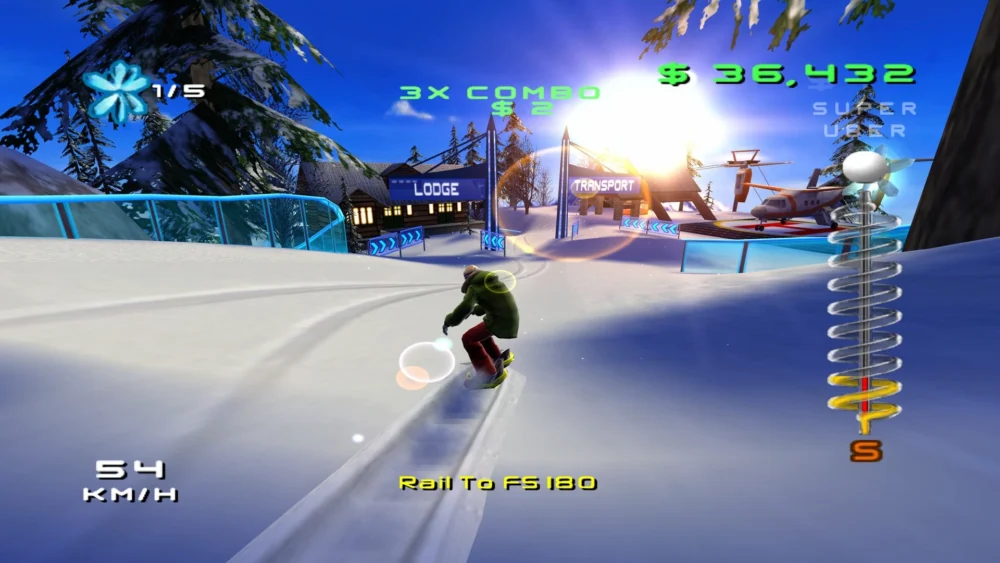
The enduring appeal of classic video games, particularly those enhanced through modern console features, continues to captivate audiences. In 2026, the venerable snowboarding title SSX 3 stands as a prime example, benefiting significantly from Xbox’s robust backwards compatibility program. Originally released in 2003, this extreme sports masterpiece from EA Sports BIG has transcended its era, offering an experience that remains compelling and visually impressive on contemporary Xbox Series X and Series S consoles. This continued relevance underscores the power of well-designed gameplay, memorable aesthetics, and strategic platform support in preserving gaming history and delivering lasting entertainment value.
The Genesis of a Snowboarding Legend: SSX 3’s Original Release (2003)
SSX 3 emerged during a golden era for extreme sports video games, a genre that gained significant traction in the late 1990s and early 2000s with titles like Tony Hawk’s Pro Skater and Dave Mirra Freestyle BMX. Electronic Arts’ internal studio, EA Sports BIG, specialized in developing arcade-style sports games that prioritized exaggerated physics, fluid controls, and vibrant aesthetics over strict realism. Following the success of SSX (2000) and the critically acclaimed SSX Tricky (2001), SSX 3 was released in October 2003 across PlayStation 2, Xbox, and GameCube platforms.
The development team aimed to evolve the series beyond its initial structure, which featured distinct, disconnected courses. Their vision for SSX 3 was ambitious: to create a singular, contiguous mountain environment that players could explore freely. This design philosophy was a significant departure for the genre at the time, bridging the gap between traditional arcade sports and emerging open-world paradigms. Upon release, SSX 3 garnered widespread critical acclaim. Review aggregators like Metacritic show average scores in the high 90s for the PlayStation 2 and Xbox versions, with critics lauding its innovative open-world design, deep trick system, and exceptional soundtrack. Commercially, the game was a success, contributing to the broader financial achievements of the SSX franchise, which had already established itself as a cornerstone of EA’s extreme sports portfolio. The game’s initial success cemented its place as a genre-defining title, setting a high bar for future snowboarding simulations.
A Visual Renaissance: Backwards Compatibility’s Transformative Impact
One of the most compelling reasons for SSX 3’s continued relevance in 2026 is the profound visual and performance enhancements delivered through the Xbox backwards compatibility program. While the game was considered graphically advanced for its time of release in 2003, its presentation on modern displays has been dramatically improved. The original Xbox version rendered at a resolution of 640×480. However, Microsoft’s engineering efforts significantly elevated this.
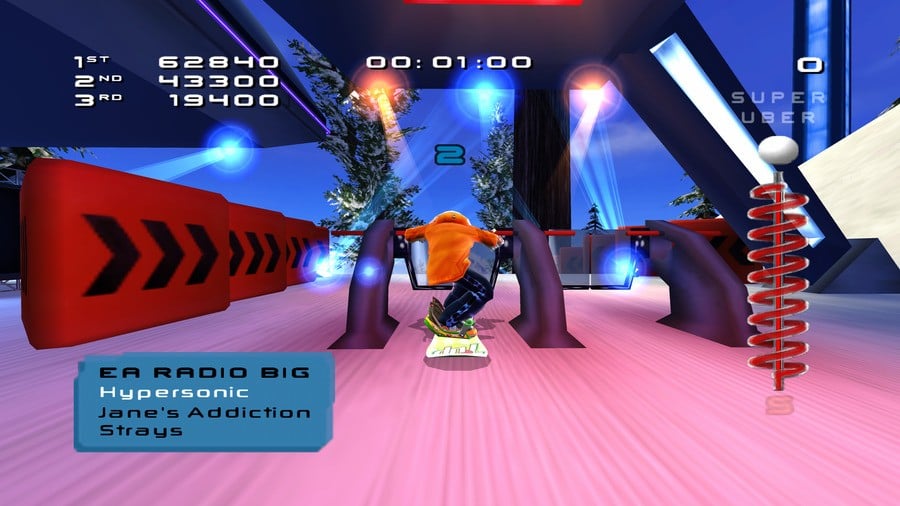
In 2018, as part of the ongoing Xbox One backwards compatibility initiative, SSX 3 received substantial resolution boosts. For the Xbox One S, the resolution was quadrupled to 1280×960. More notably, the Xbox One X applied a sixteen-fold increase, pushing the rendering resolution to a sharp 2560×1920. These enhancements are seamlessly carried over to the Xbox Series X, ensuring that players on Microsoft’s latest flagship console experience SSX 3 with unprecedented clarity. The Xbox Series S, while not achieving the same peak resolution as the Series X, still benefits from significant upscale algorithms, presenting a far cleaner image than the original.
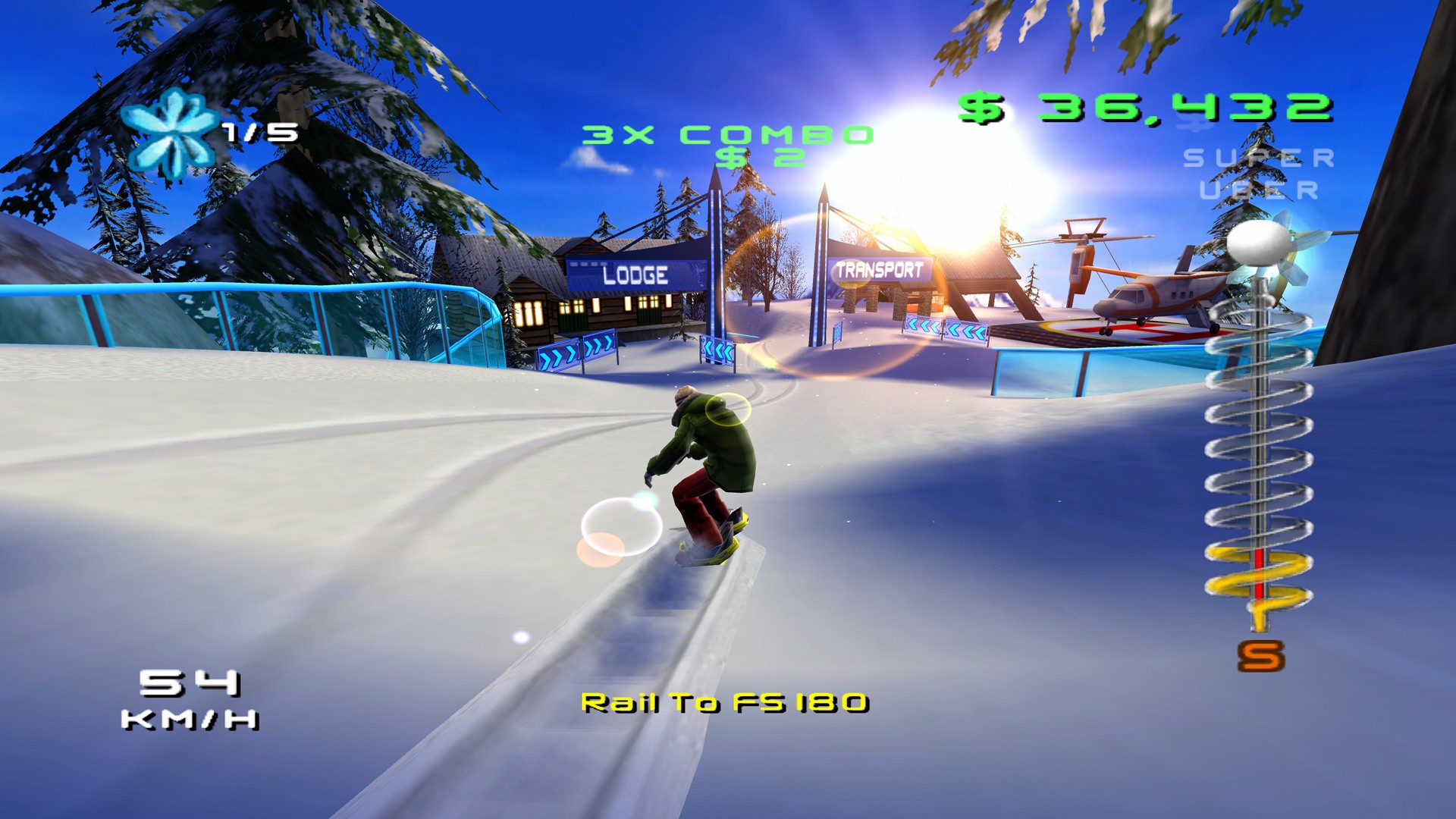
Digital Foundry’s technical analysis from 2018 highlighted these impressive gains, noting that "the result is a game much cleaner than ever before." While the widescreen support for these older titles is achieved by the emulator stretching the base image horizontally, leading to what some refer to as "rectangular pixels," the overall visual fidelity is dramatically improved, rendering environmental details and character models with a crispness unimaginable on original hardware.
Beyond resolution, performance also saw significant improvements. The original PlayStation 2 and even some segments of the original Xbox versions of SSX 3 were known to experience occasional frame rate dips. The backwards compatibility implementation on Xbox One and Series X/S largely eradicated these issues. While the Xbox One S might still exhibit minor fluctuations in demanding scenes, the Xbox One X and both current-generation Series consoles consistently deliver a smooth 60 frames per second experience. This combination of heightened resolution and stable performance ensures that SSX 3 not only looks good but also plays with a fluidity that was not always consistent at its initial launch, providing a definitive version for modern players.
The Pervasive Mountain: A Pioneering Semi-Open World Design
Central to SSX 3’s innovative design and enduring appeal is its groundbreaking semi-open world structure. Unlike its predecessors, SSX and SSX Tricky, which featured distinct, disconnected courses, SSX 3 presented players with a singular, sprawling mountain environment known as "Big Mountain." This mountain was divided into three peaks—Peak 1, Peak 2, and Peak 3—which players could unlock sequentially through progression.
What made this design revolutionary in 2003 was the ability to traverse the mountain seamlessly from top to bottom without loading screens between areas. Players could initiate a ride from the highest accessible point and descend through various zones, encountering different track layouts, trick parks, and hidden shortcuts. Along the way, specific event markers would appear, allowing players to instantly drop into races, trick competitions, or Freeride challenges. However, the game also provided the freedom to ignore these structured events entirely, allowing players to simply "cruise" the mountain, discover collectibles, complete minor challenges, or practice tricks at their own pace.
This design choice injected a unique "chill" vibe into the game, a stark contrast to the often high-octane, competitive nature of other extreme sports titles. It allowed for a personalized experience: competitive players could dive into events, while those seeking a more relaxed session could simply explore the vast environment. This blend of structured gameplay and free exploration was a significant evolution for the genre, anticipating trends that would become commonplace in gaming years later. The ambition of creating such a continuous, explorable environment on 2003 hardware was notable, and its execution remains a key selling point, providing a sense of scale and freedom that few other snowboarding games have replicated effectively. The interconnectedness of the mountain not only facilitated exploration but also encouraged players to learn the nuances of its diverse terrain, fostering a deeper engagement with the game world.
Sonic Landscape: The Enduring Appeal of Radio BIG
The auditory experience of SSX 3 is as integral to its charm as its gameplay and visuals, primarily through its in-game radio station, "Radio BIG." This feature provided a continuous stream of licensed music, interspersed with dynamic commentary from an in-game DJ who would provide updates on weather, upcoming events, and general mountain chatter. The curated soundtrack is a nostalgic journey through the late 1990s and early 2000s, featuring an eclectic mix of genres including alternative rock, electronic music, and hip-hop.
Notable tracks include remixes of iconic songs such as The Red Hot Chili Peppers’ "Higher Ground," Queens of the Stone Age’s "No One Knows," as well as "Jerk It Out" by The Caesars, "Hypersonic" by Jane’s Addiction, and "Don’t Let The Man Get You Down" by Fatboy Slim. This selection of music not only defined the game’s atmosphere but also became synonymous with the SSX experience for many players. The success of securing these licenses for the original 2003 release was significant, but their retention for the backwards compatible version on Xbox in 2026 is particularly noteworthy. Relicensing music for older games, especially across different console generations, is a notoriously complex and often prohibitive process for publishers due to expiring rights and high costs. The fact that SSX 3’s full soundtrack remains intact speaks to either foresight in the original licensing agreements or a dedicated effort by Electronic Arts and Microsoft to preserve this crucial element of the game.
The music functions in tandem with the gameplay, with dynamic shifts and intensity changes often corresponding to in-game actions, such as performing a big trick or nearing the finish line of a race. This symbiotic relationship between sound and play enhances immersion and provides an additional layer of feedback. Radio BIG is more than just background noise; it’s a character in itself, cultivating the game’s distinctive "chill but thrilling" vibe and contributing significantly to its enduring cultural impact and replayability.
Mastering the Slopes: Gameplay Mechanics and Lasting Influence
Twenty-three years after its initial release, SSX 3 is still widely regarded by many critics and fans as the pinnacle of the snowboarding video game genre. This reputation is rooted in its meticulously crafted gameplay mechanics, which strike a delicate balance between accessibility and depth. The game embodies a "Tony Hawk-style" philosophy: easy to pick up and immediately enjoyable for newcomers, yet offering an intricate layer of mastery for those willing to invest time in its control scheme and trick system.
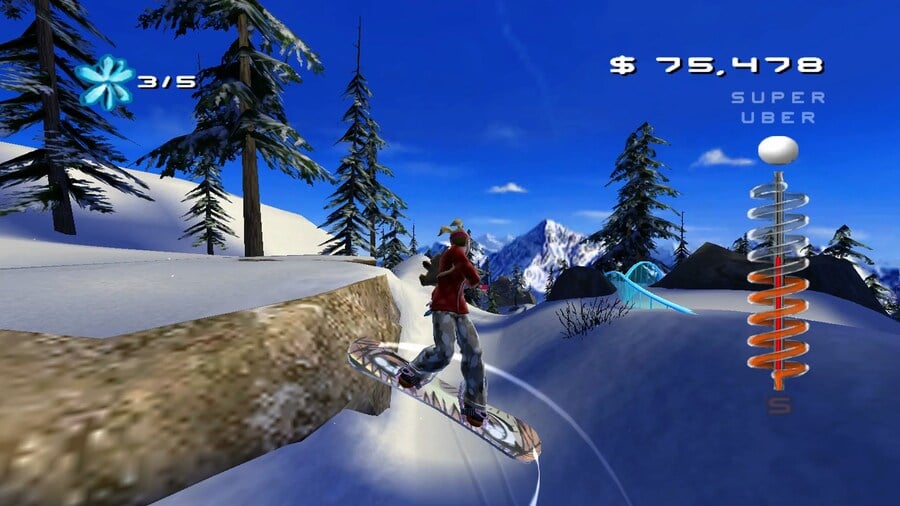
The core gameplay revolves around navigating diverse terrain, performing exaggerated aerial tricks, and linking combos to accumulate points and boost speed. Players utilize a combination of analogue stick movements, button presses for grabs, and specific inputs for "Uber Tricks"—over-the-top, high-scoring maneuvers that are a hallmark of the SSX series. The game’s physics, while arcade-like, provide a satisfying sense of weight and momentum, making each jump and landing feel impactful. The design prioritizes fun and creative expression, allowing players to unleash their imagination in terms of the stunts they can execute.
However, the game is not without its initial challenges. New players in 2026 might find the onboarding system somewhat lacking, as the game essentially drops players onto the mountain with minimal tutorialization. The control scheme, particularly for the Xbox version, requires a period of adjustment. This initial learning curve can be a barrier, but once players overcome it—typically after an hour or two of dedicated practice—the game’s true appeal unfolds. The satisfaction of chaining together complex tricks, mastering the nuances of the terrain, and fluidly transitioning between racing and tricking events is profound.
SSX 3’s enduring legacy is also partly due to the subsequent landscape of snowboarding games. While titles like Steep and Riders Republic have offered modern takes on extreme sports, few have captured the specific blend of arcade accessibility, profound depth, and pure joy that SSX 3 delivered. Its influence can be seen in the aspirations of many action sports titles that followed, yet its precise formula remains largely unmatched, solidifying its status as a benchmark in interactive snowboarding entertainment.
Accessibility and Preservation: The Economic Factor in 2026
In 2026, the accessibility and cost-effectiveness of SSX 3 on Xbox consoles represent another compelling reason for players to revisit or discover the title. As an older game, its pricing structure reflects its vintage while its continued availability speaks volumes about effective game preservation. The digital version of SSX 3 is available on the Xbox Store for a modest price of approximately £9.99 / $9.99. This digital purchase grants full compatibility across Xbox One, Xbox Series X, and Xbox Series S, ensuring that players on any modern Xbox console can access the enhanced version.
For those who prefer physical media or own older copies, the original Xbox disc version of SSX 3 remains compatible with Xbox One and Series X consoles equipped with disc drives. This allows long-time fans to dust off their classic discs and experience the game with modern enhancements, adding significant value to their existing libraries. This commitment to disc compatibility is a cornerstone of Microsoft’s backwards compatibility philosophy, contrasting sharply with platforms that often deprecate physical media from previous generations.
It is noteworthy that SSX 3 rarely sees significant discounts on the Xbox Store, and as of 2026, it is not included in subscription services like EA Play or Xbox Game Pass. This is a common occurrence for older licensed titles, where the ongoing costs of music and other intellectual property rights can complicate their inclusion in subscription libraries. Interestingly, the 2012 iteration of SSX is part of EA Play and Game Pass, offering an alternative for subscribers. However, the 2012 title, while modern, was not as universally acclaimed as SSX 3, making the original 2003 release the preferred choice for many aficionados.
The continued availability and affordability of SSX 3, especially given the complexities of its licensed soundtrack, underscore its importance as a preserved classic. It exemplifies how strategic platform features can extend the life of a game for decades, allowing new generations of players to experience its magic without prohibitive cost barriers, contributing significantly to the broader discourse on video game preservation.
The Broader Implications: SSX 3’s Legacy in Modern Gaming
The enduring popularity and technical enhancements of SSX 3 in 2026 offer valuable insights into the broader landscape of modern gaming. Its continued relevance highlights the critical role of backwards compatibility as a core console feature. Microsoft’s sustained investment in this program not only provides immediate value to consumers by allowing them to play their existing libraries but also serves as a crucial mechanism for game preservation. In an industry often focused on the next big release, the ability to revisit and experience classics in an enhanced state offers a powerful counter-narrative, proving that quality game design can truly be timeless.
SSX 3 stands as a testament to the fact that compelling gameplay, innovative design, and memorable aesthetics can transcend technological generations. It challenges the notion that only the latest graphics and cutting-edge features define a superior gaming experience. For many, the simple joy of carving down Big Mountain, pulling off gravity-defying tricks to a fantastic soundtrack, remains unmatched by more contemporary titles. Its success in 2026 encourages developers to reconsider the balance between innovation and foundational fun, and for publishers to explore sustainable models for preserving and making accessible the rich history of video games.
The game’s legacy also influences the extreme sports genre itself. The fact that a 23-year-old title still frequently tops "best of" lists for snowboarding games speaks to a potential void in modern gaming or an exceptionally high bar set by EA Sports BIG. It prompts reflection on why successors have struggled to capture the same magic, perhaps pointing to the difficulty of balancing arcade accessibility with the depth required for long-term engagement.
In conclusion, SSX 3 in 2026 is more than just a nostalgic throwback; it is a vibrant, playable piece of gaming history. Its journey from a critically acclaimed 2003 release to a visually stunning, smoothly performing title on current-generation Xbox consoles exemplifies the value of meticulous game design coupled with robust platform support. For those seeking an unparalleled snowboarding experience, SSX 3 remains not just a recommendation but an essential chapter in the narrative of video game excellence.
What are your experiences with SSX 3? Tell us down in the comments section below.
Please note that some external links on this page are affiliate links, which means if you click them and make a purchase we may receive a small percentage of the sale. Please read our FTC Disclosure for more information.