


The acoustic profile of home gaming hardware has undergone a radical transformation over the past two decades, transitioning from the loud, mechanical whir of early disc-based systems to the near-silent operation of modern silicon. For the Xbox brand, engineering quiet and efficient cooling solutions has become a cornerstone of hardware design, particularly following the thermal challenges faced during the seventh console generation. However, as hardware ages, the accumulation of environmental debris and the degradation of thermal interface materials have led to a resurgence of noise-related concerns among the user base. Reports from long-term owners of the Xbox Series X and legacy hardware indicate that even the most advanced cooling systems are not immune to the passage of time, prompting a closer look at the history of Xbox thermal engineering and the necessity of preventative maintenance.
The Architecture of Silence: A Chronological Overview of Xbox Hardware
To understand the current state of console noise, it is essential to examine the trajectory of Microsoft’s hardware engineering. Each generation of Xbox has utilized distinct cooling philosophies, which dictate how the systems sound after years of heavy utilization.
The Early Era: Original Xbox and Xbox 360
The original Xbox, released in 2001, was a massive unit by the standards of its time, housing a standard 3.5-inch hard drive and a disc drive that contributed significantly to its decibel output. Its cooling was handled by a 70mm exhaust fan, which, while effective, lacked the sophisticated pulse-width modulation (PWM) control found in modern systems. Consequently, the original Xbox maintained a constant, audible hum.
The Xbox 360 (2005) represented a period of significant thermal turbulence. Early models were notorious for the "Red Ring of Death" (RROD), a general hardware failure often attributed to lead-free solder cracking under thermal stress. To combat heat, the fans in the original "Pro" and "Elite" models would frequently ramp up to high RPMs, creating a noise profile often compared to a small vacuum cleaner. It was not until the release of the Xbox 360 S (Slim) in 2010 that the platform achieved a more manageable acoustic footprint through the use of a single, larger fan and a more integrated chip design.
The Quiet Revolution: Xbox One to Series X
Learning from the Xbox 360’s thermal failures, Microsoft designed the original Xbox One (2013) with a massive chassis and an external power brick. This "safety first" approach ensured that the console was virtually silent, as the internal fan rarely needed to spin at high speeds to dissipate heat from the relatively large internal volume.
The Xbox One X (2017) introduced vapor chamber cooling to the console space, a technology previously reserved for high-end PC graphics cards and servers. This allowed for a much smaller form factor while maintaining low noise levels. This philosophy culminated in the Xbox Series X (2020), which utilizes a unique "split motherboard" design and a large 130mm axial fan at the top of the unit. This design leverages the "chimney effect," allowing heat to rise naturally and requiring less fan force to move air through the system.
Technical Analysis of Acoustic Degradation
Despite the engineering feats of the Series X and Series S, users have recently reported an increase in fan noise and heat output. This phenomenon is generally attributed to three primary factors: dust accumulation, thermal paste desiccation, and bearing wear.
Dust and Obstructive Airflow
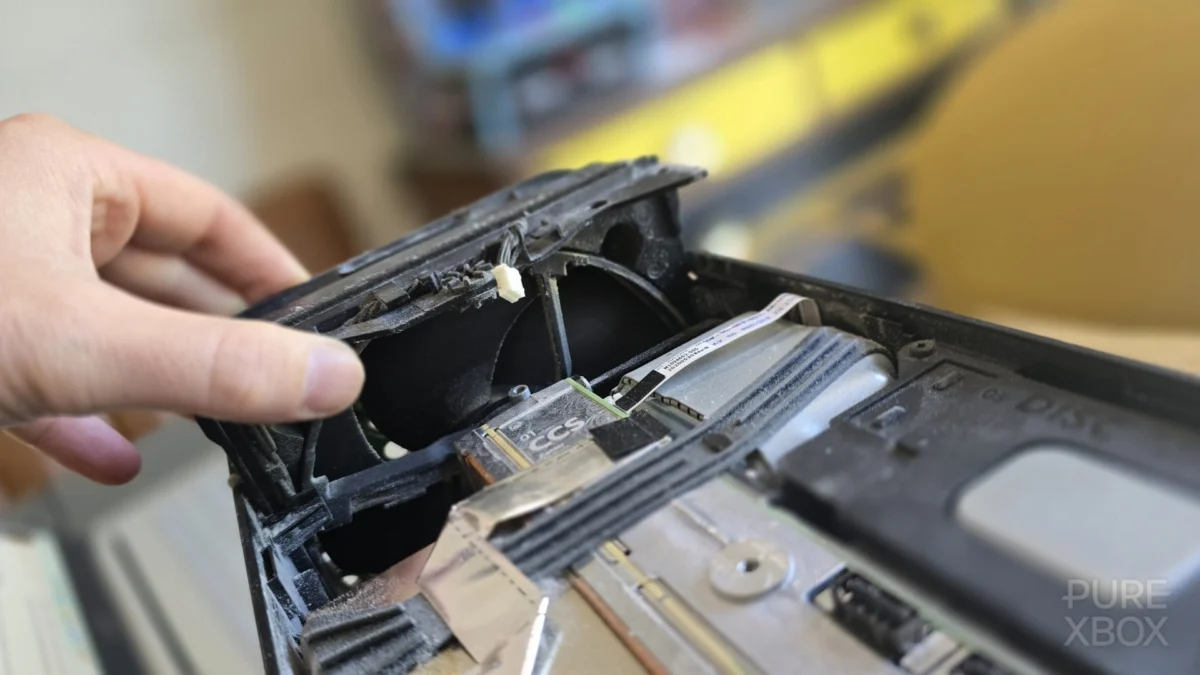
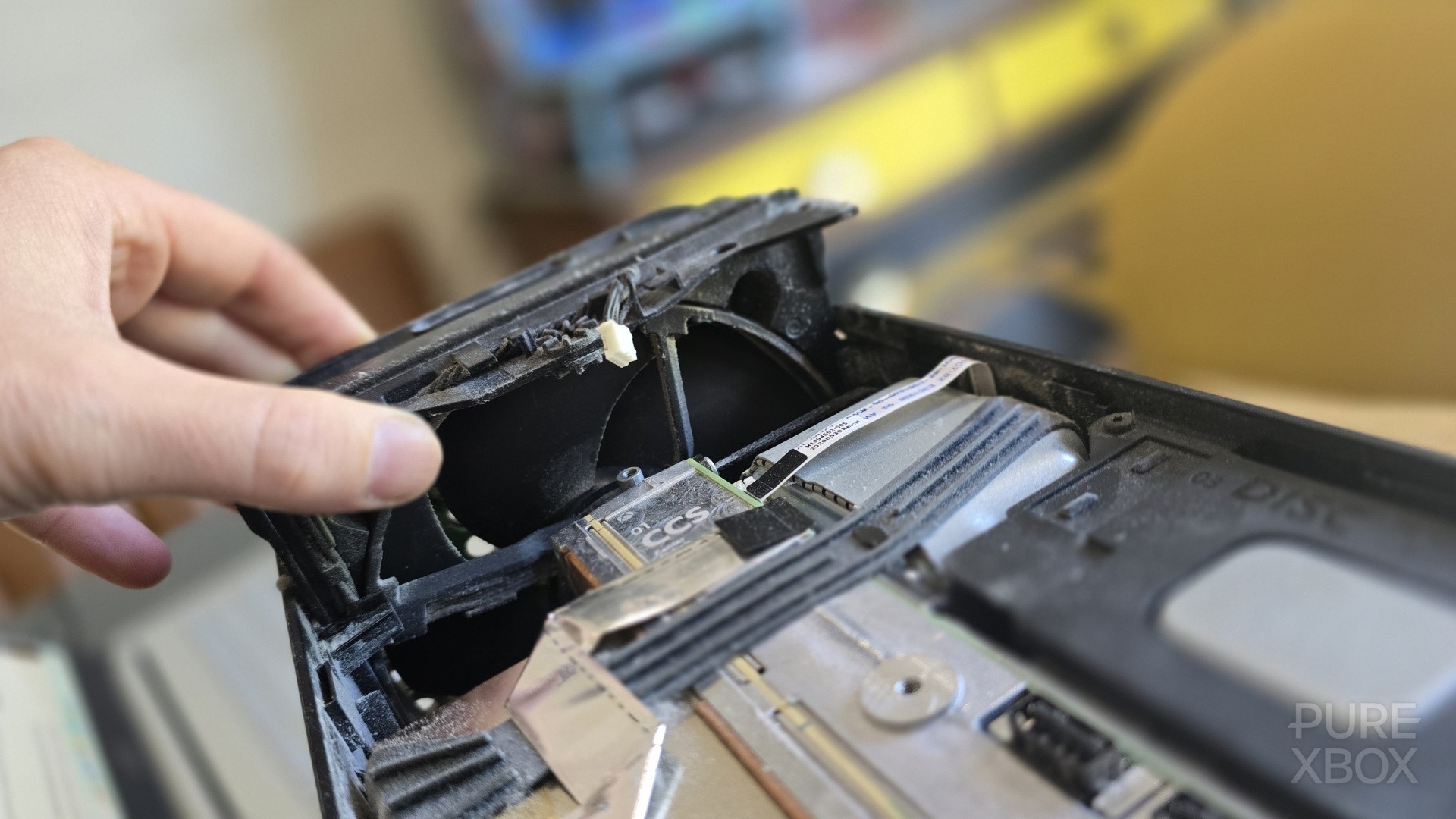
The primary culprit for increased noise in aging consoles is the accumulation of household dust and pet hair. The Xbox Series X, with its large top-venting fan, acts as a high-volume air purifier for the room it occupies. Over several years, dust particles settle on the heat sink fins, creating an insulating layer that prevents efficient heat transfer. To compensate for the rising internal temperatures, the system’s firmware instructs the fan to spin faster, resulting in the "take-off" sound reported by many users.
Thermal Interface Material (TIM) Degradation
Between the system-on-a-chip (SoC) and the heat sink lies a layer of thermal paste or a thermal pad. Over time, particularly with the high-heat cycles of modern 4K gaming, this material can dry out and lose its conductivity. When the TIM fails, the heat sink cannot effectively pull heat away from the processor, leading to thermal throttling and increased fan speeds.
Mechanical Wear
While modern brushless fans are designed for longevity, they are not infinite. Bearings can eventually lose lubrication or become unbalanced due to dust buildup on the blades. This manifests as a clicking, grinding, or high-pitched whining sound that is distinct from the standard rush of air.
Comparative Data: Decibel Levels Across Generations
Independent technical reviews and community benchmarks provide a clear picture of how Xbox consoles compare in terms of noise. Under heavy load, such as running a high-fidelity title like Gears 5 or Halo Infinite, the noise levels are typically measured in decibels (dB) from a distance of one meter.
| Console Model | Idle Noise Level (dB) | Peak Load Noise Level (dB) | Cooling Method |
|---|---|---|---|
| Original Xbox | 42 dB | 55 dB | 70mm Rear Fan |
| Xbox 360 (Launch) | 45 dB | 60+ dB | Dual 60mm Fans |
| Xbox One (Original) | 30 dB | 34 dB | 112mm Large Fan |
| Xbox One X | 32 dB | 43 dB | Vapor Chamber / Blower |
| Xbox Series S | 22 dB | 28 dB | Axial Fan |
| Xbox Series X | 24 dB | 31 dB | 130mm Axial Fan |
The data illustrates that the Series X is nearly 50% quieter than the Xbox 360 at peak load. However, anecdotal evidence from the Pure Xbox community suggests that "dirty" Series X units can reach levels upwards of 45-50 dB when the cooling system is compromised, effectively negating the engineering benefits of the hardware.
The Impact of Software on Hardware Performance
The demand placed on hardware by modern software also plays a role in noise production. Even legacy titles can stress modern systems if they are running with unlocked frame rates or high-resolution patches. Users playing Halo: Combat Evolved via the Master Chief Collection have noted that the Series X can become surprisingly warm. This is often due to the console pushing maximum frame rates (up to 120Hz) or utilizing Auto-HDR features, which keep the SoC at high utilization despite the game’s age.

Furthermore, the rise of handheld "Xbox-adjacent" devices like the ASUS ROG Ally has introduced a new variable. These devices use much smaller, high-RPM fans to cool powerful APUs in a cramped space. While they remain silent during low-power indie gaming, "Turbo" modes for AAA titles push these fans to their physical limits, often exceeding the noise levels of a full-sized Series X.
Maintenance Protocols and Official Recommendations
Microsoft provides specific guidelines for maintaining the longevity and silence of Xbox hardware. To prevent overheating and excessive noise, the manufacturer recommends the following:
- Clearance: Consoles should have at least 4 to 6 inches of open space on all sides. Placing a Series X in a closed cabinet is a primary cause of premature fan ramp-up.
- Surface Material: Consoles should be placed on hard, flat surfaces. Carpeting or rugs can block intake vents and contribute to static and dust buildup.
- External Cleaning: Users are encouraged to use compressed air to blow out dust from the vents periodically. However, Microsoft cautions against sticking objects through the fan grilles, which can damage the blades or internal components.
- Professional Servicing: For consoles that have exceeded their warranty period, some enthusiasts opt for a full teardown to replace the thermal paste. While effective, this carries the risk of damaging delicate ribbon cables and is not officially recommended for the average consumer.
Broader Implications: Sustainability and the Right to Repair
The issue of console noise is more than just an auditory nuisance; it is a matter of hardware sustainability. As the gaming industry moves toward a "circular economy," the ability for a console to last ten or fifteen years becomes crucial. A console that runs hot and loud is a console that is at higher risk of component failure.
The trend toward more accessible hardware design is growing. While the Xbox Series X is relatively easy to open compared to previous generations, the "Right to Repair" movement continues to lobby for designs that allow users to easily clean heat sinks and replace fans without specialized tools. If consoles are to remain "silent" for their entire lifecycle, manufacturers may need to consider user-replaceable dust filters, a feature common in the PC gaming world but still largely absent from the console market.
As the Pure Xbox community and the wider gaming public continue to monitor their hardware, the consensus remains clear: while Microsoft has engineered some of the quietest consoles in history, the responsibility for maintaining that silence ultimately falls to the user. Regular cleaning and proper placement remain the most effective tools against the "wheezy" sounds of aging hardware, ensuring that the only thing gamers hear is the sound of the game itself.