


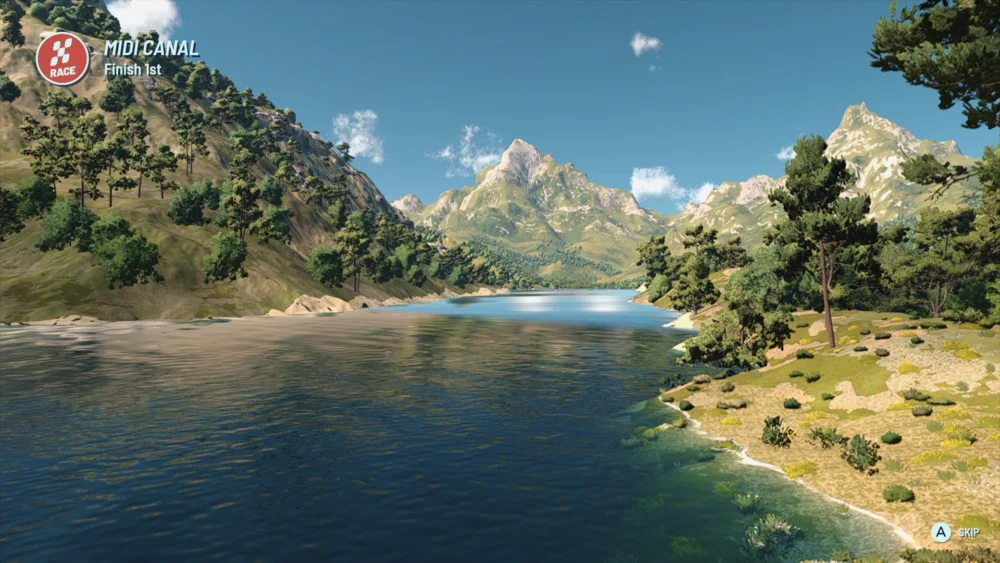
Eden Games, the Lyon-based developer recognized for its long-standing history in the racing genre, has officially released Gear.Club Unlimited 3, marking a significant transition for the franchise as it moves onto the Nintendo Switch 2 hardware. This third installment arrives approximately eight years after the initial debut of the second entry, positioning itself as a mid-budget alternative in a market dominated by high-profile racing juggernauts. While the series originated in the mobile gaming sector, it established a substantial foothold on the original Nintendo Switch by filling a vacuum for realistic-looking licensed racers on a platform often underserved by major publishers like Electronic Arts or Microsoft.
Historical Context and Franchise Evolution
The trajectory of the Gear.Club franchise is inextricably linked to the hardware limitations and market opportunities of the Nintendo ecosystem. When the first Gear.Club Unlimited launched in 2017, it was a port of the mobile title Gear.Club. Despite its humble origins, it became a commercial success due to its accessibility and the lack of competition on the Switch. Eden Games, whose pedigree includes prestigious titles such as V-Rally and the original Test Drive Unlimited, utilized this success to build Gear.Club Unlimited 2, which expanded the scope with more tracks, deeper customization, and post-launch updates that eventually included a Porsche-centric expansion and online multiplayer.

By 2026, the racing landscape has shifted. The announcement of Gear.Club Unlimited 3 for the Nintendo Switch 2—with subsequent releases planned for PlayStation, Xbox, and PC later in the year—signals an attempt to leverage more powerful hardware while maintaining the series’ "arcade-sim" identity. The choice of Japan as a primary setting follows a broader industry trend, mirroring recent thematic shifts seen in titles like Assassin’s Creed Shadows and the upcoming Forza Horizon 6. This setting provides the aesthetic foundation for the game, emphasizing mountain passes, urban neon, and the iconic imagery of falling sakura petals.
Technical Performance and Hardware Utilization
Gear.Club Unlimited 3 represents a technical milestone for the series, being the first entry to offer a dedicated 60 frames per second (FPS) "Performance Mode" on a Nintendo console. The game utilizes two distinct graphical profiles: a "Graphics Mode" that prioritizes visual fidelity at a 30 FPS target and a "Performance Mode" that prioritizes frame rate fluidity.
On the Nintendo Switch 2 hardware, the title makes extensive use of Deep Learning Super Sampling (DLSS) to manage the balance between resolution and performance. In handheld mode, the game benefits from the system’s Variable Refresh Rate (VRR) support, which smooths out occasional performance dips. However, the reliance on upscaling technologies results in visible image artifacts. Analysis of the handheld output reveals a degree of "smudging" on distant textures and ghosting effects on high-contrast elements, such as the digital speedometers on vehicle dashboards.

In contrast, the docked mode targets a higher internal resolution, providing a sharper image on external displays. Despite the increased clarity, the absence of VRR support in docked mode makes frame rate fluctuations more perceptible to the player. When compared to recent high-performance ports on the same hardware, such as the Switch 2 version of GRID Legends, Gear.Club Unlimited 3 appears to occupy a middle ground—functioning more as an enhanced legacy title rather than a ground-up showcase for the new hardware’s capabilities.
Gameplay Mechanics and the Unlimited System
The core driving model of Gear.Club Unlimited 3 remains rooted in accessible arcade physics. The game features a streamlined suite of driving assists, including auto-braking, manual or automatic gear shifting, and basic traction control. While these settings allow for a "pick-up-and-play" experience, the title has faced criticism for a lack of deeper accessibility options, such as customizable racing lines or one-handed control schemes, which have become standard in the mid-2020s.
A central mechanical innovation in this entry is the namesake "Unlimited" system. This mechanic rewards high-skill driving—such as clean overtakes, maintaining high speeds, and avoiding collisions—by filling a dedicated on-screen meter. Maintaining a high level on the Unlimited bar directly correlates to the rate at which players earn upgrade materials. Conversely, contact with barriers or AI opponents results in a penalty to the meter. This system is designed to incentivize precision, though early reports indicate inconsistencies in collision detection, where minor environmental clips can occasionally trigger disproportionately high penalties.

The campaign structure introduces "Duel" mode, a high-stakes one-on-one racing format. In this mode, drivers possess a health bar that depletes based on their position relative to the opponent and physical damage sustained during the race. This adds a layer of strategic aggression to the standard racing formula, requiring players to secure an early lead to mitigate the "health drain" associated with trailing.
Content Analysis and Comparison
A significant point of contention regarding Gear.Club Unlimited 3 is the volume of content available at launch compared to its predecessor. Gear.Club Unlimited 2, through years of "Definitive Edition" updates and DLC, eventually boasted over 250 races across four distinct biomes. In contrast, the third installment launches with approximately 50 tracks and two primary environments: Japan and France.
The vehicle roster continues the series’ tradition of featuring licensed "real-world" street cars, which players can modify in highly detailed, customizable 3D garages. The upgrade path, however, is notably more "grindy" than contemporary competitors. Unlike the rapid-fire reward systems found in the Forza Horizon series, Gear.Club Unlimited 3 requires a significant investment of time and resources to fully upgrade a single vehicle, often encouraging players to focus on a small fleet rather than a large collection.

The Artificial Intelligence (AI) behavior also displays a lack of parity with modern standards. While AI opponents are competitive on straightaways, they exhibit overly cautious braking patterns in corners, often slowing down significantly earlier than necessary. This behavior, combined with the lack of a "rewind" mechanic and the absence of adjustable difficulty sliders in the main campaign, results in a gameplay loop that some may find lacking in challenge.
Multiplayer and Launch Status
One of the most notable omissions in the launch version of Gear.Club Unlimited 3 is the total absence of online multiplayer functionality. Furthermore, the local split-screen mode has been reduced from the four-player capacity found in the previous game to a maximum of two players.
Eden Games and publisher Nacon have historically utilized a post-launch support model to expand their titles. It is anticipated that online modes and additional track content will be introduced via future updates, following the precedent set by Gear.Club Unlimited 2. However, the current state of the game presents a "feature-light" profile at a time when the Nintendo Switch 2 is seeing an influx of fully-featured racing ports and original titles.

Industry Implications and Market Position
The release of Gear.Club Unlimited 3 highlights the ongoing challenges for mid-tier developers in the racing genre. As development costs for "AAA" racing simulations continue to climb, titles like Gear.Club occupy a vital space for consumers seeking a specific balance between realistic licensed content and approachable arcade mechanics.
However, the technical gap between "budget" racers and top-tier titles is widening. The reliance on DLSS to achieve 60 FPS on the Switch 2 suggests that while the new hardware offers significant upgrades, developers must still make difficult trade-offs between resolution and performance. For Eden Games, the success of Gear.Club Unlimited 3 will likely depend on the speed at which they can restore the content depth and multiplayer features that defined the previous entry’s longevity.
As the Nintendo Switch 2 library matures, Gear.Club Unlimited 3 serves as an early indicator of the platform’s ability to handle high-frame-rate racing, even if the visual presentation remains a step behind the leading edge of the industry. For enthusiasts of the series, the leap to 60 FPS is a long-awaited improvement, but for the broader gaming public, the game currently stands as a competent, if somewhat limited, addition to the new console’s burgeoning catalog. Following the trajectory of previous Eden Games releases, the title is expected to see significant price reductions and content expansions throughout 2026, potentially making it a more attractive proposition later in its lifecycle.