


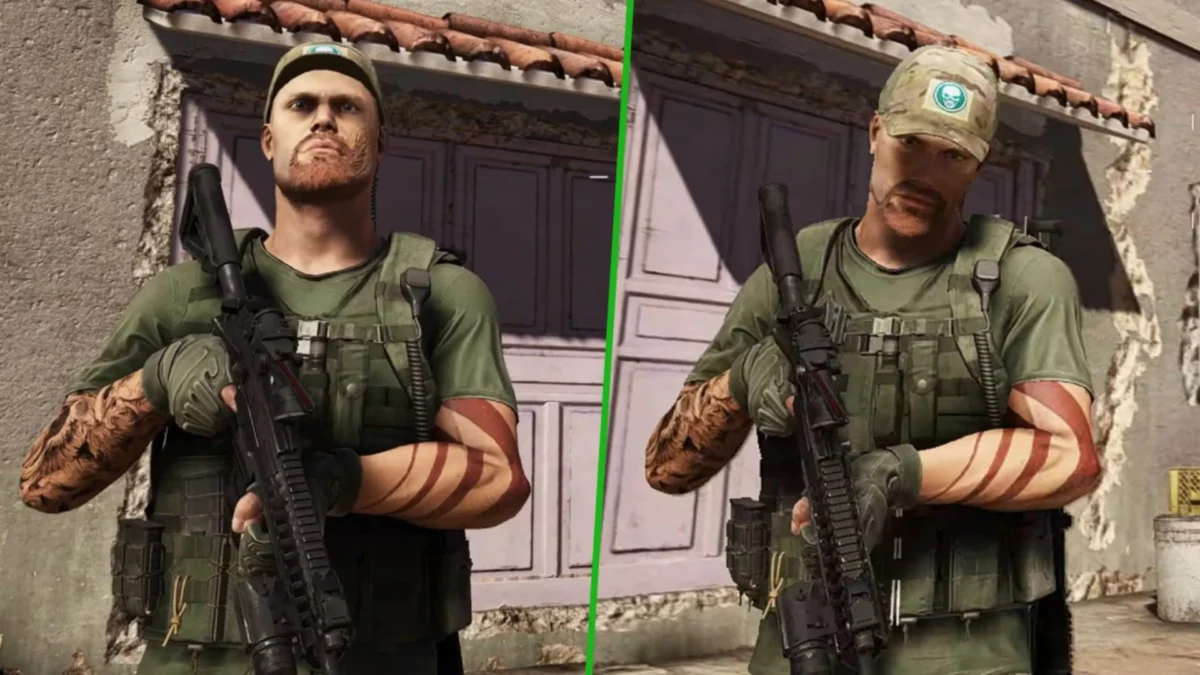
The landscape of video game performance on current-generation consoles received a notable update yesterday with the official arrival of a newly-upgraded version of Tom Clancy’s Ghost Recon Wildlands for Xbox Series X and Xbox Series S. This enhancement provides substantial technical improvements for players, coinciding strategically with its inclusion in Xbox Free Play Days and a significant promotional discount. Initial assessments, notably from the diligent community testers at Fuzion Xbox Testing, provide a comprehensive breakdown of how the 2017 open-world tactical shooter now leverages the capabilities of Microsoft’s latest hardware, offering a refreshed experience for both new and returning players.
The Technical Upgrade: A Deep Dive into Performance on Xbox Series X|S
The core of this update lies in its optimization for the distinct architectures of the Xbox Series X and Series S, aiming to deliver a smoother and more visually refined experience than was possible on the previous generation of consoles. This marks a significant moment for a title that has maintained a dedicated player base since its initial release.
For the flagship Xbox Series X, the enhancements are particularly pronounced. Fuzion Xbox Testing’s analysis indicates that Tom Clancy’s Ghost Recon Wildlands now targets a 4K resolution, although this is likely achieved through dynamic resolution scaling. Dynamic resolution scaling is a common technique used by developers to maintain a consistent frame rate by adjusting the rendering resolution in real-time based on the complexity of the on-screen action. This ensures that while the game generally appears sharper and more detailed than its Xbox One counterpart, performance remains the priority. Critically, the game now aims for a frame rate of 60 frames per second (FPS), a substantial leap from the original Xbox One’s 30 FPS target. While the analysis notes that the frame rate largely adheres to this 60 FPS goal, occasional dips into the mid-50s have been observed during particularly intense sequences or in densely populated areas. Despite these minor fluctuations, the overall consensus is that the game is "generally better looking" across the board, benefiting from clearer textures, improved draw distances, and a far more fluid gameplay experience that fundamentally alters the feel of the tactical combat and open-world exploration.
The Xbox Series S, designed as a more accessible entry point into the current generation, also receives a robust set of optimizations, albeit with different technical trade-offs. Players on the Series S are presented with two distinct graphical options, allowing for a personalized balance between visual fidelity and performance. The "Quality Mode" renders Ghost Recon Wildlands at 1440p resolution, maintaining a rigid 30 FPS. This mode prioritizes visual clarity and detail, making it suitable for players who prefer a cinematic experience and are less sensitive to frame rate. In contrast, the "Performance Mode" targets a 1080p resolution while aiming for a 60 FPS experience. The visual downgrade in Performance Mode is described as only "slightly" noticeable when compared to the higher resolution options, meaning the game retains much of its aesthetic appeal while delivering a significantly smoother frame rate. Crucially, the 60 FPS experience on the Series S in Performance Mode is noted to be quite similar to that on the Series X, providing a consistent and responsive gameplay feel across both next-gen consoles for those prioritizing fluidity. This strategic implementation ensures that Series S owners are not left behind in terms of the crucial frame rate upgrade, a common request from the gaming community for older titles.
The methodology employed by Fuzion Xbox Testing, involving dedicated video capture and frame rate analysis, underscores the importance of community-driven performance benchmarks. While official patch notes often provide high-level details, independent testing offers granular insights into real-world performance, including the nuances of dynamic resolution, frame rate stability, and visual comparisons. This level of detail is invaluable for consumers making purchasing decisions or simply understanding the true extent of an upgrade. The technical intricacies of achieving stable performance across different hardware configurations highlight the ongoing challenge for developers, balancing visual fidelity with smooth gameplay.
Contextualizing the Upgrade: Wildlands’ Journey and Next-Gen Evolution

The decision to provide a dedicated next-gen upgrade for Tom Clancy’s Ghost Recon Wildlands is significant when viewed through the lens of the game’s history and the broader evolution of the Xbox ecosystem. Ghost Recon Wildlands first launched in March 2017, marking a pivotal moment for the venerable Ghost Recon franchise as it embraced an expansive open-world setting within Bolivia. The game placed players in the boots of an elite U.S. special operations unit, tasked with dismantling a ruthless drug cartel. Upon its release, Wildlands garnered mixed to positive reviews, with critics praising its vast open world, cooperative multiplayer experience, and tactical freedom, while some pointed to repetitive mission design and AI inconsistencies. Despite these criticisms, the game was a commercial success for Ubisoft, selling millions of copies and establishing a strong player base.
Ubisoft, known for its extensive post-launch support, continued to update Wildlands with significant downloadable content (DLC) expansions, seasonal events, and the introduction of "Ghost War," a dedicated player-versus-player (PvP) mode that further extended the game’s longevity. This ongoing commitment to a live-service model ensured that Wildlands remained relevant in the competitive gaming market for years after its initial launch, fostering a loyal community.
The arrival of the Xbox Series X and Series S in November 2020 ushered in a new era of console gaming, characterized by significantly more powerful hardware, faster loading times, and a strong emphasis on backward compatibility. Microsoft’s strategy with its current generation consoles has heavily promoted the concept of "Optimized for Xbox Series X|S," a program designed to highlight games that fully leverage the new hardware’s capabilities through dedicated patches. This includes improvements such as higher resolutions, increased frame rates, ray tracing, and enhanced graphical fidelity. While many newer titles received these optimizations close to the console launch, older titles like Wildlands often relied initially on basic backward compatibility, which offered faster loading and more stable frame rates but lacked specific next-gen graphical overhauls.
The concept of Smart Delivery, another cornerstone of Microsoft’s next-gen strategy, automatically ensures players receive the best available version of a game for their console. While Wildlands wasn’t initially part of the Smart Delivery program for a full next-gen patch, this recent update retroactively brings it into alignment with the spirit of the initiative, demonstrating that even established titles from the previous console generation can receive significant modernizations. The decision to invest development resources into upgrading an older title like Wildlands, rather than solely focusing on newer releases, underscores a commitment to the extensive library of games available on the Xbox platform and the value of supporting enduring IPs.
The Broader Landscape: Ubisoft’s Strategy and Player Engagement
Ubisoft’s decision to issue a significant performance upgrade for Tom Clancy’s Ghost Recon Wildlands years after its initial release is indicative of a broader industry trend and the company’s own strategic approach to its vast catalog of intellectual properties. For many years, Ubisoft has been a proponent of the "games as a service" model, providing continuous updates, expansions, and community engagement for its popular titles long after their launch. This approach not only maximizes the return on investment for individual games but also cultivates brand loyalty and ensures a steady stream of content for its player base.
The Wildlands upgrade aligns with Ubisoft’s general commitment to supporting its popular games with next-generation enhancements, a strategy seen in titles like Assassin’s Creed Valhalla and Far Cry 6, which received day-one or early next-gen optimizations. However, Wildlands stands out as an older example, demonstrating that this commitment extends beyond recent releases to games that have proven their enduring appeal. By bringing Wildlands up to modern performance standards, Ubisoft extends the game’s commercial viability and ensures it remains an attractive option for players migrating to or already owning Xbox Series X|S consoles. This move potentially re-engages lapsed players who might have put the game aside due to previous generation limitations, and attracts new players who are now accustomed to higher frame rates and resolutions on their new hardware.
The timing of this upgrade is particularly strategic due to its simultaneous inclusion in Xbox Free Play Days this weekend. The Free Play Days program, typically available to Xbox Live Gold and Xbox Game Pass Ultimate subscribers, allows players to experience full versions of select games for a limited period, usually from Thursday through Sunday. This initiative serves as a powerful marketing tool, offering a no-risk trial for potential new customers. By pairing the technical upgrade with Free Play Days, Ubisoft and Microsoft create an irresistible proposition: players can experience the best version of Wildlands for free, allowing them to witness the performance improvements firsthand.

Further sweetening the deal, the game has been discounted by a whopping 90% to mark the occasion. This aggressive pricing strategy is a well-established tactic in the gaming industry to convert trial users into permanent owners. A significant discount removes a major barrier to purchase, especially for an older title, and capitalizes on the positive impression created by the enhanced performance. For players who enjoy the Free Play Days experience, the opportunity to own the game permanently at a fraction of its original price is highly appealing. This combined strategy of technical enhancement, free access, and deep discount is a potent mechanism for revitalizing interest in an older title, driving both engagement and sales. It reflects a broader market trend where older, well-regarded games find new life through performance updates and accessibility initiatives, proving that a game’s lifecycle can be significantly extended beyond its initial launch window.
Implications and Future Outlook
The Tom Clancy’s Ghost Recon Wildlands upgrade for Xbox Series X|S carries several important implications for the gaming industry, the player base, and the future of game optimization. For the existing and returning player base of Wildlands, this update is a significant win. The leap to 60 FPS fundamentally changes the gameplay experience, making tactical engagements feel more responsive and the vast open world more immersive. This can revitalize the game’s community, particularly for its cooperative and PvP modes, by making it a more attractive option compared to newer titles. A smoother frame rate reduces input lag and improves visual clarity, which are critical factors in competitive multiplayer and precise tactical gameplay.
For owners of Xbox Series X|S consoles, this kind of upgrade reinforces the value proposition of their investment. It demonstrates that Microsoft and its publishing partners are committed to not only delivering new, cutting-gen experiences but also enhancing a vast library of existing games. This backward compatibility with forward enhancement strategy ensures that players have a massive catalog of titles to enjoy, many of which now perform better than ever before. This ongoing support for older titles differentiates the current console generation from previous ones, where the transition often meant leaving behind older games or playing them without significant improvements.
From a developer’s perspective, the ability to deliver such upgrades for older titles speaks to improvements in development tools and the architectural similarities between the Xbox One and Xbox Series X|S. While not always a trivial task, the process of optimizing for the new consoles may have become more streamlined, making it economically feasible to revisit popular legacy titles. This suggests that other developers might follow suit, offering "mid-life cycle" enhancements for their own popular games that missed the initial next-gen launch window. Such initiatives can be a cost-effective way to generate renewed interest and revenue from established intellectual properties, especially compared to the immense cost and time involved in developing entirely new AAA titles.
Looking ahead, the Wildlands upgrade could signal a broader trend of sustained post-launch support that extends beyond content updates to fundamental performance overhauls. As console generations become less about hard breaks and more about continuous evolution, players can increasingly expect their favorite games to adapt and improve over time, leveraging the full power of new hardware. This creates a more dynamic and player-friendly ecosystem where games have longer, more vibrant lifespans. The economic considerations are also crucial; by extending the life and appeal of an existing product through free upgrades and strategic promotional events, publishers can cultivate a larger, more engaged audience and generate incremental sales for titles that might otherwise have faded into obscurity. This model offers a sustainable path for both player satisfaction and business growth in the competitive video game market.
In conclusion, the performance upgrade for Tom Clancy’s Ghost Recon Wildlands on Xbox Series X|S represents a significant enhancement for players, offering a dramatically improved visual and gameplay experience. Coupled with its inclusion in Xbox Free Play Days and a substantial discount, this initiative revitalizes an enduring title and underscores the ongoing commitment of both Ubisoft and Microsoft to extending the value and longevity of the Xbox game library. It serves as a compelling example of how current-generation console capabilities can breathe new life into beloved games, benefiting players and publishers alike within an evolving industry landscape.