


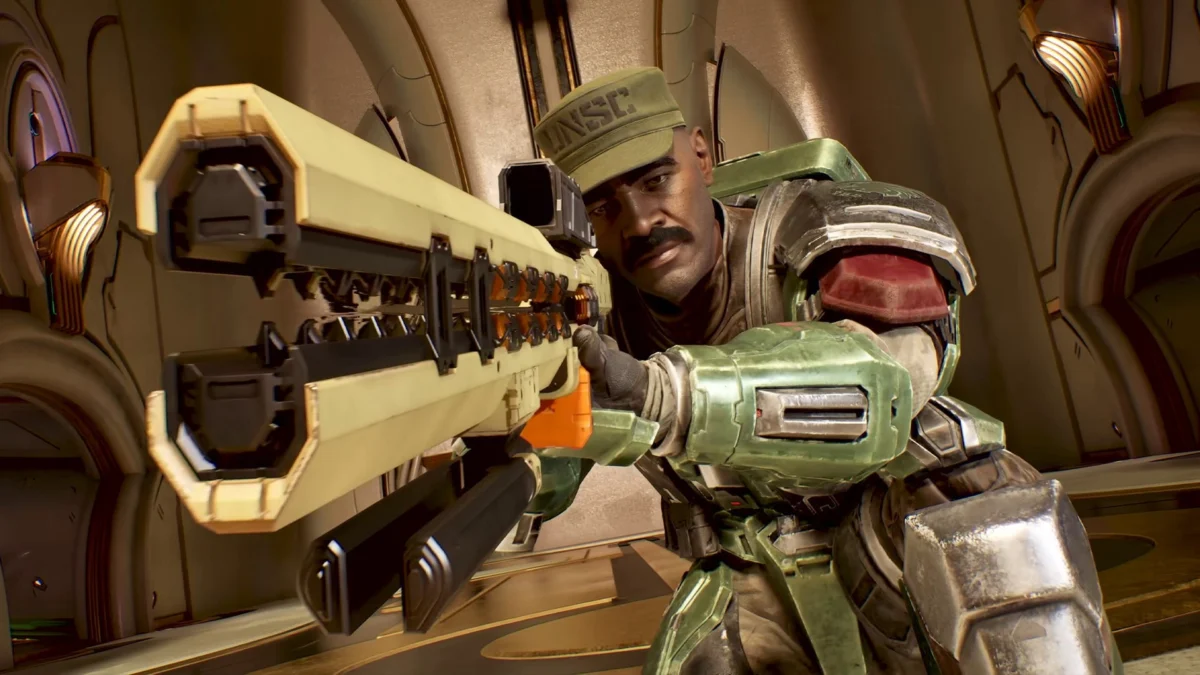
Just nine days after the highly anticipated release of Halo: Campaign Evolved, a critically lauded remake, several employees at Halo Studios have announced their departure from the company. The news, which surfaced through social media channels like LinkedIn, highlights a challenging period for the gaming industry, where even successful launches do not guarantee job security. While the full extent and nature of these departures remain officially unconfirmed by Microsoft or Halo Studios, the individual accounts paint a picture of workforce adjustments occurring shortly after a major title launch.
Immediate Aftermath of a High-Profile Launch
Halo: Campaign Evolved, a reimagining of the classic campaign that garnered a perfect 10/10 score from Pure Xbox and other outlets, launched to significant attention. The game, which received an 81 on the aggregate review site Metacritic, also saw robust early commercial performance, with approximately 900,000 units sold across Xbox consoles and PC within its first week. This initial success, however, appears to have done little to insulate some members of the development team from job losses. The swiftness of these departures following such a high-profile release underscores the precarious employment landscape currently facing many within the video game development sector.
Among those who publicly announced their exit is Nick Treitman, a producer at Halo Studios, who described his departure as "a tough reality" within the current gaming industry climate. In a LinkedIn post, Treitman shared, "After 6.5 years working on Halo and dodging just as many rounds of layoffs – it has finally caught up to me. I have nothing but love for Halo and the folks at the studio, this is just a tough reality in the gaming industry right now." His statement suggests a history of instability within the studio, even for long-serving employees, indicating that this round of cuts might be part of a larger, ongoing pattern.
Paul Morris, a Scrum Master at Halo Studios, also updated his LinkedIn profile to display the "Open to Work" banner. Morris’s statement, while reflective, maintained a forward-looking perspective. He wrote, "Every player has a game they’ll never forget. That’s why I chose this career. I want to help create games that bring smiles to players and create memories they’ll carry with them for years. That’s what drives me. Today, I learned my time at Halo Studios will be coming to an end following the successful launch of our latest game, Halo: Campaign Evolved." Morris acknowledged the difficult job market, stating, "I know this is one of the most challenging job markets our industry has seen, and I know the road ahead won’t be easy. But I’m not done, and my purpose has not changed." These sentiments reflect a broader resilience among affected professionals even as they face significant career disruption.
Caleb Lawrence, a software engineer at the studio, also indicated his availability for new opportunities by activating the "Open to Work" banner on his LinkedIn profile, further confirming the scope of the workforce reductions. While the exact number of affected employees remains undisclosed, the public announcements from multiple departments suggest a more widespread impact than isolated departures.
Broader Context: A Turbulent Period for the Gaming Industry
The workforce adjustments at Halo Studios are not an isolated incident but rather a microcosm of a much larger, turbulent trend sweeping across the global video game industry. The year 2023 witnessed an unprecedented wave of layoffs, with estimates suggesting over 10,000 job losses across various companies, a figure that has unfortunately continued to climb into 2024. Major industry players, from independent studios to multinational publishers, have announced significant headcount reductions, citing reasons ranging from post-pandemic market corrections and over-hiring to increased operational costs and shifting consumer spending habits.

Microsoft, the parent company of Xbox and Halo Studios, has been at the forefront of these industry-wide restructurings. In January 2023, Microsoft announced a reduction of 10,000 employees across its various divisions, including significant cuts within its Xbox gaming segment. This was followed by further targeted layoffs in late 2023 and early 2024, notably impacting teams within Activision Blizzard following its massive acquisition by Microsoft. These broad corporate directives often trickle down to individual studios, making even high-performing teams vulnerable to strategic adjustments aimed at optimizing efficiency and profitability.
Economic pressures, including rising inflation and interest rates, have led to a tightening of investment capital and a more cautious approach to spending by both consumers and corporations. The post-pandemic boom in gaming, fueled by increased at-home entertainment, has cooled, leading to a recalibration of growth expectations. Publishers and developers are facing greater scrutiny over return on investment for large-scale projects, often leading to difficult decisions regarding staffing levels, even for projects that appear to be performing well. The "tough reality" cited by Treitman is a direct reflection of this challenging economic environment that prioritizes lean operations over expanded teams.
The Halo Franchise and Studio History
Halo Studios, formerly 343 Industries, has a complex history with the iconic Halo franchise since taking the reins from Bungie. While the series has always been a flagship title for Xbox, recent entries have faced varying degrees of critical and commercial success. Halo 5: Guardians (2015) received generally positive reviews but drew criticism for its narrative direction. Halo Infinite (2021) launched to a strong critical reception for its campaign but experienced a prolonged and often challenging post-launch period for its live-service multiplayer component, which struggled with content updates and player retention issues. These challenges placed considerable pressure on the studio to deliver a standout experience with Halo: Campaign Evolved.
The development of Halo: Campaign Evolved itself followed a period of internal restructuring and external collaboration, which is common for large-scale remakes or remasters. Such projects often involve a combination of permanent staff and contract workers, with staffing levels fluctuating throughout different phases of development. The possibility that some of the recent departures might be the natural conclusion of temporary contracts tied to the game’s completion, rather than outright layoffs, is a consideration. However, the language used by affected employees, particularly Treitman’s reference to "rounds of layoffs," suggests that at least some of these are involuntary terminations aligned with broader company or industry-wide downsizing.
Performance Metrics: Sales and Critical Reception
The initial sales figures of approximately 900,000 units across console and PC for Halo: Campaign Evolved within nine days are respectable, especially for a remake. For context, while not reaching the blockbuster sales of a new mainline entry in its first week, it demonstrates significant player interest and a strong launch. However, without official benchmarks from Microsoft regarding expected sales targets for this specific title, it is difficult to definitively assess whether this performance met internal financial projections that might influence staffing decisions. The market for remakes, while robust, often operates on different commercial scales than entirely new AAA releases.
The game’s critical reception has been somewhat polarized, despite its 81 Metacritic score and several perfect 10/10 reviews. While outlets like Pure Xbox and VGC lauded the remake for its fidelity, enhanced gameplay, and faithful reimagining of the classic experience, other prominent reviewers, such as IGN and Insider Gaming, delivered lower scores, citing various criticisms that could include pacing, visual inconsistencies, or the perceived value proposition for a remake. This mixed critical landscape, even with an overall positive aggregate score, could contribute to internal evaluations regarding the game’s overall impact and commercial viability in the long term. In a highly competitive market, even a strong 81 Metacritic score might not be enough to justify maintaining peak development staffing if commercial performance is perceived as not aligning with investment.
Implications for Halo Studios and the Franchise’s Future

The departures at Halo Studios raise several questions about the future trajectory of the studio and the iconic Halo franchise. A reduction in workforce, regardless of its specific nature (layoffs or contract conclusions), can impact morale, institutional knowledge, and the speed and quality of future development. The loss of experienced personnel like producers and scrum masters can disrupt project pipelines and necessitate reorganization, potentially affecting the development of any subsequent content updates for Campaign Evolved or future Halo projects.
For the Halo franchise, this situation adds another layer of uncertainty. Following the mixed reception and long-term challenges of Halo Infinite, the success of Campaign Evolved was crucial for rebuilding goodwill and demonstrating the studio’s capabilities. While the remake has largely succeeded in that regard, the immediate staff reductions suggest that even a successful launch might not translate into a stable environment for the development team. This could influence the scope and ambition of future Halo titles, potentially leading to more cautious development strategies or increased reliance on external studios for support.
Industry-Wide Reverberations and the Developer Experience
The situation at Halo Studios serves as a stark reminder of the ongoing volatility in the video game industry. Developers, even those working on beloved franchises and successful games, are increasingly facing job insecurity. This environment fosters a sense of precarity, which can impact creativity, innovation, and long-term career planning for individuals. The repeated phrase "tough reality" from affected employees resonates deeply across the industry, highlighting a systemic issue where companies, driven by market demands and investor expectations, are prioritizing short-term financial adjustments over long-term team stability.
The increasing trend of post-launch layoffs, where teams are reduced shortly after a game ships, is particularly demoralizing. It suggests that once the immediate development cycle is complete, many roles are deemed redundant, irrespective of the game’s performance. This practice, while potentially cost-effective for corporations, can erode trust and make it challenging to retain talent in the long run.
Conclusion
The workforce reductions at Halo Studios, coming so soon after the well-received launch of Halo: Campaign Evolved, are a poignant illustration of the current climate in the video game industry. While the game itself has performed respectably both critically and commercially, the departures of key personnel underscore the ongoing challenges faced by developers. Whether these are part of a broader layoff initiative by Microsoft, a natural scaling down post-project completion, or a combination of both, the impact on the individuals affected is significant. The events at Halo Studios are not just an isolated incident but a clear indicator of the "tough reality" that continues to shape the careers of thousands within the dynamic yet often unforgiving world of video game development. The industry watches to see how these adjustments will influence the future of one of gaming’s most iconic franchises and what further shifts lie ahead in this evolving landscape.