


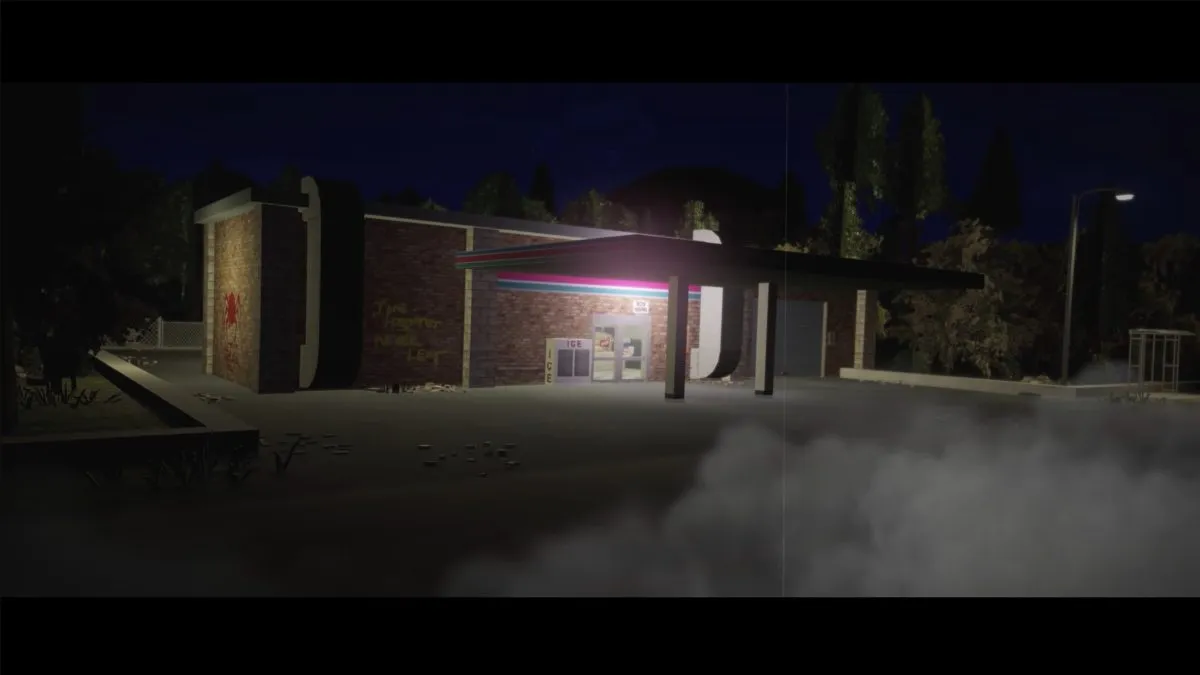
The grim reality of late-night shifts in the unsettling world of Shift at Midnight now extends beyond the financial anxieties of veterinary bills and surgical costs. A new layer of mystery has been introduced with the disappearance of Guillermo, a beloved brown Labrador, whose absence is now being communicated through a poignant missing dog poster. This development, while seemingly a minor narrative detail, raises significant questions about player engagement, narrative design, and the subtle ways in which games can evoke emotional responses and foster community interaction. The appearance of Guillermo’s poster on the in-game notice board during Night 10 marks a significant, albeit enigmatic, moment within the gameplay experience, prompting a deeper examination of its purpose and potential impact.
The Unfolding Mystery of Guillermo’s Disappearance
Guillermo, described as a brown Labrador sporting a distinctive yellow collar, vanishes from the narrative during the tenth night of gameplay. His absence is first brought to the player’s attention through a missing dog poster prominently displayed on the in-game notice board. This notice board serves as a crucial conduit for information within Shift at Midnight, functioning alongside the Store Manager’s direct communications, such as phone calls or written notes, to guide players through the game’s unfolding events.
Unlike the urgent side quests that demand immediate player action upon their introduction in the game’s Story Mode, the missing dog scenario appears to be handled with a different narrative weight. While a $50 reward is advertised on the poster, seemingly aligning with the game’s mechanics for accumulating bonuses through completing the Store Manager’s requests, there is currently no discernible in-game mechanism for players to actively locate Guillermo. This has led to widespread speculation that the poster might be a narrative red herring, a deliberate piece of environmental storytelling designed to add depth and atmosphere rather than present a solvable puzzle. The absence of an in-game model for Guillermo further supports this theory, suggesting that his physical presence within the game world is not intended to be discovered.
The narrative context surrounding Guillermo’s disappearance also warrants consideration. It is important to distinguish Guillermo from Tofu, the service dog that players are tasked with serving when Tofu enters the store. Shift at Midnight employs a degree of misdirection, attempting to lead players into a potentially harmful interaction with the innocent Tofu. Guillermo, in contrast, is presented as a distinct entity – a pet that has gone missing. His disappearance could be organically linked to the game’s overarching themes of deception and paranoia, potentially connecting him to characters like "The Dentist" or other customers who have been revealed to be doppelgangers. If the individuals who previously cared for Guillermo have been replaced or are no longer present, it would logically render him "ownerless" within the game’s context.
Player Reactions and Community Investigations
The immediate instinct for many players upon encountering the missing dog poster would likely be to search the surrounding in-game environments, particularly the adjacent forest, for any sign of a stray dog. However, the game’s design appears to preclude such direct interaction. Viewing the missing poster does not unlock any specific dialogue options or gameplay mechanics that would enable players to investigate customers or locations related to Guillermo’s whereabouts that night. This suggests that the inclusion of the poster is primarily intended for lore enrichment and to amplify the player’s inherent desire to protect their own virtual companions. Given that players are actively risking their lives in the perilous conditions of the midnight shift, the poster serves as a poignant reminder of the stakes involved and the potential for loss, thereby reinforcing the player’s motivation to safeguard what they hold dear within the game.
The player community, as is often the case with complex game narratives, has taken it upon themselves to thoroughly investigate the Guillermo mystery. Discussions on the official Shift at Midnight Discord server, a hub for player interaction and information sharing, reveal that extensive searches have been conducted by dedicated community members. These investigations have yielded no success in locating Guillermo within the game. The consensus among these active players appears to be that there is no discoverable missing dog in the game.
The most compelling evidence for Guillermo’s inaccessibility is embedded within the poster itself. Crucially, the poster does not provide a contact number that can be dialed or interacted with in-game. This absence of a direct link to initiate a search or a rescue mission strongly indicates that the narrative element of the missing dog is not designed as a solvable quest. Instead, it functions as a piece of atmospheric storytelling, contributing to the game’s unsettling ambiance and reinforcing its themes of vulnerability and loss.
Thematic Resonance and Narrative Depth
The inclusion of Guillermo’s missing dog poster, despite its apparent lack of direct gameplay consequence, serves several important narrative and thematic functions within Shift at Midnight. Firstly, it introduces a personal element into the otherwise high-stakes and often brutal environment of the game. By focusing on a beloved pet, the developers tap into a universal emotional connection that players are likely to have. This emotional resonance can make the overall experience more impactful, drawing players deeper into the game’s world and its underlying themes. The loss of a pet is a profoundly human experience, and its depiction in the game, even in this indirect manner, can evoke empathy and a sense of concern.
Secondly, the poster contributes to the game’s atmosphere of unease and mystery. In a world where sinister forces are at play and characters are not always what they seem, the disappearance of a creature as innocent as a dog adds another layer of potential danger and sadness. It hints at a world that is not only hostile but also capable of causing harm to the most vulnerable. This can amplify the feeling of isolation and vulnerability that players often experience during their shifts. The poster, in this regard, functions as a subtle narrative device, expanding the game’s lore without requiring extensive exposition.
Furthermore, the poster can be interpreted as a deliberate narrative choice to underscore the importance of companionship and loyalty, particularly in the face of overwhelming adversity. The player character is likely working under duress, facing immense pressure and danger. The mention of Guillermo, a creature that embodies unconditional love and companionship, serves as a poignant counterpoint to the grim realities of the game. It highlights what is at stake beyond the immediate survival of the player character – the potential for loss of loved ones, even those of the animal variety, in this dangerous world.
The $50 reward, while seemingly insignificant in the grand scheme of the game’s mechanics, also plays a role. It subtly integrates the missing dog narrative into the existing gameplay loop of earning and managing resources. This makes the absence of Guillermo feel more grounded within the game’s established systems, even if the primary purpose of the reward is not to facilitate a quest. It might also serve as a subtle commentary on the economic realities that can accompany pet ownership, a theme that was initially introduced in the article’s preamble regarding veterinary bills.
Broader Implications for Game Design
The case of Guillermo’s missing dog poster in Shift at Midnight offers valuable insights into contemporary game design, particularly in the realm of narrative immersion and player engagement. Developers are increasingly seeking innovative ways to create meaningful experiences that resonate with players on an emotional level, extending beyond traditional quest structures and reward systems.
The deliberate inclusion of a narrative element that is not directly solvable or interactive presents a bold design choice. It challenges the player’s expectations of a game world, prompting them to consider the purpose and intent behind every detail. This approach can foster a deeper level of critical thinking and appreciation for the nuances of storytelling within interactive media. It moves away from a purely task-oriented gameplay loop and encourages players to engage with the world and its inhabitants on a more profound level.
The community’s reaction, as evidenced by the extensive discussions on Discord, further highlights the power of collective engagement in deciphering game lore. When faced with ambiguity, players naturally gravitate towards collaboration, pooling their observations and theories to construct a more comprehensive understanding of the game’s universe. This communal aspect of gaming can transform the experience from a solitary pursuit into a shared exploration, enriching the overall enjoyment and fostering a sense of belonging among players.
In conclusion, while Guillermo the Labrador may not be a character players can physically rescue within Shift at Midnight, his disappearance and the subsequent missing dog poster serve as a powerful narrative tool. They enhance the game’s atmosphere, evoke emotional responses, and underscore the thematic concerns of loss and vulnerability within the game’s dark and unforgiving world. The careful crafting of such seemingly minor details demonstrates a sophisticated approach to game design, aiming to create a more immersive and memorable experience that lingers with players long after the credits have rolled. The mystery of Guillermo, therefore, is not about finding a dog, but about understanding the deeper emotional and thematic currents that the developers have so expertly woven into the fabric of Shift at Midnight.