


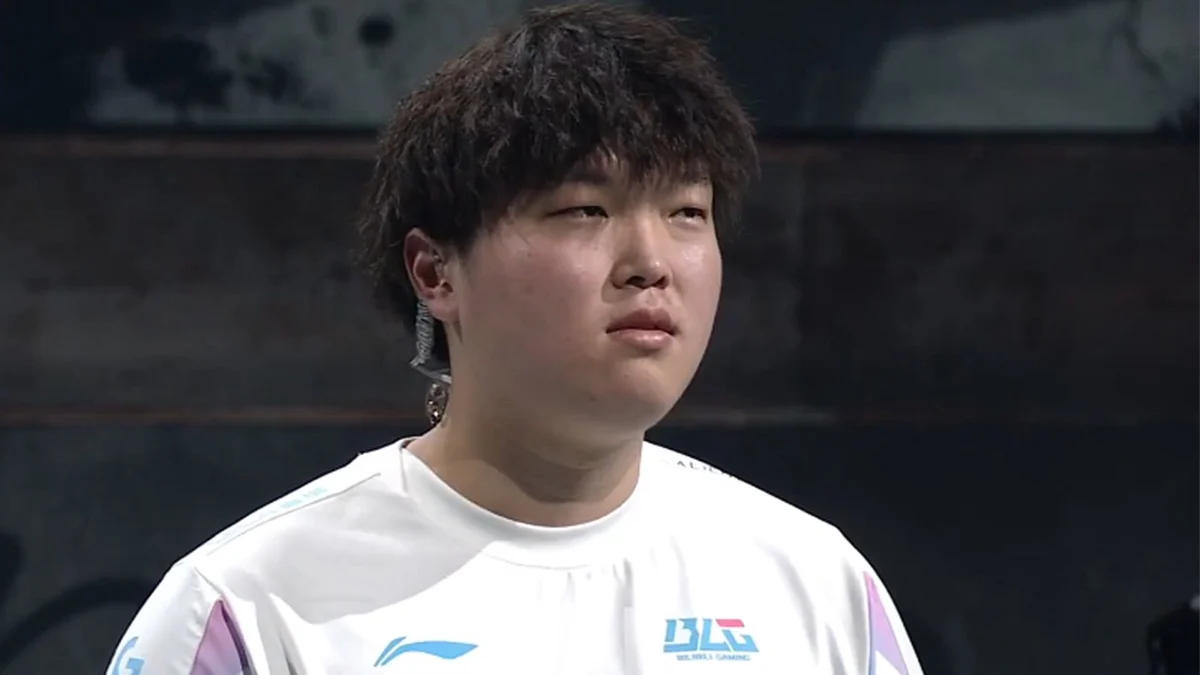
Chen "Bin" Zebin, a prominent top laner for Bilibili Gaming (BLG) in the League of Legends Pro League (LPL), has been subjected to a substantial fine by the league for failing to fulfill his on-stage contractual obligations following a decisive victory against EDward Gaming (EDG) on Wednesday, June 3. The incident, which saw Bin seemingly overlook fans in the arena, has ignited a discussion about the importance of player-fan interaction, the enforceability of league regulations, and the financial penalties associated with breaches of professional conduct in the highly competitive LPL.
The match in question was a highly anticipated fixture within the LPL, pitting two formidable teams against each other. Bilibili Gaming emerged victorious with a commanding 3-0 sweep over EDward Gaming, a result that would typically be met with widespread celebration from both the team and their supporters. However, the post-match proceedings took an unexpected turn when Bin was cited by the LPL for failing to engage in a mandatory high-five exchange with fans, a standard component of player appearances after official matches.
According to an official statement released by the LPL, Bin’s actions were deemed a violation of his contractual obligations. The league’s disciplinary committee determined that his omission of the high-five interaction "disrupted the match and negatively impacted the viewing experience and enthusiasm of the audience." This statement underscores the league’s stance on the significance of these seemingly small gestures in fostering a positive and engaging environment for the fanbase, particularly in a league as popular and scrutinized as the LPL.
The LPL’s Investigation and Enforcement
The LPL’s investigation into the incident extended beyond Bin’s individual actions to scrutinize the management practices of Bilibili Gaming. The league found the club’s oversight and preparation of their players regarding pre-match and post-match protocols to be "inadequate" and concluded that BLG "failed to effectively fulfill its supervisory and management responsibilities." This broader indictment suggests a systemic issue within the organization regarding adherence to league regulations and player conduct.
As a consequence of these findings, both the team and the player received significant penalties. Bilibili Gaming was handed a hefty fine of ¥50,000 (approximately $7,300 USD) and a public reprimand. Bin, however, faced a more severe financial penalty, reportedly being fined ¥150,000 (approximately $22,000 USD). In addition to the financial sanction, Bin was also subjected to public criticism and mandated to undergo "relevant training and education." This multi-faceted disciplinary approach indicates the LPL’s commitment to not only penalizing infractions but also to reinforcing professional standards and educating its personnel.
The LPL’s official statement articulated a clear message regarding player and club responsibilities: "Players should strictly adhere to professional conduct and maintain a positive attitude both on and off the field, respecting the competition and the audience." Furthermore, the league emphasized the need for clubs to proactively improve their governance: "Clubs need to comprehensively improve their management mechanisms to prevent similar incidents from recurring. We hope that all league personnel will learn from this incident, adhere to professional standards, and cherish every viewer." This reflects a broader organizational philosophy aimed at elevating the professionalism and fan engagement within the LPL ecosystem.
Background and Context of Player-Fan Interactions
In the dynamic world of esports, particularly in a globally renowned league like the LPL, the relationship between professional players and their fanbase is a crucial element of the sport’s appeal and commercial viability. Matches are not merely competitive contests; they are also spectacles designed to entertain and engage a dedicated audience. Post-match ceremonies, which often include player appearances, autograph sessions, and direct interactions like high-fives, serve as vital touchpoints for fans to connect with their idols. These interactions are often seen as a reward for the fans’ unwavering support, especially those who attend in person, invest in merchandise, or purchase premium ticketing options.

The inclusion of mandatory high-fives, as stipulated by the LPL, is likely a reflection of a league-wide policy aimed at ensuring a baseline level of fan engagement at all official events. Such policies are common across various professional sports leagues, where athletes are expected to interact with spectators as part of their public persona and contractual duties. The LPL’s emphasis on this specific interaction suggests it is viewed as a fundamental aspect of the post-match fan experience, contributing to the overall atmosphere and positive perception of the league.
The match between BLG and EDG on June 3 was a significant event in the LPL calendar. Both teams are established powerhouses with substantial fan bases. The competitive intensity of such matchups often translates into heightened emotions and expectations from the audience. A decisive victory, as achieved by BLG, typically amplifies the celebratory mood. Therefore, Bin’s alleged failure to participate in the high-five exchange, in this context, could be perceived as a missed opportunity to reciprocate the enthusiasm of the fans who had supported his team throughout the intense series.
Fan Reactions and Broader Implications
The news of Bin’s fine has elicited a range of reactions from the League of Legends community, primarily observed on social media platforms like X (formerly Twitter). The responses have been notably divided, reflecting differing perspectives on the severity of the infraction and the appropriateness of the penalty.
A significant portion of the fanbase appears to find the situation somewhat perplexing or even humorous, with comments such as "This is a prank, right?" surfacing. This sentiment suggests that for some, the focus on such a seemingly minor act as high-fiving fans might seem disproportionate to the financial penalties imposed. This viewpoint often hinges on the belief that professional players are primarily judged on their in-game performance, and that minor deviations from ceremonial protocols should not warrant severe repercussions.
Conversely, another segment of the community has defended the LPL’s decision, arguing that Bin failed to adhere to a clear and simple contractual obligation. Some fans pointed out that specific seating sections, often designated as "VIP," may have paid a premium for guaranteed or enhanced fan interaction opportunities. One fan explicitly stated, "He didn’t high-five the VIP ticket section where you’re supposed to give high-fives…VIP is probably hella expensive, and fans paid extra for that interaction." This perspective highlights the commercial aspect of esports and the expectation that contractual agreements, including those related to fan engagement, should be upheld, especially when financial investments are involved.
The implications of this incident extend beyond the immediate disciplinary action. It raises questions about the league’s enforcement consistency and the clarity of its rules regarding player conduct. For players, it serves as a stark reminder that their responsibilities extend beyond the game itself and encompass a broader commitment to maintaining a positive public image and engaging with the community that supports them. For clubs like BLG, it underscores the critical need for robust internal management systems that ensure players are fully aware of and adhere to all league regulations and contractual obligations.
The lack of a public response from either Bin or Bilibili Gaming thus far leaves the exact reasoning behind Bin’s actions open to interpretation. Without official comment from the player or his team, speculation will likely continue. However, the LPL’s firm stance and substantial penalties suggest a commitment to upholding specific standards of professionalism and fan interaction within its league. This incident, while seemingly minor on the surface, highlights the intricate balance that esports leagues must strike between competitive integrity, player welfare, and the cultivation of a vibrant and engaged fan base. The LPL’s approach, in this instance, prioritizes the latter as a non-negotiable component of professional esports.