


The evolution of gaming hardware has historically been a battle between increasing processing power and the heat generated as a byproduct of that performance. For the Xbox brand, this journey has seen a dramatic shift from the mechanical clamor of early 2000s hardware to the sophisticated, near-silent thermal solutions found in the current generation of Xbox Series X and Series S consoles. However, as hardware ages, even the most efficiently designed systems begin to show signs of wear, leading to increased fan noise, thermal throttling, and potential hardware failure. Understanding the chronology of Xbox thermal design and the mechanics of console maintenance is essential for preserving the longevity of these devices.
The Chronology of Xbox Thermal Engineering
Since the release of the original Xbox in 2001, Microsoft has navigated various engineering challenges related to acoustics and cooling. The original Xbox, powered by a 733 MHz Intel Pentium III processor, utilized a standard 80mm exhaust fan. By modern standards, the unit was relatively loud, primarily due to the mechanical noise of the hard disk drive and the high-speed DVD-ROM drive.
The launch of the Xbox 360 in 2005 marked a turning point, albeit a controversial one. The initial "Pro" and "Core" models were notorious for their loud fan profiles and the audible "whir" of the 12x DVD drive. More significantly, the console suffered from the "Red Ring of Death" (RROD), a general hardware failure often attributed to thermal stress and the lead-free solder joints cracking under repeated heating and cooling cycles. This era forced Microsoft to prioritize thermal management in all subsequent designs.
The Xbox One (2013) represented a conservative reaction to the 360’s failures. The console was physically large, featuring a massive 112mm fan and an external power brick to keep heat away from the internal components. This design was highly successful in terms of acoustics, with the console remaining nearly silent under load. This trend continued with the Xbox One X, which introduced vapor chamber cooling to the console market—a technology previously reserved for high-end PC graphics cards and servers.
In 2020, the Xbox Series X introduced the "Parallel Cooling Architecture." By utilizing a large 130mm axial fan at the top of a vertical chassis, Microsoft leveraged the "chimney effect," allowing heat to rise naturally while the fan moved large volumes of air at lower RPMs, minimizing noise. Despite these advancements, users are beginning to report that even these modern machines are becoming louder as they surpass their fourth year in the field.
Technical Analysis of Console Noise and Heat
The noise emitted by a console is generally categorized into two types: mechanical noise and airflow noise. Mechanical noise stems from moving parts, such as the bearings in a cooling fan or the spinning of an optical disc. Airflow noise, or "whooshing," occurs when the system’s firmware detects rising internal temperatures and increases the fan’s rotations per minute (RPM) to compensate.
Data from thermal testing indicates that a brand-new Xbox Series X typically operates at approximately 30 to 33 decibels (dB) under heavy gaming loads, which is roughly equivalent to a whisper. In contrast, an original Xbox 360 could reach levels exceeding 50 dB, comparable to a quiet office or a household refrigerator. When a modern console’s noise level begins to climb toward the 40 or 45 dB range, it is a clinical indicator that the cooling system is no longer operating at peak efficiency.
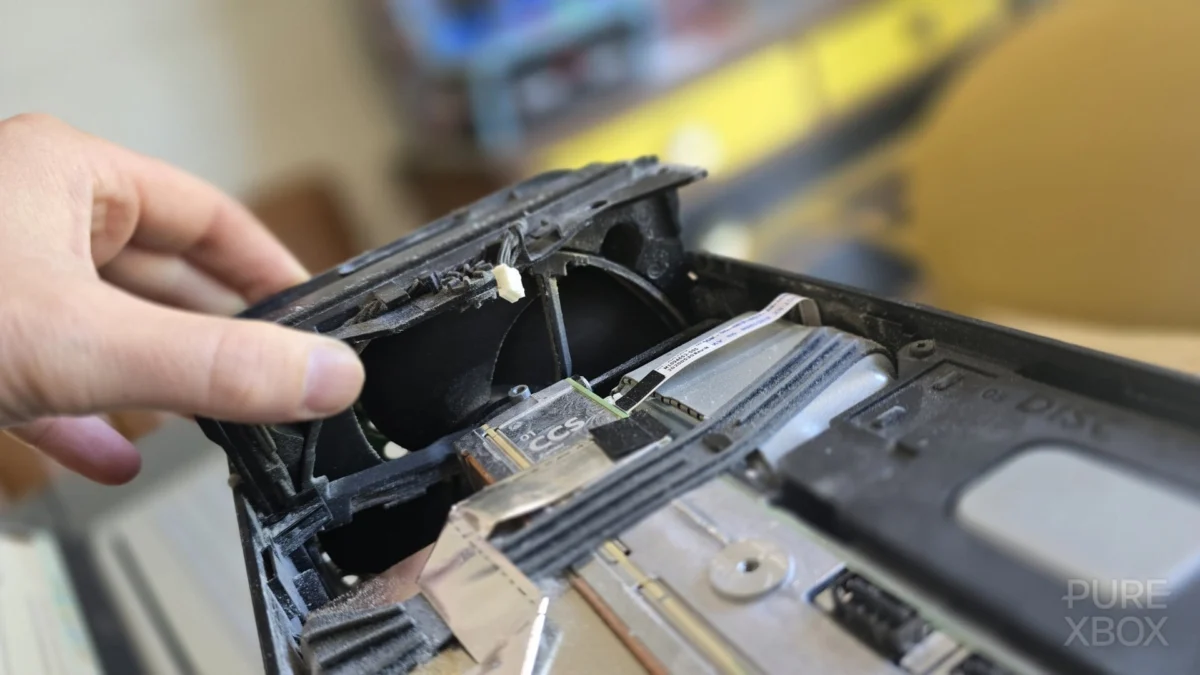
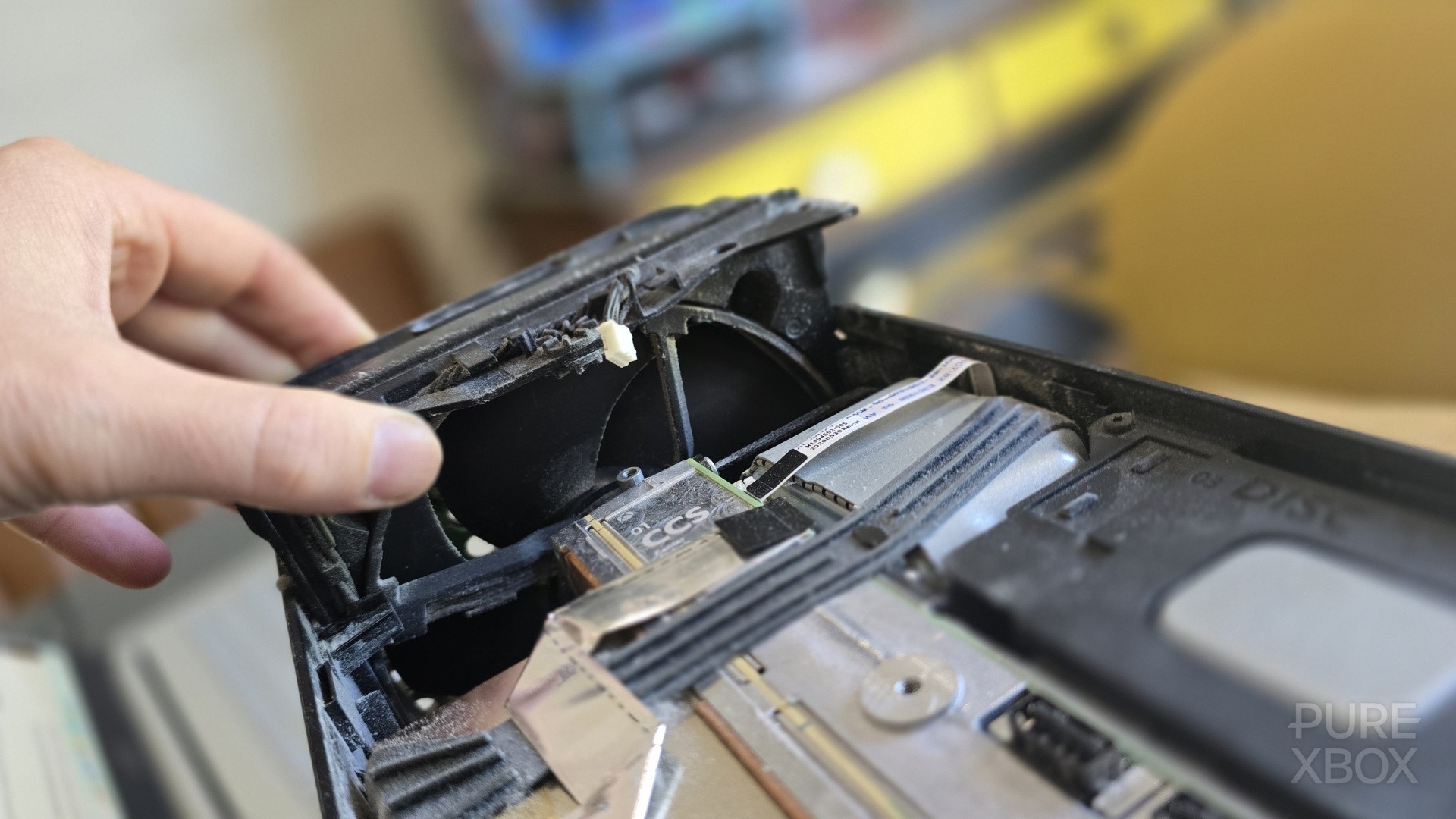
The primary culprit for increased noise over time is dust accumulation. Dust acts as an insulator, coating the fins of the heat sink and preventing the transfer of heat from the metal to the passing air. Furthermore, dust buildup on the fan blades can cause imbalances, leading to increased vibration and bearing wear.
The Role of Thermal Interface Material (TIM)
Beyond external dust, the internal chemistry of the console plays a vital role in noise management. The Heat Sink is connected to the System on a Chip (SoC) via thermal paste or a thermal phase-change material. This material fills the microscopic gaps between the processor and the cooler to ensure maximum heat transfer.
Over a period of five to ten years, thermal paste can "dry out" or "pump out," losing its effectiveness. When the heat cannot be moved efficiently into the heat sink, the internal sensors trigger the fan to spin at its maximum rated speed. This results in the "jet engine" sound often reported by owners of older Xbox One or Xbox 360 consoles. For the Xbox Series X, which uses a high-performance thermal interface, this degradation is expected to be slower, but it remains a factor for the "day one" units released in 2020.
User Maintenance and the Right to Repair
As reports of "wheezy" or loud Xbox Series X consoles increase within the gaming community, the discussion has shifted toward user-serviceability. Microsoft has made strides in this area, providing official repair parts through partnerships and improving the internal modularity of their devices.
Standard maintenance for a loud console typically involves:
- Compressed Air: Blowing out the intake and exhaust vents to dislodge surface-level dust.
- Deep Cleaning: Disassembling the outer shell to access the fan and heat sink directly.
- Thermal Repasting: A more advanced procedure involving the removal of the old thermal compound and the application of new, high-conductivity paste.
While these steps can return a console to its "out-of-the-box" silence, they carry risks. Improper disassembly can lead to electrostatic discharge (ESD) damage or the voiding of warranties (though "warranty void if removed" stickers have faced legal challenges in various jurisdictions).

Handhelds and the New Frontier of Cooling
The inclusion of devices like the ROG Ally X (often referred to in the context of the Xbox ecosystem due to its native Game Pass integration) introduces new thermal variables. Handheld devices utilize much smaller, high-pitch fans. Because these devices are held closer to the user’s face, the perceived noise level is often higher even if the actual decibel output is lower than a home console.
The ROG Ally X has been commended for its dual-fan system which manages to stay quiet in "Performance" mode but, like the Series X, requires "Turbo" modes to handle high-fidelity titles, resulting in significant acoustic output. This highlights a universal truth in gaming hardware: high-end performance requires aggressive cooling, and aggressive cooling eventually requires maintenance.
Broader Implications for Longevity and E-Waste
The issue of console noise is more than a mere annoyance; it is a symptom of hardware health. A console that runs hot and loud is a console that is under thermal stress. Sustained high temperatures can lead to the degradation of internal components, including capacitors and the silicon itself.
From an environmental and economic perspective, maintaining the quiet operation of Xbox consoles is a key factor in reducing electronic waste. By performing basic cleaning and ensuring proper ventilation (placing the console in an open space rather than a cramped cabinet), users can extend the lifecycle of their hardware by several years. This reduces the need for premature replacements and ensures that the secondary market for used consoles remains viable.
Conclusion and Future Outlook
Microsoft’s engineering trajectory suggests a future where silent operation is a baseline expectation. The Xbox Series X and S have set a high bar for acoustic performance that makes any increase in noise particularly noticeable to the user base. As the current generation of hardware enters the middle of its lifecycle, the responsibility for maintaining these "silent" machines shifts from the engineers to the consumers.
The transition from the noisy, mechanically-driven consoles of the past to the refined, airflow-optimized systems of today represents a significant achievement in consumer electronics. However, the laws of thermodynamics remain unchanged. As dust accumulates and thermal materials age, the community must embrace hardware maintenance as a standard part of the gaming experience to ensure that their consoles continue to run as quietly as they did on launch day. Whether through official repair channels or DIY cleaning guides, the goal remains the same: preserving the immersive silence that allows the games themselves to take center stage.