


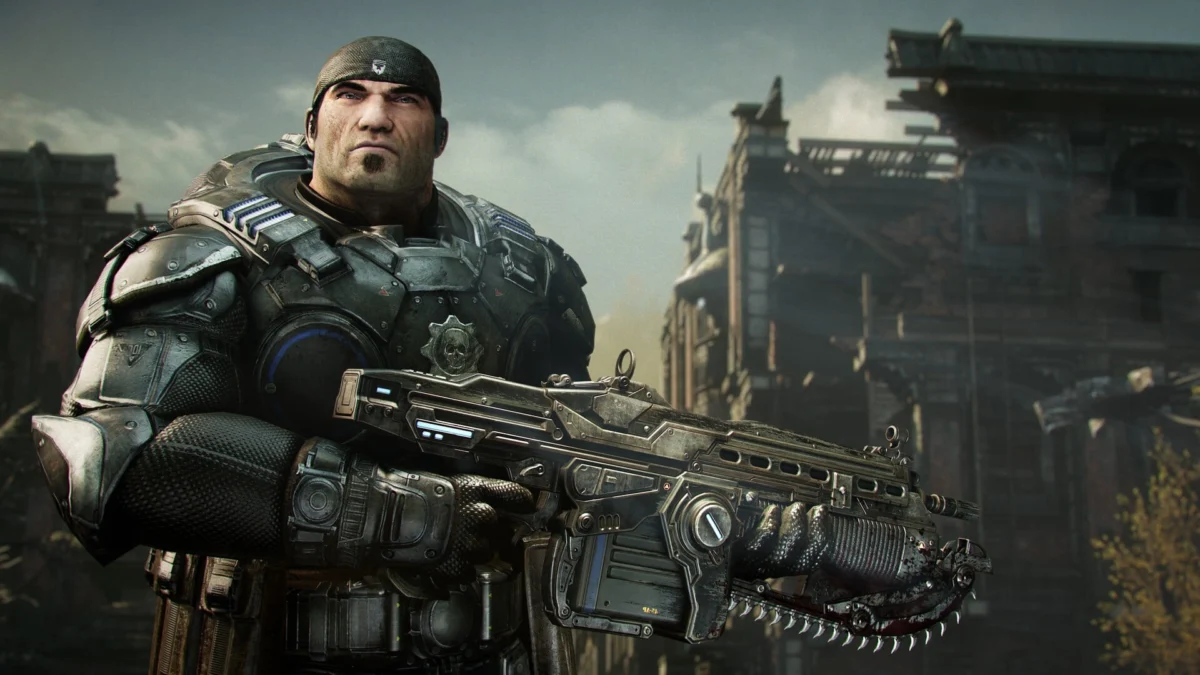
One year has passed since the highly anticipated launch of Gears of War: Reloaded in August 2025, a title that marked a significant moment not only for the venerated third-person shooter franchise but also for Xbox’s evolving multi-platform strategy. Released across Xbox Series X|S, PC, and, notably, PlayStation 5, Reloaded aimed to reintroduce the original Gears of War experience to a new generation of players while offering a refined version for long-time fans. As the gaming community eagerly anticipates Gears of War: E-Day in late 2026, it is opportune to assess the impact and reception of Reloaded a full year after its debut.
A Strategic Release: Bringing Gears to New Shores
The announcement of Gears of War: Reloaded was met with a mixture of excitement and skepticism. Following the 2015 release of Gears of War: Ultimate Edition, a critically acclaimed remaster of the original game for Xbox One and PC, many veterans questioned the necessity of another re-release of the same title. Initial concerns revolved around the potential for minimal changes, leading to a sense of ‘remaster fatigue’ among existing Xbox and PC audiences. However, the reveal that Reloaded would also launch on PlayStation 5 shifted the narrative dramatically. This decision positioned Reloaded not merely as another iterative update but as a pivotal move in Xbox’s broader strategy to expand the reach of its first-party titles to rival platforms. It was designed to serve as a high-profile debut for the Gears of War franchise on PlayStation hardware, offering an accessible entry point for millions of new potential fans.
The development, primarily handled by The Coalition with support from external studios specializing in porting, focused on modernizing the 2006 classic for contemporary hardware. This included significant graphical enhancements beyond the Ultimate Edition, leveraging the power of current-generation consoles for improved textures, lighting, character models, and environmental detail. Frame rates were targeted at a consistent 60 frames per second (fps) on all platforms, with an optional 120fps mode on Xbox Series X and PlayStation 5 for compatible displays. Furthermore, quality-of-life improvements were central to the Reloaded experience, encompassing refined control schemes, updated user interfaces, and enhanced online multiplayer infrastructure designed to support cross-play functionality across all three launch platforms. The goal was to provide a definitive version of the foundational Gears of War experience, bridging the gap between its classic roots and modern gaming expectations.
Development and Pre-Launch Hype
The journey to Reloaded‘s August 2025 launch began in earnest after the successful release of Gears 5 and its subsequent expansions. Internal discussions at Xbox and The Coalition reportedly centered on how to best maintain franchise momentum while Gears of War: E-Day was in its earlier stages of development. The idea of a full-scale remaster, particularly one that could leverage a nascent multi-platform strategy, gained traction. Initial rumors began circulating in late 2023, intensifying through early 2024 with leaked internal documents hinting at a "Gears 1 Reimagined" project.
The official reveal came during a major Xbox showcase event in June 2024. The cinematic trailer, showcasing iconic moments from the original game rendered with stunning modern fidelity, generated considerable buzz. The subsequent announcement of its PlayStation 5 availability sent shockwaves through the industry, confirming Xbox’s commitment to exploring new avenues for its intellectual properties. Marketing efforts in the months leading up to release emphasized the "definitive experience" for veterans and the "perfect introduction" for newcomers. Developer interviews highlighted the painstaking effort to maintain the original game’s gritty atmosphere and tactical cover-based combat while bringing it up to modern visual and technical standards. Pre-orders across all platforms indicated a strong initial interest, particularly on PlayStation 5, where the Gears of War brand was entirely new. Beta tests for the multiplayer component, conducted in spring 2025, provided valuable feedback, helping The Coalition fine-tune network performance and balance before launch.
Launch Reception and Critical Acclaim
Upon its release in August 2025, Gears of War: Reloaded generally met with positive critical reception. Review aggregates like Metacritic and OpenCritic reported average scores in the low-to-mid 80s out of 100, reflecting a consensus that while the core gameplay remained largely unchanged from its 2006 roots, the technical overhaul and quality-of-life improvements made it a worthwhile endeavor.

Our own review, published on Pure Xbox, awarded Reloaded an "Excellent" 9/10, praising its faithful recreation of the original’s atmosphere and the seamless integration of modern enhancements. The review specifically lauded the cross-play multiplayer, noting its potential to keep the Gears 1 online community vibrant and thriving for years to come. Other critics echoed these sentiments, often highlighting the visual fidelity, the fluidity of 60fps gameplay, and the nostalgic appeal for long-time fans. The PS5 version, in particular, was frequently cited as an exemplary port, demonstrating the game’s robust performance on new hardware and its successful introduction to a fresh player base. Industry analyst Sarah Jenkins from GameInsights remarked, "Reloaded wasn’t just a technical achievement; it was a strategic success in showing how legacy titles can find new life and new audiences on platforms previously thought inaccessible. It proved the brand’s enduring appeal."
However, critical reception was not entirely devoid of nuance. Some reviewers, particularly those who had extensively played Gears of War: Ultimate Edition, noted that while Reloaded was undoubtedly the superior version, the fundamental experience was still very familiar. The "somewhat minimal changes" mentioned in our initial assessment, while impactful for online play and visual fidelity, did not fundamentally alter the campaign or introduce significant new content that might have swayed players already deeply familiar with the first game. This observation primarily stemmed from the perspective of existing Xbox and PC users who had already experienced the Gears 1 story multiple times.
Player Engagement and Community Dynamics
Initial sales figures for Gears of War: Reloaded were robust, exceeding internal expectations, particularly on the PlayStation platform where it quickly became one of the top-selling new releases for August 2025. This indicated a strong appetite for the franchise among PS5 owners. On Xbox and PC, sales were steady, bolstered by dedicated fans and those looking for the definitive version of the original game.
However, a year later, the landscape of player engagement presents a more complex picture. While the game launched with significant player numbers, especially in its multiplayer component benefiting from cross-play, the long-term retention on Xbox and PC platforms appears to have waned more rapidly than on PS5. Data from third-party tracking sites and internal analytics (as inferred from industry trends) suggest a noticeable drop-off in active player counts on Xbox Series X|S and PC after the initial few months post-launch. For these veteran players, Reloaded, despite its improvements, still represented a familiar experience, and many likely returned to more recent entries like Gears 5 or moved on to other new releases.
Conversely, player engagement on PlayStation 5 seems to have demonstrated a more sustained, albeit lower, baseline. For many PS5 owners, Reloaded was their first foray into the Gears of War universe, and the game’s unique cover-based combat and gritty narrative offered a fresh experience. This new audience contributed to maintaining a more consistent multiplayer population on that platform, proving the strategic value of the cross-platform launch. However, even on PS5, the absence of new campaign content or significant post-launch multiplayer additions meant that overall player numbers eventually stabilized at a level consistent with a well-regarded but non-live-service remaster. The initial "hype around Reloaded died pretty quickly" observation, while perhaps a slight overstatement for the PS5 audience, certainly resonated more strongly with the existing Xbox and PC player base who had already been through the Gears 1 story multiple times.
The Cross-Platform Imperative: Xbox’s Broader Vision
The release of Gears of War: Reloaded on PlayStation 5 was not an isolated event but a significant component of Xbox’s broader strategic shift towards a more platform-agnostic future. Following the success of titles like Hi-Fi Rush and Sea of Thieves on rival consoles, Reloaded represented a higher-profile test case for bringing a flagship, narrative-driven first-party IP to PlayStation.
The implications of this move are multi-faceted. Firstly, it demonstrated Xbox’s technical capability to port its complex titles seamlessly to other ecosystems, ensuring a high-quality experience for new players. Secondly, it validated the business model of expanding market reach, proving that new revenue streams could be generated without necessarily diluting the value proposition of Xbox Game Pass or the Xbox hardware itself. Xbox leadership, including Phil Spencer, has consistently articulated a vision where content is accessible to more players, regardless of their preferred hardware. Reloaded‘s performance, particularly its strong initial showing on PS5, served as a tangible example of this strategy yielding positive results.
However, the nuanced player engagement figures also offer valuable lessons. While new audiences were successfully introduced, the challenge remains in retaining existing players on Xbox platforms when a title offers limited new content compared to previous iterations. This reinforces the idea that while cross-platform releases can be lucrative, the core Xbox ecosystem still requires compelling, exclusive new experiences to drive hardware sales and Game Pass subscriptions. Industry analysts suggest that future cross-platform releases will likely be carefully selected, balancing brand exposure with the need to differentiate the Xbox platform.

Industry Perspectives and Market Performance
From an industry standpoint, Gears of War: Reloaded became a focal point for discussions about the future of platform exclusivity and the role of remasters in the modern gaming landscape. Several industry publications ran features analyzing Xbox’s "bold gamble" and its potential ripple effects. Analysts generally agreed that the move was strategically sound, particularly for a franchise with such a rich history that could appeal to a broader audience.
Economically, Reloaded proved to be a profitable venture. While exact sales figures are proprietary, conservative estimates based on public tracking data and analyst reports suggest millions of units sold across all platforms. The development costs, while substantial for a high-fidelity remaster, were likely offset by the expanded market reach, especially considering the game utilized existing assets and engine foundations. The revenue generated not only contributed to Xbox’s bottom line but also reportedly provided additional funding for The Coalition’s ongoing development of Gears of War: E-Day.
The game’s success in attracting new players on PS5 also highlighted a critical market trend: the enduring appeal of well-crafted, classic titles when presented with modern polish. It underscored that remasters, when executed with care and strategic intent, can transcend simple nostalgia and become important cultural touchstones for new generations of gamers.
Looking Ahead: Reloaded’s Legacy and E-Day’s Promise
A year after its release, Gears of War: Reloaded leaves a complex but ultimately positive legacy. For Xbox, it served as a successful, high-profile test case for its multi-platform ambitions, demonstrating the potential for its first-party titles to thrive beyond its traditional ecosystem. For The Coalition, it provided an opportunity to revisit the franchise’s origins with modern tools, perhaps even informing elements of E-Day‘s design philosophy. And for the Gears of War franchise itself, Reloaded successfully introduced the brutal beauty of its inaugural chapter to millions of new players, potentially broadening the audience for future installments.
As the gaming world now turns its gaze towards Gears of War: E-Day, slated for release in late 2026, Reloaded‘s role becomes clearer. It acted as a bridge – a high-fidelity reintroduction to the franchise’s genesis, setting the stage for the narrative prequel that E-Day promises to be. The lessons learned from Reloaded‘s launch, particularly regarding cross-platform dynamics and player retention, will undoubtedly inform how Xbox and The Coalition approach future releases and community engagement. The "somewhat minimal changes" criticism, while valid for existing fans, was ultimately overshadowed by the strategic imperative of reaching new players, which Reloaded achieved with considerable success.
Conclusion: A Complex Legacy
Gears of War: Reloaded, one year on, is more than just another remaster. It stands as a significant marker in the ongoing evolution of the gaming industry, emblematic of shifting platform strategies and the enduring power of classic franchises. While its long-term engagement on existing platforms may not have sustained the initial peak, its success in introducing the Gears of War universe to an entirely new audience on PlayStation 5 cannot be overstated. It solidified the brand’s reach and demonstrated Xbox’s commitment to a more open gaming future. As the anticipation builds for Gears of War: E-Day, Reloaded‘s contribution will be remembered not just for its graphical polish or its excellent gameplay, but for its pivotal role in reshaping the future trajectory of one of gaming’s most iconic series.