


The once-bustling aisles of GameStop stores across North America have, in recent years, become a stark contrast to the vibrant scenes often found at a popular UK retailer, CeX. While GameStop grapples with declining foot traffic and a market increasingly dominated by digital downloads, CeX has cultivated a thriving ecosystem built on the resale of pre-owned games, movies, and technology. This divergence has led to a critical question for the beleaguered American company: can it successfully pivot to a retro-focused model, drawing inspiration from CeX’s proven formula, or is this a Hail Mary pass destined to fall short?
The genesis of GameStop’s strategic shift can be traced to a series of announcements and observed changes within its retail footprint. In late August 2023, GameStop confirmed a significant restructuring, with a portion of its stores slated to adopt a "retro" gaming focus. This move, reportedly implemented with limited preparation time for store employees according to reports from YouTube channels like Spawn Wave, signals a desperate attempt to recapture a market segment that has been largely overlooked or underserved by the company’s traditional offerings. The rationale behind this pivot appears to be an acknowledgment of the enduring appeal of physical media, particularly for older console generations, and the potential to leverage nostalgia as a significant revenue driver.
To understand the potential of GameStop’s retro initiative, it is imperative to examine the success of its UK counterpart, CeX (short for "Complete Entertainment Exchange"). For over three decades, CeX has established itself as a ubiquitous presence on high streets across the United Kingdom, and increasingly, in other international markets. The core of CeX’s business model is the buy, sell, and exchange of used items, with a particular emphasis on video games, electronics, and entertainment media. Unlike the often sparse shelves of many North American GameStop locations, CeX stores, particularly in densely populated urban centers like Milton Keynes and London, are frequently characterized by their packed shelves and bustling customer activity, especially during peak hours.
This stark contrast in customer engagement is not accidental. CeX has meticulously cultivated a community and a culture around the concept of pre-owned goods. The store’s model encourages consumers to trade in their old games, consoles, and electronics for store credit or cash, which they can then use to acquire new items or further expand their collections. This creates a dynamic, circular economy within the retail space, ensuring a constant influx of diverse inventory, from the latest releases to coveted retro titles. For gamers seeking older console generations – PlayStation 2, PlayStation 3, Wii, Xbox 360, and even earlier systems – CeX often serves as a primary destination. The availability of games for these platforms, alongside current-generation titles, provides a comprehensive offering that appeals to a broad spectrum of gamers.
The appeal of CeX extends beyond its transactional model. The company has fostered a significant online presence and engagement. Dedicated YouTube channels, such as Retro Ghetto and TVM, regularly feature vlogs showcasing "hauls" from CeX stores, highlighting the treasures and unexpected finds that customers can unearth. This content creation not only promotes CeX but also reinforces the excitement and treasure-hunt aspect of shopping at their stores. This organic digital marketing, driven by passionate consumers, has been instrumental in building a loyal following. The very act of visiting a CeX store, despite its somewhat unconventional name, has become a ritual for many enthusiasts seeking to unearth rare titles or simply expand their gaming libraries at accessible price points.
In contrast, the landscape for retro gaming in North America has historically been more fragmented and less convenient. While independent game stores do exist in some communities, their prevalence is not comparable to the widespread network of CeX. Consequently, many North American consumers have been relegated to online marketplaces like eBay and Amazon, where prices can be inflated by resellers, and shipping costs can further add to the expense. Thrift stores can sometimes yield gems, but these finds are often infrequent and unpredictable. This lack of accessible and affordable avenues for acquiring retro games has, for many, made building a dedicated collection a frustrating and costly endeavor. The author’s personal experience of struggling to afford retro game prices while living in Canada underscores this point, highlighting a significant market gap that GameStop’s new initiative aims to address.
GameStop’s announcement of its retro-focused stores has been met with a mixed reception. While some online communities have expressed skepticism, even derision, the potential for this strategy to revitalize the company cannot be dismissed. The crucial factor will be its ability to replicate the community-building and value proposition that CeX has so effectively established. Early indications from Spawn Wave’s observations suggest that GameStop Retro locations may be offering competitive pricing, a critical element in attracting and retaining customers. "The prices [are] not terrible; I’ve seen much worse on like eBay [and] if it’s at a convention, good luck, right?" Spawn Wave noted, a statement that hints at a potential advantage over existing online resellers.
Furthermore, the operational efficiency and customer transparency offered by CeX’s digital platform present another area where GameStop could learn. The CeX website provides real-time information on stock availability at individual stores and offers immediate transparency on trade-in credit values. This level of detail empowers consumers and removes the element of uncertainty often associated with visiting a GameStop store, where inventory and trade-in valuations can be less predictable. Implementing a similar system could significantly enhance the customer experience and build trust.
The economic implications of GameStop’s move are significant. The pre-owned gaming market is a substantial segment of the overall video game industry. Data from market research firms consistently indicates a robust demand for used games, particularly as the lifecycle of consoles extends and the desire for older titles persists. For instance, industry reports have previously shown that the pre-owned market can contribute billions of dollars annually to the global games industry. By carving out a dedicated space for retro gaming, GameStop aims to tap into this established revenue stream, potentially offsetting declines in new game sales and a shrinking physical media market for current-generation consoles.
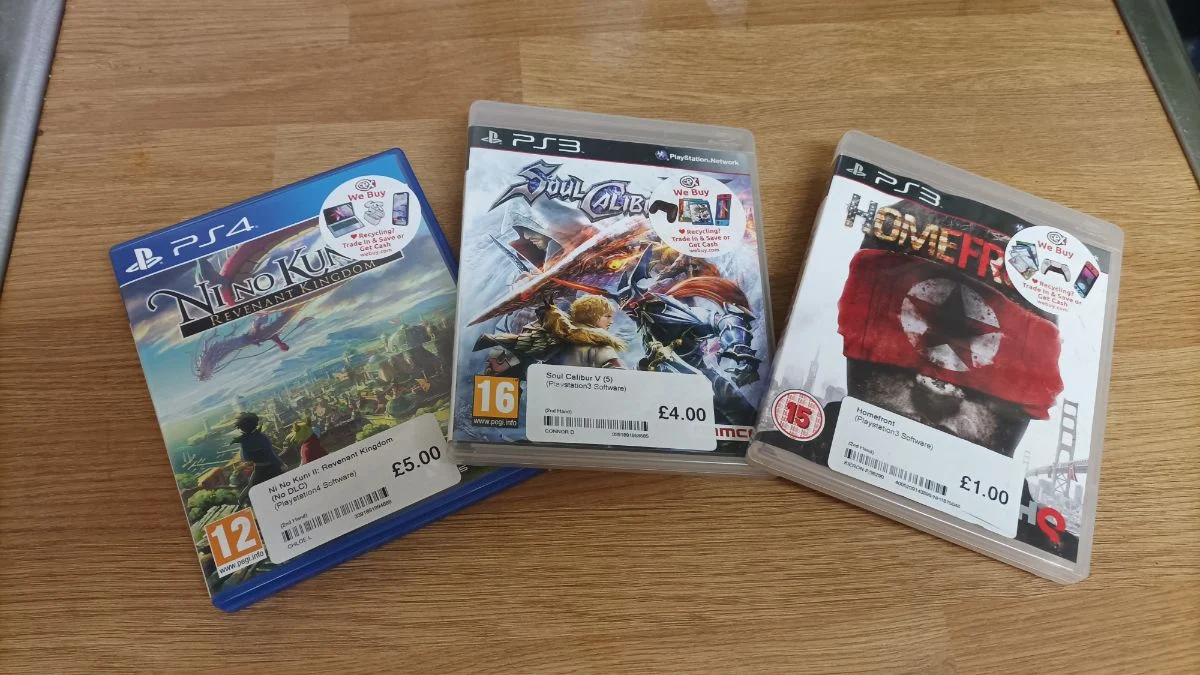
The success of CeX is not merely anecdotal; it is backed by a sustained business model that has weathered economic fluctuations and evolving consumer habits. The company’s ability to offer a wide range of products at competitive prices, coupled with a user-friendly trade-in system, has created a loyal customer base. This has, in turn, fostered a subculture of "game hunting," where enthusiasts actively seek out rare finds and unique deals. The author’s personal experience of building an extensive PS3 and PS4 library in the UK for “just a few quid” exemplifies the affordability and accessibility that CeX provides, offering experiences that are becoming increasingly difficult to obtain on modern platforms.
However, GameStop’s path forward is not without its challenges, beyond the operational aspects of its new strategy. The company has faced criticism and scrutiny regarding its past business practices, including the controversial shutdown of Game Informer magazine and the subsequent layoffs of its staff. These actions have understandably created a degree of public skepticism and may impact consumer willingness to embrace a revitalized GameStop brand. Rebuilding trust and demonstrating a genuine commitment to the gaming community will be as crucial as the retail strategy itself.
The broader impact of GameStop’s retro initiative could be transformative for the North American market. If successful, it could lead to a more competitive landscape for retro game sales, potentially driving down prices on platforms like eBay and Amazon and offering consumers more accessible options. It could also foster a stronger sense of community around physical gaming, reminiscent of the enthusiasm that surrounds retro gaming events and conventions. The author’s positive experience with acquiring specific PS3 and PS4 titles at low costs in the UK, like Alpha Protocol, Final Fantasy XIII, and PlayStation All-Stars Battle Royale, highlights the value proposition that GameStop Retro could potentially bring to American consumers. These are titles that, while not necessarily rare, offer unique gameplay experiences that are less readily available or are significantly more expensive through other channels.
The timeline for GameStop’s retro transformation is still unfolding. The initial rollout of these rebranded stores represents the first phase of a potentially larger strategic overhaul. The company’s ability to adapt, learn from its early implementations, and respond to consumer feedback will be critical. The lessons learned from CeX’s sustained success over decades provide a compelling blueprint. By focusing on customer value, community engagement, and operational transparency, GameStop may yet find a viable path to renewed relevance in a rapidly changing retail environment. The gamble on retro gaming is a bold one, but for a company facing significant headwinds, it might be the most promising strategy to power up its future. The question remains: will this shift be a fleeting experiment, or will it mark a genuine turning point for the iconic, yet challenged, video game retailer? The answer lies in its execution and its ability to connect with a passionate and enduring segment of the gaming world.