


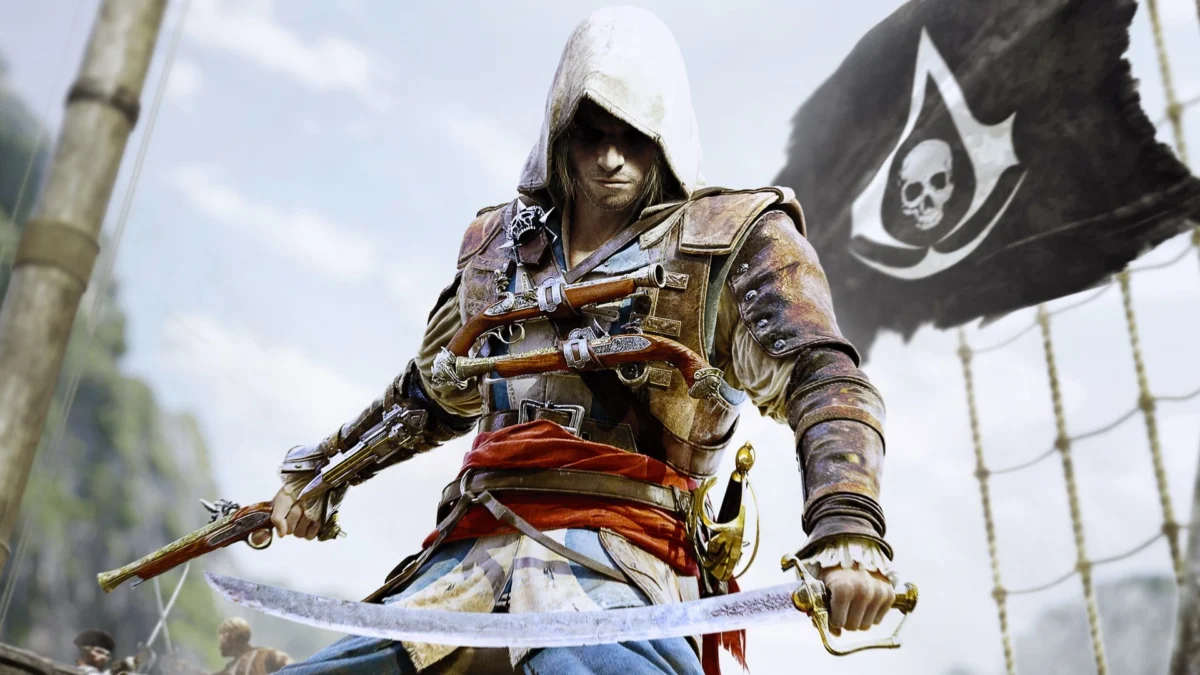
The global gaming market has witnessed a significant milestone this week with the simultaneous release of two high-profile titles that cater to vastly different segments of the Xbox community. While id Software and Bethesda have captured headlines with the launch of DOOM: The Dark Ages Revelations, Ubisoft has strategically revisited one of its most commercially and critically successful intellectual properties with Assassin’s Creed Black Flag Resynced. This title is not merely a high-definition remaster but a comprehensive remake of the 2013 classic, rebuilt to leverage the advanced computational power of the Xbox Series X and Xbox Series S. As the third console generation to host the adventures of Edward Kenway, the release of Resynced serves as a case study in the longevity of the Assassin’s Creed franchise and the evolving technical standards of the Ninth Generation of gaming hardware.
A Chronological Overview of the Black Flag Legacy
To understand the significance of Assassin’s Creed Black Flag Resynced, one must look back to the original title’s debut in late 2013. At that time, the gaming industry was in a state of transition. The original Assassin’s Creed IV: Black Flag was a cross-generational launch title, appearing on the aging Xbox 360 and the then-new Xbox One. Despite the hardware limitations of the era, the game was lauded for its seamless integration of land-based parkour and sophisticated naval combat. It successfully pivoted the series away from the American Revolution setting of its predecessor toward the "Golden Age of Piracy" in the Caribbean.
Over the subsequent decade, Black Flag maintained a reputation as a fan-favorite entry, often cited in retrospective reviews as the pinnacle of the series’ "classic" era before the franchise shifted toward the massive RPG-lite structures of Assassin’s Creed Origins, Odyssey, and Valhalla. The announcement of a remake—codenamed and eventually titled "Resynced"—was met with high expectations. Ubisoft’s decision to rebuild the game from the ground up rather than providing a simple resolution bump indicates a commitment to preserving the title’s legacy while modernizing its mechanics for a contemporary audience that expects near-instant load times and high-fidelity ray-traced environments.
Technical Specifications and Hardware Optimization
The transition to the Xbox Series X and S represents a monumental leap in performance for the Black Flag experience. While the 2013 version struggled to maintain a consistent 30 frames per second (fps) at 1080p on the Xbox One, Assassin’s Creed Black Flag Resynced targets a native 4K resolution at a stable 60 fps on the Series X. On the Series S, the title utilizes dynamic resolution scaling to maintain fluid gameplay, ensuring that the fast-paced naval skirmishes remain immersive across the entire Xbox ecosystem.
Key technical enhancements in the Resynced version include:

- Global Illumination and Ray Tracing: The Caribbean setting, defined by its vibrant sunrises and turquoise waters, benefits immensely from modern lighting techniques. Ray-traced reflections on the surface of the ocean and more accurate shadows in the dense jungles of Havana and Kingston provide a level of realism that was previously unattainable.
- Asset Density and Draw Distance: One of the limitations of the original hardware was the "pop-in" of distant islands and ships. The Xbox Series X’s Velocity Architecture allows for significantly increased draw distances, allowing players to spot distant Spanish Galleons from the crow’s nest of the Jackdaw with clarity.
- Advanced Physics and Particle Effects: The naval combat has been overhauled with a more robust physics engine. Cannon fire now produces volumetric smoke that reacts to wind direction, and ship-to-ship collisions result in more realistic structural splintering.
- Reduced Latency and Load Times: Utilizing the custom NVMe SSD of the current-gen consoles, Resynced has virtually eliminated the loading screens that previously separated the open sea from major city hubs. The transition from the deck of a ship to the streets of Nassau is now instantaneous, a feature that significantly enhances the "seamless" promise of the original design.
Critical Reception and Community Engagement
Early indicators from both professional critics and the Xbox player base suggest that Assassin’s Creed Black Flag Resynced has successfully bridged the gap between nostalgia and modern innovation. Review aggregators show that the remake is performing exceptionally well, with particular praise directed at the refined controls and the "Quality of Life" improvements that bring the 2013 mission design in line with 2026 standards.
Data from community polls conducted shortly after the launch reflect a high level of enthusiasm. In a survey of over 900 active Xbox players, a significant majority expressed that the remake not only lives up to the original’s reputation but surpasses it by removing the technical friction points of the previous versions. Simultaneously, a secondary poll of nearly 800 players regarding the original 2013 title confirms its enduring status; even thirteen years after its initial release, the "OG" Black Flag is rarely viewed as "overrated," with the vast majority of respondents still ranking it among the top three entries in the entire Assassin’s Creed series.
The engagement levels on Xbox platforms suggest that there is a robust market for high-quality remakes of "Golden Era" titles. Many players who missed the original release on the Xbox 360 are now experiencing the narrative of Edward Kenway for the first time, while veterans of the series are returning to see how their favorite moments—such as the assault on the Castillo de San Salvador—have been reimagined with modern technology.
Strategic Implications for Ubisoft and the Franchise
The release of Resynced is a calculated move by Ubisoft to maintain brand momentum. As the company prepares for future flagship entries in the series, such as the highly anticipated projects under the "Assassin’s Creed Infinity" umbrella, remakes serve a dual purpose. They provide a steady stream of content for subscribers and retail buyers while allowing development teams to experiment with updated engines and assets.
Industry analysts suggest that the success of Black Flag Resynced may influence Ubisoft’s long-term strategy regarding its back catalog. There is already speculation among market observers that other fan-favorite entries, such as Assassin’s Creed Unity or the Ezio Auditore trilogy, could receive similar "Resynced" treatments if the sales data for Black Flag continues its upward trajectory. By revitalizing its legacy titles, Ubisoft is effectively future-proofing its most valuable intellectual property against the rapid obsolescence of digital hardware.
Furthermore, the timing of this release alongside DOOM: The Dark Ages Revelations highlights a competitive but healthy period for the Xbox platform. By offering a deep, narrative-driven open-world experience alongside a high-intensity first-person shooter, Microsoft’s ecosystem is providing a diverse range of content that maximizes the value of the Xbox Series X/S hardware.

Broader Impact on the Gaming Industry
The trend of remaking titles from the 2010s is becoming increasingly prevalent across the industry. As development costs for new IPs continue to skyrocket and production cycles lengthen, remakes offer a lower-risk avenue for publishers to generate revenue while satisfying player demand for "prestige" experiences. Assassin’s Creed Black Flag Resynced represents a sophisticated example of this trend. It is not merely a cash-in on nostalgia but a technical overhaul that justifies its existence through meaningful improvements to the user experience.
The focus on "Resynced" as a branding strategy also suggests a move toward a more unified digital library. For Xbox players, the ability to play a version of Black Flag that feels native to their 4K-capable hardware—complete with features like Quick Resume and Auto HDR—is a powerful incentive to remain within the ecosystem. It reinforces the concept of "forward compatibility," where the games of the past are not left behind but are instead elevated to meet the standards of the present.
Conclusion: The Enduring Appeal of the Golden Age
As the weekend approaches and more players dive into the waters of the West Indies, the verdict on Assassin’s Creed Black Flag Resynced appears increasingly clear. By honoring the core mechanics that made the 2013 original a masterpiece—its emotional narrative, its sense of freedom, and its iconic sea shanties—and layering them with the technical sophistication of 2026, Ubisoft has delivered a definitive version of a classic.
Whether it is the thrill of the hunt on the high seas or the intricate stealth of the Assassin-Templar conflict, Black Flag continues to resonate because it captures a specific sense of adventure that few other titles have replicated. For the Xbox Series X and S, Resynced is more than just a trip down memory lane; it is a demonstration of how far the medium has progressed and a reminder of why Edward Kenway’s journey remains a cornerstone of modern gaming history. The data from the polls and the early critical consensus suggest that the "Golden Age of Piracy" is far from over; it has simply been reborn for a new generation.