


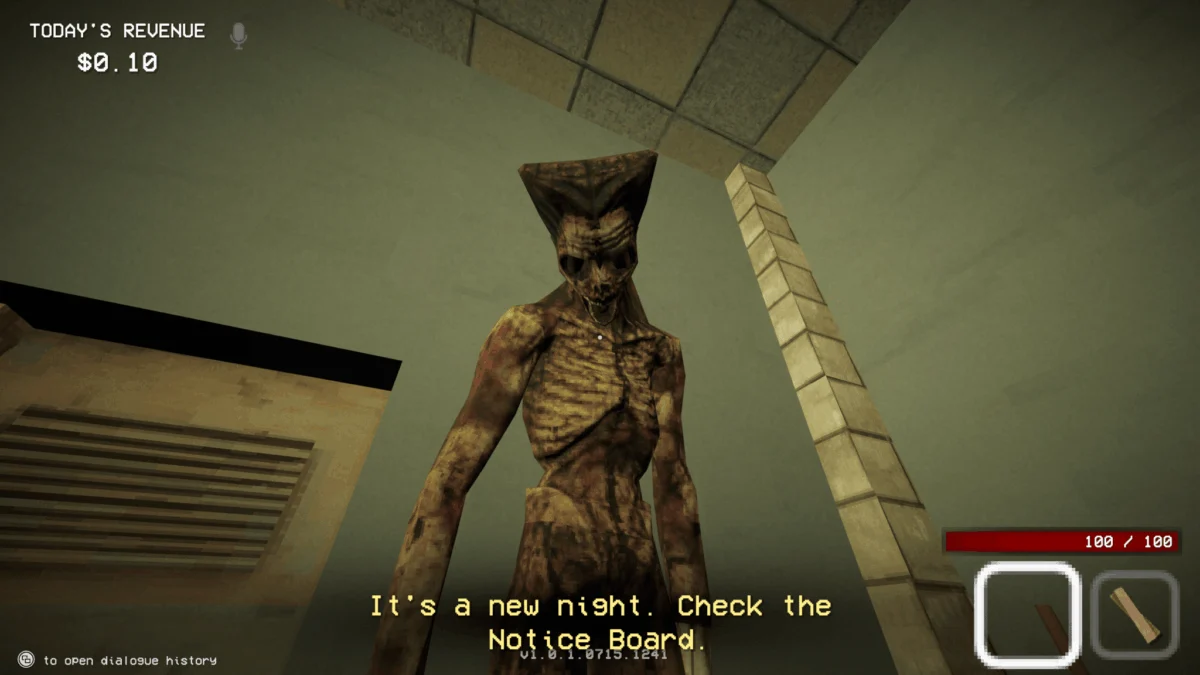
Shift at Midnight represents a calculated fusion of two distinct digital entertainment trends: the meticulous workplace simulator and the atmospheric "lo-fi" horror experience. Set in a rural American gas station in 1993, the title places players in the role of a night-shift clerk tasked with balancing the mundane requirements of retail management against a backdrop of escalating supernatural threats. Developed with an aesthetic that pays homage to the 32-bit era of gaming, the title has recently emerged as a notable addition to the Xbox ecosystem, specifically targeting the audience currently engaged with the Game Pass subscription service. This analysis explores the game’s structural components, its mechanical depth, and its positioning within the broader landscape of independent horror titles.

The Intersection of Mundane Labor and Supernatural Terror
The core premise of Shift at Midnight revolves around a thirteen-shift "Story Mode" that serves as the primary vehicle for the narrative. Players are introduced to a world where the primary objective is ostensibly simple: manage a grocery and gas station. This involves stocking shelves, cleaning facilities, managing financial records, and servicing vehicles. However, the simulation is quickly disrupted by a "doppelganger" mechanic, requiring players to scrutinize customers for signs of non-human identity. Using an in-game ID scanner and visual cross-referencing, players must decide which customers are legitimate and which are malevolent entities attempting to infiltrate human society.
The narrative setting—1993 America—is leveraged to enhance the sense of isolation. The lack of modern cellular technology and the reliance on clunky, period-accurate machinery contribute to a "softly stressful" atmosphere. This tension is further exacerbated by the presence of a belligerent off-site manager who delivers increasingly demanding tasks, ensuring that the player is never entirely comfortable in their environment. The game effectively utilizes the "uncanny valley" effect, where the low-polygon character models—reminiscent of early 3D titles like GoldenEye 007—create a natural sense of unease during interrogations.

Gameplay Mechanics and the Thirteen-Shift Structure
The gameplay loop of Shift at Midnight is divided into distinct phases that dictate the level of threat and the required player response. During the daylight and evening hours, the focus remains on the simulation elements. The efficiency with which a player manages the store directly impacts their resources for the more dangerous night sequences.
- The Detection Phase: Players must use an ID scanner and observational skills to identify doppelgangers. Failure to identify a single entity results in a direct confrontation later that night.
- The Management Phase: Stacking shelves and cleaning are not merely busywork; they are tied to the store’s finances. These funds are essential for purchasing defensive upgrades, ammunition, and aesthetic improvements that can influence gameplay.
- The Night Phase: If a doppelganger is permitted to escape or if specific story triggers occur, the player must survive the night against "The Entity." This multi-legged, spider-like horror serves as the primary antagonist, growing in strength and bringing additional "friends" as the thirteen shifts progress.
As the game moves into its latter half, the tone shifts from psychological dread to "run-and-gun" survival. Players eventually gain access to an upgraded arsenal, including flamethrowers and traps. While this transition moves away from the initial stealth-focused tension, it provides a sense of progression that culminates in a large-scale finale. The campaign is designed to be completed in approximately ten hours, a duration that industry analysts suggest is ideal for maintaining engagement without the mechanics becoming repetitive.

Technical Performance and Controller Optimization
While Shift at Midnight has been praised for its atmospheric delivery, technical assessments reveal a disparity between input methods. The game was originally designed with a PC-centric interface, which translates with varying degrees of success to the Xbox Series X.
Control Schemes and Accessibility:

- Mouse and Keyboard: This is the recommended input method. The precision required for shooting and the frequency of on-screen text entry make the traditional PC setup more fluid.
- Controller Support: While functional, the first-person controls can feel "finicky" during high-stakes combat. The reliance on the Xbox dashboard’s on-screen keyboard for certain simulation processes is a notable friction point that may impact the experience for console and handheld PC players (such as those using a Steam Deck or ROG Ally).
- Collision and Stealth: Technical reviews have identified inconsistencies in collision detection, particularly regarding traps and stealth mechanics. In some instances, the cramped environments of the gas station make stealth less viable than direct combat, leading many players to adopt a more aggressive strategy in the late game.
The Lo-Fi Aesthetic and Psychological Horror Elements
The visual identity of Shift at Midnight is a deliberate choice intended to evoke nostalgia and heighten the horror elements through abstraction. The "lo-fi" aesthetic—characterized by low-resolution textures, pixelated edges, and "jittery" vertex animations—allows the developers to bypass the need for high-budget realism while creating a more disturbing atmosphere.
The horror is largely "haunted house" in style, relying on frequent jump scares and the inherent weirdness of the character models. Unlike "elevated horror" titles that focus on lingering dread, Shift at Midnight embraces a more "goofy" and "silly" tone. This approach has proven successful in the viral horror market, where the juxtaposition of humor and terror often leads to high engagement on social media and streaming platforms.

The game also features multiple endings and randomized events, providing a degree of replayability. Players who seek a "perfect run" by completing all shifts without a single error will find a significantly higher challenge curve, as the visual cues for identifying doppelgangers can sometimes be obscured by the retro-styled rendering.
Multiplayer Integration and Future Development Roadmap
One of the most discussed aspects of Shift at Midnight is its multiplayer functionality. Although marketed heavily as a cooperative title, the current "Story Mode" is primarily structured for a solo experience. The game includes support for proximity voice chat, which enhances the immersion during stealth segments and allows for emergent social gameplay.

Current State of Multiplayer:
- Co-op Mechanics: Players can work together to manage the store and fight off entities, though the deduction mechanics (ID scanning) currently lack a "traitor" or PvP element that would add depth to group play.
- Endless Mode: This mode is currently in a "Beta" state. The developers have promised a full launch of this procedural mode later this year, which will include more varied events and content specifically designed for long-term multiplayer engagement.
- Customization: The game features a variety of unlockable character models and wacky physics-based interactions, which are clearly designed to appeal to the "party game" segment of the horror genre.
Market Positioning and Industry Implications
The release of Shift at Midnight on Xbox Game Pass is a strategic move that aligns with Microsoft’s recent efforts to diversify its library with unique, independent titles. The "sim-horror" mash-up is a relatively new sub-genre that has seen significant success on PC through titles like Lethal Company and Phasmophobia. By bringing this experience to consoles at a budget price point, the publishers are tapping into a market hungry for "streamable" content.

Market Trends and Data:
- Genre Popularity: "Workplace Horror" has seen a 40% increase in search volume over the last 24 months, driven by the success of indie titles that subvert mundane tasks.
- Game Pass Impact: Titles that feature a mix of simulation and social elements often see a longer "tail" of engagement on subscription services compared to traditional linear horror games.
- Production Values: The success of Shift at Midnight demonstrates that "lo-fi" graphics are no longer a barrier to entry but are instead a stylistic choice that can help a game stand out in a crowded market of hyper-realistic AAA titles.
Broader Impact and Conclusion
Shift at Midnight serves as a testament to the evolving nature of the horror genre. By blending the addictive loops of a simulation game with the unpredictable scares of a lo-fi horror title, the developers have created an experience that is greater than the sum of its parts. While the game suffers from some technical "rough edges"—including finicky controller inputs and collision issues—its charm and pacing help it overcome these hurdles.

The thirteen-shift structure provides a clear sense of purpose, while the mystery of "The Entity" and the surrounding lore offer just enough intrigue to keep players engaged until the final shift. As the "Endless Mode" moves out of beta and more content is added, Shift at Midnight has the potential to become a staple of the cooperative horror scene. For now, it remains a compelling, if slightly unpolished, gem that highlights the creative potential of genre-mashing in the independent gaming space.
As the industry continues to see a rise in "creepypasta-inspired" media, titles like Shift at Midnight will likely serve as blueprints for how to effectively monetize and distribute niche horror experiences to a mainstream audience. Whether played solo for the atmospheric dread or with friends for the goofy physics and jump scares, the game offers a unique 1993-themed nightmare that is well worth the "shift."