


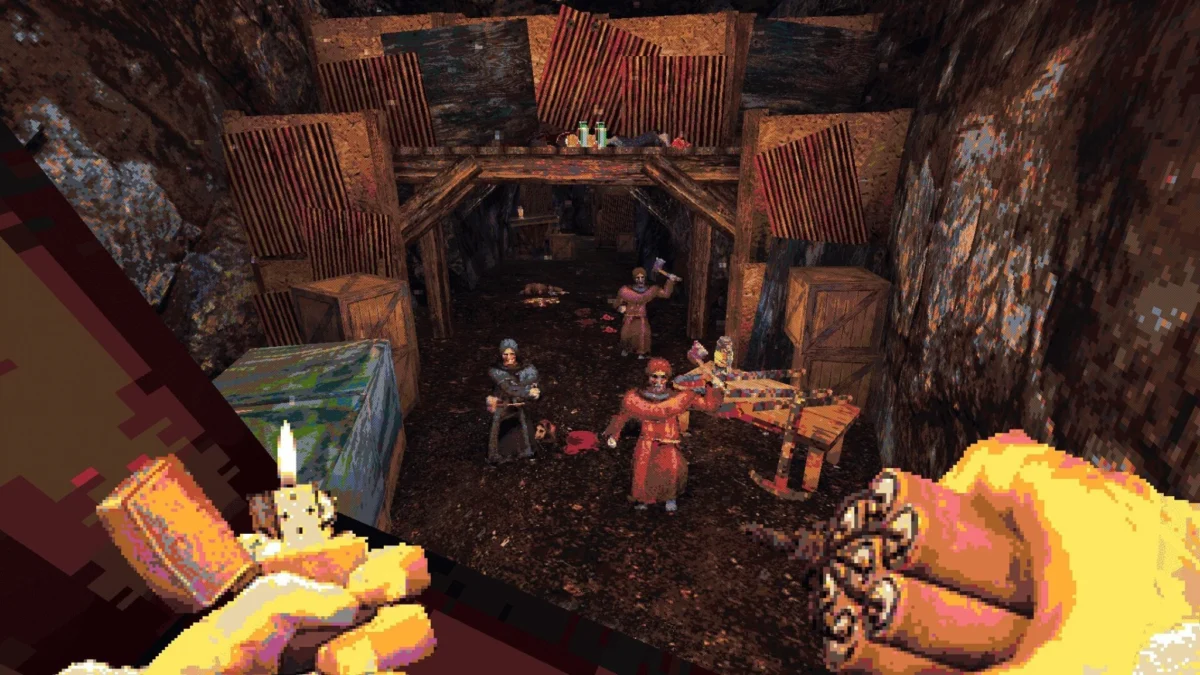
The landscape of the first-person shooter (FPS) genre has undergone a significant transformation over the last decade, characterized by a movement colloquially known as the "boomer shooter" revival. This sub-genre, which prioritizes the high-speed movement, non-linear level design, and abstract aesthetics of 1990s classics like Doom, Quake, and Blood, has found a new champion in Cultic. Originally developed by Jason Smith under the moniker Jasozz Games and published by 3D Realms, Cultic first garnered critical acclaim upon its PC release in 2022. Now, in 2026, the complete experience—comprising both Chapter One and the recently finalized Chapter Two—has transitioned to home consoles, with the Xbox Series X version serving as the primary benchmark for this transition.
The Genesis and Evolution of Cultic
The development of Cultic represents a pivotal moment for indie development within the retro-FPS space. While many titles in this category seek to replicate the engine limitations of the mid-90s, Cultic was built on the Unity engine to provide a "lo-fi" aesthetic that masks modern technical sophistication. The game was initially released as Chapter One on October 13, 2022, following a highly successful demo period that saw it rise to the top of Steam’s trending lists.
The narrative follows a disgraced former detective in a stylized 1960s America. After being left for dead in a mass grave, the protagonist must fight through the ranks of a mysterious, macabre cult that has taken root in the rural and urban underbelly of the country. This premise serves as a springboard for a campaign that spans two massive chapters, incorporating diverse environments ranging from decaying asylums and underground catacombs to frozen mountainous fortresses.

By the time the game reached consoles in 2026, the package had expanded significantly. The console edition includes the full narrative arc, the "Intermission" survival mode, and various seasonal content updates, such as the specialized Christmas-themed levels. This comprehensive release strategy aims to position Cultic not just as a nostalgic throwback, but as a flagship title in the modern FPS library.
Gameplay Mechanics and Hybrid Design
Cultic distinguishes itself from its peers by refusing to be a mere clone of the games that inspired it. While the visual DNA is undeniably linked to the Build Engine games—specifically Monolith Productions’ 1997 classic, Blood—the mechanical depth of Cultic draws from more contemporary sources.
The combat loop is built on a foundation of "smart shooting." Unlike the "circle-strafing" common in Quake-clones, Cultic demands tactical awareness. Players are equipped with a grounded but lethal arsenal, including a high-impact revolver, a lever-action shotgun, and various explosives like TNT bundles and Molotov cocktails. The inclusion of a physics-based interaction system allows players to use the environment as a weapon. Objects such as chairs, lanterns, and even the severed limbs of enemies can be picked up and hurled to cause damage or create distractions.
The survival horror influences are palpable. Drawing inspiration from titles like Resident Evil 7 and Outlast 2, Cultic frequently slows its pace to build tension. Intricate puzzles and resource management play a vital role; ammo is often scarce, forcing players to rely on their hatchet or environmental kills. This tension is further elevated by the enemy AI, which utilizes flanking maneuvers and long-range suppression to keep the player from feeling truly safe, even when fully armed.

Technical Performance on Xbox Series X
The transition from PC to the Xbox Series X brings with it a set of technical expectations regarding resolution, frame rate, and input fidelity. On a visual level, the port is highly successful. Cultic’s unique art style—which utilizes 2D sprites for enemies and items within a 3D polygonal world—is rendered with sharp clarity on the Series X. The game maintains the original’s "crunchy" pixelated look while benefiting from the console’s ability to handle complex lighting, particle effects, and high-resolution textures without drops in performance.
The Xbox Series X version includes several quality-of-life features standard for modern console shooters, such as:
- Customizable Field of View (FOV) sliders.
- Toggleable retro filters (including various color palettes like sepia, monochrome, and VGA-style).
- Support for high-refresh-rate displays.
- Rapid loading times facilitated by the console’s internal SSD.
However, the transition has not been entirely seamless. The primary point of contention in the console version lies in the controller mapping and input response. Cultic was fundamentally designed for the precision of a mouse and keyboard. The game’s fast-paced nature, combined with the need for precise headshots to manage ammo efficiently, places a heavy burden on the analog sticks.
Reviewers and early adopters have noted a perceptible input delay on the camera movement, often referred to as "deadzone latency." Despite the inclusion of a robust aim-assist suite and various sensitivity sliders, the "feel" of the movement remains slightly disconnected compared to its PC counterpart. This lag can make high-stakes encounters, particularly in Chapter Two’s more vertical levels, more frustrating than intended.

The Industrial Context: Atari and the Retro Revival
The release of Cultic on consoles is part of a broader strategy by legacy publishers to capitalize on the burgeoning "new-retro" market. With Atari and Infogrames revitalizing their portfolios through acquisitions and publishing deals with developers like Jasozz Games and 3D Realms, Cultic represents the "prestige" end of this movement.
Industry analysts suggest that the "boomer shooter" market has grown by over 40% in terms of digital sales since 2021. This growth is driven by a demographic of older gamers seeking the experiences of their youth, alongside a younger audience attracted to the high skill ceiling and distinct aesthetic of lofi gaming. Cultic’s arrival on Xbox is seen as a move to legitimize these indie-led projects on the same platform as AAA giants like Call of Duty or Halo.
In a statement regarding the console launch, representatives from the publishing collective noted: "The goal was to ensure that the atmosphere of Cultic—its dread, its speed, and its visceral combat—remained intact for a new audience. Bringing a game of this complexity to the controller was a challenge, but it is a necessary step in making these modern classics accessible to everyone."
Chronology of Cultic’s Development and Release
To understand the impact of the console release, one must look at the timeline of the game’s trajectory:

- July 2021: The first public demo of Cultic is released during the Steam Next Fest, receiving immediate acclaim for its atmosphere and gunplay.
- October 13, 2022: Chapter One launches on PC. It secures an "Overwhelmingly Positive" rating on Steam within weeks.
- Early 2023: The "Intermission" update introduces a dedicated survival mode and leaderboards.
- Late 2024: Chapter Two is released on PC, doubling the length of the campaign and introducing more supernatural elements to the story.
- Early 2026: The "Cultic: Complete Edition" is announced for Xbox Series X/S, PlayStation 5, and Nintendo Switch.
- July 2026: The official console launch, marking the first time the detective’s story is playable outside the PC ecosystem.
Broader Impact and Implications for the Genre
The success of Cultic on consoles, despite its current control hurdles, signals a shift in the industry. It proves that there is a significant appetite for single-player, narrative-driven shooters that do not rely on "live service" models or microtransactions. Cultic offers a finite, high-quality experience that rewards exploration and player agency.
Furthermore, the game’s blend of horror and action provides a blueprint for future developers. By integrating the tension of survival horror into the framework of a fast-paced shooter, Jason Smith has created a hybrid that feels fresh despite its retro trappings. The game’s level design, which avoids the "corridor shooter" tropes of the early 2000s in favor of open, secret-filled arenas, encourages a type of engagement that is increasingly rare in the modern mainstream market.
While the Xbox Series X version currently requires a series of patches to address the input delay and optimize the controller experience, the core of the game remains a masterclass in atmospheric design. For the console audience, Cultic represents a window into a different era of gaming—one where the focus was on the visceral thrill of the hunt and the dark satisfaction of uncovering a well-hidden secret.
As the industry moves further into the current console generation, titles like Cultic serve as a reminder that graphical fidelity is secondary to art direction and mechanical cohesion. If the developers can bridge the gap between mouse-and-keyboard precision and controller accessibility, Cultic will likely be remembered not just as a great "boomer shooter," but as one of the definitive FPS experiences of the mid-2020s.