


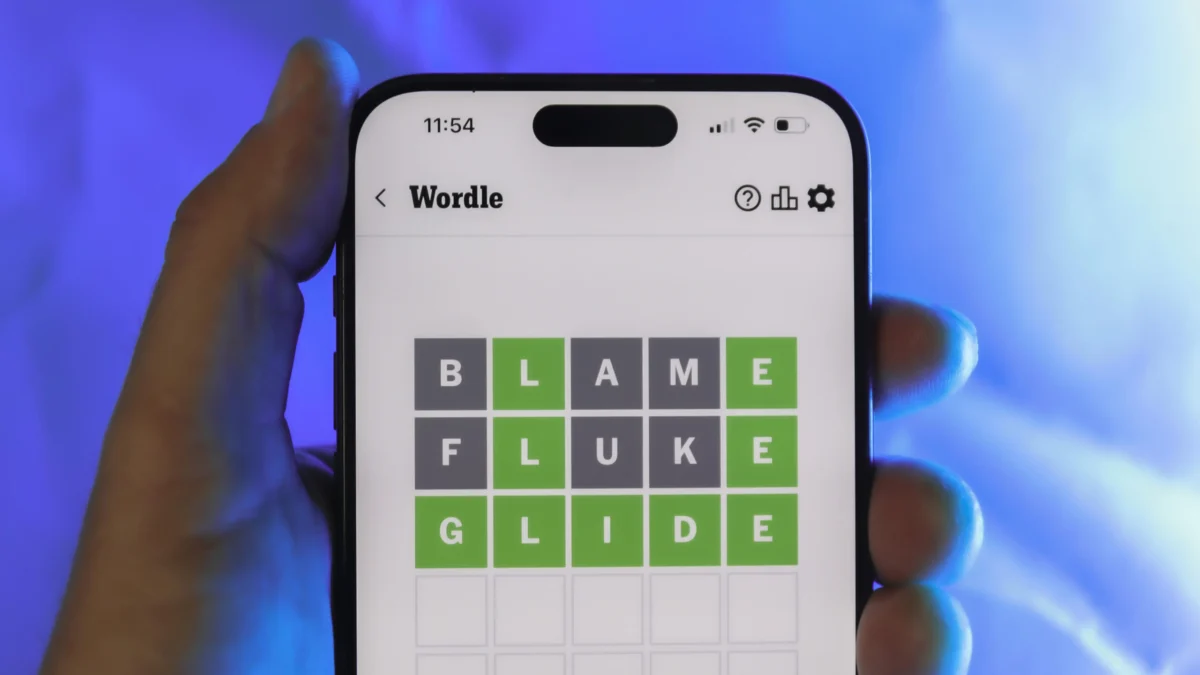
The digital word puzzle sensation, Wordle, presented its daily challenge today, with many players finding the solution to be particularly elusive. Today’s answer, FLUME, for puzzle number 1867, proved to be a test for even seasoned enthusiasts, primarily due to the less common usage of its initial and fourth letters. This daily ritual continues to captivate millions worldwide, serving as a brief yet engaging mental workout in an increasingly fast-paced digital landscape. Yesterday’s Wordle, number 1866, was VALVE, offering a somewhat more familiar linguistic terrain.
The specific nuances of today’s puzzle made it stand out. Hints provided to players indicated a word without repeated letters, featuring two vowels, commencing with ‘F’ and concluding with ‘E’. The most telling clue, however, pointed to its meaning: a term often associated with a specific ride found in water or theme parks. While ‘flume’ is an established word, its relative infrequency in everyday conversation, compared to many other five-letter words, contributed to the heightened difficulty. The strategic placement of less common letters, such as ‘F’ as a starting letter and ‘M’ in the fourth position, often forces players to deviate from their usual starting word strategies, pushing them to explore a broader range of phonetic and lexical combinations. This strategic design by the game’s curators ensures that the puzzle remains consistently challenging and engaging, preventing players from becoming overly reliant on predictable patterns.
Decoding Today’s Wordle: The Anatomy of a Tricky Puzzle
The process of solving a Wordle puzzle like FLUME involves a blend of linguistic knowledge, strategic thinking, and deductive reasoning. Players typically begin with a "starter word" designed to reveal as many common letters as possible (e.g., "CRANE," "ADIEU," "SLATE"). For today’s puzzle, a strong starter word might have yielded a green ‘E’ in the final position, and potentially a yellow ‘F’ if it contained one elsewhere. The hint specifying no repeated letters immediately simplifies the search space, eliminating words like "APPLE" or "SENSE" from consideration. The two-vowel constraint is also crucial, guiding players towards words like FLUME, which contains ‘U’ and ‘E’, rather than words with three or more vowels.
The combination of the ‘F’ start and ‘E’ end, while helpful, still leaves numerous possibilities. However, the meaning clue – "can refer to a specific ride at a water or theme park" – acts as the ultimate filter. This semantic hint narrows down the options significantly, directing players towards words related to amusement parks or water features. This multi-layered hinting system is a hallmark of Wordle’s design, gradually guiding players towards the solution without outright giving it away, fostering a sense of accomplishment upon successful completion. For many, the satisfaction of uncovering a word like FLUME, especially when it initially seems obscure, is a significant part of the game’s appeal. It encourages a deeper engagement with the English lexicon and an appreciation for its diverse vocabulary.
Wordle’s Phenomenal Rise: A Brief History and Cultural Impact
Wordle’s journey from a personal project to a global phenomenon is a compelling narrative in the history of digital gaming. Conceived by software engineer Josh Wardle for his partner Palak Shah during the COVID-19 pandemic, the game was initially a private pastime. Its public launch in October 2021 marked the beginning of its meteoric ascent. Within months, Wordle had captured the attention of millions worldwide, its simple yet addictive gameplay spreading rapidly through word-of-mouth and social media. The iconic green, yellow, and grey square grid, shared daily across platforms like Twitter, became a ubiquitous symbol of a shared intellectual pursuit.

The game’s minimalist design, absence of ads, and once-a-day release schedule contributed significantly to its appeal. In an era dominated by endless digital distractions, Wordle offered a refreshing antidote: a brief, finite challenge that could be completed in minutes, leaving players satisfied without consuming excessive time. Its democratic accessibility, playable directly in a web browser without requiring downloads or accounts, further fueled its viral spread.
By January 2022, Wordle’s popularity had reached such heights that it caught the attention of The New York Times, a media institution with a long-standing tradition in puzzles and games. The acquisition, reportedly for a sum in the low seven figures, solidified Wordle’s status as a cultural touchstone. The New York Times integrated Wordle into its Games section, ensuring its continued availability for free, while also leveraging its immense popularity to drive engagement with its broader digital offerings. This acquisition underscored the increasing value of casual, engaging content in attracting and retaining digital audiences for news organizations.
The Cognitive Benefits and Community Aspect of Daily Word Puzzles
Beyond its entertainment value, Wordle, like many word puzzles, offers significant cognitive benefits. Engaging with games that require lexical retrieval, pattern recognition, and deductive reasoning has been shown to enhance various aspects of cognitive function. Regularly solving Wordle can contribute to:
- Vocabulary Expansion: Encountering words like FLUME, which may not be part of one’s active vocabulary, encourages players to learn new terms.
- Improved Problem-Solving Skills: The game’s logic-based approach trains the brain to think systematically and eliminate possibilities, akin to scientific method application.
- Enhanced Memory: Recalling words and letter patterns strengthens memory pathways.
- Cognitive Flexibility: Players must adapt their strategies based on the feedback from each guess, promoting mental agility.
- Stress Reduction: For many, the focused nature of solving a puzzle provides a welcome break from daily stressors, offering a form of mindful engagement.
Research in cognitive psychology frequently highlights the positive correlation between regular engagement in mentally stimulating activities, such as word puzzles, and the maintenance of cognitive health, particularly in older adults. Wordle’s accessible format makes these benefits available to a broad demographic, from casual players to dedicated puzzle enthusiasts.
The social aspect of Wordle is equally significant. The ability to share results without spoilers fosters a sense of community and friendly competition. Online forums and social media platforms are rife with discussions about daily puzzles, strategies, and humorous anecdotes of near misses or triumphant solves. This shared experience transcends geographical boundaries, uniting a global community around a common, gentle intellectual pursuit. Players often express a mix of frustration and triumph when faced with a challenging word, and the shared commiseration or celebration further strengthens their connection to the game and its community.
A Chronology of Recent Wordle Answers
The consistency of Wordle’s daily release is a core part of its appeal, creating a predictable routine for millions. Here’s a look at some of the recent solutions, showcasing the variety of words chosen by the curators:

- July 29, No. 1866: VALVE – A relatively common mechanical term, offering a moderate challenge.
- July 28, No. 1865: SONAR – A word with specific scientific connotations, known to many.
- July 27, No. 1864: POSER – A more common verb/noun, likely easier for many players.
- July 26, No. 1863: GRAPE – A very common fruit, often considered an easier solve.
- July 25, No. 1862: ALOHA – A culturally specific greeting, familiar to a broad audience.
These words demonstrate the careful curation by The New York Times’ puzzle team, who manage Wordle’s lexicon. The goal is to strike a balance between common and less common words, ensuring that the game remains consistently engaging without becoming overly simplistic or impossibly difficult. The team meticulously reviews word choices to avoid obscure terms, proper nouns, or words that could be culturally insensitive, maintaining the game’s broad appeal and integrity. This rigorous process is critical to preserving the game’s reputation for fairness and intellectual stimulation.
Broader Implications and The Future of Wordle
Wordle’s success has had several broader implications. For The New York Times, it underscored the value of digital games as a crucial component of its subscription strategy, demonstrating that casual, engaging content can effectively drive and sustain digital readership. The game’s straightforward monetization model (none, beyond indirectly supporting NYT subscriptions) contrasts sharply with many ad-heavy free-to-play mobile games, reinforcing its appeal as a pure, unadulterated puzzle experience.
Culturally, Wordle has cemented its place alongside classic word games like Scrabble and crossword puzzles as a beloved daily intellectual ritual. It has spawned numerous imitators and variations, from Heardle (for music) to Worldle (for geography), demonstrating its profound influence on the casual gaming landscape. Its minimalist aesthetic and focus on pure wordplay have resonated deeply in an age often characterized by visually complex and feature-rich digital experiences.
Looking ahead, Wordle’s enduring popularity seems assured, primarily due to its elegant simplicity and the consistent satisfaction it delivers. While the lexicon of five-letter words in English is finite, the strategic selection and daily release ensure that the challenge remains fresh. The game’s design inherently fosters a loyal community, eager for the next day’s puzzle. As digital routines evolve, Wordle stands as a testament to the power of a well-designed, accessible game to become a cherished part of daily life for millions globally, offering a moment of quiet contemplation and intellectual engagement amidst the digital din. Its continued relevance highlights the timeless appeal of language-based puzzles and their capacity to connect people through a shared, gentle challenge.