


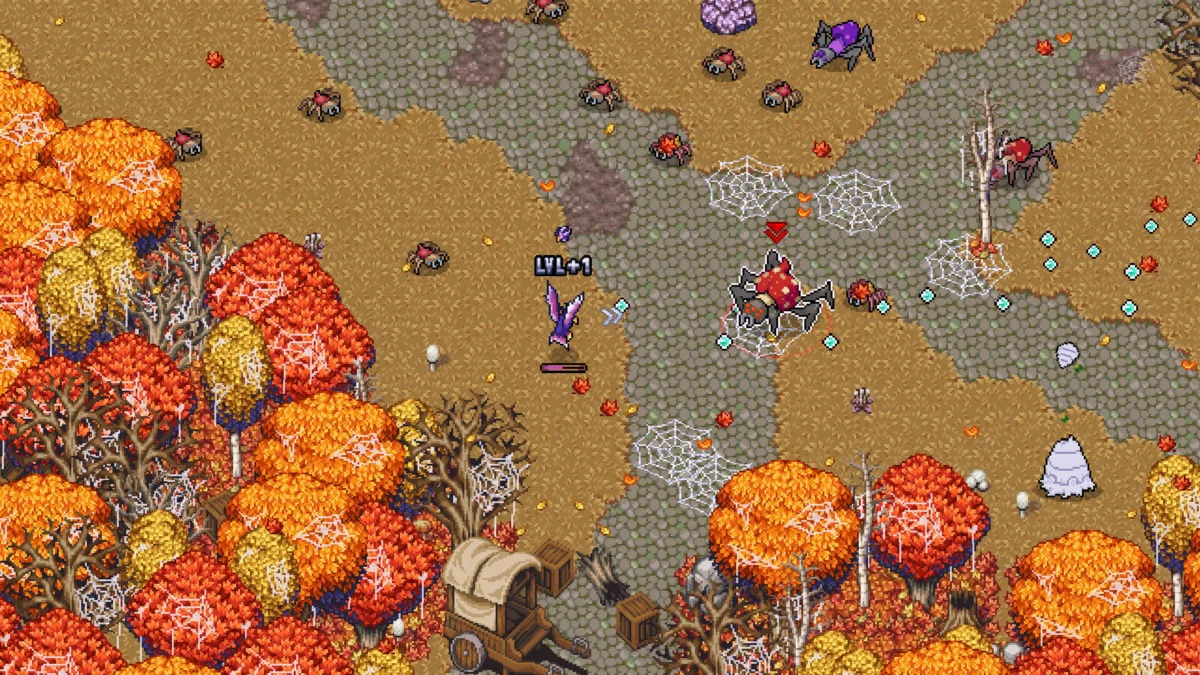
The digital landscape of the "bullet heaven" or "survivors-like" genre has seen an unprecedented influx of titles since the breakout success of Vampire Survivors in early 2022. Shard Squad, developed by The Root Studios and published by Nuntius Games, represents the latest significant entry to make the transition from a successful PC debut to a comprehensive multi-platform console release. Tested on the Xbox Series X, the title attempts to bridge the gap between the addictive, low-barrier-to-entry mechanics of the roguelite horde-survival genre and the nostalgic, collection-based aesthetics of the monster-taming RPGs popularized in the late 1990s. As the genre matures, Shard Squad positions itself not as a reinvention of the wheel, but as a refined, visually distinct alternative that emphasizes creature synergy and evolutionary progression.
The Genesis and Console Transition of Shard Squad
The journey of Shard Squad began on PC, where it cultivated a dedicated player base through its charming pixel art and accessible gameplay loop. The decision to bring the title to the Xbox Series X, as well as PlayStation and Nintendo Switch platforms, follows a broader industry trend where "micro-indies" find secondary, often more lucrative lives on home consoles. On the Xbox Series X, the game benefits from the hardware’s robust processing power, ensuring that even when the screen is saturated with hundreds of elemental projectiles and dozens of enemy sprites, the frame rate remains a locked 60 frames per second.
The transition to console also brings with it a refined user interface tailored for controller input. While the PC version relied on the standard mouse-and-keyboard or gamepad versatility, the Xbox version emphasizes the "twin-stick" potential of the genre, even if the primary gameplay remains focused on movement and positioning rather than manual aiming. This console release includes all content updates previously seen on PC, launching as a "definitive" version for the couch-gaming audience.
Gameplay Mechanics: Beyond the Pokémon Aesthetic
At first glance, Shard Squad draws heavy visual inspiration from the Pokémon franchise, utilizing a bright, saturated color palette and creature designs that evoke elemental archetypes. However, the mechanical underpinnings are strictly rooted in the bullet heaven tradition. Players begin a "run" by selecting one of approximately two dozen starting creatures. Each creature possesses unique base statistics, including health, movement speed, and two inherent attacks.

As the player navigates a top-down battlefield, defeated enemies drop "XP shards." Collecting these shards fills a meter that triggers a level-up event, presenting the player with three random choices for upgrades. These choices range from raw statistical boosts—such as increased damage or reduced cooldowns—to the recruitment of additional creatures. Unlike traditional RPGs where you "capture" monsters, in Shard Squad, secondary creatures function as autonomous weapon systems. They orbit the player or follow closely, firing their specific elemental attacks at set intervals.
The "Evolution" mechanic serves as the game’s primary hook. Upon reaching specific level milestones and fulfilling certain criteria, a player’s primary creature can evolve into a more powerful form. This transformation is not merely cosmetic; it significantly alters attack patterns and increases the efficacy of elemental synergies. This system provides a clear sense of "power creep" that is essential to the genre’s appeal, rewarding players for surviving the increasingly dense waves of enemies.
Tactical Synergy and Build Variety
One of the more nuanced aspects of Shard Squad is the synergy between different creature types. The game utilizes an elemental system that, while familiar, dictates the effectiveness of a build against specific bosses or map types. For instance, a "Fire" focused build might excel at high-density crowd control, while "Electric" types may offer better single-target DPS (damage per second) for boss encounters.
However, the game faces a challenge common in the survivors-like genre: the limitation of build variety. Because upgrades are largely tied to pre-existing creature stats, players may find it difficult to create the "broken" or "overpowered" builds that define titles like Soulstone Survivors. The tactical depth is found not in the creation of unique spells, but in the careful selection of a "squad" that covers the player’s weaknesses. With 24 creatures to unlock, the permutations are numerous, but the core gameplay remains focused on a relatively narrow set of interactions.
Content Depth and Progression Systems
Shard Squad offers a meaty experience for its price point. The game features ten distinct levels, each with varying terrain, enemy types, and environmental hazards. Progression is handled through a "meta-hub" where players spend gold earned during runs on permanent upgrades. This meta-progression is a staple of the genre, providing a sense of forward momentum even after a failed run.

The permanent upgrades include:
- Offensive Boosts: Base damage, critical hit chance, and projectile speed.
- Defensive Boosts: Total HP, HP regeneration, and damage reduction.
- Utility Boosts: Pickup radius (magnetism), movement speed, and luck (which affects the rarity of level-up choices).
In addition to the standard levels, the game includes infinitely replayable modes and higher difficulty tiers. This is where the "grind" becomes most apparent. To unlock the higher-tier relics and the full roster of creatures, players must invest significant time into repeating levels. While the core loop is satisfying, the repetitive nature of the encounters—where the strategy for the third level is often identical to the strategy for the seventh—may lead to player fatigue for those seeking a more traditional RPG experience.
The Impact of Local Co-operative Play
A standout feature of the console release is the inclusion of two-player local co-op. In an era where many indie titles prioritize online connectivity, the addition of "couch co-op" is a significant value proposition. In co-op mode, two players share the screen, each controlling their own creature and managing their own set of upgrades.
The synergy mechanic becomes even more critical in this mode. One player can focus on a high-defense "tank" build to draw enemy aggro, while the other focuses on glass-cannon DPS. The visual chaos is doubled, but the Xbox Series X hardware manages the load without stuttering. This mode transforms Shard Squad from a solitary "podcast game" into a social experience, filling a niche in the Xbox library for accessible, pick-up-and-play cooperative titles.
Technical Performance and Aesthetic Direction
The pixel art in Shard Squad is a highlight, offering a clean, readable style that avoids the visual clutter that plagues many bullet heaven games. Each creature is distinct, and the animations for evolution are satisfyingly impactful. The sound design complements the visuals, with retro-inspired chiptunes and crunchy sound effects that provide tactile feedback for every hit landed.

On the technical side, the game offers both manual and automatic aiming. Automatic aiming allows players to focus entirely on movement—a "one-handed" playstyle that many genre fans prefer. Manual aiming, while more taxing, allows for greater precision during boss fights. The addition of a dash mechanic on a cooldown adds a layer of mechanical skill, requiring players to time their invincibility frames to escape being cornered by a mob.
Market Context and Broader Implications
The release of Shard Squad on consoles signifies the continued democratization of the bullet heaven genre. What began as a niche sub-genre of roguelites has become a mainstay of digital storefronts. Shard Squad’s success lies in its ability to take a proven formula and apply a high level of polish and a popular aesthetic theme.
Industry analysts suggest that the "survivors-like" market is approaching saturation, forcing developers to find unique hooks to stand out. For Shard Squad, that hook is the combination of creature collection and evolution. By tapping into the "gotta catch ’em all" mentality, the developers have created a progression loop that feels more personal than simply upgrading a generic sword or firebolt.
Furthermore, the game’s presence on Game Pass-adjacent ecosystems and its low entry price make it an ideal "timewaster." It fills the gaps between major AAA releases, offering a low-stress environment where players can enjoy a sense of power and progression in short, 20-to-30-minute bursts.
Final Analysis of Shard Squad’s Value
Shard Squad is a robust, well-crafted entry in the bullet heaven genre that excels in visual charm and cooperative play. While it may lack the infinite complexity of some of its peers, its creature-based upgrade system provides a unique flavor that distinguishes it from the sea of clones. The game is particularly well-suited for the Xbox Series X, where its performance is flawless and its co-op features can shine on a large screen.

For players who have already exhausted the content in Vampire Survivors or Brotato, Shard Squad offers a fresh set of goals and a new roster of characters to master. Its grindy nature and mechanical simplicity are balanced by its addictive "just one more run" loop and the genuine joy of seeing a tiny pixelated egg evolve into a screen-clearing elemental titan. As the genre continues to evolve, Shard Squad stands as a testament to the enduring appeal of simple mechanics paired with deep, rewarding progression systems. It is a solid addition to any digital library, providing hours of entertainment for both solo players and duos alike.