


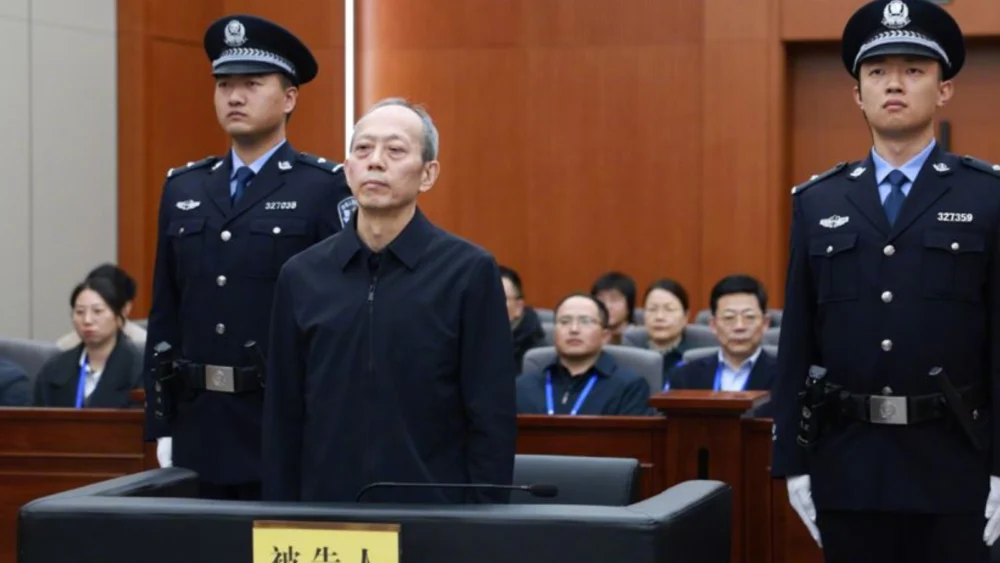
A seismic judicial pronouncement has rocked China’s sporting establishment, with Gou Zhongwen, the former head of the General Administration of Sport (GAS), receiving a death sentence with a two-year reprieve. The Yancheng Intermediate People’s Court found Gou guilty of orchestrating large-scale bribery and engaging in significant abuse of power during his tenure, a verdict that sends shockwaves through both traditional sports and the burgeoning esports sector he oversaw. The sentence, though suspended, carries profound implications for governance and anti-corruption efforts within China’s state-controlled sports landscape.
The court’s damning indictment detailed Gou’s systemic corruption, revealing that between 2009 and 2024, he illicitly amassed over 236 million yuan, equivalent to approximately $33.4 million USD, through a complex web of bribery. This extensive period of alleged malfeasance spans his rise through various influential positions within the government, culminating in his leadership of the GAS, the apex body responsible for regulating and developing all forms of sport in China, including the rapidly expanding realm of esports.
Judicial findings presented by the Yancheng court painted a grim picture of Gou leveraging his formidable authority. He is accused of exploiting his senior government roles to facilitate personal enrichment by granting undue advantages to individuals and corporate entities. These benefits were allegedly secured through the manipulation of project approvals, the awarding of contracts, and the influence over business operations under the GAS’s purview. The court unequivocally characterized the scale of Gou’s corruption as "extremely large," underscoring the profound societal damage inflicted by his actions, which were deemed "extremely negative" in their impact.
At 68 years old, Gou Zhongwen’s conviction carries the ultimate penalty, albeit with a crucial suspended element. In addition to the suspended death sentence, he has been permanently stripped of his political rights, a severe sanction designed to prevent any future involvement in public life. Furthermore, all of his personal assets have been ordered confiscated, a clear signal of the state’s intent to recover illicit gains and deter future corruption.
A Shadow Over Esports and Traditional Sports
The downfall of Gou Zhongwen is particularly significant given his stewardship of the GAS during a pivotal period for both traditional sports and esports in China. Under his leadership, the GAS officially recognized esports as China’s 99th sport in 2016, a move that ostensibly legitimized the industry and opened doors for professional development and investment. However, his personal stance on gaming and competitive esports was widely perceived as lukewarm at best, and often overtly critical.
While esports experienced an unprecedented surge in popularity across China, becoming a cultural phenomenon and a multi-billion dollar industry, Gou Zhongwen himself was not seen as a champion of its growth. This is a critical observation, especially when juxtaposed with the government’s increasingly stringent regulations on the gaming sector. The year 2021 marked the implementation of some of the strictest gaming restrictions in the world, spearheaded by the National Press and Publication Administration (NPPA), the body responsible for game approvals. These regulations imposed a strict three-hour weekly gaming limit on individuals under the age of 18.
The ramifications for esports were immediate and severe. Since all professional players in China are required to be registered athletes, this age restriction effectively barred minors from entering the professional esports pipeline. This starkly contrasted with traditional sports, where no such age-based prohibitions exist for aspiring athletes. Critics argue that the GAS, under Gou’s leadership, failed to advocate for esports or negotiate any carve-outs for the industry, thereby allowing these restrictive measures to significantly stifle its potential and impact. This inaction, coupled with his alleged corruption, paints a complex picture of his leadership.
Chronology of a Downfall
Gou Zhongwen’s career trajectory offers a stark timeline of his rise and eventual fall. His initial public service roles laid the groundwork for his ascension through the ranks of China’s sports administration. His involvement in the Beijing 2022 Winter Olympics, where he held a significant leadership position as President of the Chinese Olympic Committee, placed him at the pinnacle of China’s sporting elite. This period, however, appears to have coincided with the height of his alleged corrupt activities.

The period of alleged bribery, from 2009 to 2024, encompasses Gou’s tenure in various high-profile positions. While the exact dates of his leadership at the GAS are not explicitly detailed in the initial reports, the broad timeframe suggests that his corrupt practices may have been ongoing throughout much of his influential career. His prior role as a Beijing vice-mayor from 2012 to 2013 also came under scrutiny, with a separate five-year prison sentence handed down for abusing his authority. This conviction stemmed from actions related to the acquisition of a public project, which allegedly resulted in substantial state losses.
The culmination of these charges led to the suspended death sentence, a judicial outcome that reflects the gravity with which the Chinese authorities are treating corruption within their state apparatus.
The Mechanics of a Suspended Death Sentence in China
In China, a death sentence with a two-year reprieve is a distinct legal mechanism. It is typically reserved for individuals convicted of extremely serious crimes, where the court deems a direct execution to be too severe or where there is a possibility of commutation. The common practice is that if the convicted individual demonstrates good behavior and commits no further offenses during the two-year reprieve period, the sentence is commuted to life imprisonment.
However, the Yancheng court’s ruling in Gou Zhongwen’s case included a significant caveat. Despite acknowledging that Gou confessed to the charges, voluntarily disclosed additional bribery schemes not yet uncovered by investigators, and returned illicit gains, the court deemed these mitigating factors insufficient to override the severity of his crimes. Consequently, the court ruled that Gou will not be eligible for parole or sentence reductions. This means that once the death sentence is formally reduced after the two-year reprieve, he is expected to serve the remainder of his life in prison without the possibility of early release. This provision underscores the court’s intent to ensure a lifelong punitive consequence for his actions, regardless of the suspended nature of the initial sentence.
Official Responses and Broader Implications
While direct official statements from all affected parties remain limited, the court’s verdict itself serves as a powerful statement from the Chinese judiciary and, by extension, the state. The severe sentencing of such a high-ranking official signals a continued and intensified commitment to the anti-corruption campaign that has been a hallmark of President Xi Jinping’s administration. The campaign, launched in 2012, has targeted corruption at all levels of government and within state-owned enterprises, aiming to restore public trust and ensure the integrity of the ruling Communist Party.
The implications of Gou Zhongwen’s conviction extend beyond the immediate punishment. It raises critical questions about accountability and oversight within China’s vast state sports system. The scale of the bribery, involving hundreds of millions of yuan, suggests systemic weaknesses that allowed such extensive corruption to fester for years, even within an organization overseen by a senior official.
For the esports industry, the verdict offers a complex mix of disappointment and potential opportunity. The recognition of esports as a formal sport was a positive step, but Gou’s perceived lack of support and the subsequent regulatory environment have created challenges. His conviction, and the potential for new leadership with a more supportive outlook, could pave the way for a more favorable development trajectory for esports in China. However, the shadow of government regulation and the ongoing scrutiny of the gaming industry will undoubtedly continue to shape its future.
The case also serves as a stark reminder of the stringent control the Chinese government exercises over all aspects of society, including sports and entertainment. While the anti-corruption drive aims to ensure fairness and prevent abuse of power, it also operates within a system where state institutions wield immense influence. The outcome for Gou Zhongwen, a man who held significant sway over the sporting fortunes of a nation, is a testament to the power of the state to both elevate and ultimately bring down its most senior officials when deemed to have transgressed. The future governance of Chinese sports, particularly in the dynamic and evolving world of esports, will be closely watched in the wake of this unprecedented judicial ruling.