


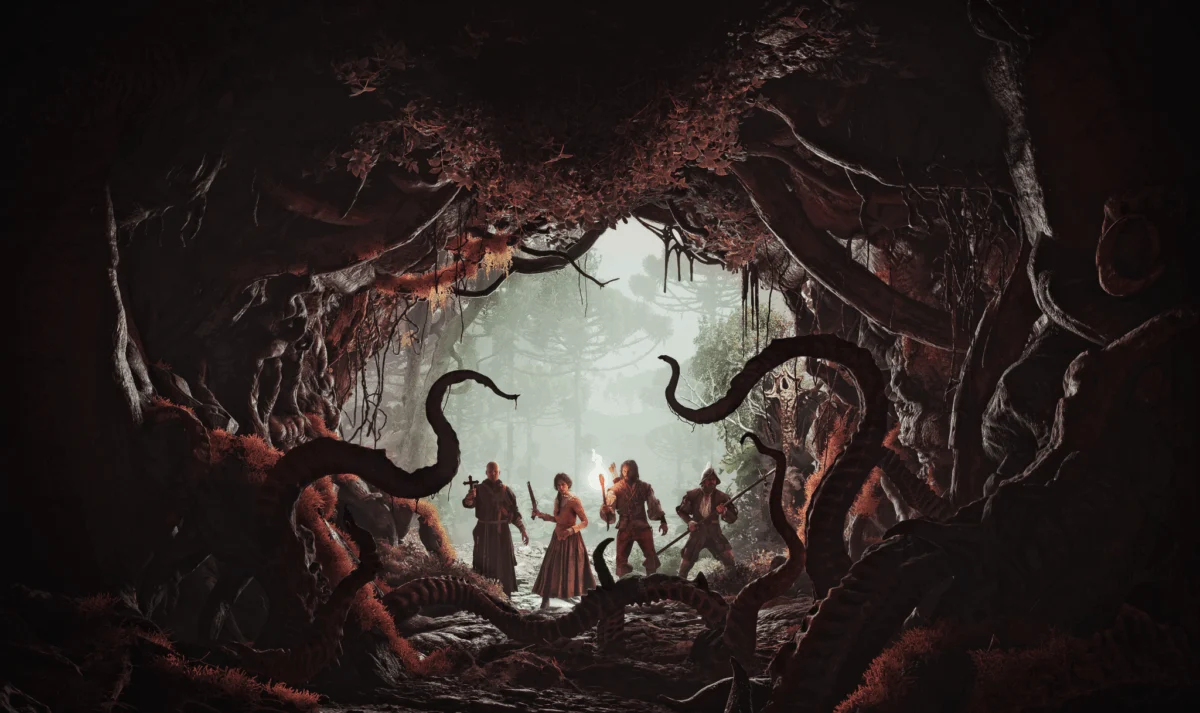
The Mound: Omen of Cthulhu represents a significant stylistic departure for ACE Team, the Chilean development studio recognized for its surrealist aesthetics and unconventional gameplay loops. Published by NACON, this co-operative psychological horror title attempts to fuse the high-stakes tension of the "extraction" genre with the atmospheric dread of 20th-century weird fiction. Set against the backdrop of a cursed 16th-century South American jungle, the game moves away from the studio’s previous whimsical or brawler-focused titles, such as Zeno Clash or Rock of Ages, to explore a more somber, survival-oriented landscape. As the title enters its initial launch window, early critical assessments based on "Review-in-Progress" sessions highlight a project that is as much an experiment in auditory psychological warfare as it is a traditional treasure-hunting expedition.

Historical Context and Literary Foundation
The narrative foundation of The Mound: Omen of Cthulhu is loosely derived from the H.P. Lovecraft novella "The Mound," which was originally ghostwritten for Zealia Bishop between 1929 and 1930 and published in an abridged form in 1940. While the original text focuses on an underground civilization in the American Southwest, ACE Team has re-contextualized the mythos to suit a 16th-century colonial expedition. Players assume the roles of Spanish explorers venturing into a South American jungle that is increasingly distorted by eldritch influences.

This shift in setting allows the developers to utilize period-accurate weaponry—such as muskets, crossbows, and rapiers—which fundamentally dictates the pace of engagement. By placing the player in a pre-industrial era, the developers emphasize the vulnerability of the human form against cosmic horrors. The primary objective is to locate "The Mound," a legendary site said to house both unfathomable riches and reality-shattering terrors.

The Gameplay Architecture: The Tempestad and the Jungle
The game’s structural loop begins aboard the Tempestad, a Spanish galleon that serves as the player hub and social lobby. In this environment, players select from an initial roster of four characters: a soldier, a priest, a scholar, and a navigator. While these characters possess unique backstories intended to flesh out the game’s lore, early technical analysis suggests that their functional gameplay differences are minimal at launch, with all characters sharing a baseline of movement and combat capabilities.

Progression is managed through a contract system overseen by the ship’s captain. These contracts dictate the difficulty of the mission—ranging from Basic to Legendary—and the specific environmental conditions, such as torrential rain or midnight fog. The game utilizes a scaling difficulty system that adjusts the density and aggression of enemies based on the number of players in the session. Although solo play is technically supported, ACE Team has explicitly marketed the title as a co-operative experience, citing the interdependence of players as a core mechanic for surviving the game’s psychological stressors.

Chronology of Development and Post-Launch Adjustments
The development of The Mound: Omen of Cthulhu has been characterized by a transparent dialogue between ACE Team and its early-access community. During the final review period leading up to the mid-July 2026 launch window, the developers issued several rapid-fire patches to address balance concerns.

Initially, the jungle environment was noted for its extreme lethality, with high "Total Party Wipe" (TPW) rates reported during "Advanced" missions. However, a significant update deployed shortly before the public release appeared to over-correct these metrics. Journalistic testing following this patch indicated a substantial drop in difficulty, allowing veteran players to navigate high-tier missions with minimal resistance. This volatility in game balance suggests that ACE Team is still fine-tuning the "sweet spot" between rewarding progression and maintaining the oppressive atmosphere necessary for a horror title.

Furthermore, the review period was marred by intermittent network instability. Reports of "Connection Lost" errors mid-mission resulted in players being stranded in the jungle without their teammates, often leading to the loss of collected resources and experience points. ACE Team has acknowledged these server-side issues, stating that stability remains their primary technical priority in the immediate post-launch roadmap.

Mechanics of Insanity: Auditory and Visual Deception
The defining feature of The Mound: Omen of Cthulhu is its "Sanity Engine," which leverages high-fidelity audio design and proximity-based voice chat to manipulate the player’s perception. Unlike many horror games that rely on jump-scares, this title employs a slow-burn psychological erosion.

The integration of proximity chat is not merely a social tool but a gameplay liability. The jungle is designed to "listen" to player input. Excessive noise, whether through voice communication or the discharge of firearms, attracts the island’s inhabitants. As a player’s sanity meter depletes, the game begins to feed them false information. This includes:

- Peripheral Hallucinations: Shadows and movements in the brush that vanish upon direct inspection.
- Auditory Mimicry: The sound of a teammate’s voice or footsteps coming from a direction where no player is present.
- Visual Corruption: Teammates may temporarily appear as undead monstrosities or writhing masses of worms, often leading to "friendly fire" incidents as panicked players defend themselves against perceived threats.
To mitigate these effects, players must rely on an AI-controlled companion known as the Priest, who steers an ox-drawn carriage. This carriage serves as a mobile sanctuary and a deposit point for treasures. The Priest leaves a trail of white paint on the jungle floor, providing a literal "breadcrumb trail" for players who become disoriented by the environment’s shifting geography.

Supporting Data and Resource Economy
The game’s economy revolves around successful extractions. Players who return to the Tempestad with idols, trinkets, and biological samples are rewarded with two primary currencies: Experience Points (XP) and Tokens.

- Experience Points: Used to unlock higher-tier contracts and passive character boons.
- Tokens: A finite resource used to purchase single-use survival tools. These include map fragments, protective medallions, and smelling salts for reviving downed allies.
A point of contention among early adopters is the "perishable" nature of upgrades. Unlike traditional RPGs where equipment improvements are permanent, many of the weapon enhancements and specialized gear in The Mound are lost upon death or mission completion. This design choice aligns with the extraction genre’s emphasis on risk management but has drawn criticism for making the progression feel "temporary" and "repetitive."

Critical Evaluation of Movement and Combat
While the atmosphere and psychological mechanics have received praise for their innovation, the mechanical execution of combat and movement has been identified as a primary weakness. The game lacks several features common to modern first-person titles:

- Movement Limitations: There is no dedicated jump button, which can lead to players becoming snagged on the jungle’s dense geometry.
- Defensive Gaps: At launch, the game features no parry or block mechanic. Combat is largely a matter of "hit and retreat," which critics have described as "janky" and "rudimentary."
In response to these criticisms, ACE Team issued a statement via the Steam Community Hub, confirming that they are currently developing a blocking system. However, they clarified that this feature would not be ready for the initial launch, citing the complexity of integrating defensive animations with the existing eldritch enemy types.

Official Responses and Future Implications
NACON, the game’s publisher, has positioned The Mound: Omen of Cthulhu as a mid-tier "AA" title intended to capture a niche audience interested in high-concept horror. In a recent press briefing, NACON representatives emphasized the "unique social experiment" aspect of the game’s proximity chat and sanity systems.

Industry analysts suggest that the success of The Mound will depend heavily on the frequency of content updates. The "Review-in-Progress" data indicates that while the first ten hours of the game are highly effective at inducing dread, the predictability of the hallucinations starts to set in once the player understands the underlying triggers. To maintain a long-term player base, ACE Team will need to introduce new "Sanity Events" and varied environments beyond the initial jungle biomes.

Broader Impact on the Extraction Genre
The Mound: Omen of Cthulhu enters a market currently dominated by titles like Hunt: Showdown and Escape from Tarkov. By removing the Player-vs-Player (PvP) element in favor of a pure Player-vs-Environment (PvE) focus on psychological breakdown, ACE Team is betting on a more narrative-driven extraction experience.

The implications of this shift are significant. If successful, The Mound could pave the way for more "Atmospheric Extractions" that prioritize mood and mystery over competitive shooting mechanics. However, the current technical hurdles—specifically regarding combat depth and server stability—remain the primary obstacles between the game’s ambitious concepts and a polished final product. For now, the expedition toward the center of the jungle remains a perilous, if somewhat unrefined, journey into the heart of madness.