


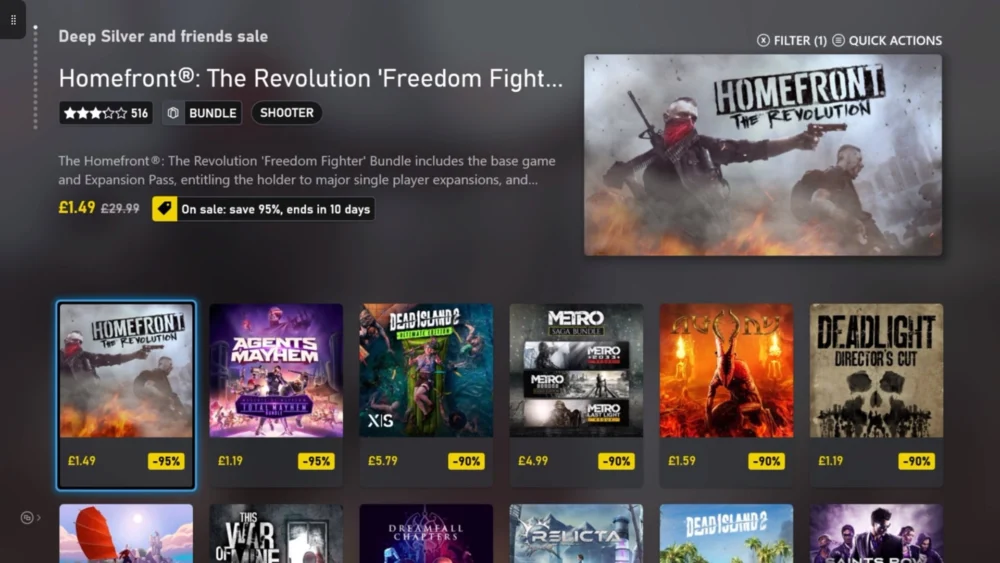
The digital storefront for Xbox consoles, the Microsoft Store, has recently introduced several new "sort by" options, significantly enhancing user discoverability and navigation. These additions, which include filters for "Discount: High-Low," "Most Wishlisted," "Price: Low-High," and "Price: High-Low," represent a notable improvement in the platform’s user experience, particularly for consumers navigating the vast and frequently updated catalog of games and digital content. While Microsoft has yet to issue an official announcement regarding these changes, their appearance has been widely noted and positively received within the Xbox gaming community, signaling a proactive step towards refining the digital shopping journey for its users.
Discovery and Community Verification
The initial detection of these enhanced sorting capabilities was credited to a user identified as "Clippy" on the ResetEra forums, a prominent online community dedicated to video game discussions. On a recent thread, "Clippy" raised inquiries regarding the novelty of these "sort by" options, indicating observations of new functionalities that were not previously apparent within the Microsoft Store interface. This community-led discovery highlights a common pattern in the digital landscape, where platform enhancements are often first identified by vigilant users before any formal communication from the developers or platform holders.
Following this initial report, numerous other users across various geographical regions and using different access points—both directly on Xbox consoles and via web browsers—began confirming the presence of these new filters. This grassroots verification process underscored the widespread rollout of these features, even in the absence of a formal press release or specific system update notification. The lack of an immediate official statement from Microsoft is not entirely unprecedented for minor user interface (UI) and user experience (UX) adjustments, which are sometimes deployed incrementally or as part of ongoing A/B testing protocols designed to gauge user reception and system performance before broader public announcements. The staggered nature of feature rollouts often allows platform providers to monitor stability and gather real-world data without a large-scale public commitment.
Detailed Examination of New Sorting Functionalities
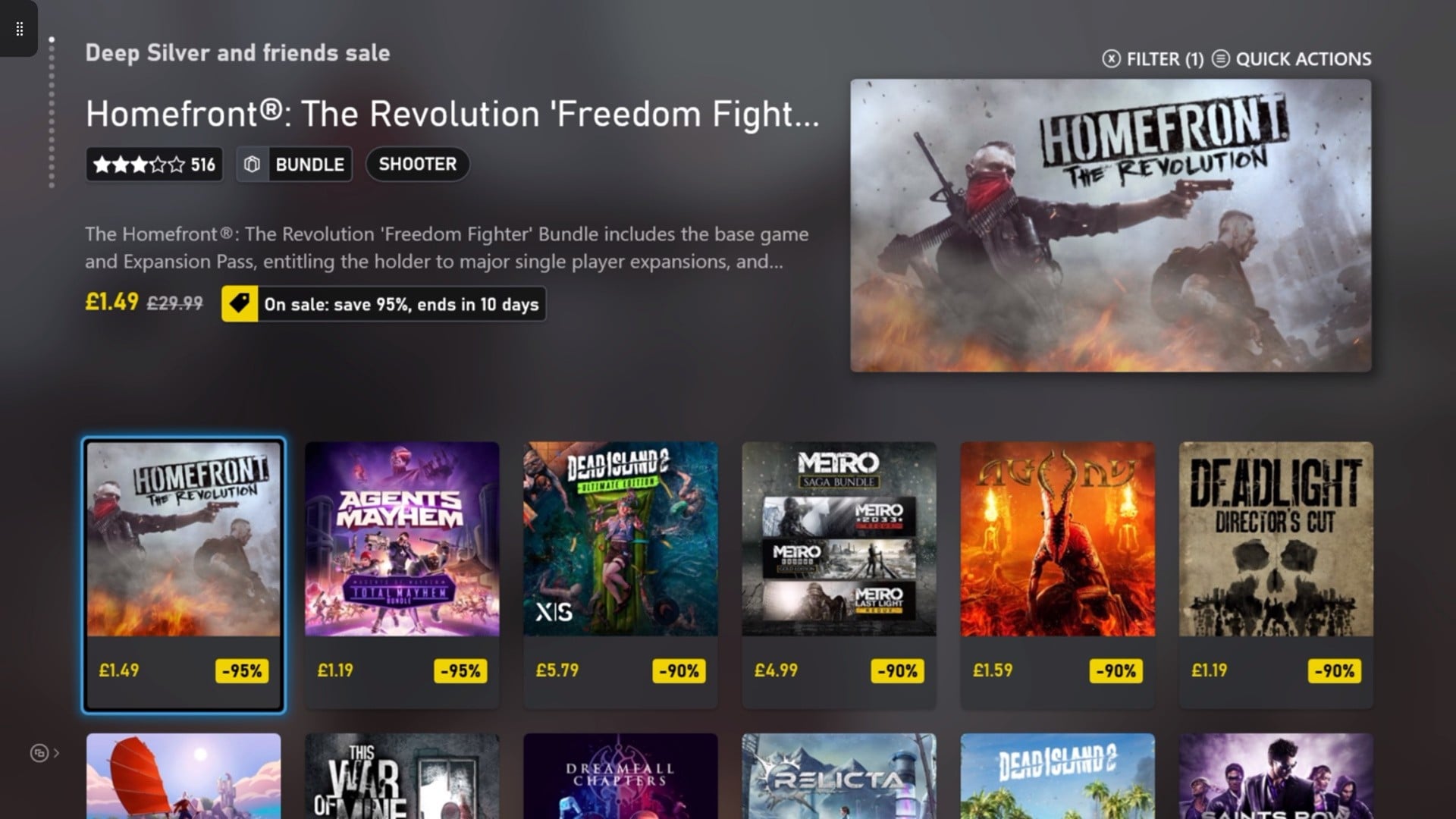
Among the most impactful new additions is the "Discount: High-Low" filter. This feature empowers users to organize games within any active sale event by the magnitude of their price reduction, starting with the steepest discounts. For dedicated bargain hunters and specialized gaming publications that regularly track and report on game deals, this filter is an invaluable tool. It streamlines the process of identifying games with significant price drops, making it considerably easier to compile lists of highly discounted titles—a popular content format that generates substantial consumer interest, especially during major seasonal sales periods such as Black Friday, Spring Sale, or Summer Game Fest promotions. Prior to this enhancement, users might have been compelled to manually scroll through extensive lists or rely on third-party deal aggregators to pinpoint the most substantial savings, a cumbersome and time-consuming process given the hundreds, if not thousands, of games frequently included in major Xbox sales events.
Another highly anticipated addition is the "Most Wishlisted" tab. This filter is engineered to display games based on their cumulative popularity, specifically how frequently they have been added to players’ wishlists across the entire Xbox platform. The wishlist feature itself serves as a crucial indicator of consumer intent and interest, allowing users to track desired titles and receive automated notifications about price reductions or availability. By surfacing the "Most Wishlisted" games, Microsoft provides a unique and transparent insight into prevailing player desires and market demand. Recent observations using this filter have consistently shown titles such as Cyberpunk 2077, Stray, Elden Ring, Grand Theft Auto V, and Red Dead Redemption 2 appearing at the top of the list. This aggregation of popular demand not only assists individual users in discovering highly anticipated or critically acclaimed titles they might have overlooked but also offers invaluable market data to developers and publishers regarding current player sentiment and purchasing intent.
Furthermore, the comprehensive integration of dedicated "Price: Low-High" and "Price: High-Low" sorting options provides users with more granular control over price-based discovery. While some form of price-based filtering has been accessible on the browser version of the Microsoft Store for a considerable period, its consistent and intuitive integration across both console and desktop interfaces marks a significant step towards achieving parity in user experience. This unified functionality ensures that users can access the same robust sorting tools regardless of their chosen access point, simplifying the shopping experience whether they are browsing directly on their Xbox console or planning purchases from a personal computer. Such consistency is paramount for maintaining a seamless and frustration-free journey for consumers navigating the vast digital offerings within the Xbox ecosystem.
The Evolution of the Microsoft Store and the Imperative of User Experience
The Microsoft Store, in its various iterations, has been a foundational element of the Xbox ecosystem since the nascent stages of digital distribution. Initially conceived as a platform for game downloads and multimedia content, it has progressively evolved into a comprehensive digital marketplace encompassing games, downloadable content (DLC), applications, movies, and more. The trajectory of the Microsoft Store has not been without its criticisms, including past concerns regarding its interface design, search efficacy, and overall discoverability in earlier versions. In comparison to competitors such as Valve’s Steam, which has long been lauded for its extensive filtering options, robust user reviews, and vibrant community features, the Microsoft Store has at times been perceived as trailing in certain aspects of its user experience.
In the increasingly competitive and saturated digital games market, a robust and user-friendly storefront is not merely a convenience but a strategic imperative. The ability for users to efficiently navigate an expansive library of titles, particularly during large-scale sales events that can feature thousands of discounted games, directly influences purchasing decisions. A cluttered, inefficient, or difficult-to-navigate store can lead to missed opportunities for both consumers seeking specific content and publishers aiming to maximize sales. Enhanced sorting and filtering options directly address these challenges by empowering users to quickly pinpoint games that align with their specific criteria, whether it is identifying the most affordable titles, the most popular ones, or those with the steepest discounts. This renewed focus on improving discoverability aligns with broader industry trends that emphasize personalized recommendations, intuitive search tools, and streamlined navigation to combat the pervasive issue of content overload in digital marketplaces.

Analysis of "Most Wishlisted" Titles and Market Trends
The current "Most Wishlisted" list provides a compelling snapshot of contemporary player interests and the enduring appeal of certain titles. The consistent appearance of games such as Cyberpunk 2077, Stray, Elden Ring, Grand Theft Auto V, and Red Dead Redemption 2 offers particularly insightful data into prevailing consumer preferences.
- Cyberpunk 2077: Despite a notoriously challenging launch, Cyberpunk 2077 has undergone a remarkable redemption arc, driven by continuous updates, extensive bug fixes, and the critically acclaimed Phantom Liberty expansion. Its prominent position on the wishlist likely reflects a resurgence of interest from players who opted to wait for the game to mature or those now eager to experience the complete, polished package. Its immersive world and compelling narrative continue to attract new players.
- Stray: An indie phenomenon, Stray garnered widespread attention with its unique premise of navigating a futuristic, dystopian city as a feline protagonist. Its consistent presence suggests a strong, ongoing appeal for distinctive narrative experiences and visually striking independent titles, resonating with a broad audience seeking innovative departures from typical AAA offerings.
- Elden Ring: FromSoftware’s critically acclaimed action RPG remains a benchmark for its genre, celebrated for its expansive open world, challenging combat mechanics, and rich, enigmatic lore. Its high wishlisted status indicates a sustained demand for demanding, high-quality experiences that offer hundreds of hours of engaging gameplay. The anticipation surrounding its upcoming Shadow of the Erdtree expansion also undoubtedly contributes to its continued prominence.
- Grand Theft Auto V: A veritable titan of the entertainment industry, GTA V (and its perpetually popular Grand Theft Auto Online component) continues to defy conventional sales cycles, remaining a top-selling title years after its initial release across multiple console generations. Its persistent presence on the wishlist underscores its unparalleled longevity, robust online community, and the enduring allure of its expansive open-world sandbox. Speculation and anticipation for Grand Theft Auto VI also likely maintain the franchise at the forefront of player consciousness.
- Red Dead Redemption 2: Rockstar Games’ other magnum opus, Red Dead Redemption 2, is universally praised for its breathtaking open world, intricate storytelling, and unparalleled attention to detail. Much like GTA V, its enduring popularity and critical acclaim ensure it remains a highly sought-after title for players seeking deep, immersive, narrative-driven experiences within a meticulously crafted setting.
Collectively, the prominence of these titles illustrates a diverse player base with interests ranging from expansive open-world epics and intense role-playing games to innovative independent gems. It also highlights the continued relevance and long-term value proposition of games that offer significant post-launch support, continuous content updates, or possess inherent replayability.
Broader Impact and Strategic Implications
The introduction of these advanced sorting options carries several significant implications for the Xbox ecosystem and the broader digital games market.
For Consumers: The immediate and most tangible benefit to consumers is a dramatically improved shopping experience. The process of finding specific types of games, identifying the most attractive deals, or discovering popular titles becomes less of a laborious chore and more of an intuitive and engaging process. This reduction in friction can lead to higher engagement with the store, increased user satisfaction, and potentially a greater volume of purchases, as users are more likely to find precisely what they are seeking or serendipitously discover appealing alternatives. The "Discount: High-Low" filter, in particular, empowers consumers to make more informed purchasing decisions by easily comparing the value proposition of various discounted titles.
For Developers and Publishers: While not directly affecting game development cycles, these features offer new avenues for game discoverability and strategic positioning. Games with high discount percentages during sales will naturally gain increased visibility, potentially boosting sales. Similarly, a game that consistently ranks high on the "Most Wishlisted" list can serve as a powerful signal of strong community interest, potentially influencing future marketing strategies, content updates, or even pricing adjustments. Publishers may also strategically leverage the "Price: Low-High" filter to position lower-priced independent titles or older catalog games to attract budget-conscious buyers. The data-driven insights gleaned from these sorting preferences can be invaluable for optimizing pricing strategies and promotional campaigns.
Competitive Landscape: In the fiercely competitive landscape of digital storefronts, every enhancement to the user experience contributes to platform differentiation. Valve’s Steam, for example, has long been considered a benchmark for its extensive filtering options, comprehensive tag system, and robust community-driven features. Similarly, Sony’s PlayStation Store and Nintendo’s eShop offer various sorting and filtering functionalities, though their comprehensiveness and consistency can vary. By bolstering its own sorting capabilities, Microsoft positions the Xbox Microsoft Store more competitively, aligning its offerings with industry best practices and meeting evolving consumer expectations for modern digital marketplaces. This strategic move reflects a continued commitment from Microsoft to refine its platform’s core functionalities and ensure it remains an attractive and efficient destination for gamers worldwide.
Future Outlook and Continuous Improvement
While these new sorting options represent a welcome and significant enhancement, the evolution of digital storefronts is an ongoing and iterative process. Users may reasonably anticipate further refinements and additions, such as more granular genre filters, sorting based on aggregated user reviews, or even more highly personalized recommendations driven by advanced artificial intelligence algorithms. The absence of an official, grand announcement suggests that these changes are likely part of a continuous, agile development cycle, where features are rolled out and refined based on real-world user data and direct feedback. This agile approach allows platform providers to adapt swiftly to user needs and dynamic market conditions without the constraints of large, infrequent update announcements.
The overwhelmingly positive community reaction to these changes underscores the profound importance of quality-of-life improvements in digital platforms. Even seemingly minor UI/UX enhancements can have a substantial impact on user satisfaction, engagement, and overall platform stickiness. As the Xbox ecosystem continues its expansion with offerings like Xbox Game Pass, cloud gaming initiatives, and an ever-growing library of titles, an efficient and intuitive storefront will remain paramount to its sustained success, ensuring that players can effortlessly navigate the vast and diverse universe of content available to them. These new sorting options are a clear indication of Microsoft’s ongoing efforts to refine this critical gateway for its global gaming community.