


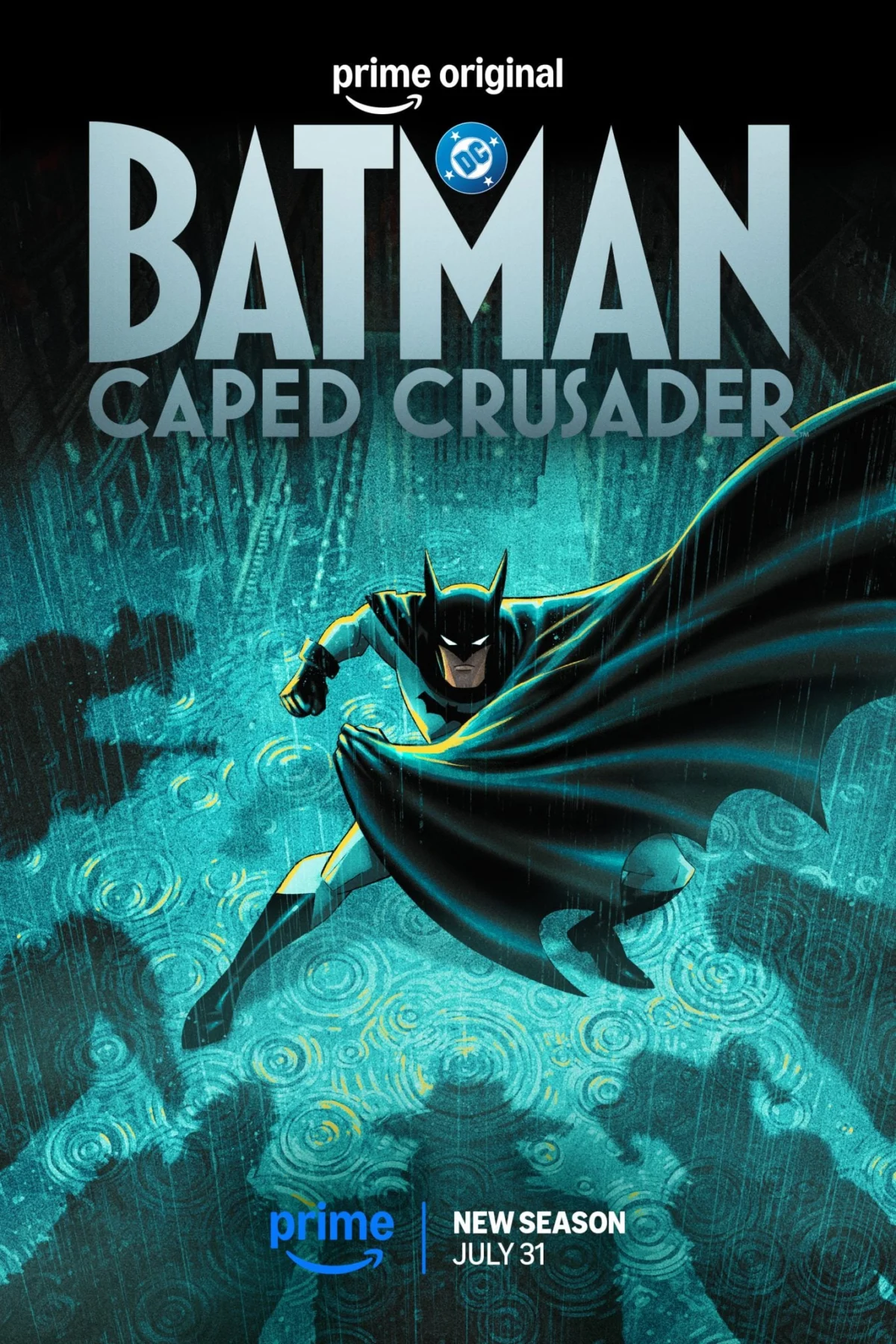
The second season of the critically acclaimed animated series Batman: Caped Crusader has debuted on Amazon Prime Video, marking a significant tonal shift that further leans into the noir-inspired, gritty realism established in its inaugural outing. Following a successful first season that reintroduced the Dark Knight through a 1940s lens, the premiere episode immediately plunges viewers back into a Gotham City defined by institutional corruption, monochromatic dread, and escalating violence. The narrative focus of the season opener centers on the high-stakes legal proceedings involving Rupert Thorne, the influential crime magnate whose arrest served as the climax of the previous season. As the city grapples with the power vacuum left by Thorne’s incarceration, the premiere introduces a more lethal iteration of the Riddler and explores the shifting dynamics between the masked vigilante and the Gotham City Police Department (GCPD).
Narrative Framework and the Thorne Trial
The premiere serves as a direct continuation of the narrative threads left dangling at the conclusion of season one. Rupert Thorne, portrayed as a pillar of Gotham’s criminal underworld who masquerades as a legitimate businessman, finds himself at the center of a media and legal firestorm. The trial of Thorne is not merely a subplot but the primary engine driving the episode’s tension. It highlights the systemic difficulties of prosecuting organized crime in a city where the judiciary and the press are susceptible to influence.
A pivotal addition to this season’s cast is the character of Hattie, a reimagined, gender-bent version of the Mad Hatter. Referred to as the “Mad Hatter of Broadcasting,” Hattie occupies a unique role as a media personality who utilizes her platform to manipulate public perception. Throughout the premiere, Hattie orchestrates a campaign to frame Rupert Thorne as a victim of overzealous vigilantism and police misconduct. By painting Batman and his few allies within the GCPD as the true villains of Gotham, Hattie introduces a psychological and social dimension to the conflict, illustrating how narrative control can be as potent a weapon as physical force.
The Reimagining of Edward Nigma
One of the most striking departures in the season two premiere is the characterization of Edward Nigma, the Riddler. Historically depicted in various media as a theatrical mastermind obsessed with intellectual superiority and complex puzzles, the Caped Crusader version of Nigma is presented as an unrepentant, cold-blooded killer. This iteration eschews the flamboyant riddles of past interpretations in favor of a more visceral, sociopathic efficiency.
In the premiere, Nigma is shown to be a man of few words and extreme actions, willing to eliminate his own associates with little provocation. This shift aligns with the show’s broader creative mandate to strip away the campier elements of the Batman mythos, replacing them with a sense of genuine menace. The episode positions Nigma as a primary antagonist for the season, suggesting that his arrival signals a new era of "super-criminals" who are not bound by the traditional codes of the mob families like the Thornes or the Falcones. The narrative implication is clear: as Batman becomes more effective at dismantling traditional organized crime, he inadvertently paves the way for a more chaotic and violent brand of villainy.

Character Dynamics and the "Early Years" Batman
The portrayal of the titular character continues to emphasize his status as a "green" or developing hero. In this premiere, the audience is presented exclusively with Batman; Bruce Wayne does not make an appearance, reinforcing the idea that the mission has entirely consumed the man. Voice actor Hamish Linklater provides a performance that remains consistent with the first season—a monotone, whisper-heavy delivery that conveys a sense of suppressed rage and singular focus.
This version of Batman is far from the seasoned, respected tactician seen in later eras of DC lore. He remains a pariah, hunted by the majority of the GCPD and viewed with suspicion by the public. His only reliable conduits for justice are Commissioner James Gordon and his daughter, Barbara Gordon. However, even these alliances are strained by Batman’s uncompromising methods.
Furthermore, the premiere delves into the internal domestic tension at Wayne Manor. The relationship between Batman and Alfred Pennyworth remains frigid, with the Dark Knight insisting on referring to his guardian and confidant simply as “Pennyworth.” This lack of warmth serves as a narrative tool to highlight Batman’s emotional detachment and his refusal to acknowledge the human cost of his crusade. Observers of the series suggest that the evolution of the Batman-Alfred dynamic will be a cornerstone of the season’s emotional arc, as the vigilante must eventually learn to balance his obsession with the necessity of human connection.
Technical Execution and Visual Aesthetic
Produced by Amazon MGM Studios in collaboration with executive producers Bruce Timm, J.J. Abrams, and Matt Reeves, Batman: Caped Crusader maintains its distinct visual identity. The animation style utilizes a hybrid approach, featuring hand-drawn character designs that evoke the aesthetic of the 1940s golden age of animation, layered over 3D-rendered environments and vehicles. This technique allows for more complex "camera" movements and dynamic action sequences while preserving the classic look that Bruce Timm pioneered in the 1990s.
The color palette of the season two premiere is intentionally desaturated. The heavy use of greys, muted blues, and deep shadows reinforces the "dour" atmosphere described by early reviewers. While some may find the lack of vibrant color visually taxing, it serves the thematic purpose of reflecting a city in decay. The art direction emphasizes the industrial, oppressive nature of Gotham’s architecture, making the city itself feel like a character that is actively hostile toward its inhabitants.
Chronology and Production Background
The path to Season 2 of Batman: Caped Crusader has been a subject of industry interest. Originally developed for HBO Max (now Max), the series was part of a cost-cutting measure and strategic shift at Warner Bros. Discovery, which led to the project being shopped to other platforms. Amazon eventually secured the rights for a two-season order, ensuring that the creative team could fulfill their long-term vision for this specific universe.

- Late 2021: Production officially begins under the leadership of Bruce Timm, Matt Reeves, and J.J. Abrams.
- August 2022: Warner Bros. Discovery announces it will not move forward with the series on Max, leading to a competitive bidding war.
- March 2023: Amazon MGM Studios officially picks up the series for two seasons.
- August 2024: Season 1 premieres to critical acclaim, noted for its psychological depth and noir roots.
- July 2026: Season 2 premieres (per the schedule), continuing the exploration of Gotham’s underworld.
Industry Implications and Broader Impact
The success of Batman: Caped Crusader represents a broader trend in the entertainment industry toward "prestige" adult animation. By moving away from the traditional Saturday morning cartoon format, Amazon and the creative team have tapped into an audience that seeks sophisticated storytelling within the superhero genre.
The show’s willingness to "gender-bend" established characters like the Mad Hatter and Penguin (seen in season one) demonstrates a commitment to subverting expectations while maintaining the core spirit of the source material. This approach allows the series to exist as a standalone "Elseworlds" story, free from the constraints of the main DC Cinematic Universe or the legacy of the 1992 Animated Series.
Industry analysts suggest that the performance of Season 2 will be a key indicator of the viability of high-budget, creator-driven animated projects on streaming services. With the "This Season" montage at the end of the premiere teasing the arrival of several iconic villains and a worsening "war zone" atmosphere in Gotham, the stakes for the production are higher than ever.
Conclusion and Future Outlook
The season two premiere of Batman: Caped Crusader successfully re-establishes the show’s dark tone while raising the stakes for its protagonists. By focusing on the intersection of crime, law, and media manipulation, the episode moves beyond simple hero-versus-villain tropes to offer a more nuanced look at a city in crisis.
As the trial of Rupert Thorne proceeds and Edward Nigma’s violent spree continues, the Dark Knight finds himself increasingly isolated. The technical prowess of the animation and the disciplined, albeit polarizing, vocal performances contribute to a cohesive vision of a Gotham City that is as beautiful as it is broken. With the full season release scheduled for late July on Amazon Prime, fans and critics alike are waiting to see if this iteration of Batman can find a path to victory in a world where the odds are perpetually stacked against justice. The premiere concludes with a stark warning: the worst is yet to come for Gotham, and its protector is only beginning to understand the true nature of the darkness he has sworn to fight.