


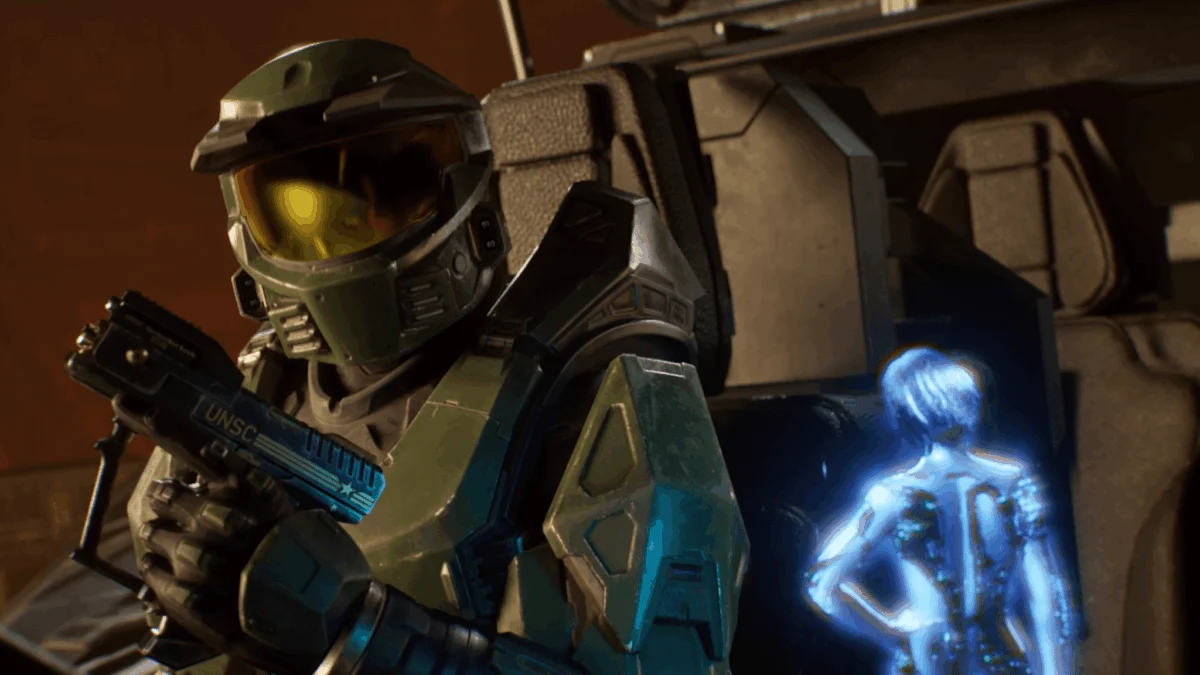
The release of Halo: Campaign Evolved marks a pivotal moment in the history of Microsoft’s gaming division, arriving exactly 25 years after the original Xbox and Halo: Combat Evolved redefined the landscape of console-based first-person shooters. Developed by the newly rebranded Halo Studios—formerly known as 343 Industries—this remake serves as both a technical showcase for Unreal Engine 5 and a strategic reset for a franchise that has spent much of the last decade searching for its modern identity. By reconstructing the 2001 classic from the ground up, the developers have attempted to bridge the gap between nostalgic purism and the expectations of a contemporary gaming audience, delivering a product that is as much a historical preservation project as it is a modern blockbuster.

The Technical Transition: From Slipspace to Unreal Engine 5
The most significant shift in the development of Halo: Campaign Evolved is the abandonment of the proprietary Slipspace Engine in favor of Epic Games’ Unreal Engine 5 (UE5). This transition, which was first hinted at during the "Project Foundry" technical demonstrations, represents a fundamental change in how Halo Studios approaches environmental design and lighting. The use of Nanite virtualized geometry and Lumen dynamic global illumination has allowed the developers to render the ring-world of Installation 04 with a level of fidelity previously reserved for pre-rendered concept art.

Technical analysis across various platforms reveals a high level of optimization on high-end hardware. On the Xbox Series X, the game maintains a stable 60 frames per second at a dynamic 4K resolution, utilizing the engine’s advanced temporal upscaling to preserve detail during high-action sequences. PC performance is similarly robust, with the title supporting a wide range of hardware configurations without the stuttering issues that plagued previous Slipspace-based releases. However, the transition has not been entirely seamless; certain legacy physics interactions, specifically regarding environmental hitboxes for foliage and rock formations, occasionally exhibit discrepancies between the visual mesh and the physical collision model.

A Chronology of the Halo Franchise (2001–2026)
To understand the weight of this release, one must look at the timeline of the franchise’s evolution and the milestones that led to the creation of Campaign Evolved:

- November 2001: Halo: Combat Evolved launches with the original Xbox, introducing the Master Chief and the revolutionary "two-weapon" system and regenerative shielding.
- November 2011: Halo: Combat Evolved Anniversary is released for the Xbox 360. Developed by Saber Interactive, it allowed players to toggle between original and remastered graphics but was criticized for its inconsistent art direction.
- December 2021: Halo Infinite launches, introducing an open-world structure and the Grappleshot, though the game faced long-term challenges regarding content delivery.
- October 2024: 343 Industries rebrands to Halo Studios and confirms that all future projects will utilize Unreal Engine 5.
- November 2026: Halo: Campaign Evolved launches as the centerpiece of the 25th-anniversary celebrations for the Xbox brand.
Narrative Refinement and Cinematic Direction
While the core narrative of Halo: Campaign Evolved remains faithful to the 2001 original, Halo Studios has implemented several "lore-conscious" adjustments to the script and cinematics. These changes are designed to better align the first game with the broader expanded universe and subsequent sequels. For instance, the dialogue between Captain Jacob Keyes and the Master Chief has been subtly rewritten to emphasize the connection to Miranda Keyes, a central character in Halo 2 and Halo 3.

The cinematics themselves have moved from in-engine real-time sequences to high-fidelity pre-rendered videos. While this allows for a level of facial animation and environmental detail that surpasses real-time capabilities, it has introduced a point of contention among enthusiasts: a 30 frames-per-second lock on cutscenes. This decision was reportedly made to provide a "cinematic feel," yet it creates a noticeable visual transition when moving from the fluid 60-plus FPS gameplay into narrative segments.

Evolution of Core Gameplay Mechanics
Halo: Campaign Evolved introduces several modern mechanics that were absent in the 2001 original but became staples of later entries. These additions are not merely cosmetic; they fundamentally alter the tactical flow of combat:

- Mobility Enhancements: The inclusion of a dedicated sprint mechanic allows for faster navigation of the game’s larger environments, though the developers have included a "Classic" skull to disable this for purists.
- Expanded Arsenal: Weapons such as the SMG and the Needle Rifle have been integrated into the campaign’s sandbox, providing more options for engaging the Covenant.
- Vehicle Boarding: A mechanic introduced in Halo 2, boarding is now fully functional in the remake, allowing players to hijack Wraiths and Ghosts mid-combat.
- Cooperative Play: The game now supports four-player online cooperative play, with level geometry in several missions enlarged to accommodate the increased player count without creating bottlenecks.
Level Design: Addressing the "Library" Problem
One of the most praised aspects of the remake is the structural revision of the original game’s most controversial levels. The seventh mission, "The Library," was long criticized for its repetitive corridors and monotonous combat encounters. In Campaign Evolved, Halo Studios has redesigned the space to include more varied Forerunner architecture, distinct visual landmarks to aid navigation, and dynamic combat scenarios that prevent the "copy-paste" sensation of the 2001 version.

Similarly, the final mission, "The Maw," has seen its iconic Warthog escape sequence revamped. While the original was noted for its illogical internal layout of the Pillar of Autumn, the remake provides a more grounded, architecturally consistent path that still retains the high-octane tension of the original countdown.

New Content: Operation Meteorite and Remix Mode
To justify the remake’s status as a standalone release, Halo Studios has included "Operation Meteorite," a series of three prequel missions. These levels follow the Master Chief and Sergeant Avery Johnson approximately one year before the events on Installation 04. These missions serve as a testing ground for the studio’s new creative direction, featuring more dialogue-heavy interactions and a focus on the Master Chief’s characterization before his partnership with Cortana.

Additionally, the "Remix Mode" offers high replayability by applying randomized Skulls and altering enemy faction placements within standard campaign missions. This mode is designed to cater to the modern "live-service" expectation of recurring content, providing a fresh experience for veteran players who have memorized the original enemy spawns.

Broader Impact on the Gaming Industry
The launch of Halo: Campaign Evolved is a significant data point in the ongoing debate regarding the necessity of remakes in the video game industry. For Microsoft, it represents a safe but high-quality bet to stabilize their flagship IP. By pricing the game as a "premium mid-range" title and omitting a dedicated competitive multiplayer mode, Microsoft has positioned this release as a prestige single-player experience meant to restore faith in the brand’s storytelling and technical prowess.

Industry analysts suggest that the success of Campaign Evolved will likely dictate the future of the franchise. If the UE5 transition is viewed as a success by the player base, it is highly probable that Halo 2 and Halo 3 will receive similar "Evolved" treatments, potentially leading to a unified, modernized trilogy that functions as a cohesive narrative arc for new players.

Conclusion and Strategic Outlook
Halo: Campaign Evolved succeeds in its primary objective: it provides a definitive version of a historical masterpiece that feels at home on 2026 hardware. While some technical hitches and artistic choices—such as the over-reliance on screen-shake and the 30FPS cinematic lock—prevent it from achieving absolute perfection, the overall package is a robust testament to the enduring appeal of the Master Chief.

As Halo Studios moves forward, the lessons learned from this remake will be instrumental. The focus on atmospheric storytelling, refined level design, and technical stability suggests a studio that has finally come to terms with its predecessor’s legacy while gaining the confidence to chart its own course. For the millions of "Reclaimers" who have followed the series since 2001, this release is a reminder that while the technology may evolve, the core "30 seconds of fun" remains the heart of the Halo experience.