


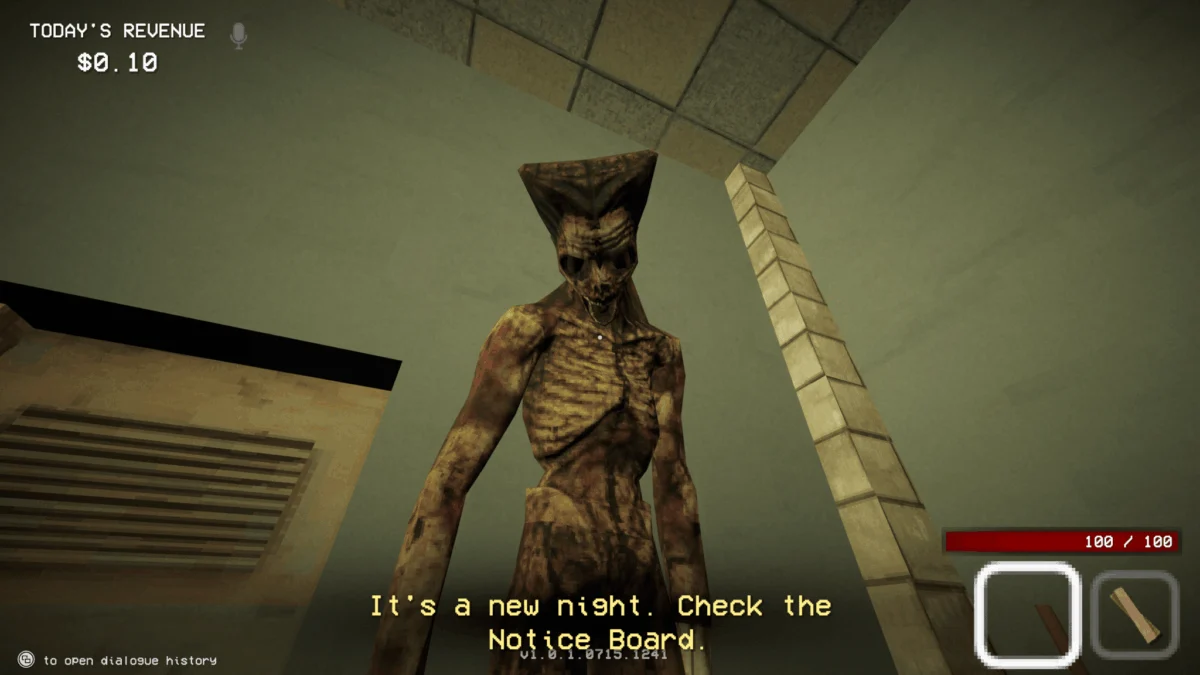
Shift at Midnight represents a calculated convergence of two distinct digital entertainment trends: the granular minutiae of professional simulation and the atmospheric tension of low-fidelity survival horror. Set against the backdrop of rural America in 1993, the title places players in the role of a gas station attendant tasked with balancing the mundane requirements of retail management against a burgeoning supernatural threat. This duality serves as the primary engine for the gameplay experience, offering a structured 13-shift narrative that explores the intersection of blue-collar labor and cosmic dread. As the title makes its debut on platforms including Xbox Series X and the Xbox Game Pass service, it invites a closer examination of how indie developers are increasingly utilizing "lo-fi" aesthetics to mask technical limitations while enhancing psychological unease.

The Dual-Phase Gameplay Structure
The core architecture of Shift at Midnight is divided into two distinct operational phases: the retail simulation and the survival confrontation. During the daylight and evening hours, the player is responsible for the standard upkeep of a 1990s-era convenience store. This involves a variety of task-oriented mini-games, including stocking shelves with inventory, cleaning spills, fueling customer vehicles, and managing the store’s internal finances. These elements are designed to create a "softly stressful" environment where the player is incentivized to maintain efficiency to appease an unseen, belligerent employer.
However, the simulation is complicated by a secondary objective: security screening. Drawing inspiration from the "identity verification" subgenre popularized by titles such as Papers, Please and That’s Not My Neighbor, players must utilize an ID scanner and visual observation to identify "doppelgangers"—malevolent entities attempting to infiltrate human society by mimicking customers. This process requires meticulous attention to detail, as cross-referencing identification papers with physical appearances becomes the only barrier between a successful shift and a catastrophic security breach.

Chronology of a Thirteen-Shift Campaign
The narrative progression of Shift at Midnight is strictly regulated through its Story Mode, which spans thirteen increasingly volatile work shifts.
- Shifts 1–3: The Onboarding Phase. During the initial stages, the game focuses on establishing the routine. Players learn the layout of the store and the basic mechanics of inventory management. The horror elements are introduced subtly, primarily through eerie customer interactions and vague lore clues found within the environment.
- Shifts 4–8: The Escalation Phase. As the player progresses, the margin for error narrows. The introduction of "The Entity"—a multi-legged, arachnid-inspired horror—occurs if a doppelganger is successfully permitted entry. Failure in the simulation phase directly triggers a survival phase at night, where the player must defend the premises.
- Shifts 9–12: The Resource Management Phase. The late-game introduces more complex entities with varied strengths and weaknesses. Players must invest store earnings into defenses, aesthetics, and an upgraded arsenal, including flamethrowers and high-caliber firearms, to combat the escalating threat.
- Shift 13: The Finale. The campaign culminates in a scripted sequence that attempts to provide a narrative resolution to the "creepypasta" style lore hints dropped throughout the game. This finale pushes the game’s engine to its limits, often resulting in high-intensity combat scenarios that deviate from the earlier stealth-focused encounters.
Technical Performance and Interface Analysis
The technical execution of Shift at Midnight is heavily informed by its "lo-fi" aesthetic, which utilizes low-polygon models and filtered textures to evoke the early 3D era of the mid-1990s. While this choice is stylistically effective—creating an "uncanny valley" effect that enhances the horror—it presents certain functional challenges. Reviewers have noted that visual cues required for identifying doppelgangers are occasionally obscured by the intentional graphical degradation, leading to infrequent but frustrating deduction errors.

On the Xbox Series X, the title maintains a stable frame rate, though the control scheme reveals a clear optimization for mouse and keyboard. First-person interactions, particularly those involving precise aiming or the manipulation of small objects, can feel "finicky" when using a standard controller. Furthermore, the reliance on the Xbox system’s on-screen keyboard for certain data-entry tasks disrupts the immersion and pace of the simulation. For players on handheld PC devices or consoles, these interface hurdles represent a notable barrier to the "perfect shift" sought by hardcore enthusiasts.
The Role of Procedural Events and Multiplayer
While the Story Mode provides a finite experience of approximately ten hours, Shift at Midnight includes an "Endless Mode" currently in a beta state. This mode is intended to offer higher replayability through randomized events and procedural shift generation. The developers have indicated that this mode will receive substantial content updates throughout the remainder of the year, focusing on expanding the variety of entity types and environmental hazards.

The title’s multiplayer component is another area of active development. Though marketed with a focus on co-operative play, the current iteration of the game is heavily weighted toward the solo experience. The inclusion of proximity voice chat adds a layer of tactical depth to the survival phases, allowing players to coordinate during stealth sequences or combat encounters. However, the lack of a "Player versus Player" (PvP) deception mechanic means the deduction elements of the game remain largely a solitary or purely co-operative task, which some critics suggest may limit the long-term engagement for groups of players.
Contextualizing the Lo-Fi Horror Trend
Shift at Midnight arrives at a time when the "retail horror" and "liminal space" genres are experiencing a surge in popularity on platforms like YouTube and Twitch. This "viral" potential is a key component of the game’s market strategy. By blending the mundane frustration of a service-industry job with the high-stakes terror of a monster invasion, the game taps into a specific cultural zeitgeist that finds humor and horror in the absurdity of modern labor.

The use of 1993 as a setting is not merely a nostalgic choice but a functional one. The lack of modern technology—such as smartphones or high-speed internet—justifies the player’s isolation and the analog nature of the investigation tools. This era-specific setting, combined with character models that evoke the "quasi-realism" of early 3D gaming (drawing comparisons to the character models found in GoldenEye 007), creates a unique visual identity that distinguishes the title from high-budget, photorealistic horror games.
Implications for the Indie Gaming Landscape
The inclusion of Shift at Midnight on Xbox Game Pass serves as a significant endorsement of the "mash-up" genre. It demonstrates a growing appetite among mainstream audiences for experimental indie titles that prioritize "vibes" and unique gameplay loops over traditional polish and high-fidelity graphics.

From an industry perspective, the game’s success or failure will likely influence how future simulation-horror titles are structured. If the "13-shift" narrative model proves successful, it may encourage other developers to move away from purely endless procedural loops in favor of more curated, story-driven experiences. However, the technical issues regarding collision detection and controller optimization serve as a reminder that the "lo-fi" label does not exempt a title from the necessity of mechanical precision, especially when those mechanics involve high-stakes survival.
Official Reception and Future Outlook
While official statements from the publisher have focused on the title’s "compact and punchy" narrative, player feedback has highlighted the charm of its "haunted house" style scares. Unlike "elevated horror" titles that focus on psychological trauma and looming dread, Shift at Midnight embraces the campy, often silly nature of its jump scares. This approach has garnered a positive response from casual horror fans who appreciate the game’s ability to transition from a serious simulation to a chaotic, flamethrower-fueled action game.

As the development team moves toward the full launch of the Endless Mode and further multiplayer refinements, the long-term viability of Shift at Midnight will depend on its ability to sustain a community through regular content drops. For now, it stands as a robust example of how specific, niche genres can be successfully combined to create a product that is greater than the sum of its parts. For solo players seeking a weekend of "spooky fun" or Game Pass subscribers looking for a unique diversion, Shift at Midnight offers a compelling, if occasionally unpolished, glimpse into the nightmares of the 1990s retail landscape.