


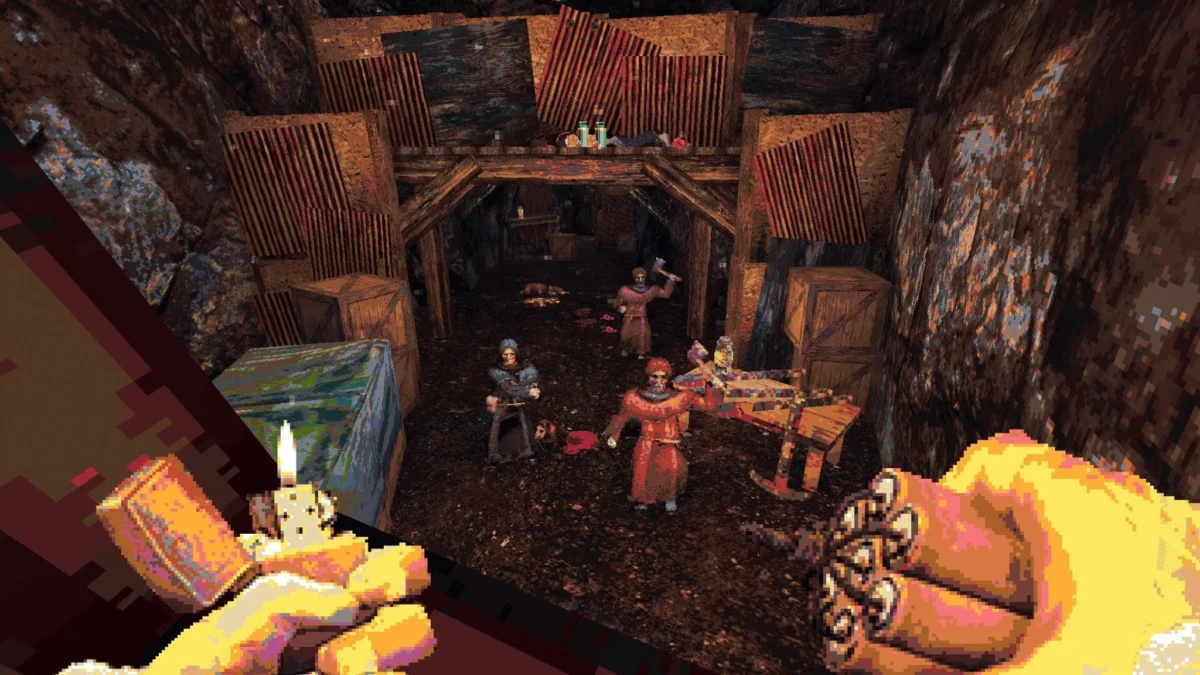
The landscape of the first-person shooter genre has undergone a dramatic transformation over the last decade, characterized by a fervent return to the design philosophies of the 1990s. This movement, colloquially known as the "boomer shooter" revival, has seen the emergence of several high-profile titles that prioritize speed, non-linear level design, and visceral combat over the cinematic scripted sequences common in the mid-2000s. Among the elite tier of these modern classics is Cultic, a title developed primarily by Jason Smith under the moniker Jasozz Games and published by 3D Realms. After establishing a formidable reputation on PC, Cultic has officially transitioned to home consoles, bringing its two-chapter campaign to the Xbox Series X and offering a comprehensive package of one of the most atmospheric shooters in recent memory.
The Genesis of a Modern Classic
The development of Cultic began as a passion project that sought to capture the specific aesthetic and mechanical feel of the Build Engine era, most notably the 1997 classic Blood. When Chapter One was released on PC in 2022, it was met with immediate critical acclaim for its ability to blend retro visuals with modern physics and survival horror elements. The game’s protagonist is a disgraced former detective in 1960s America who finds himself entangled in the machinations of a shadowy, violent cult. This narrative framework serves as a vehicle for a journey through increasingly macabre environments, ranging from desolate rural outposts to decaying urban centers and subterranean catacombs.
The arrival of the console version in 2026 marks the culmination of a multi-year development cycle. Following the success of the initial chapter, Jasozz Games spent several years refining the experience and developing Chapter Two, which concluded the primary narrative arc. The console release integrates both chapters into a singular, cohesive experience, allowing players to witness the full evolution of the detective’s struggle against the occult forces.

Narrative Architecture and Atmospheric Design
Cultic distinguishes itself from its peers by leaning heavily into a grim, investigative atmosphere. While many boomer shooters focus on high-octane action and heavy metal soundtracks, Cultic adopts a more measured, eerie tone. The narrative is delivered through environmental storytelling and discovered notes, mirroring the detective’s slow descent into a world of ritualistic horror. The setting of the 1960s provides a unique aesthetic backdrop, allowing for a mix of mid-century Americana and timeless gothic horror.
The level design is a standout feature, characterized by intricate, multi-layered maps that reward exploration. Unlike the "corridor shooters" of the modern era, Cultic’s environments are sprawling and interconnected, featuring secrets hidden behind breakable walls and complex puzzles that require the player to interact with the environment in meaningful ways. This design philosophy takes clear inspiration from survival horror stalwarts like Resident Evil 7 and Outlast 2, particularly in how it uses lighting and sound design to build tension before erupting into chaotic firefights.
Combat Mechanics and Weaponry
At its core, Cultic is a shooter that demands both precision and tactical thinking. The game utilizes a hybrid visual style: 3D environments populated by 2D sprites for enemies and objects. This "2.5D" approach is a deliberate stylistic choice that evokes the mid-90s, yet it is augmented by a modern physics engine. Players can pick up and throw almost any object in the environment, turning chairs, crates, and even severed limbs into improvised weapons.
The arsenal is a collection of grounded yet powerful tools. The standard-issue revolver and pump-action shotgun feel weighty and impactful, while more specialized equipment like TNT bundles, Molotov cocktails, and hatchets allow for creative approaches to combat. One of the game’s defining features is its limited resource management. On higher difficulty settings, ammo scarcity forces players to optimize their weapon usage and utilize the environment to thin out enemy ranks. The movement system is fast and fluid, incorporating slides and dodges that are essential for surviving the cult’s relentless onslaught.

Technical Performance on Xbox Series X
The transition from PC to the Xbox Series X brings the game’s unique art style to the big screen with high-fidelity clarity. Cultic employs a highly customizable visual suite, allowing players to adjust the pixel density and color palettes to mimic different eras of hardware, from CGA-style limited colors to a more modern, albeit still grimy, look. On the Xbox Series X, the game maintains a stable frame rate, ensuring that the fast-paced action remains fluid even during intense encounters involving dozens of enemies and explosive effects.
The port includes several console-specific features, such as a field-of-view (FOV) slider and various accessibility options. The game also bundles the "Intermission" survival mode, a special Christmas-themed level, and various difficulty modifiers that provide significant replay value beyond the initial 12-hour campaign.
The Challenge of Controller Optimization
Despite the technical prowess of the port, the transition to a controller-based input system has presented notable hurdles. Cultic was fundamentally designed for the precision of a keyboard and mouse, a fact that becomes apparent during high-stakes encounters. While the developers have implemented a robust suite of controller settings, including customizable dead zones and aim assist, some players have reported a lingering sense of "input lag" or camera latency on the Xbox version.
This latency issue is particularly pronounced due to the game’s emphasis on "free aim" and environmental interaction. In a game where throwing a bundle of TNT at a specific point in a room is a core tactic, any delay in camera movement can lead to frustration. While the game remains playable and highly enjoyable, the console experience currently lacks the surgical precision found on PC. This is an area where future patches are expected to provide refinement as the developers gather feedback from the console community.

Chronology of the Cultic Franchise
The journey of Cultic from an indie concept to a console heavyweight follows a clear timeline of growth:
- 2021: Initial reveal and demo release, garnering significant interest within the retro-FPS community.
- October 2022: Chapter One launches on PC via Steam, receiving "Overwhelmingly Positive" reviews.
- 2023-2024: Continuous updates add survival modes and refined physics, alongside the development of the second half of the story.
- 2025: Release of Chapter Two on PC, completing the detective’s narrative journey.
- 2026: Full console launch on Xbox Series X/S and other platforms, bringing the complete saga to a broader audience.
Market Context: The "Boomer Shooter" Economy
The success of Cultic is indicative of a broader market trend where "retro" aesthetics are no longer seen as a limitation but as a premium stylistic choice. Data from the mid-2020s suggests that indie shooters utilizing 2D-in-3D engines have a high capture rate among players aged 25 to 45, who grew up during the original FPS boom. Titles like Dusk, Ion Fury, and Warhammer 40,000: Boltgun have paved the way for Cultic to succeed on consoles, proving that there is a substantial audience for non-regenerating health bars and keycard-based progression.
Industry analysts note that the production costs for these titles, while lower than AAA cinematic shooters, allow for greater experimentation in gameplay mechanics. Cultic’s success stems from this freedom, as it successfully merges the fast-paced action of the 90s with the atmospheric tension of modern horror—a combination that larger studios often find difficult to balance.
Broader Impact and Future Implications
The arrival of Cultic on the Xbox Series X is a significant milestone for Jasozz Games and 3D Realms. It demonstrates the viability of solo-developed or small-team projects on high-end console hardware. Furthermore, it serves as a litmus test for how complex, PC-centric input systems can be adapted for controllers.

For the genre at large, Cultic represents the "prestige" tier of the boomer shooter revival. Its emphasis on atmosphere, intricate level design, and mechanical depth sets a high bar for future entries in the genre. While the controller input issues represent a temporary blemish on an otherwise stellar port, the core quality of the game remains undeniable.
As the gaming industry continues to grapple with rising development costs and a move toward "live service" models, the success of a focused, single-player experience like Cultic provides a counter-narrative. It proves that there is still a massive demand for tight, well-designed campaigns that respect the player’s intelligence and reflexes. Whether through future patches to address controller latency or potential expansions to the Cultic universe, the game has secured its place as a cornerstone of the modern FPS landscape.
In conclusion, Cultic on the Xbox Series X is a masterclass in atmospheric action. It successfully bridges the gap between decades of game design, offering a haunting, violent, and deeply rewarding experience. While it may require a few technical adjustments to reach perfection on a controller, it remains a mandatory experience for any fan of the genre, standing as a testament to the enduring power of the "boomer shooter."