


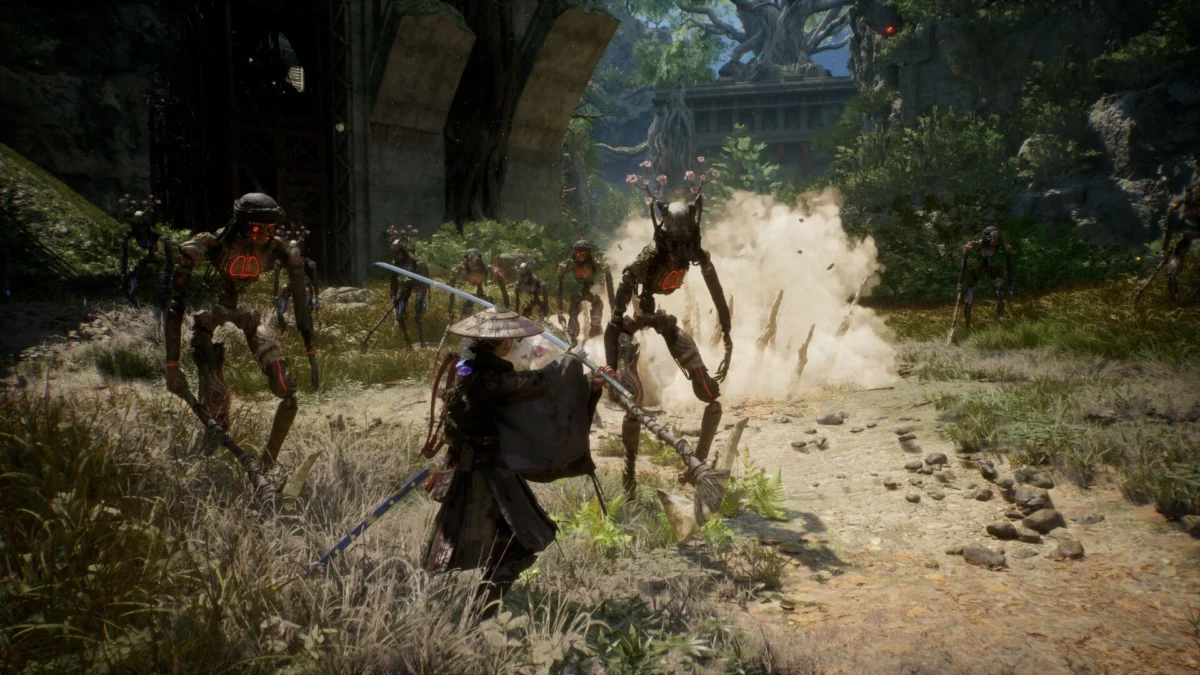
Anticipation is mounting for Beast of Reincarnation, the ambitious new title from renowned Japanese developer Game Freak, known globally for its iconic Pokémon series. As the game approaches its multi-platform launch on August 4th for Xbox Series X, Xbox Series S, PlayStation 5, and PC, a comprehensive "Final Preview" from IGN has unveiled a wealth of new details, painting a clearer picture of what players can expect from this significant departure for the studio. Notably, the game is also confirmed as a day-one launch title for Xbox Game Pass, significantly broadening its immediate reach.
The revelations from IGN’s preview, available in both written and video formats, highlight a game that aims to carve its own niche within the action RPG genre. Among the most significant insights is the game’s unique approach to world design, described as "partially open-world." Players will navigate several distinct, expansive regions as the story progresses, though these areas are not interconnected in a traditional open-world fashion, and opportunities to revisit them once completed will be limited. Despite this structured exploration, the estimated length for a thorough playthrough is a substantial 30-40 hours, suggesting a rich and engaging experience that doesn’t compromise on scope.
Game Freak’s Strategic Diversification: Beyond the Pokémon Legacy
For decades, Game Freak has been synonymous with Pokémon. Since the release of Pokémon Red and Green in 1996, the studio has consistently delivered mainline entries in the beloved monster-catching franchise, cementing its reputation as a master of accessible RPG design and captivating creature collection. The immense global success of Pokémon has, however, often overshadowed Game Freak’s other creative endeavors, leading to a perception that the studio is solely defined by its most famous creation.
In recent years, Game Freak has made a conscious effort to diversify its portfolio and explore new genres and artistic expressions. This initiative, referred to as an "incubation effort for ideas to help the studio branch out and try new things," has led to a series of smaller, experimental titles. Games like the rhythm-action platformer HarmoKnight (2012), the side-scrolling action title Tembo the Badass Elephant (2015), the action-platformer Giga Wrecker (2017), and the turn-based RPG Little Town Hero (2019) showcased the studio’s versatility, but none achieved the mainstream recognition or multi-platform ambition that Beast of Reincarnation now embodies.
Beast of Reincarnation represents Game Freak’s most significant and high-profile attempt to step out from Pokémon‘s shadow. Its multi-platform release on current-generation consoles and PC, coupled with a day-one Game Pass inclusion, signals a clear intent to reach a broader audience and establish a new, substantial intellectual property. The project’s five to six-year development cycle further underscores the considerable investment and commitment Game Freak has poured into crafting this experience, positioning it as a flagship title in their diversification strategy rather than another experimental side project. The success of Beast of Reincarnation could profoundly influence Game Freak’s trajectory, validating their pursuit of diverse projects and potentially paving the way for more ambitious non-Pokémon titles in the future.
Unpacking the Gameplay Experience: A Nuanced World and Combat System
The "partially open-world" design of Beast of Reincarnation is a critical aspect that sets it apart. Publisher Fictions explained to IGN that while the game isn’t a traditional interconnected open-world, it features "several open regions that you’ll explore as the story goes on." This structure implies a more guided, narrative-driven experience within expansive, yet contained, environments. The inability to return to completed regions once the story pushes players forward suggests a focus on forward momentum and unique, unfolding experiences rather than extensive backtracking or emergent exploration. This design choice could allow Game Freak to craft highly curated environments and narrative beats for each region, ensuring a consistent pace and preventing players from feeling overwhelmed by an endless map. It stands in contrast to the sprawling, often overwhelming, fully open-world games prevalent in the market, offering a potentially more focused and impactful journey.
The estimated 30-40 hour playthrough duration for an "earnest full playthrough" is a healthy length for a modern action RPG, striking a balance between offering substantial content and respecting player time. It suggests that despite the linear progression through regions, each area will be dense with content, challenges, and narrative depth. This duration is comparable to many critically acclaimed single-player action RPGs, positioning Beast of Reincarnation as a significant investment for players seeking a robust adventure.
At the core of Beast of Reincarnation‘s appeal lies its combat system, which IGN describes as a "singular, flowing combat system" that blends "traversal mechanics, RPG elements, and hard-action foundation." While the preview noted that no single component might be "outstanding on their own," it is the "smart confluence of all three that make it stand out in a sea of Souls-ish action games." This critique suggests that the game’s strength lies in its synergy—how movement, character progression, and precise combat interact seamlessly to create a cohesive and engaging experience.
The "hard-action foundation" points towards a combat system demanding skill, timing, and strategic engagement, reminiscent of titles known for their challenging encounters. The inclusion of "traversal mechanics" suggests that environmental interaction, agility, and perhaps verticality will play a crucial role in both exploration and combat encounters, potentially allowing players to gain tactical advantages or navigate complex battle arenas. "RPG elements" would encompass character progression, skill trees, gear customization, and stat management, allowing players to tailor their combat style and adapt to different challenges. The combination of these elements, rather than any one being revolutionary, is what the preview highlights as the game’s unique selling proposition, differentiating it from the numerous "Souls-like" titles that often focus predominantly on punishing combat mechanics. The implication is a system that feels fluid and intuitive, rewarding players who master the interplay of its various components.
Artistic Vision and Influences: From Blade Runner to Brutal Action
The artistic vision behind Beast of Reincarnation is deeply influenced by disparate yet compelling sources. Director and writer Kota Furushima revealed that his biggest influence has been the seminal science fiction film Blade Runner. This inspiration suggests a game steeped in atmospheric, melancholic cyberpunk aesthetics, potentially exploring themes of identity, humanity, artificial intelligence, and a dystopian future. Players might anticipate a world rich in detail, with neon-drenched cityscapes juxtaposed against gritty, industrial environments, and a narrative that delves into philosophical questions rather than straightforward heroism. The "Beast of Reincarnation" title itself could allude to cycles of life, death, and rebirth within a technologically advanced yet decaying world, echoing the existential dread and yearning for meaning often found in Blade Runner.
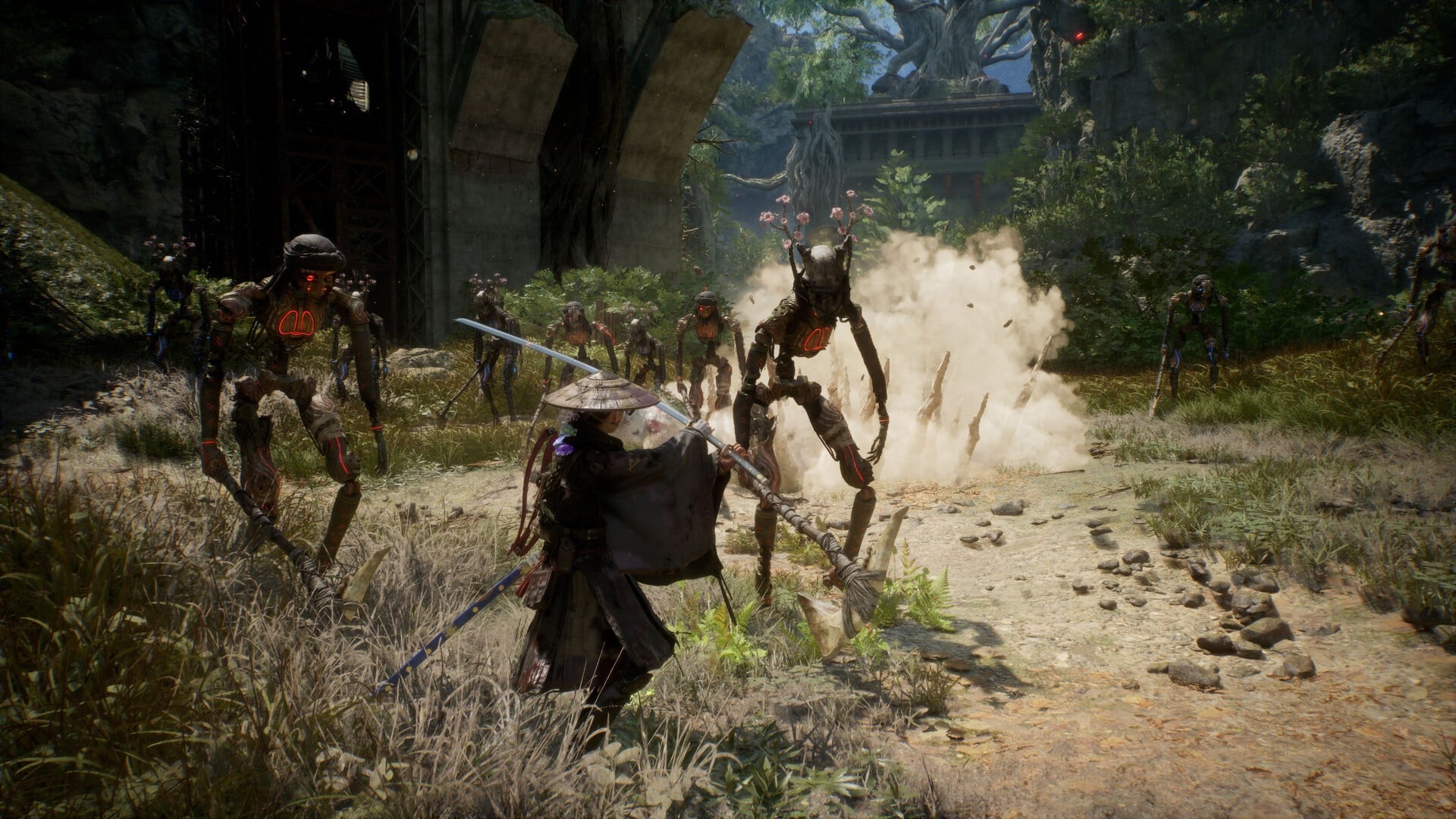
IGN’s preview further drew comparisons to a diverse range of high-profile action titles, including Sekiro: Shadows Die Twice, NieR, and Stellar Blade. Each of these comparisons offers clues to Beast of Reincarnation‘s potential design philosophy:
- Sekiro: Shadows Die Twice: Known for its precise, posture-based combat, rewarding parries and deflections, and vertical traversal using a grappling hook. This comparison suggests Beast of Reincarnation might feature highly demanding, skill-based melee combat and dynamic movement options.
- NieR (likely referring to NieR: Automata or NieR Replicant ver.1.22474487139…): Celebrated for its unique blend of fast-paced action combat, philosophical and emotionally resonant storytelling, and distinctive art direction. This points towards a game that might prioritize narrative depth and a strong sense of atmosphere alongside its action.
- Stellar Blade: A recent action game known for its visually striking character design, intense combat, and post-apocalyptic setting. This comparison could indicate a focus on visceral, high-octane action and a strong aesthetic identity.
While the preview also mentioned "Ghost of Yotei," which appears to be a generic reference or potential typo for a similar open-world action title (like Ghost of Tsushima), the overall picture is clear: Beast of Reincarnation is aiming for a mature, complex action experience with a strong narrative backbone and a distinctive artistic flair, moving far beyond the vibrant, family-friendly aesthetic of Pokémon. The confluence of these influences suggests Game Freak is attempting to craft a sophisticated and challenging game that appeals to a different demographic.
Development Journey and Critical Anticipation: A Long Road to Release
The fact that Beast of Reincarnation has been in development for "around five or six years" speaks volumes about its scope and ambition. Such an extended development cycle is typical for major, new intellectual properties in the AAA space, allowing ample time for concept refinement, engine development, asset creation, and extensive playtesting. This long gestation period reinforces the notion that this is not a quick spin-off but a carefully crafted venture designed to make a significant impact.
IGN’s "Final Preview" serves as a crucial barometer of pre-release sentiment. A "Final Preview" typically means the game is in a near-complete state, often representing a build very close to what reviewers will play. The nuanced assessment—that individual mechanics aren’t necessarily "outstanding" but their synergy is—is a critical insight. It suggests that while players might not find groundbreaking innovations in each separate element (e.g., a revolutionary traversal system or the deepest RPG mechanics ever), the overall experience will be greater than the sum of its parts. This holistic approach to game design, where all components are finely tuned to work together, can often lead to a highly satisfying and cohesive player experience, preventing any single weak link from detracting from the whole.
The preview’s anticipation for how the game "will evolve as the story goes on" and how "boss fights further along challenge me in increasingly interesting ways" further highlights the potential for narrative and mechanical depth. This suggests that the game will introduce new combat mechanics, enemy types, and story twists throughout its duration, keeping players engaged and preventing the combat or exploration from becoming stale. The promise of evolving challenges, particularly in boss encounters, is a hallmark of well-designed action games and crucial for maintaining player interest over a 30-40 hour journey. This pre-release analysis builds significant confidence in the game’s potential to deliver a consistently engaging and well-paced experience.
Market Position and Release Strategy: A Strategic Day-One Launch
Beast of Reincarnation‘s release on August 4th places it in a competitive summer window, typically characterized by a mix of smaller indie titles and larger, established franchises. Its multi-platform launch across Xbox Series X/S, PlayStation 5, and PC ensures it can reach the broadest possible audience, essential for a new IP seeking to establish itself. This broad availability signals a confident marketing push by Game Freak and its publisher (Fictions, as mentioned in the original IGN quote), aiming for widespread adoption from day one.
Perhaps the most significant aspect of its release strategy is its inclusion as a day-one launch title for Xbox Game Pass. This move carries substantial implications for both the game and the Game Pass ecosystem. For Beast of Reincarnation, a day-one Game Pass launch guarantees immediate access to millions of subscribers across Xbox consoles and PC. This vastly increases the game’s potential player base and visibility, especially for a new IP that doesn’t carry the pre-existing brand recognition of Pokémon. It mitigates the risk associated with purchasing a new, unproven title, encouraging subscribers to try the game without an additional financial commitment. This strategy can lead to a significant surge in initial player numbers, fostering a strong community and word-of-mouth promotion from the outset.
For Xbox Game Pass, Beast of Reincarnation‘s inclusion further solidifies its value proposition. Microsoft has been aggressively expanding its day-one Game Pass offerings, including major third-party titles, to make the subscription service an indispensable part of the gaming landscape. Adding a high-profile, ambitious new IP from a renowned developer like Game Freak demonstrates Game Pass’s continued ability to attract diverse and quality content, reinforcing its appeal to subscribers and potential new users. This strategic partnership benefits all parties: Game Freak gains massive exposure, players get immediate access, and Game Pass enhances its robust library.
Broader Industry Implications: Game Freak’s Future and the Evolving Action RPG Landscape
The reception and commercial performance of Beast of Reincarnation will have significant implications for Game Freak’s future direction. A successful launch could embolden the studio to continue pursuing diverse projects alongside its Pokémon commitments, potentially leading to a more varied and innovative output. It would demonstrate that Game Freak is not merely a Pokémon factory but a versatile developer capable of crafting compelling experiences in different genres and for different audiences. Conversely, a lukewarm reception might lead to a more cautious approach to future non-Pokémon ventures, potentially reinforcing the studio’s reliance on its flagship franchise.
For the broader video game industry, Beast of Reincarnation contributes to the evolving landscape of action RPGs. As developers continue to experiment with established formulas, particularly those influenced by the "Souls-like" subgenre, titles that successfully blend distinct mechanics and forge unique identities are crucial for innovation. Game Freak’s approach to integrating traversal, RPG elements, and hard-action into a "singular, flowing combat system" offers a fresh perspective on how these components can synergize. Its "partially open-world" design also presents an alternative to the sprawling, often criticized, open-world trend, suggesting that focused, narrative-driven exploration within expansive regions can offer a compelling experience.
As the August 4th release date rapidly approaches, all eyes will be on Beast of Reincarnation. With comprehensive details now revealed, the stage is set for Game Freak to demonstrate its prowess beyond Pokémon and deliver a memorable action RPG experience that stands on its own merits. The confluence of its unique design choices, ambitious artistic vision, and strategic Game Pass launch positions it as one of the most intriguing titles of the year, carrying the weight of Game Freak’s diversification efforts and the high expectations of a global gaming audience. Reviews, which are anticipated to drop shortly before release, will provide the final verdict on whether this ambitious new beast can truly reincarnate Game Freak’s identity.