



Welcome to the Game 3 presents players with a high-stakes race against time and shadowy competitors to unearth crucial Key Hashes. This intricate thriller, developed by Reflect Studios, plunges players into the perilous depths of the dark web, demanding strategic resource management, cunning social engineering, and a keen understanding of its unique economic and reputational systems. To emerge victorious, players must not only survive the constant threats but also adeptly navigate the game’s multifaceted mechanics, from the acquisition of vital DOS Coins to the strategic manipulation of player reputation and the perilous hunt for encrypted data. This guide delves into the core systems of Welcome to the Game 3, offering insights into how to thrive in its unforgiving digital landscape.
The Economic Engine: Farming and Protecting DOS Coins
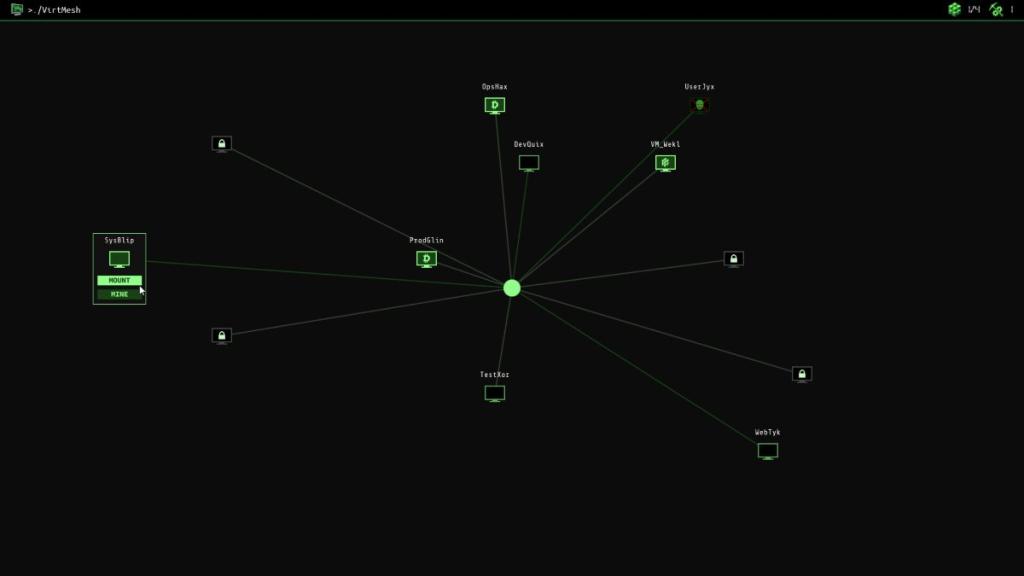
At the heart of player progression in Welcome to the Game 3 lies the acquisition and protection of DOS Coins, the primary digital currency that fuels nearly every significant action within the game. These coins are not merely a score; they are the lifeblood of a player’s ability to interact with the dark web, acquire essential tools, and crucially, hinder the progress of rivals. The primary method for accumulating this vital currency is through the VirtMesh application, a sophisticated hacking suite that allows players to either "mount" or "mine" compromised computers.
The VirtMesh system operates on a dynamic principle: sustained exploitation of a single system is not feasible. Much like navigating the broader dark web or remaining vigilant against the persistent threats of characters like Tanner and Lucas, players cannot remain tethered to one virtual machine indefinitely. Each session on a hijacked computer, whether for mining DOS Coins or for other illicit purposes, carries a risk of detection and lockout. This necessitates a fluid approach, constantly rotating between different compromised systems to ensure uninterrupted access and a steady flow of income.

The act of "mounting" a computer involves engaging with the INJ3KT-R minigame. This challenge requires players to plot a specific path across a grid, alternating between light and dark tiles from a starting point (A) to an objective (B) using directional keys. Success is paramount; failure to correctly navigate the INJ3KT-R puzzle results in the immediate closure of access to that particular machine, forcing the player to seek out new targets. Within the initial network of VirtMesh, specific nodes offer more lucrative returns. Players are advised to prioritize mining from NetVorn, which yields 1.45 DOS Coins, UserJyx, offering 1.80 DOS Coins, and WebTyk, the most profitable at 1.84 DOS Coins per successful mining operation.
Beyond direct mining, DOS Coins can also be earned through the completion of various requests and tasks presented within the game’s narrative. These often involve fulfilling specific demands from non-player characters (NPCs) or engaging in more complex digital operations, which will be explored further in the context of reputation building.
The precarious nature of the dark web means that DOS Coins are constantly under threat. Two primary adversaries seek to deplete a player’s digital wealth: Lucas, a recurring antagonist who attempts to pilfer coins during his motel visits, and the other competing players vying for the same Key Hashes. Lucas’s intrusions can be mitigated by quickly powering down the computer upon detecting his presence. This is achieved by interacting with the power button located in the bottom-left corner of the screen. The strategic placement of motion sensors can provide early warnings, granting players sufficient time to execute a shutdown before Lucas can initiate his theft. For those seeking a more direct approach, the NOP Sled tool offers a way to bypass Lucas’s minigame entirely.
Competitors, on the other hand, employ more sophisticated tactics. They will dispatch hackers to your location, aiming to steal your accumulated DOS Coins. If a competitor has successfully installed a "Backdoor" on your systems, an unsuccessful hacking attempt on your part can result in a monetary penalty, effectively backfiring and costing you valuable currency. Conversely, a successful hack against an NPC without such defenses can yield a portion of their DOS supply, significantly hindering their progress and bolstering your own financial standing. This offensive capability can be initiated by contacting specific hackers through the A.C.R.S. platform, allowing players to target rivals directly.
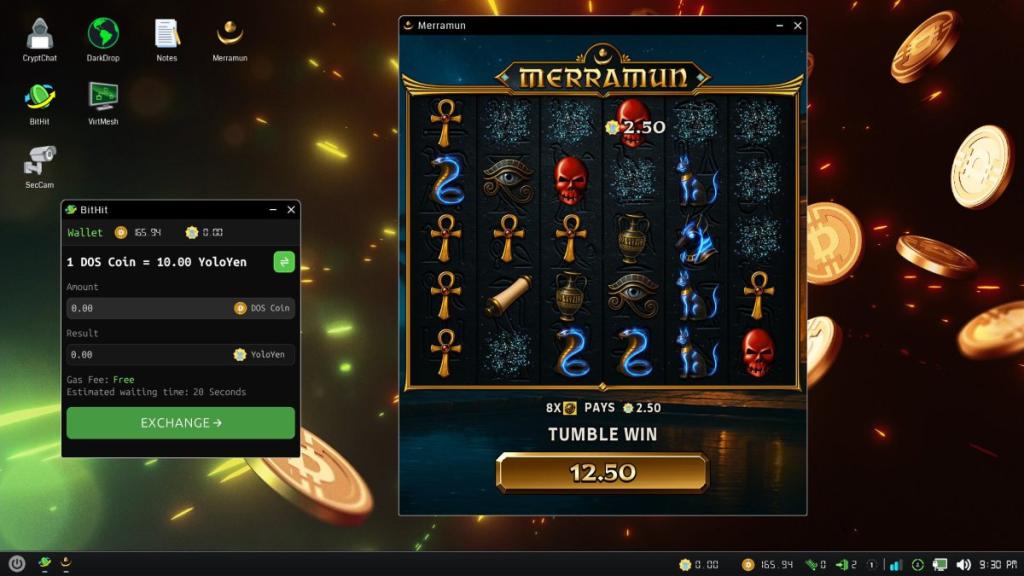
In more extreme scenarios, players can leverage the Merramun gambling application, accessible via the BitHit exchange. By converting DOS Coins into YoloYen, players can engage in high-stakes gambling. Successful wagers can then be reconverted back into DOS Coins, offering a risky but potentially high-reward avenue for increasing wealth. However, the inherent volatility of gambling means this method carries a significant risk of substantial financial loss.
Building Influence: The Importance of Reputation (Rep)
In the cutthroat environment of Welcome to the Game 3, a player’s reputation, or "Rep," is as crucial as their financial standing. Rep acts as a social and operational currency, unlocking access to more advanced services, discerning trustworthy contacts, and signaling a player’s competence within the dark web ecosystem. Two essential applications facilitate Rep building: ShadowFetch and A.C.R.S.
ShadowFetch serves a dual purpose. Primarily, it allows players to convert Universal Resource Locators (URLs) into MP4 video files. These video files are often in demand within the A.C.R.S. chat room and can be traded for DOS Coins and Rep. The conversion process incurs a DOS Coin fee, making it imperative for players to only convert files when they are certain of their marketability or specific demand.
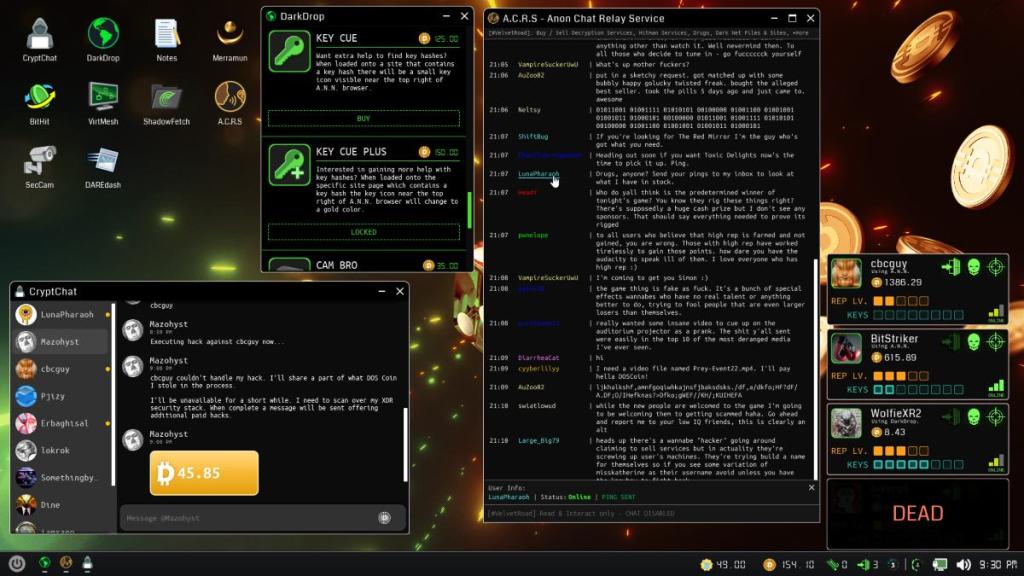
The A.C.R.S. (an acronym likely standing for Anonymous Communications and Reporting System) functions as a global chat room, a bustling nexus where competitors, hackers, information brokers, and other dark web denizens congregate. This platform is the primary conduit for acquiring and completing NPC requests, which are analogous to side quests in role-playing games. These requests are time-sensitive, with the A.C.R.S. chat room resetting every thirty minutes. To ensure a request remains active and visible, players must "PING" the user who posted it, sending a notification that keeps their offer in circulation. Successfully evading incoming hacks also contributes to a player’s Rep experience points (XP).
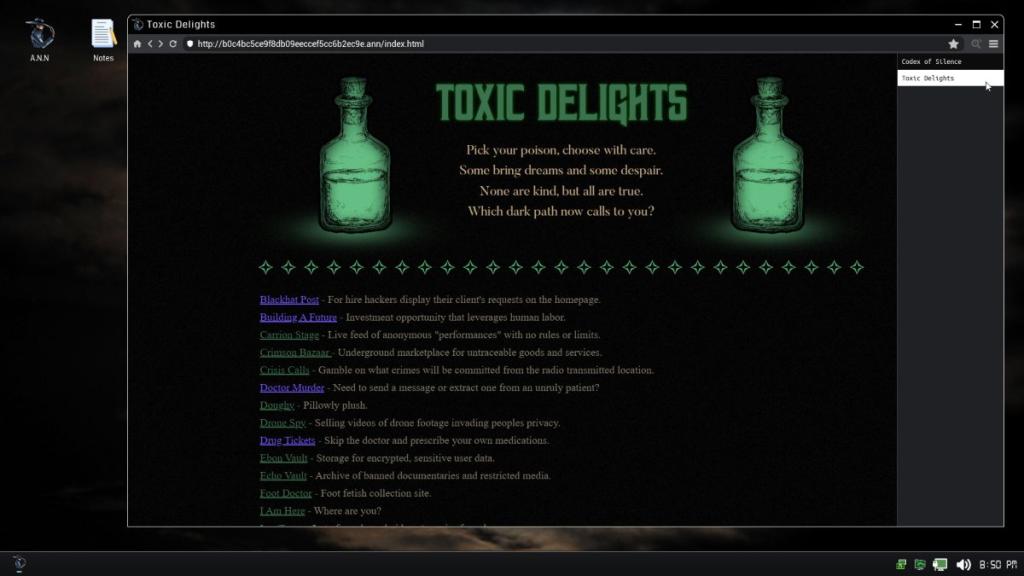
NPC requests often involve specific URLs or video files. Players can find these required URLs on the Dark Net, even if direct access to the hosting site is blocked. By copying and pasting these URLs into A.N.N., a specialized browser, players can access lists of websites. The Dark Wiki is a particularly valuable resource for uncovering these hidden digital locations. Once a URL is obtained, it can be converted into an MP4 using ShadowFetch. These files can then be sold for DOS Coins and, more importantly, Rep.
Interacting with other users on A.C.R.S. is facilitated by the CryptChat application. By selecting a username from the A.C.R.S. feed, players can initiate a private messaging conversation. This is essential for negotiating deals, accepting jobs, and coordinating actions. Players should prioritize interacting with dealers whose Rep level matches their own, or users actively soliciting URLs, videos, or offering tasks. This ensures a higher likelihood of successful and mutually beneficial transactions.
The Ultimate Objective: Locating and Decrypting Key Hashes
The overarching goal of Welcome to the Game 3 is the acquisition of eight distinct Keys, represented by Key Hashes. These are not simply found lying around; their discovery is a multi-stage process involving meticulous exploration of the dark web and careful decryption. The game introduces a competitive element, with four other players simultaneously hunting for these same crucial fragments of information. This transforms the search into a race against both the clock and rival operators.
Key Hashes are procedurally generated at the start of each new game, meaning their locations are randomized. Websites on the dark web can be categorized by their accessibility: some are always open, others are timed, and some may be temporarily or permanently inaccessible. Understanding this variability is crucial for efficient searching. When a Key Hash appears on a webpage, it is typically presented as a number from one to eight, followed by a short alphanumeric string.
Keys can manifest in plain sight or be cleverly hidden. When a Key Hash is embedded within page elements, players must carefully hover over text and images. For deeper inspection, the "Source Code Viewer," accessible via a magnifying glass icon in the top-right corner of the A.N.N. browser, becomes invaluable. Within the source code, Key Hashes are explicitly written out, offering a definitive method for their retrieval. In some instances, hovering over a hidden Key Hash on the page itself will change the cursor, indicating it is clickable and can be directly accessed.
A significant departure from previous installments in the series, Welcome to the Game 3 requires more than just finding all eight Keys. Once a Key Hash is located, it must be decrypted by an agent within the A.C.R.S. This decryption service comes with a fee in DOS Coins, adding another layer of resource management to the final objective.
Navigating the Digital Battlefield: Blocking and Deploying Hacks
The latter stages of Welcome to the Game 3, particularly after 9:30 PM in-game time, are characterized by an escalating wave of incoming hacks. These attacks become progressively more sophisticated and dangerous as the game progresses, reflecting the increasing desperation and investment of opposing players. Understanding the nature of these hacks and how to defend against them, or even turn them to your advantage, is critical for survival.
The game presents various hacking mechanics, each with its own challenges and counter-strategies. While the specific details of each hack minigame are not explicitly detailed in the provided text, it is evident that players will face digital intrusions designed to disrupt their operations, steal data, or compromise their systems. The implication is that successful defense against these attacks, perhaps through quick reactions, specialized tools, or even by successfully navigating an associated minigame, will contribute to a player’s Rep. Conversely, failing to defend against these intrusions could lead to a loss of DOS Coins, stolen data, or even a direct threat to the player’s in-game avatar. The increasing cost that opponents are willing to bear to disrupt players signifies the escalating stakes as the game progresses towards its climax.
Eliminating the Competition: Strategic Offensive Measures
In certain critical junctures, players may find it necessary to proactively eliminate their competition. This involves a two-step process, leveraging the dark web’s network of illicit services. Firstly, players can utilize the A.C.R.S. to contact individuals capable of "doxxing" a competitor – that is, revealing their real-world identity or personal information. This act of digital espionage requires payment. Once the competitor’s sensitive information is acquired, a second contact is necessary. This contact specializes in dispatching "hits," or assassination attempts, using the doxxed information to locate and neutralize the rival player.
This offensive strategy is described as one of the most expensive features within Welcome to the Game 3. However, the article emphasizes that its significant cost is justified, particularly as players approach the endgame. The ability to permanently remove a competitor from the race for the Key Hashes can be a decisive advantage, especially when facing time constraints and the constant pressure of other players. This highlights the game’s emphasis on not just surviving, but actively shaping the competitive landscape through aggressive and costly maneuvers.
Reflect Studios has introduced a complex web of interconnected systems in Welcome to the Game 3, demanding a holistic understanding of resource management, social interaction, and strategic combat. By mastering the art of DOS Coin acquisition and protection, cultivating a strong Rep, diligently searching for and decrypting Key Hashes, and strategically deploying defensive and offensive hacking capabilities, players can hope to emerge as the ultimate Dark Net master and claim victory in this high-stakes digital underworld.