


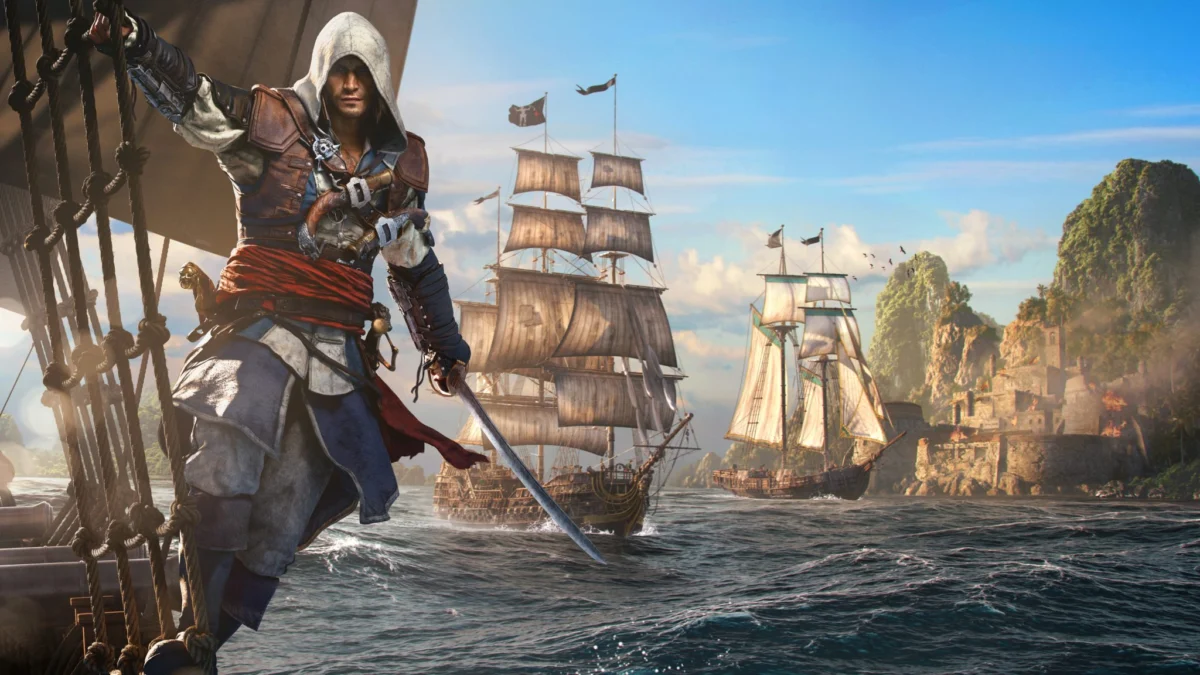
Ubisoft has officially launched Assassin’s Creed: Black Flag Resynced, a comprehensive ground-up remake of the 2013 title that remains one of the most commercially successful and critically acclaimed entries in the long-running franchise. Arriving thirteen years after the original release, this "Resynced" edition aims to preserve the core swashbuckling identity of the Caribbean-set adventure while utilizing the latest iteration of the Anvil Engine to meet modern graphical and performance standards. The project represents a significant strategic pivot for Ubisoft, following the protracted development and polarizing reception of other maritime titles, as the publisher seeks to recapture the "magic" of its 18th-century naval combat loop.

The Evolution of a Maritime Legacy
The original 2013 release of Assassin’s Creed IV: Black Flag marked a turning point for the series, shifting the focus from dense European urban centers to the sprawling, open waters of the West Indies. It introduced Edward Kenway, a Welsh privateer turned pirate, whose narrative arc was praised for its grounded, often cynical take on the Assassin-Templar conflict. At the time of its original launch, the game sold over 15 million units, cementing its status as a pillar of the Ubisoft catalog.

The development of the Resynced edition was preceded by years of industry speculation. Rumors of a remake began circulating as early as 2023, coinciding with internal delays of Ubisoft’s other pirate-themed project, Skull and Bones. Analysts suggest that the decision to prioritize a Black Flag remake was driven by persistent fan demand and the technical challenges of creating a new maritime IP from scratch. By leveraging the established narrative framework of the Kenway saga, Ubisoft has delivered a product that serves both as a nostalgic revival for returning players and a entry point for a generation of gamers who missed the eighth-generation console era.

Structural Overhauls and Narrative Expansion
One of the most significant departures in Assassin’s Creed: Black Flag Resynced is the removal of the "modern-day" first-person segments. In the 2013 original, players periodically exited the historical simulation to explore the offices of Abstergo Entertainment. While central to the series’ overarching lore, these segments were frequently cited by critics and players as momentum-breaking. In the 2026 remake, the narrative remains strictly locked within the 18th-century Caribbean, a move Ubisoft representatives suggest was intended to maximize immersion and focus entirely on the "Golden Age of Piracy."

To compensate for the removal of modern-day content, Ubisoft has injected a substantial amount of new historical material. This includes:

- The Blackbeard Chronicles: An expanded story arc focusing on Edward Thatch (Blackbeard), providing deeper context into the legendary pirate’s motivations and his eventual fate.
- Templar "What-If" Scenarios: New side-quests that explore alternate narrative paths, such as the implications of Kenway choosing to align with the Templar Order for the sake of global stability and personal gain.
- Recruitable Officers: A new management layer allowing players to recruit specific named NPCs—a Master-at-arms, a Shipwright, and a Weapon Master—each of whom provides unique passive bonuses and narrative flavor to the crew of the Jackdaw.
Land and Sea: The Dual Gameplay Loop
The gameplay in Black Flag Resynced continues to be defined by its two distinct environments: terrestrial exploration and naval warfare. The terrestrial gameplay utilizes a modernized parkour system designed to reduce the "stickiness" and unintended inputs that occasionally plagued the 2013 version. While the fundamental stealth mechanics—such as whistling from foliage and performing low-profile assassinations—remain intact, the AI has seen a marginal increase in detection complexity.

Combat on land has been refined with a more fluid parry-and-counter system. Players can now utilize an expanded arsenal of gadgetry, including improved smoke bombs, rope darts, and blow-pipes with varying chemical effects. New animations allow for more environmental interaction, such as kicking enemies into structures or utilizing secondary weapons for multi-target finishers.

However, the centerpiece of the experience remains the Jackdaw, the player’s upgradeable brigantine. The naval combat remains a benchmark for the genre, requiring players to manage positioning, wind direction, and a variety of weapon systems:

- Chain-shot: Used for disabling the masts of fleeing vessels.
- Broadside Cannons: The primary damage dealer, featuring different ammunition types for varying ranges.
- Mortars: Long-range artillery for initiating combat or sieging coastal forts.
- Fire Barrels: Defensive tools used to deter pursuing fleets.
The "Resynced" edition maintains the addictive progression loop of the original, where players must raid merchant convoys and sink Spanish and British warships to gather the gold, wood, metal, and cloth required for ship upgrades. The open world is populated with shipwrecks accessible via a diving bell, hostile marine life, and four "Legendary Ships"—high-level boss encounters that serve as the ultimate test of the player’s naval mastery.

Technical Benchmarks and Performance Analysis
The transition to the latest Anvil Engine has resulted in a dramatic visual uplift. The Caribbean environment benefits from high-fidelity water physics, dynamic weather systems—including rogue waves and waterspouts—and significantly improved lighting. The game has been optimized for a range of hardware, with technical testing revealing the following performance profiles:

- PlayStation 5 Pro: Utilizing PSSR (PlayStation Spectral Super Resolution), the console leads the hardware pack with the highest image quality and consistent frame rates at 4K resolution.
- Xbox Series X: Offers a robust 4K experience with high-quality textures, maintaining a stable 60 FPS in most scenarios, including heavy naval engagements.
- PC Performance: On high-end hardware, such as the NVIDIA RTX 4090, the game supports 1440p and 4K Ultrawide configurations. With Frame Generation enabled, the title can exceed 120 FPS at maximum settings. The inclusion of a comprehensive benchmarking tool allows for granular optimization.
- Handheld Optimization: A notable feature is the dedicated "Handheld Mode" for devices like the ROG Ally X. Initially struggling at low settings, the implementation of specific Low, Medium, and High Handheld presets allows for a playable and visually respectable experience on the go, facilitating the "grind" for ship resources outside of primary story sessions.
Chronology of the Black Flag Remake
The path to the release of Black Flag Resynced follows a decade-long timeline of internal shifts at Ubisoft:

- October 2013: Original launch of Assassin’s Creed IV: Black Flag on PS3 and Xbox 360, followed by next-gen and PC ports.
- 2017: Initial development of Skull and Bones begins, originally conceived as an expansion or spin-off of Black Flag’s naval combat.
- 2021-2023: Internal reports suggest Ubisoft Singapore and other studios have pivoted toward a Black Flag remake following the difficult production of new maritime IPs.
- Late 2024: Official announcement of "Project Resynced," confirming a ground-up remake of the Kenway story.
- July 2026: Worldwide release of Assassin’s Creed: Black Flag Resynced.
Official Responses and Industry Implications
Ubisoft’s leadership has framed the release as a "love letter" to the fans who have consistently ranked Black Flag as their favorite entry in the franchise. In a statement accompanying the launch, the development team emphasized their commitment to preserving the "soul" of the original while stripping away the elements that modern audiences found cumbersome.

Industry analysts view the success of Black Flag Resynced as a potential blueprint for Ubisoft’s future. By successfully modernizing a "classic" title, the company may look toward other fan-favorite entries—such as the Ezio Trilogy or Assassin’s Creed Unity—for similar "Resynced" treatments. Furthermore, the game’s performance on handheld PC devices signals a growing trend of major AAA publishers optimizing specifically for the burgeoning portable gaming market.

Broader Impact and Conclusion
Assassin’s Creed: Black Flag Resynced arrives at a time when the "Remake Era" of gaming is in full swing. Following the success of titles like Resident Evil 4 and Dead Space, Ubisoft’s entry proves that even massive open-world games can be successfully rebuilt for a new generation. While the game retains some of the inherent flaws of its 2013 predecessor—namely simplistic stealth AI and occasionally clunky parkour—the core appeal of its naval exploration remains unmatched in the current market.

The legend of Edward Kenway, voiced once again by Matt Ryan, continues to resonate due to its themes of personal redemption and the pursuit of freedom against the backdrop of colonial empires. For returning players, the additional story content and technical polish justify a return to the Caribbean. For newcomers, it represents the definitive version of what many consider to be the peak of the Assassin’s Creed series. As the maritime genre continues to evolve, Black Flag Resynced stands as a reminder that strong character writing and a focused gameplay loop can withstand the test of time, provided they are supported by the necessary technological advancements.