


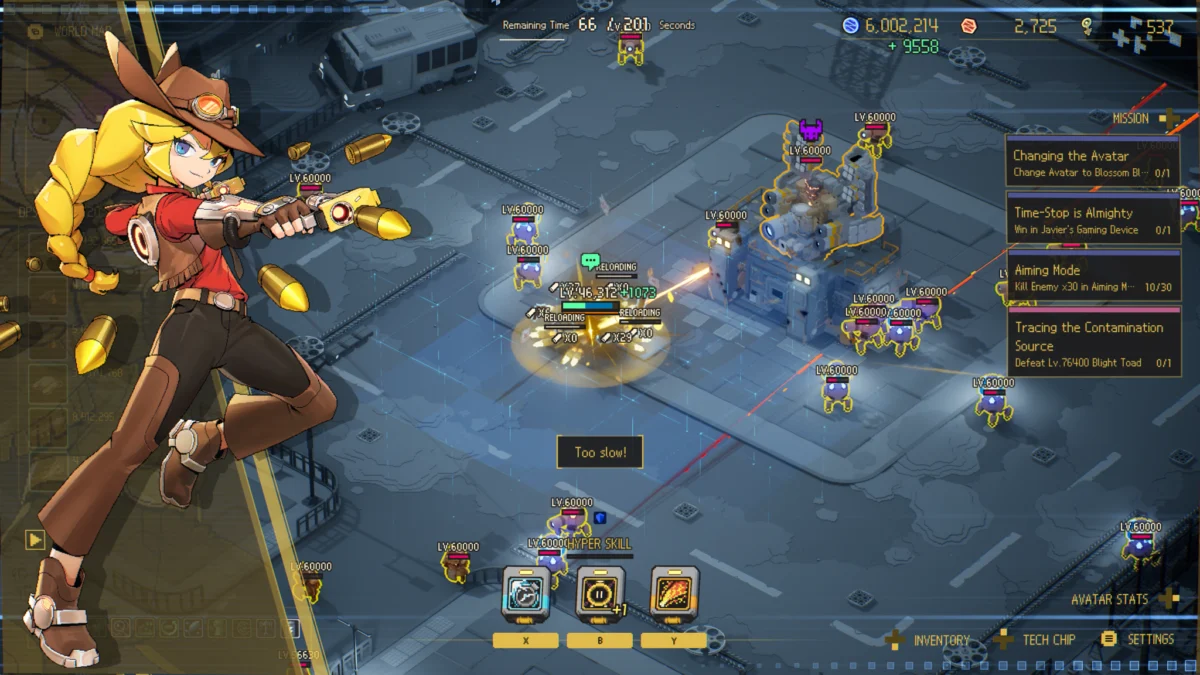
The landscape of independent game development continues to evolve with the announcement and upcoming release of Ascend to Zero, a high-octane auto-battler and survivors-like title developed by Flyway Games. Positioned as a day-one addition to the Xbox Game Pass library, the title merges the addictive loop of incremental progression with a sophisticated time-manipulation mechanic. Set against a backdrop of a robotic apocalypse, players assume the role of the "Chrono Child," a specialized avatar designed to navigate the fractures of time to prevent the total annihilation of humanity.

Core Gameplay Mechanics and the Chrono Loop
Ascend to Zero distinguishes itself from traditional bullet-heaven titles through its fundamental reliance on time as a finite resource and a tactical tool. Unlike the genre’s pioneers, which often focus on surviving for set durations of twenty to thirty minutes, Ascend to Zero operates on a condensed thirty-second interval. This "Chrono Loop" defines the pace of the game, forcing players to optimize their movement and combat efficiency within a remarkably tight window.
The protagonist, known as the Chrono Child, possesses the unique ability to start and stop the flow of time at will. This mechanic is mapped to a specific control scheme where the B button serves as the primary toggle for temporal flow. When time is frozen, the player can navigate the environment and position themselves strategically without the threat of incoming projectiles or enemy movement. In this state, the dash mechanic—mapped to the A button—operates without consuming stamina, allowing for rapid repositioning. However, once time is resumed, the stamina meter becomes a critical factor, limiting the frequency of evasive maneuvers and requiring the player to balance aggression with defensive caution.

As players progress, the complexity of the control scheme increases. Gadgets and secondary abilities are introduced and mapped to the X and Y buttons, expanding the player’s tactical repertoire. This gradual introduction of systems ensures that while the initial barrier to entry is low, the skill ceiling remains high as players learn to weave time-stops into their offensive rotations.
Narrative Framework and World Building
The narrative of Ascend to Zero centers on a desperate scientific endeavor within a vast laboratory complex. Humanity’s survival hinges on the success of the Chrono Child, who must traverse various sectors of the facility to rescue the scientific team responsible for their creation. The story is delivered through a combination of in-game interactions and stylized cutscenes.

While the in-game models adopt a voxel-based aesthetic reminiscent of titles like Trove or Roblox, the narrative segments utilize high-fidelity Korean anime-style character portraits. This visual contrast serves to differentiate the chaotic, high-speed gameplay from the more somber, dialogue-heavy moments of world-building. The dialogue itself often leans into an irreverent tone, though it remains grounded in the stakes of the robotic uprising.
The laboratory serves as a central hub between runs. Here, players can interact with rescued staff members, who provide both flavor text and critical mission objectives. A quest system, persistently displayed in the upper-right corner of the interface, guides the player through the early tutorial phases before transitioning into more complex challenges that reward meta-leveling currency.

Incremental Progression and Meta-Systems
At its heart, Ascend to Zero is an incremental roguelite that emphasizes long-term growth over immediate victory. Each run provides two distinct forms of currency: run-specific resources and meta-progression points.
Run-Specific Upgrades
During a single thirty-second excursion, players collect currency from fallen robotic enemies to level up their current avatar. Each level gained allows for the selection of various stat boosts or weapon upgrades. The arsenal is diverse, featuring traditional armaments like swords and guns alongside more exotic options such as automated drones, heavy cannons, and area-of-effect modifiers. These weapons operate on an auto-battle cooldown system, allowing the player to focus primarily on movement and time management.

Meta-Progression and Customization
The depth of Ascend to Zero becomes apparent in its "outside-of-time" progression systems. The currency earned across multiple runs can be invested into a wide array of permanent upgrades, including:
- Base Stats: Permanent increases to health, stamina, and damage output.
- Time Machine Modifiers: Enhancements to the starting conditions of each run, such as extending the initial thirty-second timer.
- Avatar Unlocks: Different versions of the Chrono Child with unique starting abilities and passive bonuses.
- Shop Inventory: Expanding the variety of items available for purchase during runs.
One of the most significant late-game features is the inclusion of gear sets. Borrowing a page from classic action-RPGs like Diablo III, Ascend to Zero features a tiered loot system ranging from Common to Unique (Red). These unique items often belong to specific sets that provide massive bonuses when four or six pieces are equipped simultaneously. This adds a layer of build-crafting rarely seen in the survivors-like genre, encouraging players to farm specific bosses or areas to complete powerful item sets.

Technical Performance and Aesthetic Direction
Flyway Games has opted for a distinct visual identity that blends low-poly voxel environments with high-intensity particle effects. On high-end PC hardware, the game maintains a stable frame rate despite the screen often being filled with hundreds of enemies and thousands of projectiles. However, reports indicate that performance can fluctuate during particularly chaotic boss fights, especially on handheld devices like the ROG Ally or Steam Deck. These "particle-heavy" moments can lead to temporary slowdowns, a common challenge for the bullet-heaven genre.
The audio design is equally bold, featuring a soundtrack heavily influenced by dubstep and modern electronic dance music. The high-energy, bass-heavy tracks are designed to complement the frantic nature of the combat, creating a "flow state" for the player as they navigate through waves of mechanical foes.

Comparative Analysis and Market Implications
The release of Ascend to Zero on Xbox Game Pass is a strategic move that reflects current trends in the gaming industry. Since the massive success of Vampire Survivors, the "survivors-like" or "bullet-heaven" genre has seen a surge in popularity. Microsoft has actively sought to bolster its subscription service with these types of titles, which offer high replayability and "pick-up-and-play" accessibility.
Ascend to Zero differentiates itself by moving away from the passive survival model and toward an active, time-manipulation model. The thirty-second limit creates a sense of urgency that is often missing from its contemporaries, where early-game segments can feel slow or repetitive. By forcing the player to earn back time through the defeat of elite enemies, Flyway Games has created a more aggressive gameplay loop that rewards risk-taking.

However, the game is not without its hurdles. The transition from the mid-game to the true endgame involves a significant difficulty spike. Once the initial "final" boss is defeated, the game introduces higher difficulty tiers that require optimized gear sets and precise time management to clear. Some players may find the late-game grind for specific "Red" gear sets to be repetitive, especially if their current build lacks the damage output to clear high-health bosses within the allotted time.
Broader Impact on the Roguelite Genre
Ascend to Zero represents a growing trend of "genre-blending" within the indie space. By combining the loot-chase mechanics of an ARPG with the movement-based combat of a survivors-like and the temporal puzzles of a strategy game, it appeals to a broad demographic of players.

The success of the title on Xbox Game Pass will likely serve as a litmus test for how much complexity players are willing to accept in their auto-battlers. While the genre started as a "one-stick" experience, Ascend to Zero proves that adding more buttons and deeper systems does not necessarily dilute the addictive core of the experience.
As the industry moves toward 2026, the reliance on subscription models like Game Pass allows developers like Flyway Games to take creative risks with niche mechanics like the Chrono Loop. For players, this means a steady stream of innovative titles that push the boundaries of established genres. Ascend to Zero is a testament to the fact that even in a crowded market, there is always room for a new twist on a familiar formula—provided that twist is as well-executed as the ability to stop time itself.