


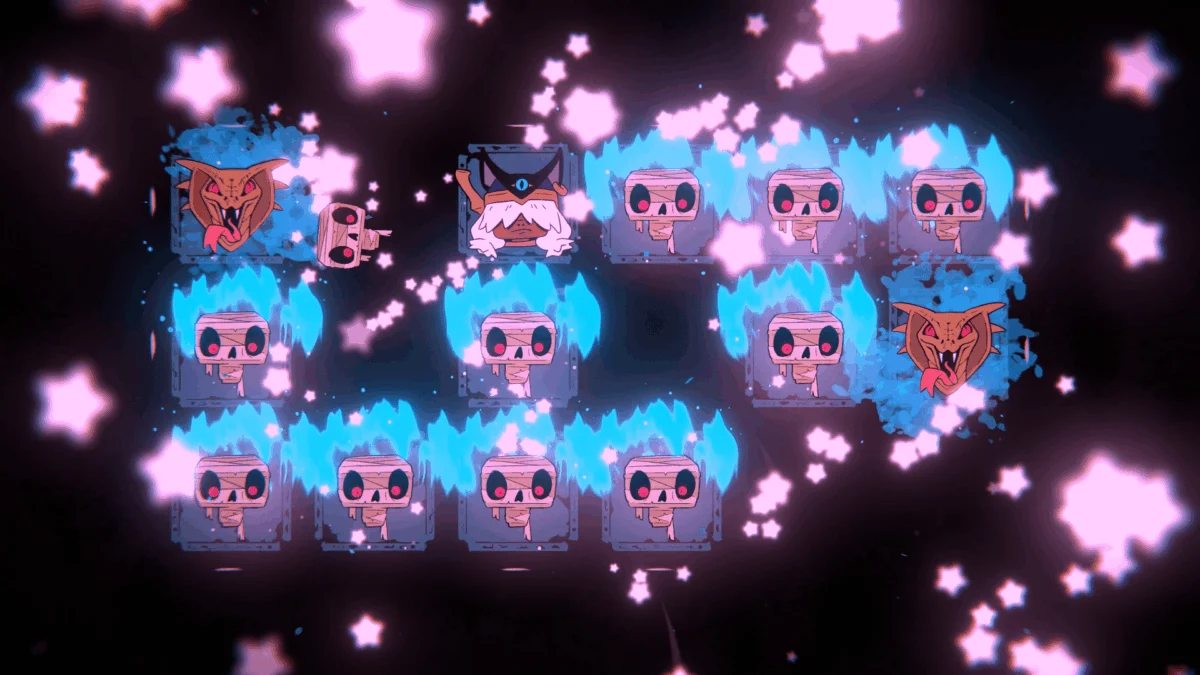
The digital landscape of indie gaming has recently seen a resurgence in "minimalist" design, where complex systems are distilled into accessible, high-intensity loops. Among the most notable recent entries is Kaz, a roguelike arcade title developed by Kalinarm and HAKURO. Initially gaining traction during the Steam Next Fest, the game presents a deceptively simple premise: a score-chasing, keyboard-driven experience that operates on a mere four-key input system. However, beneath this accessible exterior lies a sophisticated mechanical structure that combines high-speed reactivity with the strategic depth typical of the roguelike genre.

Core Gameplay Mechanics and the "Whack-a-Mole" Loop
At its foundational level, Kaz functions as a modernized, digital evolution of the classic "whack-a-mole" arcade game. Players are positioned on a grid of square tiles that dynamically evolves in size and complexity as the game progresses. The primary objective is straightforward: move the player character across the grid to occupy squares inhabited by enemies, eliminating them to accumulate points within a strict time limit.
The game is optimized for keyboard input, specifically utilizing the cursor (arrow) keys or the WASD configuration. While controller support is integrated, technical analysis suggests a significant disparity in responsiveness; the precision required for high-level leaderboard climbing favors the tactile feedback of a mechanical keyboard. The developers have acknowledged this hardware preference with a humorous warning to players regarding the potential wear and tear on their equipment, underscoring the game’s "keyboard-smashing" intensity.

The Roguelike Framework: Progression and Customization
While the immediate gameplay is arcade-focused, the overarching structure of Kaz is firmly rooted in roguelike traditions. Each "run" begins with a strategic choice of weaponry. There are six distinct weapons available in the current build, three of which must be earned through gameplay milestones. These weapons operate on a "move-based" cooldown, activating automatically after the player performs a specific number of directional inputs.
The progression system is further bolstered by a robust buff/debuff economy. At the conclusion of each round, players are presented with a selection of power-ups to assist with the escalating difficulty. These enhancements include:

- Point Bonuses: Immediate increases to the starting score for the subsequent round.
- Grid Modifiers: The addition of "stars" to the grid, which provide significant point boosts upon contact.
- Defensive Assets: Armor sets that mitigate the damage or penalties from environmental traps.
- Area-of-Effect (AoE) Spells: High-impact abilities such as lightning strikes or explosions that clear large portions of the grid.
A unique feature within this system is the "Spell" mechanic. Unlike passive buffs, spells require active player input in the form of specific key combinations—for example, "Left-Left-Right-Right" to trigger a tidal wave. Executing these sequences amidst the chaotic, high-speed movement of a standard round adds a layer of cognitive load that separates novice players from experts.
The Curse System and Maluses
To balance the player’s power fantasy, Kaz implements a "Curse" meter. This meter fills whenever a player inadvertently triggers a trap on the grid. Once the bar is maximized, the player is forced to select a "malus"—a permanent debuff for the remainder of the run. These maluses are designed to be significantly disruptive, ranging from "Confusion" (which momentarily scrambles directional inputs) to "Teleportation" (which randomly displaces the player character).

Data collected from early-access players indicates that the malus system is one of the game’s most polarizing yet effective features. By forcing players to adapt to compromised control schemes or increased enemy durability—such as shielded enemies requiring three hits instead of two—the game ensures that no two runs feel identical.
Diversified Game Modes: From High Tension to Tactical Strategy
Recognizing that the intense pace of the primary "Survivor" mode may not appeal to all demographics, the developers have introduced "No Stress" mode. This variant removes the time-attack element entirely, replacing the clock with a limited number of moves. This shift transforms Kaz from a test of twitch reflexes into a tactical puzzle game, where players must calculate the most efficient path through the grid to meet point requirements.

Additionally, Kaz features competitive community challenges:
- Legends of the Week: A competitive mode where all players compete on a standardized board with identical rare items, ensuring a level playing field for leaderboard rankings.
- Only Debuffs Challenge: A monthly event that forces players to navigate grids while being cursed every round, catering to the "hardcore" segment of the player base.
- Dance Pad Mode: An unorthodox inclusion that allows players to use a Dance Dance Revolution (DDR) mat for movement. While largely viewed as a novelty, it demonstrates the developer’s commitment to varied input methods.
Aesthetic Variety and the Quest System
The presentation of Kaz is a significant factor in its "dopamine delivery" model. The game features a wide array of unlockable characters, each associated with a specific visual theme and musical accompaniment. These themes range from neon-drenched synthwave aesthetics to more minimalist, abstract designs.

Unlocking these themes and characters requires the accumulation of in-game currency, which is tied to an extensive quest system. With approximately 140 unique quests—tracking metrics such as total enemies killed, traps triggered, and rounds completed—the game provides a consistent sense of progression. Statistical tracking is comprehensive, offering players post-round data on their "keys per minute" (KPM) and movement efficiency, further incentivizing self-improvement and score-chasing.
Technical Considerations and Hardware Limitations
Despite its high praise, Kaz is not without its technical caveats. The game’s reliance on rapid, precise inputs means that hardware choice significantly impacts the experience. Players using laptops with condensed arrow keys or "chiclet-style" keyboards may find the game less ergonomic and more prone to input errors.

Furthermore, the game’s design philosophy favors short, high-intensity sessions. Analysis of player retention suggests that while the "just one more go" loop is strong, the cognitive fatigue associated with the Survivor mode often leads to shorter play sessions (typically 30 to 45 minutes) compared to more traditional, slower-paced roguelikes.
Market Analysis and Genre Impact
The release of Kaz comes at a time when the "Survivor-like" subgenre is becoming increasingly crowded. However, Kaz distinguishes itself by eschewing the "auto-battler" mechanics seen in titles like Vampire Survivors in favor of active, movement-based combat. By placing the onus of every attack and every point earned directly on the player’s manual dexterity, it recaptures the spirit of 1980s arcade classics while utilizing modern roguelike progression hooks.

Industry analysts suggest that the success of Kaz during the Steam Next Fest—driven largely by community word-of-mouth and livestreaming visibility—indicates a growing appetite for "hyper-focused" indie titles. These are games that do not attempt to offer sprawling open worlds, but instead master a single, tight gameplay loop.
Conclusion and Future Outlook
Kaz represents a masterclass in focused game design. By limiting the player’s primary interaction to four keys, Kalinarm and HAKURO have created a high-ceiling skill gap that rewards both muscle memory and strategic planning. The combination of a robust quest system, diverse game modes, and high-quality audio-visual presentation makes it a standout title in the current indie market.

As the developers continue to iterate on the game, the addition of more spells and perhaps even more complex grid layouts could further solidify its position as a staple of the arcade-roguelike genre. For players seeking a pure, unadulterated test of reactivity and rhythm, Kaz is an essential addition to their digital library.