


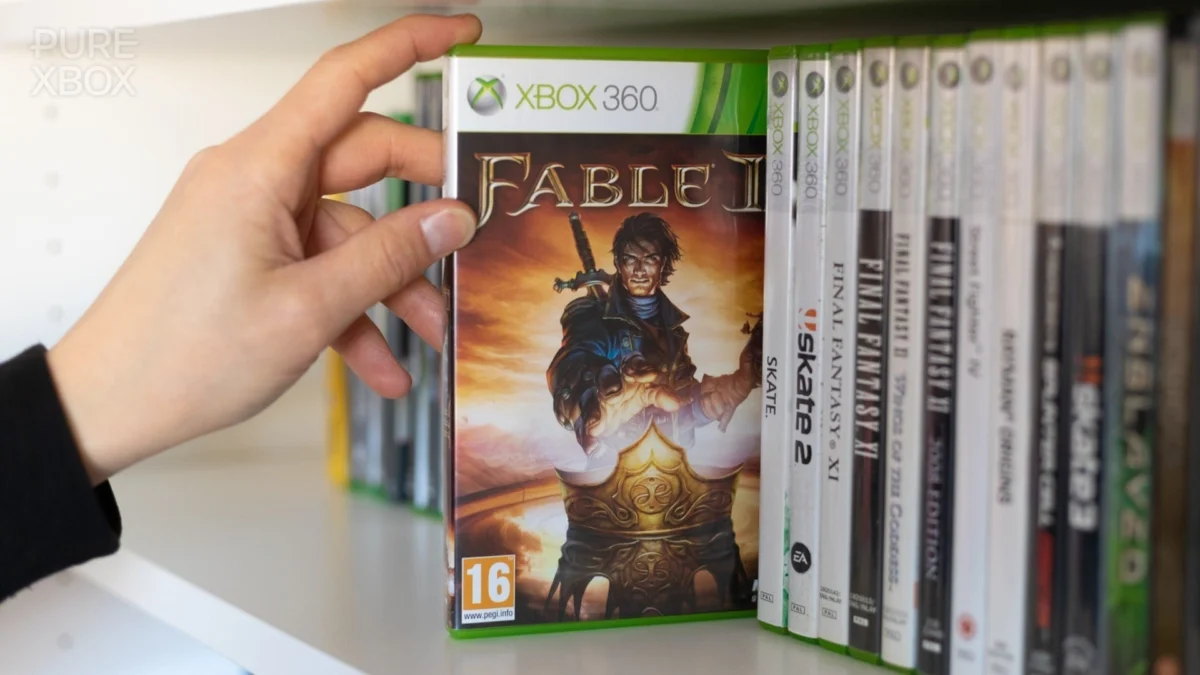
The landscape of the interactive entertainment industry has undergone a seismic shift, culminating in a pivotal moment for Microsoft’s gaming division. Following the departure of longtime leader Phil Spencer and former president Sarah Bond, the mantle of leadership has passed to Asha Sharma, the new CEO of Microsoft Gaming. Sharma inherits a division that has increasingly distanced itself from the traditional "console war" mechanics of the past two decades. As the brand moves deeper into 2026, the strategy regarding software exclusivity—once the bedrock of the Xbox ecosystem—has become the most contested and scrutinized aspect of the company’s business model.
For years, the industry standard dictated that first-party titles served as the primary incentive for hardware adoption. However, under the previous administration, Xbox began a gradual transition toward a platform-agnostic future. This transition has recently accelerated to a degree that was once unthinkable: flagship franchises such as Forza, Gears of War, and even the foundational Halo series are being positioned for release on competing hardware platforms. This "Project Latitude" initiative represents a fundamental reimagining of what it means to be a first-party publisher in an era defined by ballooning development costs and stagnating hardware growth.
The Evolution of the Multiplatform Pivot
The trajectory toward a multiplatform Xbox began in earnest following the massive $69 billion acquisition of Activision Blizzard King (ABK). To secure regulatory approval across the globe, Microsoft entered into several legally binding ten-year commitments to keep Call of Duty on Nintendo and Sony platforms. While these were initially viewed as concessions to antitrust regulators, they eventually served as a blueprint for a broader corporate philosophy.
In early 2025, internal data indicated that Microsoft had become the top game publisher in the world in terms of monthly revenue, a feat achieved largely through its presence on the PlayStation Store and Nintendo eShop. Titles like Sea of Thieves and Grounded proved that Xbox-developed software could dominate sales charts on rival systems, often outperforming those platforms’ native exclusives. For instance, the European launch of Forza Horizon 5 on the PlayStation 5 reportedly outperformed several of Sony’s own 2025 releases in initial sales volume.
This financial success created a paradox for Xbox leadership. While the software division thrived, the hardware division faced questions regarding the "value proposition" of the Xbox Series X|S and its successors. If the best Xbox games are available everywhere, the necessity of owning an Xbox console diminishes for a segment of the market. This is the central challenge facing Asha Sharma: balancing the immediate, massive profit gains of multiplatform publishing against the long-term health of the Xbox hardware ecosystem.
A Chronology of Strategic Shifts
To understand the weight of the decisions facing the new CEO, one must look at the timeline of Xbox’s strategic pivot over the last several years:
- 2022-2023: Microsoft navigates global regulatory hurdles for the ABK merger, establishing the precedent of "content ubiquity" through legal pledges.
- Early 2024: The "four-game experiment" begins, bringing titles like Hi-Fi Rush and Sea of Thieves to PS5 and Switch. Executives describe this as a "case study" rather than a total shift in policy.
- Late 2024: Internal reports leak regarding "Project Latitude," a strategy to bring nearly all first-party titles to rival consoles to offset the $69 billion acquisition cost.
- Early 2025: Microsoft reaches the milestone of being the world’s #1 publisher by revenue. Concurrently, rumors circulate about the retirement of Phil Spencer and the departure of Sarah Bond.
- April 2026: Asha Sharma is officially introduced as the CEO of Microsoft Gaming. Her first public appearances are marked by questions regarding the "Xbox Faithful"—the core fanbase that feels alienated by the loss of exclusivity.
The Economic Reality of AAA Development
The shift away from exclusivity is not merely a philosophical choice but a financial necessity driven by the current economics of the gaming industry. Modern AAA titles such as Halo or the next Gears of War installment can require budgets exceeding $250 million, with marketing costs often doubling that figure.
When a game is locked to a single console with a domestic install base of roughly 30 to 40 million units, the path to profitability is narrow. By expanding the potential reach to the PlayStation 5’s 60+ million users and the Nintendo Switch’s 140+ million users, Microsoft effectively triples its total addressable market.
Furthermore, the Game Pass model, while revolutionary, has faced its own hurdles. Recent reports suggest that Game Pass growth on consoles has slowed, leading to concerns that the service is "too expensive" to maintain at its current value equation without significant price hikes or a massive influx of new users from other platforms. Sharma has already hinted that the "value equation" of Game Pass needs a recalibration, potentially moving toward a tiered system that prioritizes cloud access over hardware ownership.
Three Potential Paths Forward
As Asha Sharma settles into her role, industry analysts have identified three primary strategic paths she could take regarding exclusivity:
1. Total Platform Ubiquity
This path involves fully leaning into the role of a third-party publisher while maintaining Xbox hardware as a "reference device" or a high-end niche product for enthusiasts. In this scenario, every Microsoft-owned IP—from Indiana Jones to Starfield—is released on all viable platforms. This maximizes short-term revenue and ensures that Microsoft’s software reaches the widest possible audience, effectively making them the "Disney of Gaming."
2. The Hybrid "Boutique" Model
A more moderate approach would involve a "windowed" exclusivity or a tiered release strategy. Major "system sellers" might remain exclusive to Xbox hardware for 12 to 24 months before migrating to other platforms. Alternatively, Sharma could decide to keep "prestige" titles and smaller, unique indie-style games (like Pentiment) exclusive to maintain a unique brand identity, while sending the high-budget "blockbusters" to other consoles to recoup costs.
3. The "Nuclear" Re-trenching
The most aggressive—and perhaps most difficult—move would be to reverse the current trend and return to a strict exclusivity model. This would involve halting all future ports to PlayStation and Nintendo (outside of existing legal obligations for Call of Duty) and focusing entirely on rebuilding the Xbox hardware brand. While this would satisfy the "Xbox faithful," it would likely result in significant financial friction with Microsoft’s board of directors and investors, who have become accustomed to the high margins of multiplatform software sales.
Market Reactions and Stakeholder Sentiment
The reaction from the gaming community remains deeply divided. On one hand, players on PlayStation and Nintendo platforms have welcomed the influx of high-quality titles that were previously unavailable to them. On the other hand, the Xbox core community has expressed concerns regarding the "devaluation" of their hardware investment. If an Xbox console no longer offers exclusive content, the primary reason to choose it over a PlayStation—which has its own robust slate of exclusives like Spider-Man and God of War—becomes less clear.
Industry analysts suggest that Microsoft’s shift could trigger a domino effect. "If the most powerful software entity in the world decides that consoles are no longer the primary gatekeeper for content, it changes the fundamental math for Sony and Nintendo as well," says one senior market researcher. "We are moving toward an era of ‘ecosystems’ rather than ‘boxes.’"
Implications for the Future of Gaming
Asha Sharma’s decisions in the coming months will likely define the next decade of interactive media. If she continues the path of multiplatform expansion, the "console war" as we know it may effectively end, replaced by a battle of services and cloud infrastructure. If she manages to find a middle ground that preserves the Xbox hardware identity while still capturing multiplatform revenue, she could create a new sustainable model for the industry.
However, the legal pledges regarding Activision content remain a significant hurdle for any return to total exclusivity. Microsoft is legally bound to support rival platforms for years to come, meaning that even a "nuclear" retreat would be a staggered, decade-long process.
As the "Xbox Boss," Sharma must navigate a landscape where the traditional rules no longer apply. The "keys to the kingdom" given by Phil Spencer come with a complex set of financial obligations, fan expectations, and technological shifts. Whether the future of Xbox lies in being a hardware leader or a global software superpower remains the most pressing question in the world of gaming. For now, the industry watches closely as Sharma prepares to chart a course for a brand that is currently at its most profitable, yet its most identity-challenged, in its 25-year history.