


The Evolution of Vocational Simulators on Xbox
The arrival of Car Dealer Simulator on Xbox Series X|S is a reflection of a broader industry trend where "work-life" simulations have moved beyond the "meme" status of the early 2010s to become a respected and commercially viable genre. Over the last three years, titles such as PowerWash Simulator, Gas Station Simulator, and Car Mechanic Simulator have demonstrated that there is a massive appetite for games that gamify domestic or industrial labor. On the Xbox ecosystem, these games have found particular success through the Xbox Game Pass service, which often serves as a discovery engine for titles that players might otherwise overlook.
Car Dealer Simulator enters this market by offering a hybrid experience. Unlike focused simulators that task the player with a single discipline, this title attempts to simulate the entire lifecycle of an automotive asset. The game’s premise begins with the player inheriting a modest, unrefined garage facility. From this starting point, the objective is to build a commercial empire by sourcing, refurbishing, and selling vehicles. This "rags-to-riches" narrative is a cornerstone of the genre, providing a clear progression path that incentivizes long-term engagement through incremental upgrades and financial milestones.
Comprehensive Gameplay Mechanics: A Multi-Disciplinary Approach
The structural complexity of Car Dealer Simulator is defined by its refusal to rely solely on menu-driven management. While many business simulations focus on spreadsheets and digital interfaces, this title emphasizes "hands-on" physical interaction within a three-dimensional environment. The gameplay loop is divided into four distinct phases: acquisition, logistics, restoration, and commerce.
In the acquisition phase, players must navigate the game world to locate viable inventory. This involves traveling to various locations within the simulated town to scout for used vehicles. The logistics phase introduces a towing mechanic, where players must physically transport non-functional vehicles back to their hub. This adds a layer of vehicular physics and navigation that distinguishes the game from more static management sims.
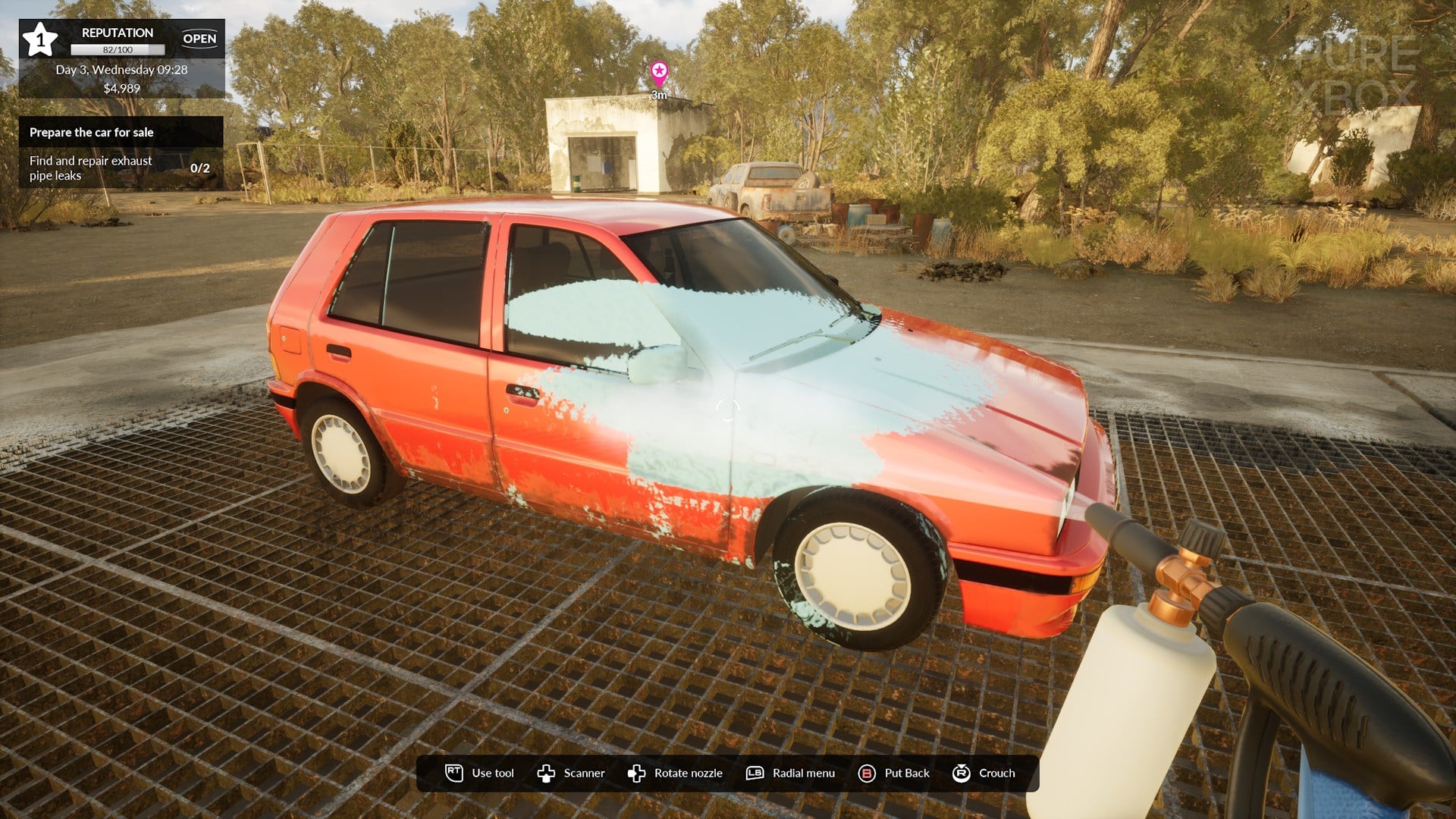
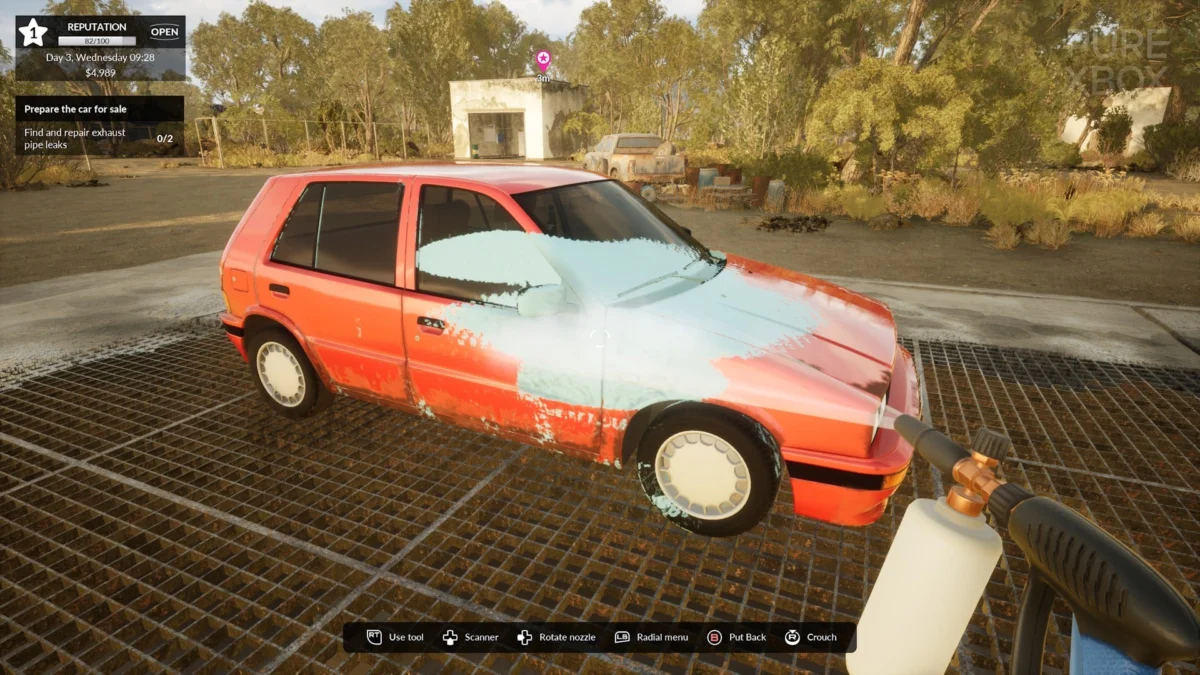
Once a vehicle reaches the garage, the restoration phase begins. This is where the game incorporates elements of "valet" and "mechanic" simulators. Players are required to use a variety of tools, including high-pressure hoses and mechanical equipment, to improve the vehicle’s aesthetic and functional condition. The cleaning mechanic, in particular, taps into the "satisfying" gameplay loop popularized by PowerWash Simulator, where players must meticulously remove grime to increase the car’s market value. The mechanical repair component, while perhaps less granular than dedicated titles like Car Mechanic Simulator, still requires a fundamental understanding of automotive components and part replacement.
The Economic Model and Negotiation Systems
The ultimate goal of Car Dealer Simulator is capital accumulation, which is achieved through a dynamic sales system. The game features a forecourt mechanic where potential customers arrive to inspect the inventory. This culminates in a price-haggling minigame, a feature that introduces a psychological element to the simulation. Players must balance the desire for maximum profit against the risk of alienating a customer and losing a sale entirely.
Industry analysis suggests that these types of "soft-skill" simulations—negotiation, pricing, and market timing—are becoming increasingly popular as they offer a different kind of challenge than traditional reflex-based gaming. In Car Dealer Simulator, the negotiation process is influenced by the quality of the player’s prior work. A car that has been thoroughly cleaned and mechanically sound provides more leverage during the haggling phase. This creates a direct feedback loop between the "dirty work" performed in the garage and the financial rewards gained in the office.
Technical Performance and Platform Optimization
Developing simulators for consoles presents unique challenges, particularly regarding control schemes and user interfaces that were originally designed for a mouse and keyboard. On the Xbox Series X|S, Car Dealer Simulator utilizes the hardware’s processing power to maintain a stable environment, though like many titles in this genre, it is characterized by what community members often call "endearing jank." This refers to slightly unpolished animations or physics interactions that, while not game-breaking, remind the player of the game’s mid-tier production origins.
The use of the Xbox Series X|S SSD is particularly relevant for simulators of this scale, as it allows for faster transitions between the garage, the town, and various sourcing locations. As the complexity of the player’s business grows, the ability of the hardware to handle multiple tracked assets—such as various cars in different states of repair—becomes critical. The game’s UI has been adapted for the Xbox controller, focusing on radial menus and simplified button mapping to ensure that the "hands-on" tasks, like scrubbing a car or towing a vehicle, feel intuitive rather than cumbersome.
Market Context and Pricing Strategy
At a price point of $19.99, Car Dealer Simulator is positioned as a "AA" or "Indie-Plus" title. This pricing strategy is common among simulator developers who aim to capture the "impulse buy" market. By offering a game that bundles several different simulation experiences into one, the developers are maximizing the value proposition for the consumer. Instead of buying a separate towing game, a separate cleaning game, and a separate business sim, the player receives a consolidated version of all three.
The broader implications for the Xbox library are notable. Microsoft has been aggressive in courting simulator developers, recognizing that these titles have high "watchability" on streaming platforms like Twitch and YouTube, and high retention rates among players who enjoy "second-screen" gaming—games that can be played while listening to podcasts or music. Car Dealer Simulator fits perfectly into this category, providing a relaxing yet engaging loop that rewards patience and attention to detail.
Chronology of the Simulation Genre on Xbox
To understand the context of this release, one must look at the timeline of simulation games on the platform:
- 2017-2019: The "Niche Era," where simulators like Farming Simulator began to see significant console sales, proving the market existed.
- 2020-2022: The "Game Pass Explosion," where titles like Microsoft Flight Simulator and PowerWash Simulator became mainstream hits, legitimizing the genre for a wider audience.
- 2023-Present: The "Consolidation Era," where new releases like Car Dealer Simulator attempt to offer "all-in-one" experiences, combining multiple simulation mechanics to provide deeper gameplay value.
Conclusion and Future Outlook
Car Dealer Simulator is a representative example of the current state of the simulator genre on modern consoles. It is a game that prioritizes systems, loops, and tactile engagement over narrative or graphical fidelity. While it may lack the triple-A polish of major first-party titles, its depth of mechanics and the variety of its "hands-on" tasks offer a compelling package for fans of the genre.
As the Xbox Series X|S continues to mature, the library of such simulators is expected to grow. The success of Car Dealer Simulator will likely depend on post-launch support and the community’s response to its multifaceted gameplay. For players looking to manage a digital business from the ground up—getting their hands dirty in the process—this title provides a comprehensive entry point into the world of automotive commerce. Whether it is the satisfaction of a clean car, the thrill of a successful haggle, or the simple joy of towing a wreck through a virtual town, Car Dealer Simulator ensures that there is indeed something for every variety of simulation enthusiast.