


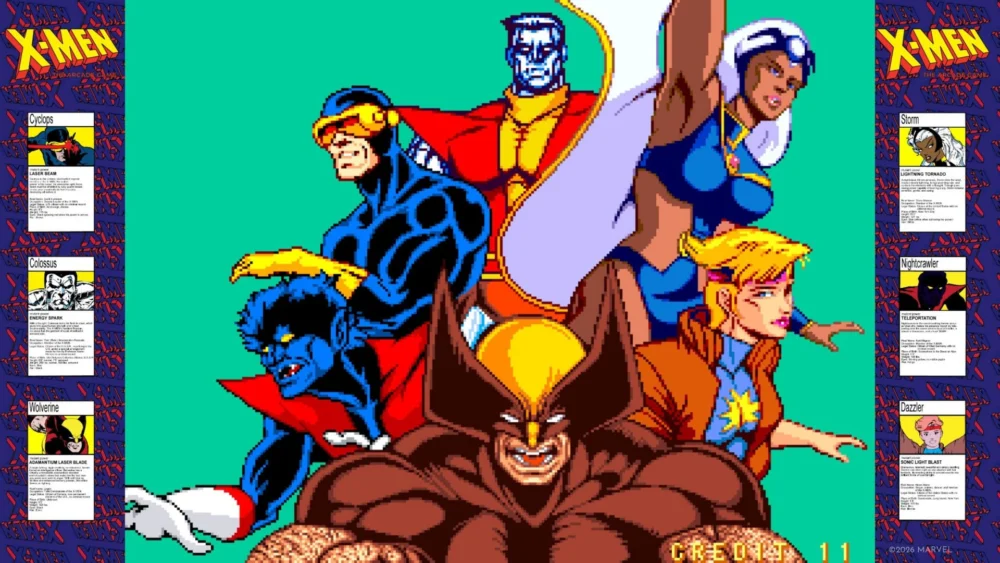
A significant announcement in the realm of retro gaming has revealed the upcoming Marvel MaXimum Collection, a comprehensive compilation of six classic Marvel-licensed video games, encompassing multiple versions across various original platforms. While a definitive release date and pricing information remain undisclosed, the collection is confirmed for launch on contemporary gaming systems, including PC, Nintendo Switch, PlayStation 5, and Xbox Series X and S. This initiative aims to reintroduce a pivotal era of Marvel gaming to both long-time fans and a new generation of players, leveraging modern enhancements to ensure accessibility and an enriched play experience.
The collection distinguishes itself by not only offering thirteen distinct game titles and their console/handheld counterparts but also by featuring all-new musical contributions from the acclaimed game composer Chris Huelsbeck, known for his iconic work on titles like the Turrican series and Factor 5 games. This addition signals a commitment to elevating the nostalgic appeal beyond simple emulation.
A Deep Dive into the MaXimum Roster: Reliving Marvel’s Gaming History
The core of the Marvel MaXimum Collection lies in its curated selection of six seminal Marvel titles, each representing a unique facet of comic book adaptations during the late 1980s and 1990s. The inclusion of multiple versions for several titles offers a fascinating glimpse into the development challenges and platform-specific interpretations prevalent during that period.
1. X-Men: The Arcade Game (Arcade)
At the forefront of the collection is the legendary X-Men: The Arcade Game, a title that defined the cooperative beat-’em-up genre for many arcade enthusiasts. Originally developed by Konami and released in 1992, this side-scrolling brawler allowed up to six players to control iconic X-Men characters such as Wolverine, Cyclops, Colossus, Storm, Nightcrawler, and Dazzler, as they battled Magneto and his Brotherhood of Evil Mutants. The game was celebrated for its vibrant pixel art, memorable voice samples, and relentless action, becoming a staple in arcades worldwide. Its inclusion in the Marvel MaXimum Collection is particularly noteworthy due to its integration of full online multiplayer support for up to six players, a crucial feature that addresses one of the original game’s most cherished aspects – communal play – and brings it into the modern era. This allows a global audience to experience the definitive mutant beat-’em-up, fulfilling a long-standing desire among fans for accessible, high-fidelity re-releases.
2. Captain America and The Avengers (Arcade, Sega® Genesis/Mega Drive, NES)
Another cornerstone of the collection is Captain America and The Avengers, a title that further exemplifies the diverse approaches to comic book adaptation across different platforms. The arcade version, developed by Data East and released in 1991, was a visually impressive beat-’em-up that allowed players to embody Captain America, Iron Man, Hawkeye, and Vision, battling villains like Red Skull, Mandarin, and Ultron. Its cinematic presentation and character roster drew heavily from the comics, offering a robust experience for fans. The Marvel MaXimum Collection also includes its console counterparts: the NES version, developed by Mindscape, which notably diverged into a platforming-oriented adventure, and the Sega Genesis/Mega Drive version, also a beat-’em-up but with its own distinct gameplay mechanics and visual style. The opportunity to compare these different interpretations side-by-side provides valuable insight into the design philosophies and technical limitations of the era, highlighting how developers tailored experiences for specific hardware.
3. Spider-Man/Venom: Maximum Carnage (Super Nintendo™, Sega Genesis/Mega Drive)
Based on the wildly popular 1993 comic book crossover event of the same name, Spider-Man/Venom: Maximum Carnage offered 16-bit console owners a chance to directly engage with one of Marvel Comics’ most iconic storylines. Developed by Software Creations and released in 1994, this beat-’em-up plunged players into the chaotic streets of New York City, fighting hordes of villains led by the psychopathic symbiote, Carnage. The game was celebrated for its direct narrative ties to the comics, its extensive roster of characters (including playable Spider-Man and Venom, with various Marvel heroes appearing as assist characters), and its distinctive rock-infused soundtrack, which often varied between the Super Nintendo and Sega Genesis versions. The collection provides both the Super Nintendo version, known for its richer color palette, and the Sega Genesis/Mega Drive version, often praised for its grittier aesthetic and unique sound chip capabilities. This dual inclusion allows players to appreciate the nuanced differences in art direction and audio production that characterized the console rivalry of the 1990s.
4. Venom/Spider-Man: Separation Anxiety (Super Nintendo, Sega Genesis/Mega Drive)
Following the success of Maximum Carnage, Software Creations developed its sequel, Venom/Spider-Man: Separation Anxiety, released in 1995. This title continued the narrative thread, focusing on the Life Foundation’s attempts to create new symbiotes from Venom’s offspring and the subsequent chaos involving Carnage. The game maintained the beat-’em-up formula but refined certain aspects, most notably by offering a two-player co-operative mode. This allowed friends to team up as Venom and Spider-Man, a feature that significantly enhanced the gameplay experience and offered a compelling reason to return to the streets of NYC. The inclusion of both the Super Nintendo and Sega Genesis/Mega Drive versions ensures that fans can experience the direct continuation of the Maximum Carnage saga with the platform-specific nuances they remember.
5. Spider-Man/X-Men: Arcade’s Revenge (Super Nintendo™, Sega Genesis/Mega Drive, Game Boy™, Game Gear™)
Spider-Man/X-Men: Arcade’s Revenge, developed by Western Technologies and released in 1992, presented a unique take on the superhero action genre. Instead of a traditional beat-’em-up, this game challenged players to navigate the deadly "Murderworld" created by the villain Arcade. The gameplay was distinctive for allowing players to control five different heroes – Spider-Man, Wolverine, Storm, Cyclops, and Gambit – each with their own dedicated levels and unique abilities. This structural approach provided varied gameplay experiences, from Spider-Man’s web-slinging and platforming to Wolverine’s close-quarters combat. A particularly noteworthy aspect of its inclusion in the Marvel MaXimum Collection is the presence of the handheld versions for Game Boy and Game Gear. These versions offer a fascinating historical perspective on Marvel’s early foray into portable gaming, showcasing the compromises and creative solutions developers employed to translate complex console experiences to less powerful, monochromatic, or smaller-screen devices.
6. Silver Surfer (NES)
Rounding out the collection is Silver Surfer for the NES, developed by Arcadia Systems (later Arc Developments) and released in 1990. This title is famously (or infamously) known for its excruciating difficulty, widely regarded as one of the most challenging shooters ever to grace a console. Players control the Silver Surfer in a horizontal and vertical scrolling shooter, battling cosmic threats across various alien planets. Despite its brutal difficulty, the game has achieved cult status, partly due to its surprisingly sophisticated graphics for the NES and, crucially, its legendary 8-bit soundtrack. Composed by Tim Follin, the music is consistently cited as one of the greatest achievements in NES audio, providing an epic backdrop to the Surfer’s cosmic journey. Its inclusion serves as both a test of skill for veteran players and a historical curiosity for those interested in the extremes of 8-bit game design and musical composition.
Modern Enhancements for a Classic Experience
Beyond the core game content, the Marvel MaXimum Collection integrates a suite of modern features designed to enhance accessibility, enjoyment, and the overall value proposition for players. These quality-of-life improvements have become standard in contemporary retro compilations, addressing common frustrations associated with older titles while preserving their authentic feel.
Players will benefit from essential functionalities such as rewind gameplay, allowing them to instantly reverse mistakes and navigate notoriously difficult sections with greater ease. Save states provide the flexibility to save progress at any point, a stark contrast to the often-limited or non-existent save systems of the original releases. To cater to aesthetic preferences, the collection offers various CRT and scanline filters, which can emulate the visual characteristics of classic cathode ray tube televisions, providing an authentic retro visual experience for purists. For those who appreciate the auditory artistry, a dedicated music player will allow users to listen to the iconic soundtracks from each game, including Chris Huelsbeck’s new compositions, independently of gameplay. Furthermore, the collection includes a robust digital museum, featuring high-resolution scans of original box art, game manuals, and vintage advertisements. This archival content offers invaluable historical context and a tangible connection to the games’ original release eras, appealing to collectors and gaming historians alike.
The Sound of Nostalgia: Chris Huelsbeck’s Contribution
A particularly exciting aspect of the Marvel MaXimum Collection is the involvement of legendary game composer Chris Huelsbeck. Known for his groundbreaking work in the Amiga and console scene, Huelsbeck’s compositions have left an indelible mark on gaming history, with scores that pushed the boundaries of sound chips and captivated players worldwide. The announcement specifies "all new music from legendary game composer Chris Huelsbeck," indicating that he is not merely providing existing tracks but creating fresh auditory experiences for this collection. This could manifest as entirely new themes for menus and interstitial content, or potentially reimagined arrangements of classic in-game tracks, or even entirely new scores for select games within the collection. Huelsbeck’s participation signifies a premium effort to not only preserve the visual and gameplay integrity of these classics but also to infuse them with a fresh, high-quality audio layer that resonates with his signature style, adding significant artistic value and a compelling draw for audiophiles and fans of classic game music.
A Legacy of Licensed Gaming: The Context of Marvel’s Video Game History
The Marvel MaXimum Collection arrives at a time when Marvel’s presence in popular culture, particularly through its cinematic universe, is at an all-time high. However, its video game history stretches back decades, with a rich and often experimental past. The games featured in this collection hail predominantly from the late 1980s and 1990s, an era when licensed comic book games were ubiquitous but varied wildly in quality. This period predates the sophisticated 3D engines and large development teams of modern superhero titles, relying instead on 2D pixel art, sprite animation, and often unique gameplay mechanics to adapt characters and storylines.
Many of these early adaptations faced the dual challenge of translating static comic panels into dynamic interactive experiences while navigating the technical limitations of 8-bit and 16-bit hardware. Publishers like Data East, Konami, and Acclaim (through its various development studios) were instrumental in bringing Marvel characters to consoles and arcades. While some games achieved critical acclaim and commercial success, others became known for their difficulty or quirky interpretations. This collection provides a valuable historical cross-section, showcasing both the definitive arcade experiences and the often-divergent console ports that characterized this formative period for Marvel in interactive entertainment. It offers a tangible link between Marvel’s enduring comic book legacy and its evolving digital presence.
The Resurgence of Retro Collections and Digital Preservation
The release of the Marvel MaXimum Collection is part of a broader industry trend towards the re-packaging and re-release of classic video games. Over the past decade, numerous publishers have capitalized on nostalgia and the growing interest in gaming history by launching compilations such as the Capcom Beat ‘Em Up Bundle, the Disney Afternoon Collection, and various Mega Man and Castlevania collections. These compilations serve multiple purposes: they offer a convenient and legally sanctioned way for fans to access beloved older titles, provide a revenue stream for publishers from their back catalogs, and contribute to the vital effort of digital preservation.
Many older games become increasingly difficult to play due to decaying original hardware, incompatible software, or the sheer scarcity of physical media. Digital collections, often built upon robust emulation frameworks, ensure that these cultural artifacts remain accessible to future generations. The inclusion of features like save states, rewinds, and digital galleries goes beyond mere emulation, transforming these collections into curated museum experiences. For the Marvel MaXimum Collection, this means that titles like X-Men: The Arcade Game, which was once a costly coin-op experience, and Silver Surfer, a rare and infamously challenging NES title, are now made readily available and more approachable on modern platforms, preserving their legacy while making them enjoyable for a contemporary audience.
Market Implications and Fan Anticipation
The announcement of the Marvel MaXimum Collection carries several implications for the gaming market and the Marvel brand. For retro gaming enthusiasts, it represents a significant release, bringing a highly requested arcade classic and several notable console titles back into the spotlight. The inclusion of online multiplayer for X-Men: The Arcade Game is particularly impactful, as it directly addresses a key social element of the original arcade experience that has historically been difficult to replicate in home versions.
For Marvel Entertainment, this collection diversifies its gaming portfolio, complementing its modern AAA titles with a nod to its rich history. It appeals to a demographic that grew up with these games while also potentially introducing newer fans, drawn by the Marvel brand, to the roots of superhero gaming. The competitive landscape for retro collections is robust, but the unique appeal of Marvel’s characters, combined with the quality-of-life features and Chris Huelsbeck’s new music, positions this collection to be a strong contender.
While the absence of a release date and price might temper immediate enthusiasm for some, it also builds anticipation. The market will be keenly watching for these details, as they will determine the overall value proposition. However, the sheer breadth of content—thirteen distinct experiences across six foundational titles—coupled with the modern amenities and the involvement of a revered composer, suggests that the Marvel MaXimum Collection is poised to be a significant and celebrated addition to the retro gaming landscape. It stands as a testament to the enduring appeal of Marvel’s heroes and the timeless enjoyment derived from classic video games.