


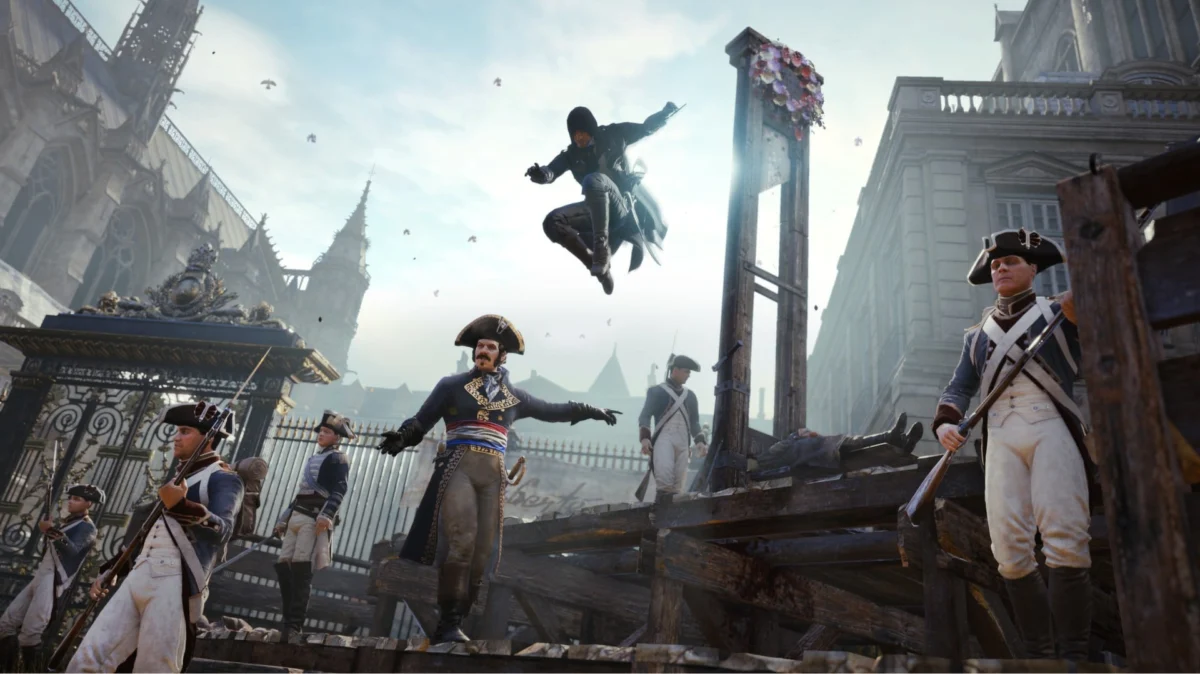
Ubisoft has officially deployed a corrective patch for Assassin’s Creed Unity on Xbox Series X and Xbox Series S, addressing a significant graphical anomaly that emerged following the title’s recent high-frame-rate update. The intervention comes approximately three weeks after the French publisher released a long-awaited optimization patch designed to bring the 2014 title into alignment with modern hardware standards. While the initial update was intended to provide a seamless 60 frames-per-second (FPS) experience, it inadvertently introduced a specialized lighting bug that exclusively affected the Xbox ecosystem, causing character models and environmental visual effects (VFX) to render incorrectly.
The resolution of this technical hurdle marks the latest chapter in the storied history of Assassin’s Creed Unity, a game that has become a touchstone for discussions regarding technical ambition and post-launch support within the video game industry. With the deployment of this fix, Ubisoft ensures that the Parisian-set adventure maintains visual parity across all current-generation consoles, including the PlayStation 5, while finally capitalizing on the raw processing power of the Xbox Series X|S architecture.
The Nature of the Xbox-Specific Lighting Anomaly
The issue addressed in the latest patch was categorized by Ubisoft’s technical teams as a "VFX lighting issue affecting characters." Reports from the player community immediately following the March 2026 current-gen upgrade indicated that the game’s lighting model—specifically how it interacted with skin shaders, clothing textures, and atmospheric particles—had become unstable. On Xbox Series X and Series S hardware, characters often appeared with distorted illumination, sometimes manifesting as unnatural glows or broken shadow maps that stripped the game of its carefully crafted 18th-century aesthetic.
The anomaly was particularly jarring given that Assassin’s Creed Unity is frequently cited for its advanced lighting system and dense urban environments, which were considered ahead of their time upon the game’s original release. The "Global Illumination" system used in the game was designed to simulate the bounce of light off surfaces in a realistic manner, a feature that was compromised by the initial 60FPS implementation. By rectifying this, Ubisoft has restored the atmospheric integrity of the game’s depiction of Revolutionary Paris.
A Chronological Overview: From 2014 to the Present
To understand the significance of this patch, one must examine the timeline of Assassin’s Creed Unity’s performance history on Xbox hardware. The game’s journey from a troubled launch to a refined legacy title is one of the most unique trajectories in the Assassin’s Creed franchise.
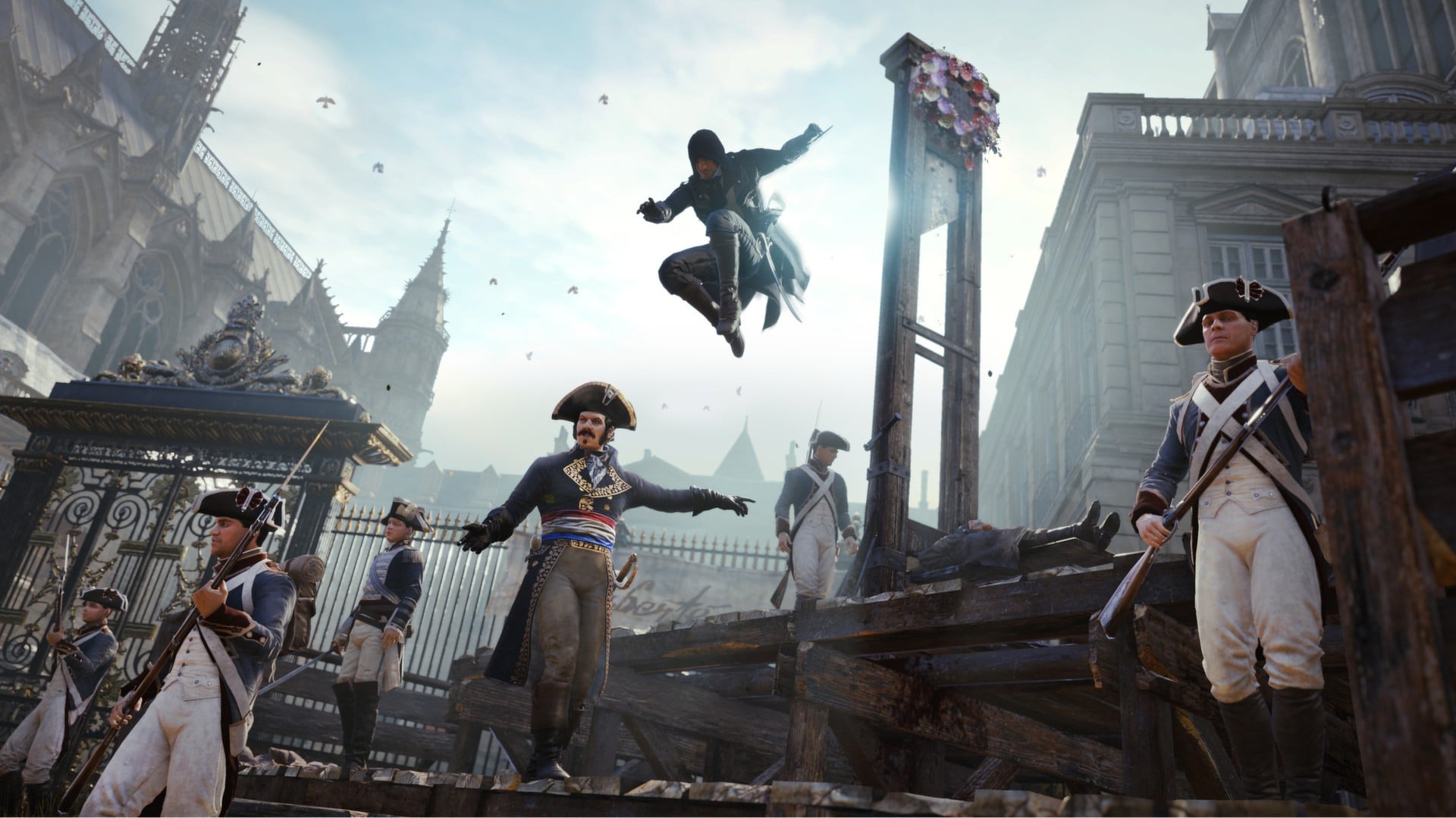
- November 2014: Initial Launch: Assassin’s Creed Unity launched on Xbox One, PlayStation 4, and PC. While praised for its scale and parkour mechanics, it was heavily criticized for technical bugs and performance drops, often dipping below 20 FPS on consoles during crowded sequences.
- February 2015: Final Major Stability Patches: Ubisoft released a series of updates that stabilized the game at a locked 30 FPS on the original Xbox One, though resolution remained capped at 900p.
- May 2021: Microsoft FPS Boost: As part of its backward compatibility initiative, Microsoft included Assassin’s Creed Unity in its "FPS Boost" program. This feature allowed the Xbox Series X|S to run the game at 60 FPS using system-level techniques without requiring changes to the game’s original code. However, this did not improve the resolution or visual assets.
- March 2026: Official Current-Gen Upgrade: Ubisoft released a native patch for current-gen consoles. This update was intended to replace the "FPS Boost" method with a more robust, developer-side optimization, theoretically allowing for higher resolutions and better stability.
- Mid-March 2026: Discovery of the Lighting Bug: Shortly after the upgrade, Xbox players reported the aforementioned lighting glitches, which were absent from the PlayStation 5 version of the same update.
- April 2026: The Corrective Patch: Ubisoft issues the fix for Xbox Series X|S, bringing the version history to its current, stable state.
Technical Comparison: FPS Boost vs. Native Optimization
The recent update cycle created a point of contention among the Xbox community because Assassin’s Creed Unity was already performing at 60 FPS on Xbox Series X via Microsoft’s FPS Boost. This led to questions regarding the necessity of a new patch if it introduced visual regressions.
The distinction between FPS Boost and a native developer patch is critical. FPS Boost functions by tricking the game engine into thinking it is rendering at a higher frequency than originally programmed, often by manipulating the direct rendering calls at the OS level. While effective, it can sometimes lead to minor inconsistencies or prevent the implementation of higher-resolution textures.
In contrast, Ubisoft’s native 2026 update was designed to integrate 60 FPS directly into the game’s engine code (AnvilNext 2.0). This approach allows the developers to potentially unlock resolution scaling, improve draw distances, and optimize CPU-heavy tasks like crowd AI. The initial failure of the lighting model on Xbox suggested a conflict between the new engine-level instructions and the specific DirectX implementation on the Xbox Series X|S architecture. With the fix now live, players can enjoy the benefits of native optimization—such as improved frame-pacing and potentially higher dynamic resolutions—without the visual artifacts that plagued the initial rollout.
Official Response and Community Impact
Ubisoft addressed the player base through its official social media channels, stating: "To our Xbox Series X|S players, we have deployed a fix for the VFX lighting issue affecting characters in Assassin’s Creed Unity. Thank you for your patience while we worked on this resolution."
The response from the community has been largely positive, though some players noted that the three-week window for a fix was longer than expected for a legacy title. However, industry analysts suggest that Ubisoft’s willingness to dedicate resources to a twelve-year-old game reflects a broader strategy of maintaining the "long-tail" value of its back catalog. By ensuring that classic entries in the franchise remain playable and visually appealing on modern hardware, Ubisoft strengthens its subscription service, Ubisoft+, and keeps interest in the brand high between major releases.
The fix is particularly important for the Xbox ecosystem, where backward compatibility is a core pillar of the platform’s marketing. Xbox Series X users, who have access to the most powerful console hardware currently available, expect "definitive" versions of legacy titles. The lighting bug had temporarily rendered the Series X version inferior to its PlayStation 5 counterpart, a discrepancy that has now been erased.

Broader Implications for Legacy Title Support
The situation surrounding Assassin’s Creed Unity highlights the complexities of modern game preservation and the challenges of updating older software. As game engines evolve, the original lighting and shading models may not always translate perfectly to new APIs (Application Programming Interfaces) or hardware drivers.
Ubisoft’s recent trend of updating older Assassin’s Creed titles—including 60 FPS patches for Assassin’s Creed Origins and Assassin’s Creed Odyssey—demonstrates a commitment to the franchise’s history. These updates serve several purposes:
- Player Retention: Keeping players engaged with the franchise during "gap years" between new flagship releases.
- Technical Benchmarking: Testing engine optimizations on older assets to inform future development.
- Market Competitiveness: Matching the efforts of other publishers, such as Rockstar Games or CD Projekt Red, who have also updated legacy hits for the current console generation.
In the specific case of Unity, the game holds a unique place in the series due to its unparalleled crowd density and parkour animations. Many fans still consider it the peak of the "traditional" Assassin’s Creed formula before the series transitioned into the open-world RPG format with Origins. Therefore, ensuring the game is in "ship shape" on current-gen platforms is not merely a technical necessity but a move to satisfy a dedicated segment of the fanbase.
Final Assessment of the Current State of the Game
As of this report, Assassin’s Creed Unity on Xbox Series X|S is now considered to be in its most stable and visually impressive state since its 2014 inception. The combination of native 60 FPS support, the removal of the lighting artifacts, and the inherent fast loading times provided by the Xbox’s NVMe SSD creates an experience that significantly surpasses the original Xbox One version.
For players who previously avoided the title due to its launch-era reputation, the current version offers a chance to experience the French Revolution with the technical polish that was originally intended. The resolution of the lighting bug ensures that the game’s art direction—one of its most praised elements—can finally be viewed without distraction on the most powerful console hardware.
Ubisoft has confirmed that the patch is now available for download globally. Players are encouraged to ensure their game version is up to date to receive the fixes. With this update, the technical saga of Assassin’s Creed Unity on Xbox appears to have finally reached a successful conclusion, providing a blueprint for how developers can continue to support and refine their classic libraries in the years to come.