


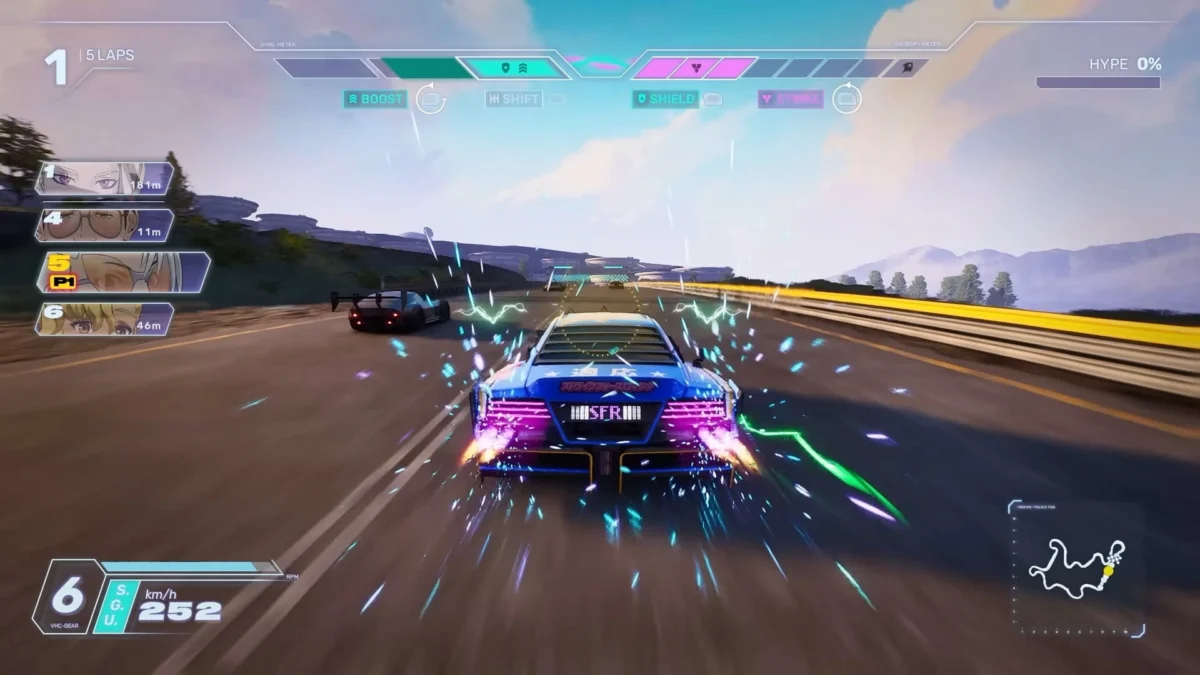
The arcade racing title, Screamer, is poised for its multi-platform launch on March 26th, arriving on Xbox Series X|S, PC, and PlayStation 5. The game has already generated considerable buzz, notably for its unique blend of high-octane racing, narrative depth, and distinct gameplay mechanics. Pre-release critical reviews, which began surfacing somewhat unusually on a Sunday, indicate a largely positive reception, positioning Screamer as a noteworthy contender in a genre often yearning for innovation.
A New Contender in the Arcade Racing Landscape
Screamer first caught the attention of enthusiasts when it was featured in Pure Xbox’s "Next Week" roundup, highlighting its impending arrival. The game’s premise, centered around a high-stakes tournament driven by themes of "longing, ambition, and vengeance," immediately suggested a departure from conventional racing game narratives. This focus on character motivation and an overarching story is a significant element that has resonated with critics and sets it apart from many contemporary racers.
The arcade racing genre itself has seen various ebbs and flows over the decades. From the groundbreaking days of Out Run and Ridge Racer to the more recent, but now dormant, cult hits like Blur and Burnout, players have consistently sought experiences that prioritize immediate fun, exaggerated physics, and vibrant aesthetics over strict simulation. Screamer appears to tap into this enduring appeal, aiming to deliver a dose of pure, unadulterated excitement while simultaneously pushing boundaries with fresh gameplay concepts. The initial critical consensus suggests it largely succeeds in this ambitious endeavor, promising a revitalization for fans of the genre.
Unpacking the Critical Acclaim: A Deep Dive into Reviewer Feedback
The early wave of reviews, despite their unconventional Sunday release, paints a picture of a game that is largely succeeding in its ambitious goals, even if not without its minor imperfections. Metacritic scores currently stand at a robust 82 for Xbox, 77 for PC, and 76 for PS5, indicating a strong performance across platforms.
Day One, granting Screamer a near-perfect 9/10, unequivocally hails it as "bold, exciting, but most importantly, incredibly fun," going so far as to suggest it "may just be one of the finest arcade racers in years." This glowing assessment emphasizes the game’s ability to recapture the essence of classic arcade racers – a sentiment that will undoubtedly resonate with a nostalgic audience eager for a return to form. The call to action for players to "do yourself a favour and buy Screamer" underscores the review’s profound enthusiasm.
DualShockers, with an 8.5/10, echoes this sentiment of rediscovered joy, noting that Screamer "ends up being exactly the kind of surprise that reminds you why you fell in love with racing games in the first place as a kid." This review highlights the game’s "bold, a little chaotic" nature and its "complete commitment to putting gameplay front and center." Crucially, DualShockers praises its distinct identity, forged through "unique twin-stick handling, the risk-reward chaos of the Echo System, and a story that leans hard into its over-the-top anime inspirations," positioning it as both "fresh and nostalgic."
Push Square’s 8/10 review further reinforces the game’s innovative spirit, describing Screamer as "a bold and exciting arcade racing game that stands out from the pack." The review commends the game for taking "big swings" that largely "worked out," particularly praising the "unique and challenging" racing mechanics. The mastery of its systems is described as "very rewarding," complemented by a "stylish presentation" that helps the game carve "its own lane." This suggests a game that rewards player dedication and skill, offering depth beyond its immediate arcade appeal.
IGN, also awarding an 8/10, draws an intriguing parallel, stating that Screamer "feels like the result of locking Blur in a room for 12 months with nothing but a Crunchyroll subscription." This vivid imagery encapsulates the game’s blend of high-intensity racing and anime-infused narrative. Despite acknowledging "tedious characters and difficulty spikes," IGN ultimately praises Screamer as a "unique and confidently assembled racer," emphasizing its distinctiveness and robust construction.
Navigating the Nuances: Areas for Improvement and Varied Perspectives
While the overall reception is largely positive, some critics identified areas where Screamer could refine its approach, offering a more balanced perspective on the title’s strengths and weaknesses. These insights are crucial for potential players seeking a comprehensive understanding of the game.
PC Gamer, awarding a 72/100, offers a perspective that, while appreciative of the game’s ambition, points to a fundamental disconnect. The review passionately advocates for more games like Screamer in a genre often fixated on hyper-realistic simulations, praising its "delightful plethora of fresh ideas" and "meticulous care into realising them." The game is lauded for being "distinct and idiosyncratic," embodying "everything I’d want a racer to be in 2026." However, the review concludes with a significant caveat: "Just one problem: I don’t like the driving." This highlights a potential challenge for players who might find the core handling mechanics not to their taste, despite the game’s other innovative elements. This particular criticism underscores the subjective nature of racing game controls and how crucial they are to the overall player experience.
GameReactor’s 7/10 review describes Screamer as a "slightly odd mix of fast-paced arcade racing, an unbalanced game, a story that takes up too much space, almost too many systems, and controls that demand a lot from the player." While acknowledging it’s "not a bad game," the reviewer suggests it "tries to do almost too much," expressing a preference for a more "straightforward" experience, perhaps more akin to a modern Ridge Racer. This feedback suggests that the game’s ambitious integration of multiple systems and a prominent narrative might, for some, lead to a sense of overwhelming complexity or a lack of focus. The demand for player skill, particularly regarding controls, could also be a barrier for more casual players.
ScreenHub, with a 2.5/5 rating, provides the most critical assessment, suggesting that "the final product perhaps isn’t what the developers set out to make, or where restrictions have prevented it from realising its potential." This review expresses disappointment, lamenting that a "story-focused, anime-style racing game with cool drifts and deep interpersonal conflicts between a diverse cast could have really been cool," implying that Screamer fell short of fully delivering on this promising concept. This perspective offers a valuable counterpoint, indicating that while ambition is lauded, execution across all facets is paramount.
The Developers’ Vision and Industry Context
While the original article does not explicitly name the developer, PC Gamer’s review attributing Screamer to "Milestone’s narrative-led, anime-infused arcade racer" provides a significant clue. Milestone, an Italian developer, has a long and storied history in the racing game genre, known for franchises such as MotoGP, MXGP, Ride, and Hot Wheels Unleashed. Their portfolio typically leans towards realistic simulations or licensed arcade experiences. If Screamer is indeed a Milestone title, it represents a bold and perhaps experimental new direction for the studio, venturing into a more stylized, narrative-driven, and uniquely mechanic-focused arcade racer. This move would signify a strategic effort to diversify their offerings and tap into a different segment of the racing game market.
The decision to infuse Screamer with an "over-the-top anime" aesthetic and a strong narrative suggests a deliberate attempt to create a distinctive identity in a crowded market. This strategy aligns with broader trends in the gaming industry where developers are increasingly seeking to differentiate their products through unique artistic styles and compelling storytelling, even within genres traditionally focused on pure gameplay. The blend of "longing, ambition, vengeance" as core narrative drivers indicates a mature approach to storytelling within a genre often perceived as light on plot.
Market Positioning and Player Anticipation
Screamer is entering the market with a pre-order price of £59.99 / $59.99, a standard full-price tag for new releases on current-generation consoles. This pricing strategy reflects confidence in the game’s quality and its position as a significant new IP. Its multi-platform launch on Xbox Series X|S, PC, and PS5 ensures broad accessibility and targets a wide player base from day one.
The anticipation surrounding Screamer has been palpable, particularly among fans of the arcade racing genre who have been vocal about their desire for fresh experiences. The game’s distinct visual style, coupled with its innovative gameplay mechanics like the twin-stick handling and Echo System, has generated considerable curiosity. The initial wave of reviews, despite some mixed opinions, largely validates this excitement, suggesting that Screamer delivers on many of its promises for a fun, engaging, and unique racing experience. The question posed by Pure Xbox – "Excited for Screamer’s release on Thursday?" – is more than rhetorical; it reflects a genuine interest within the gaming community to engage with a title that is striving to be different.
Broader Implications for the Genre
The success of Screamer, even with its identified quirks, could have significant implications for the future of the arcade racing genre. Its embrace of a strong narrative, unique control schemes, and stylized aesthetics may encourage other developers to explore similar avenues rather than solely focusing on hyper-realistic simulations or established formulas. In an era where AI is increasingly impacting game development, Screamer‘s emphasis on "distinct and idiosyncratic" design, as noted by PC Gamer, could serve as a testament to the enduring value of human creativity and bold conceptualization in game design.
Furthermore, the game’s reception highlights the importance of innovation in gameplay mechanics. The "twin-stick handling" and "Echo System" are not just cosmetic additions; they fundamentally alter how the game is played and experienced. This willingness to experiment with core mechanics, even if they prove challenging for some players, is a vital aspect of genre evolution. Should Screamer achieve commercial success alongside its critical acclaim, it could signal a renewed appetite among players and publishers for racing games that dare to be different, injecting much-needed vitality and creativity back into a beloved but sometimes stagnant genre. As players gear up for its official release, Screamer stands as a compelling case study for how innovation, narrative, and unique mechanics can converge to create a memorable and impactful gaming experience.