


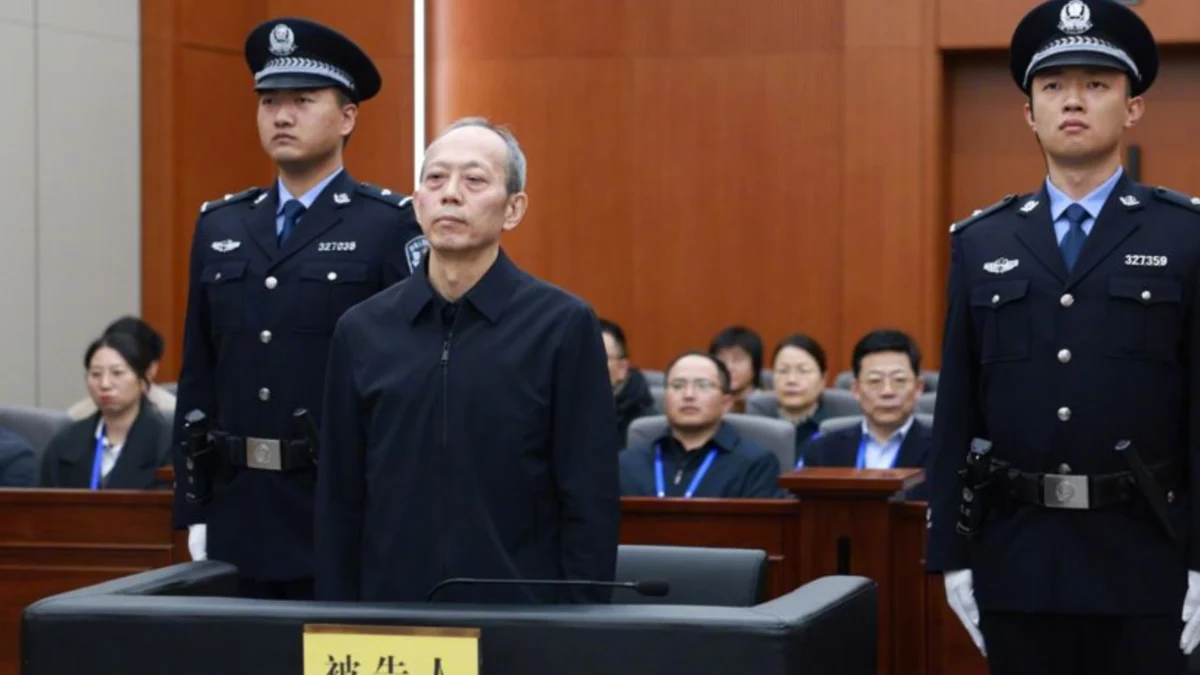
The former head of China’s General Administration of Sport, Gou Zhongwen, has been handed a death sentence with a two-year reprieve by a Chinese court, following his conviction on charges of large-scale bribery and abuse of power. The Yancheng Intermediate People’s Court delivered the verdict, which also includes the lifelong forfeiture of Gou’s political rights and the seizure of all his personal assets. This landmark ruling sends a stark message about corruption within the highest echelons of China’s sports governance, a sector that has seen significant growth and official recognition of esports in recent years.
The Yancheng court found that Gou, aged 68, accepted a staggering sum of over 236 million yuan (approximately $33.4 million USD) in bribes over a fifteen-year period, spanning from 2009 to 2024. Prosecutors presented evidence detailing how Gou leveraged his influential positions within the government to facilitate benefits for individuals and various departments. These illicit advantages were reportedly gained through the manipulation of project approvals and the steering of business operations, actions the court deemed to be of "extremely large" scale and having an "extremely negative" social impact.
A Steep Fall from Grace: Chronology of an Official’s Downfall
Gou Zhongwen’s career was one of significant ascent within China’s state apparatus. Before assuming leadership of the General Administration of Sport, he held the position of Vice Mayor of Beijing from 2012 to 2013. It was during this tenure that he faced separate charges of abusing his authority, which the court also considered in its sentencing. Investigations revealed that his actions related to the acquisition of a public project during his time as vice-mayor resulted in substantial losses for the state.
The trajectory of Gou’s career can be traced through key appointments:
- Prior to 2009: Gou held various positions within provincial and municipal government structures, gradually building his influence.
- 2009-2012: Details of his activities during this period are less publicized, but it is understood that he was already in positions where influence peddling could occur.
- 2012-2013: Served as Vice Mayor of Beijing. This period later became the subject of a separate legal inquiry concerning abuse of power and state losses.
- Post-2013: Gou rose to prominence as the head of the General Administration of Sport, overseeing a vast array of traditional sports and, significantly, the burgeoning field of esports. He also served as president of the Chinese Olympic Committee and played a pivotal role in the organization of the Beijing 2022 Winter Olympics.
- 2021 onwards: China implemented some of the world’s strictest gaming regulations, limiting minors to three hours of gameplay per week. While the General Administration of Sport, under Gou’s leadership, did not directly control game approvals, its influence on the broader regulatory environment for sports, including esports, was significant.
- 2024: Gou’s alleged criminal activities spanning over a decade came to a head, leading to his arrest and subsequent investigation.
- December 2025 (hypothetical date based on article’s implication of future reporting): The Yancheng Intermediate People’s Court delivered its verdict, sentencing Gou Zhongwen to a suspended death sentence.
The Suspended Death Sentence: A Nuance in Chinese Justice
The court’s decision to impose a suspended death sentence, specifically with a two-year reprieve, is a critical element of the ruling. In China’s legal system, a death sentence with a reprieve typically means that if the convicted individual demonstrates good behavior and commits no further offenses during the two-year period, the sentence is commuted to life imprisonment. This practice aims to offer a chance for redemption while still signifying the extreme severity of the crime.
However, the court’s judgment on Gou’s case included a significant caveat. Despite acknowledging Gou’s confession, his voluntary disclosure of additional bribery offenses not yet uncovered by investigators, and his cooperation in returning illicit gains, these mitigating factors were deemed insufficient to outweigh the gravity of his actions. Consequently, the court ruled that Gou will not be eligible for parole or sentence reductions. This means that once the suspended death sentence is formally commuted to life imprisonment after the two-year period, he will remain incarcerated for the rest of his life, effectively serving a life sentence without the possibility of early release.
Abuse of Power and State Losses
Beyond the extensive bribery charges, Gou was separately sentenced to five years in prison for his abuse of authority during his tenure as Beijing’s vice-mayor. The court’s findings indicated that his decisions concerning the acquisition of a related public project led to considerable financial detriment to the state. This dual conviction underscores a pattern of misconduct that extended beyond simple financial corruption into actions that directly harmed public assets.
The Esports Connection: A Paradoxical Leadership

Gou Zhongwen’s leadership of the General Administration of Sport placed him at the helm of a body that officially recognized esports as China’s 99th sport. This recognition was a significant step for competitive gaming, legitimizing it within the traditional sports framework and paving the way for greater investment and professionalization. The General Administration of Sport’s endorsement was crucial for esports to gain traction and be integrated into national sports policies.
Despite this official embrace, Gou’s personal stance and influence on the esports industry were reportedly unsupportive, according to sources like The Esports Advocate. Even as esports experienced a meteoric rise in popularity across China, with millions of young people engaging in competitive play and a thriving professional scene emerging, Gou was not perceived as a champion for the industry. This paradox is particularly stark given the stringent regulations imposed on the gaming sector.
Broader Regulatory Landscape and Implications for Gaming
The year 2021 marked a watershed moment for China’s video game industry, with the National Press and Publication Administration (NPPA), the primary regulator for game approvals, enacting some of the nation’s most severe restrictions. Under these new rules, individuals under the age of 18 were limited to just three hours of gaming per week. Crucially, because all professional esports players in China are required to be registered athletes, these regulations effectively created a barrier for minors seeking to enter the professional esports circuit. This stands in contrast to traditional sports, where no such age-based restrictions on participation exist.
The General Administration of Sport, under Gou’s leadership, had the potential to advocate for esports-specific exceptions or to push back against regulations that could stifle the growth of this burgeoning industry. However, according to industry observers, no such proactive measures were taken during his tenure. This inaction, coupled with his alleged corrupt practices, raises questions about the integrity of sports governance in China and its impact on emerging sectors like esports.
Reactions and Analysis: A Message to Corrupt Officials
While direct statements from Gou Zhongwen’s legal representatives or his family were not immediately available, the court’s verdict and the extensive reporting by state media indicate a clear directive from the Chinese government. The prosecution and conviction of such a high-ranking official, particularly for offenses involving substantial sums of money and abuse of power, are often presented as evidence of the Communist Party’s ongoing anti-corruption campaign.
The scale of the bribes—over 236 million yuan—places Gou’s case among the most significant corruption scandals involving sports officials in recent Chinese history. The financial figures alone are staggering, representing a substantial betrayal of public trust and a diversion of resources that could have been invested in sports development or public welfare.
The court’s decision to deny parole or sentence reductions, even with Gou’s cooperation, suggests a deliberate attempt to set a precedent. It signals that even for those who confess and cooperate, the consequences for egregious corruption at the highest levels will be severe and long-lasting. This move could be interpreted as a strategy to deter other officials from engaging in similar illicit activities, reinforcing the government’s commitment to maintaining discipline within its ranks.
The implications for the broader sports and esports landscape in China are multifaceted. On one hand, the conviction could lead to a renewed focus on transparency and accountability in sports governance, potentially fostering a healthier environment for athletes and organizations. On the other hand, the association of a high-ranking sports official with such extensive corruption could cast a shadow over the legitimacy of the sports bodies he led and raise concerns about the underlying systemic issues that allowed such corruption to fester.
The future of esports in China, while officially recognized, may also face increased scrutiny. The nexus between sports governance, regulation, and the rapid growth of digital entertainment is complex. The conviction of Gou Zhongwen serves as a stark reminder of the challenges that lie in balancing economic development, public interest, and ethical leadership within these interconnected domains. The ultimate commutation of his sentence to life imprisonment, without the possibility of release, will be closely watched as a tangible outcome of this high-profile legal battle.