


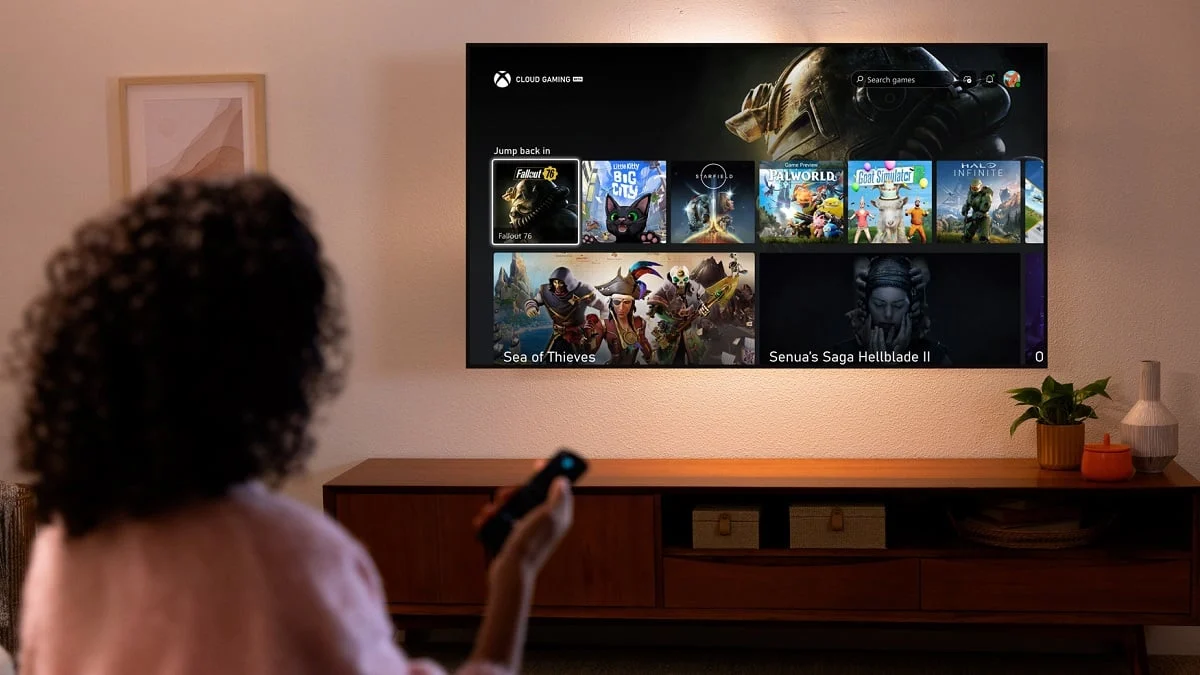
Microsoft has significantly advanced its strategy to make Xbox gaming more accessible, announcing the imminent availability of its Xbox app on select Amazon Fire TV devices. This pivotal move will enable subscribers to Xbox Game Pass Ultimate to stream a vast library of titles directly to their televisions via cloud gaming, entirely bypassing the need for a dedicated Xbox console. The announcement, made on June 27, 2024, via an official Xbox Wire post, underscores Microsoft’s deepening commitment to a "gaming everywhere" philosophy, prioritizing subscription growth and cloud-based delivery over traditional hardware sales as the primary gateway to its ecosystem.
The integration means that users with an Amazon Fire TV Stick 4K or a Fire TV Stick 4K Max – devices priced at $49.99 and $59.99 respectively – will soon be able to download the Xbox app and access the full suite of Xbox Cloud Gaming. The only other requirements are an active Xbox Game Pass Ultimate subscription and a compatible Bluetooth wireless controller. Notably, Microsoft has emphasized interoperability, confirming that users are not restricted to Xbox-branded controllers; a PlayStation 5 DualSense controller, or indeed any other widely supported Bluetooth gamepad, will suffice. This flexibility further lowers the barrier to entry, catering to a broader audience that may already own such peripherals. While an exact launch date for the app’s availability on Fire TV was not specified, the announcement indicates its arrival is on the immediate horizon, poised to transform the accessibility landscape for many casual and budget-conscious gamers.
A Strategic Leap: Microsoft’s "Gaming Everywhere" Vision Takes Shape
This development is not an isolated tactical maneuver but a significant stride in a long-articulated strategic vision by Microsoft’s Head of Xbox, Phil Spencer. For years, Spencer has championed the idea of Xbox as a service that transcends proprietary hardware, envisioning a future where games are available to everyone, everywhere, regardless of the device they own. This "gaming everywhere" ethos posits that the future of the Xbox brand lies less in the physical console and more in the ubiquity of its Game Pass subscription service and cloud infrastructure. The arrival on Amazon Fire TV represents a substantial expansion of this vision, bringing Xbox’s vast content library to potentially millions of new screens.
The Xbox Game Pass service, often dubbed "the Netflix of video games," has been the cornerstone of this strategy. Launched in 2017, it has evolved into a comprehensive subscription offering, providing access to hundreds of games, including new first-party releases on day one, a rotating selection of third-party titles, and perks like Xbox Live Gold and EA Play. As of early 2024, Microsoft reported over 34 million Game Pass subscribers, a figure the company is actively striving to grow. Expanding cloud gaming capabilities to widely adopted streaming devices like the Fire TV Stick is a direct effort to accelerate this subscriber growth by removing the significant upfront cost and commitment associated with purchasing a dedicated gaming console. It transforms a high-entry-barrier hobby into an accessible, streaming-based entertainment option.
Unpacking the Affordability: Lowering the Barrier to Entry
One of the most compelling aspects of this new integration is its potential to drastically reduce the financial barrier to experiencing modern Xbox titles. A direct comparison reveals a stark difference in cost. Consider the Xbox Series S, currently the most affordable dedicated Xbox console, priced at $299.99. When paired with a year’s subscription to Game Pass Ultimate, which costs $16.99 per month ($203.88 annually), the total investment for a year of gaming stands at approximately $503.87.
In contrast, the new Fire TV Stick 4K entry point, priced at $49.99, combined with the same year-long Game Pass Ultimate subscription, brings the total cost to roughly $253.87. This makes the Fire TV cloud gaming option more than $250 cheaper than even the entry-level Xbox console for the first year. For consumers who already own a compatible Fire TV Stick and a Bluetooth controller, the cost drops even further, requiring only the Game Pass Ultimate subscription. This significant cost reduction positions Xbox Cloud Gaming as an extremely attractive proposition for casual gamers, those on a budget, or individuals residing in multi-gaming households who might not justify a second dedicated console. It effectively democratizes access to high-fidelity gaming experiences, making titles previously confined to powerful hardware available through a relatively inexpensive streaming dongle.
The Technical Backbone: Cloud Gaming and Its Demands
While the accessibility benefits are substantial, the experience is inherently reliant on the underlying technology of cloud gaming and, critically, the user’s internet connection. Cloud gaming, at its core, involves rendering games on powerful servers located in Microsoft’s Azure data centers and then streaming the video feed to the user’s device, while input commands are sent back to the server. This process demands a robust and stable internet connection to ensure minimal latency and a smooth, high-quality visual experience.
Microsoft recommends a minimum internet speed of 20 Mbps for optimal performance, though higher speeds and a stable, low-latency connection (ideally wired Ethernet or a strong Wi-Fi 6 connection) are always preferable for the best experience. Any instability, packet loss, or significant latency in the user’s home network or internet service provider can lead to noticeable input lag, visual artifacts, or even disconnections, detracting from the immersion. Unlike traditional console gaming, there is no offline fallback option for cloud-streamed titles. This caveat is crucial for potential users, particularly those in regions with less developed internet infrastructure or inconsistent broadband service.
Furthermore, the Fire TV Stick 4K and 4K Max are specifically chosen for their enhanced processing capabilities and robust Wi-Fi connectivity compared to older or less powerful Fire TV models. Users must also possess a compatible television set, typically a 4K display, to fully appreciate the streamed content at its intended resolution, although the service will scale to 1080p for non-4K displays. The ease of setup, however, remains a key advantage: simply download the app, log in with an Xbox account linked to Game Pass Ultimate, pair a controller, and begin playing.
Chronology of Expansion: Xbox’s Multiplatform Journey
The move to Amazon Fire TV is the latest in a series of strategic expansions for Xbox Cloud Gaming, tracing its roots back to Project xCloud, which began public testing in 2019. Initially launched as a mobile-first initiative, Xbox Cloud Gaming (rebranded in 2020) has steadily broadened its reach. It first became available on Android mobile devices, then expanded to iOS and PC via web browsers, before making its way to select Samsung Smart TVs as a native app in 2022. Each expansion has progressively chipped away at the traditional console dependency, aligning with Spencer’s "gaming everywhere" mantra.
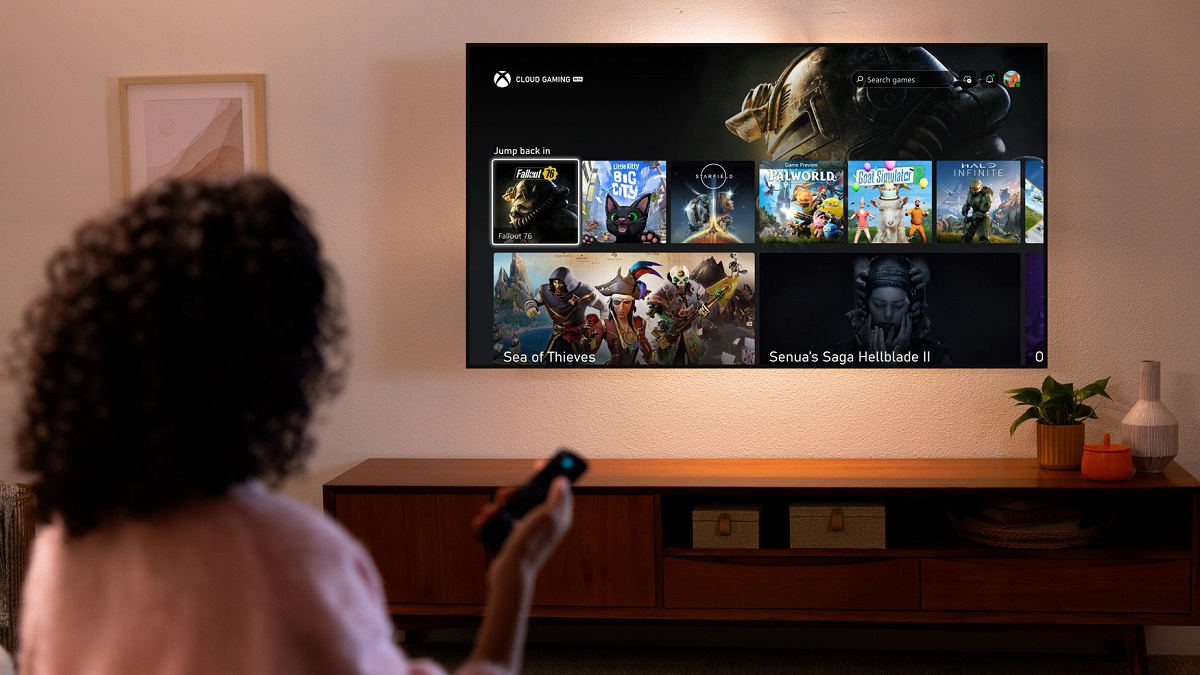
This software-centric push runs parallel to other significant shifts in Xbox’s overall strategy. In early 2024, Microsoft confirmed it would bring several of its first-party exclusive titles, including critically acclaimed games like Sea of Thieves, Hi-Fi Rush, Grounded, and Pentiment, to rival platforms such as PlayStation and Nintendo Switch. This unprecedented move, once considered unthinkable for a console manufacturer, further signaled a pivot from exclusivity as a primary driver for hardware sales to a broader content distribution model aimed at maximizing player engagement and Game Pass subscriptions across all platforms. Rumors have even circulated about the possibility of cornerstone franchises like Halo eventually appearing on PlayStation, though Microsoft has yet to officially comment on such speculation.
Despite this aggressive multiplatform strategy, Microsoft has not entirely abandoned hardware. Xbox leadership, including Phil Spencer, has teased the potential existence of an Xbox handheld device, indicating that while the company is embracing platform agnosticism for its services, it remains open to innovating within the hardware space to offer diverse ways for players to access its ecosystem. The Fire TV integration serves as another proof point in this evolving narrative, demonstrating that Xbox is prepared to meet players wherever they are, on the devices they already own.
Market Dynamics and Competitive Landscape
The decision to partner with Amazon for Fire TV integration is also a shrewd play in the competitive streaming device market. Amazon Fire TV devices hold a significant market share globally, with millions of units sold and actively in use. Tapping into this massive installed base provides Xbox with immediate access to a vast, untapped audience that might not otherwise consider purchasing a dedicated gaming console. For Amazon, hosting Xbox Cloud Gaming enhances the value proposition of its Fire TV ecosystem, offering a premium gaming experience that could differentiate it from competing streaming platforms. It also potentially provides a rival offering to Amazon’s own cloud gaming service, Luna, though the two services target slightly different segments and content libraries.
In the broader cloud gaming landscape, Xbox Cloud Gaming competes with services like NVIDIA’s GeForce NOW, which focuses on bringing PC games to various devices, and Sony’s PlayStation Plus Premium, which includes cloud streaming for a selection of older PlayStation titles. Google Stadia, once a prominent player, ceased operations in 2023, highlighting the challenges of establishing a sustainable cloud gaming platform. Microsoft’s deep integration with its Game Pass ecosystem, vast first-party library, and extensive cloud infrastructure (Azure) gives it a unique competitive advantage. By partnering with Amazon, Microsoft is leveraging the reach of an established consumer electronics giant to solidify its position as a leader in the nascent but rapidly growing cloud gaming market, projected to reach significant valuations in the coming years.
The current console market dynamics also heavily influence Microsoft’s strategic decisions. While Xbox Series X|S consoles have seen respectable sales, they have consistently trailed behind Sony’s PlayStation 5 and Nintendo’s Switch in overall unit sales globally. This persistent gap has likely reinforced Microsoft’s belief that relying solely on console sales for growth is an insufficient strategy. By de-emphasizing hardware as the sole gateway and focusing on Game Pass subscriptions across multiple platforms, Microsoft aims to broaden its total addressable market significantly, reaching players who might otherwise never engage with the Xbox brand.
Driving Subscription Growth: The Core Imperative
Ultimately, the integration of Xbox Cloud Gaming on Amazon Fire TV is a clear manifestation of Microsoft’s overarching business objective: driving Game Pass subscriber growth. For a company increasingly focused on recurring revenue streams and cloud-based services across its various divisions (Microsoft 365, Azure), Game Pass represents a critical pillar of its gaming strategy. Each new subscriber contributes to a more predictable and scalable revenue model, moving away from the more volatile sales cycles of hardware and individual game purchases.
The company’s investment in cloud infrastructure, content acquisition (including major acquisitions like Activision Blizzard), and platform expansions are all geared towards making Game Pass an indispensable service for gamers. By making it available on a popular, affordable, and easily accessible device like the Fire TV Stick, Microsoft is removing one of the most significant friction points for potential new subscribers: the need for expensive, dedicated gaming hardware. This move is less about selling more Xbox consoles and more about growing the Xbox ecosystem through Game Pass, transforming Xbox from a console brand into a ubiquitous gaming platform that lives in the cloud.
Future Trajectories: What This Means for Xbox’s Ecosystem
The Fire TV integration sets a precedent and offers a glimpse into the future trajectory of the Xbox ecosystem. It signals a strong possibility of further partnerships with other smart TV platforms and streaming device manufacturers. One could envision Xbox Cloud Gaming appearing natively on Roku devices, Apple TV, or even dedicated, low-cost Xbox streaming dongles that bypass the need for third-party hardware entirely. Such a device, potentially offering a more optimized and branded experience, could serve as a direct competitor to the Fire TV Stick while remaining true to the cloud-first, low-cost entry model.
This strategy also has profound implications for the traditional console cycle. While dedicated hardware will likely continue to exist for enthusiasts seeking the absolute best performance, the increasing viability of cloud gaming suggests a future where gaming hardware becomes more diverse and specialized. High-end consoles might evolve into powerful local rendering machines for those who demand it, while cloud-enabled streaming devices cater to the vast casual market. The rumored Xbox handheld could also fit into this continuum, offering a portable, dedicated cloud gaming experience.
In essence, Microsoft is betting on a future where gaming is less about owning a specific box and more about accessing a vast, dynamic library of content through a subscription service, available on virtually any screen. The Amazon Fire TV Stick integration is a bold and practical step in realizing this ambitious vision, potentially reshaping the landscape of how millions of people engage with video games. As the lines between different forms of digital entertainment continue to blur, Xbox’s move ensures it remains at the forefront of accessibility and innovation.