


Bungie, the Bellevue-based developer renowned for defining the console first-person shooter (FPS) through the Halo franchise and pioneering the looter-shooter genre with Destiny, has officially released its latest project, Marathon. This 2026 title represents a significant pivot for the studio, moving away from the space-opera narrative of Destiny and revisiting a nameplate that hasn’t seen a major release since the mid-1990s. Unlike its predecessors, the new Marathon is built as a dedicated extraction shooter, a high-stakes PvPvE (player-versus-player-versus-environment) experience that aims to establish a new benchmark in a genre currently dominated by titles like Escape from Tarkov and Hunt: Showdown.

The launch follows a complex development cycle characterized by high expectations and strategic delays. Priced at $39.99 USD/EUR, the game enters a competitive market alongside peers like ARC Raiders, eschewing the free-to-play model adopted by many modern live-service titles. This decision places a premium on Bungie’s ability to deliver a polished, content-rich experience from day one, serving as a litmus test for the studio’s standing under the Sony Interactive Entertainment umbrella.
A Chronology of Development and the Path to Tau Ceti IV
The journey to the 2026 release of Marathon began with a stylized reveal in 2023 that captured the industry’s attention with its vibrant, "graphic realism" aesthetic—a departure from the grittier, military-focused visuals of traditional extraction shooters. However, the path to launch was not without obstacles. In April 2025, Bungie conducted a closed alpha that received polarized feedback. Participants noted concerns regarding the game’s onboarding process and the balance of its survival mechanics.

In response to this feedback, Bungie leadership opted to delay the title, utilizing the extra time to refine the core gameplay loop and infrastructure. This culminated in a "Server Slam" event held in early March 2026, a final stress test designed to ensure server stability for the influx of players. The final product, set on the desolate yet technologically rich planet of Tau Ceti IV, invites players to step into the roles of "Runners"—cybernetic mercenaries seeking riches and secrets for competing factions.
The Extraction Loop: Mechanics and Strategic Innovations
At its core, Marathon utilizes the established pillars of the extraction genre: players deploy into an arena, secure valuable loot, and must reach an extraction point before being eliminated. A death in the field results in the total loss of all gear carried during that session. However, Bungie has introduced several mechanical shifts to distinguish its title from the competition.

The Team Dynamic and Matchmaking
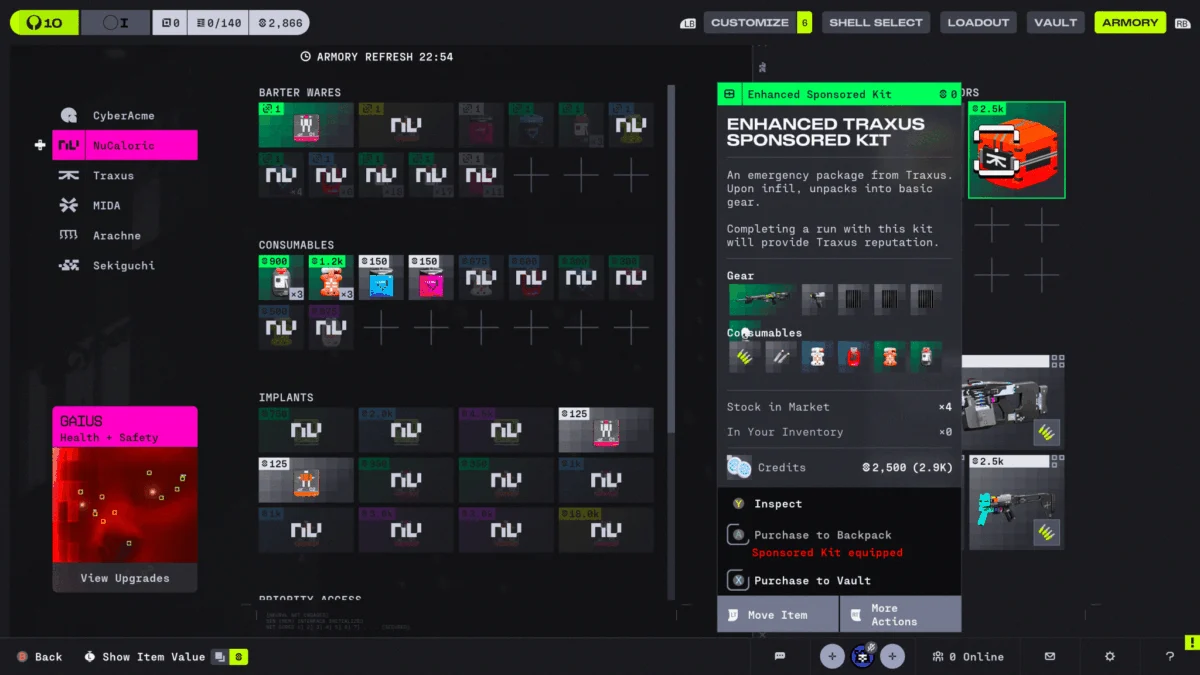
The primary gameplay mode is designed for three-player squads. While the game allows for solo play, the current architecture lacks dedicated duo matchmaking, meaning pairs of players will frequently find themselves at a numerical disadvantage against full trios. To mitigate the steep learning curve, Bungie has implemented a "Sponsored Kit" system. These are complimentary, base-level equipment packages provided to players, ensuring that even after a series of losses, a Runner can still deploy with a viable weapon and basic medical supplies. This system is designed to reduce "gear fear"—the psychological barrier that prevents players from engaging in high-stakes matches—though it has led to early reports of players being hesitant to use rare, high-tier gear for fear of losing it to a "camping" opponent.
The Rook: A Unique Solo Solution
Recognizing the demand for a solo experience, Bungie introduced the "Rook" class. Unlike standard Runners, Rooks enter matches already in progress. Their objective is to scavenge the remains of previous skirmishes and pick off weakened teams. The Rook features a unique "Mimicry" ability, allowing the player to visually blend in with the UESC (United Earth Space Council) AI soldiers roaming the map. This introduces a psychological horror element to the gameplay, as squads must constantly verify if an AI combatant is actually a player-controlled assassin.

Technical Execution and User Interface Challenges
While Bungie’s reputation for "gunplay feel" remains intact with Marathon, the game’s technical interface has become a point of contention among early adopters. The UI utilizes a cursor-based navigation system—a carryover from Destiny—that many critics and players find cumbersome on console controllers. The looting screens, essential to the extraction experience, are described as dense and visually cluttered, often leading to fatal delays during high-pressure situations.
Furthermore, the game’s Time-to-Kill (TTK) is notably low. In the competitive landscape of 2026, this high lethality encourages a passive, "corner-camping" playstyle. Reports from the first week of launch indicate that many players feel high-tier armor provides insufficient protection against basic weaponry, potentially undermining the value of the game’s long-term equipment grind.

Narrative Architecture and Faction Progression
Bungie has opted for a non-linear, environmental approach to storytelling in Marathon. There is no traditional single-player campaign; instead, the lore of Tau Ceti IV is delivered through "Factions" and an extensive in-game codex. Players complete challenges for these factions to unlock permanent stat upgrades and cosmetic items.
The narrative depth is significant, drawing on the deep-rooted history of the 1994 original, including references to the AI constructs Durandal and Tycho. However, much of this information is obscured behind text-heavy menus and cryptic "Alternate Reality Game" (ARG) elements hidden within the maps. Analysts suggest this "hands-off" storytelling may alienate players who prefer a more direct narrative experience, though it has already fostered a dedicated community of "lore-hunters" similar to those found in the Destiny ecosystem.

Comparative Market Analysis and Competitive Standing
Marathon enters an FPS market that is more crowded than ever. Its launch coincides with a robust season of Call of Duty: Black Ops 7, which offers a broader variety of maps and modes for a similar price point. At launch, Marathon features only three maps:
- The Outpost: A medium-sized facility with vertical engagement zones.
- Tau Ceti Surface: A wide-open wasteland featuring environmental hazards like the "Heat Cascade Protocol."
- The Third Map (Classified): A high-tier zone reserved for veteran Runners.
A fourth map, "Cryo Archive," is scheduled for release in late March 2026. Despite the pedigree of the developer, industry observers have noted that Marathon’s content roadmap appears lean compared to its contemporaries. The reliance on seasonal "wipes"—where player inventories are reset every three months—is a standard genre trope, but it requires a constant stream of new content to maintain player engagement, an area where Bungie is currently under heavy scrutiny.

Broader Impact and Industry Implications
The success of Marathon is critical for Bungie’s long-term strategy. Following the conclusion of Destiny 2’s "Light and Dark Saga," the studio needs a new flagship to sustain its live-service ambitions. The decision to return to the Marathon IP suggests a desire to leverage nostalgia while modernizing a dormant brand.
From a design perspective, Marathon’s "graphic realism" art style—utilizing high-contrast neons and clean, geometric shapes—is a bold attempt to redefine the visual language of the survival genre. If successful, it could signal a shift away from the "tacticool" aesthetic that has defined military shooters for over a decade.

However, the game’s current state is a mixture of brilliance and oversight. The core combat loop is widely praised for its fluidity, yet the onboarding process is described as "inadequate," leaving new players to discover essential mechanics through trial and error or third-party guides.
Conclusion: A Work in Progress
As of March 2026, Marathon stands as a testament to Bungie’s willingness to experiment with its legacy. It is a game of sharp contradictions: it features some of the most sophisticated AI and environmental storytelling in the genre, yet it is hampered by a frustrating user interface and a lack of initial content variety.

The "Server Slam" and launch week data suggest a healthy initial player base, but the longevity of the title will depend on Bungie’s responsiveness to community feedback regarding TTK balance and solo-player viability. With the "Cryo Archive" update on the horizon, the studio has a narrow window to polish the experience and prove that Marathon can lead the next movement in first-person shooters, just as Halo and Destiny did in previous decades. For now, Marathon is a bold, stylish, yet unrefined entry into the extraction genre that requires further evolution to reach its full potential.