


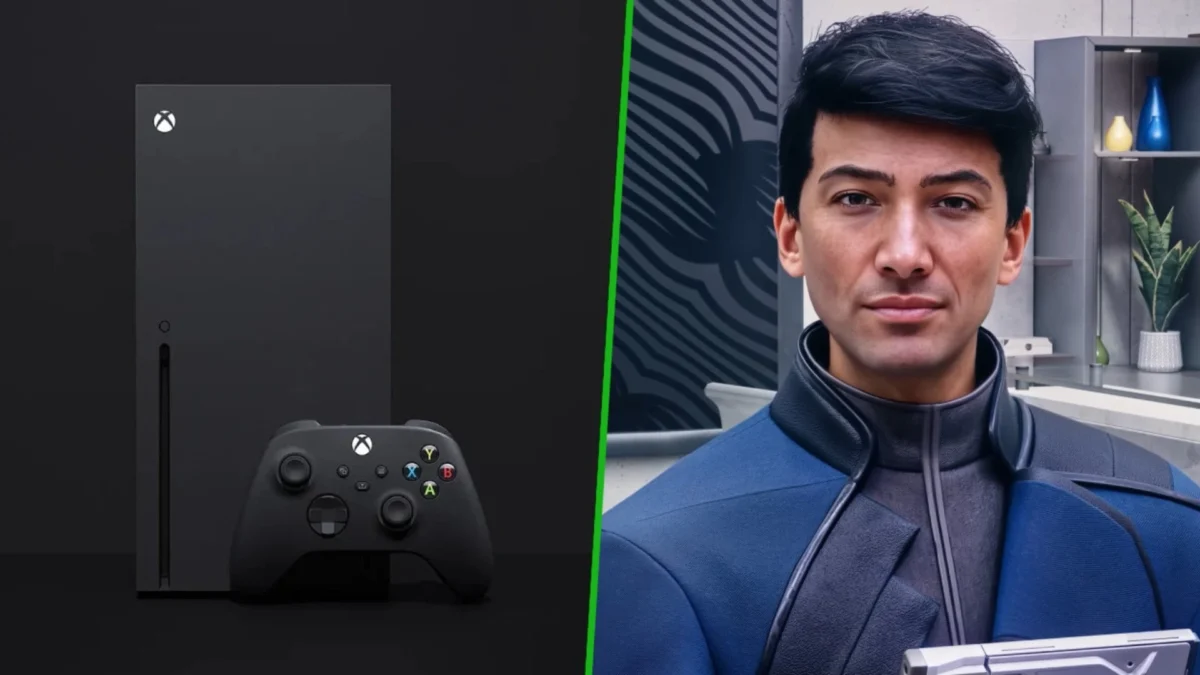
Nvidia officially introduced its Deep Learning Super Sampling (DLSS) 5 technology yesterday, a new iteration of its AI-based visual upscaling solution that aims to redefine graphical fidelity in video games. While the company touts it as a significant "breakthrough," initial reactions across the internet have been varied, with some skepticism surfacing regarding its practical application and visual impact. However, a notable endorsement comes from Bethesda Game Studios’ Director and Executive Producer, Todd Howard, who, having experienced DLSS 5 firsthand, has publicly commended its performance within the studio’s expansive sci-fi RPG, Starfield.
The Unveiling and Initial Public Reaction
Nvidia’s revelation of DLSS 5 marked a pivotal moment in the ongoing evolution of real-time rendering technology. The announcement, delivered through an official news release and supplementary presentations, highlighted the latest advancements in AI-powered upscaling, particularly emphasizing improvements in character models and overall scene rendering. The core promise of DLSS, since its inception, has been to allow games to run at higher frame rates and resolutions by rendering frames at a lower internal resolution and then intelligently upscaling them using deep learning algorithms, thereby enhancing performance without a noticeable degradation in visual quality.
While Nvidia’s press materials underscored the potential for unprecedented visual fidelity and performance gains, the broader online community’s response has been cautiously optimistic at best, and outright skeptical at worst. Discussions across gaming forums, social media platforms, and tech communities have centered on the perceived "AI-based visual fidelity" and whether the enhancements truly represent a significant leap over previous DLSS versions or rival technologies. Concerns often revolve around the potential for visual artifacts, temporal instability, or a perceived "unnatural" look that some users have attributed to AI-upscaled images in the past. This initial mixed reception underscores the high expectations and critical scrutiny that accompany major technological advancements in the highly competitive gaming hardware market.
Todd Howard’s Endorsement of DLSS 5 in Starfield
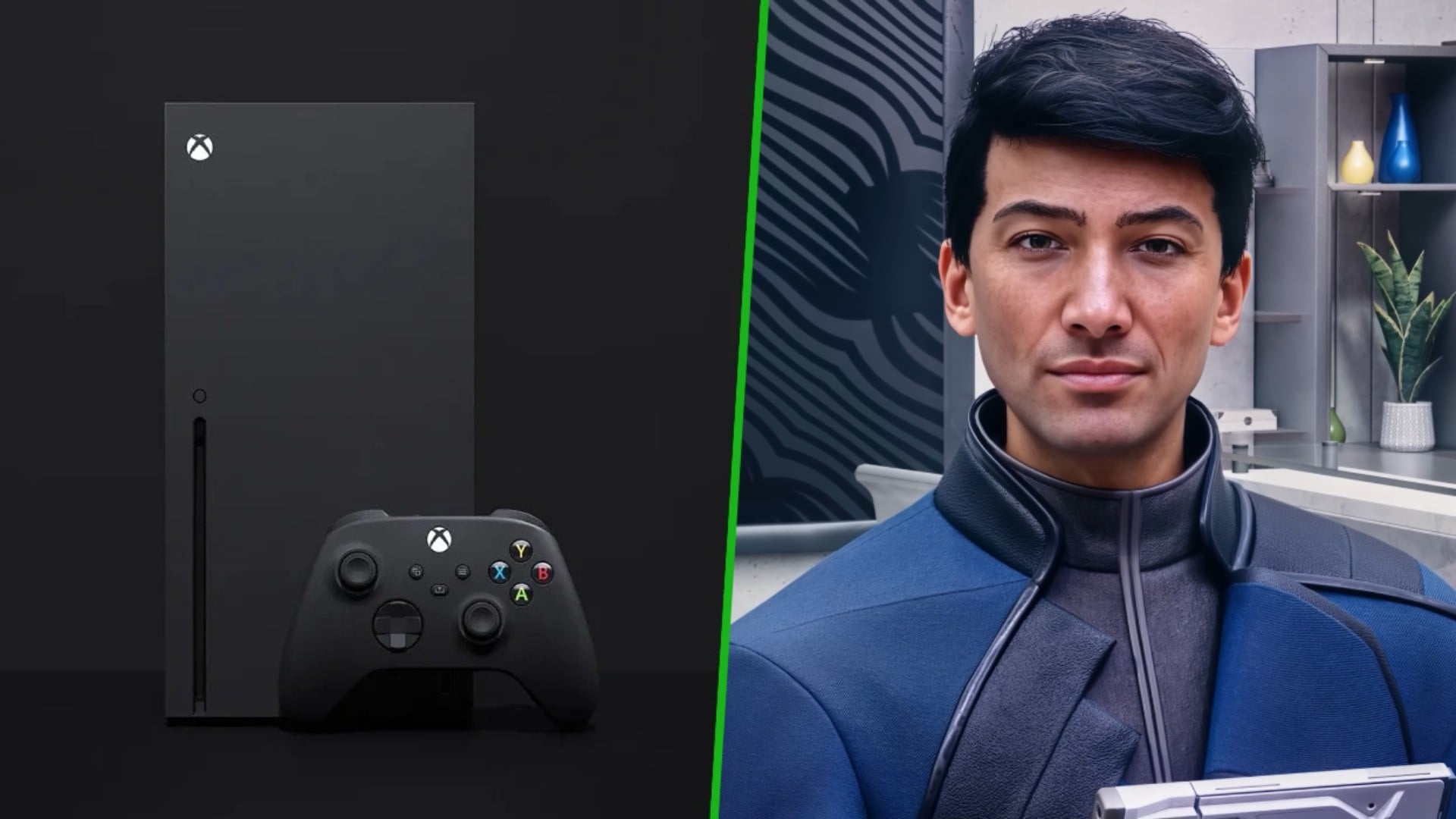
Central to Nvidia’s promotional efforts for DLSS 5 was the inclusion of Starfield as a prime demonstration title. During the reveal, various segments showcased the game running with the new technology, specifically highlighting improvements to character models and environmental details. Following these demonstrations, Todd Howard, a revered figure in the gaming industry, provided his initial assessment of DLSS 5, expressing considerable enthusiasm.
Howard’s statement, released as part of Nvidia’s official announcement, emphasized Bethesda’s long-standing collaborative history with Nvidia, reaching back to seminal titles like Morrowind where Nvidia technology contributed to groundbreaking visual effects, such as the game’s acclaimed water rendering. "Bethesda has such a rich history pushing graphics with NVIDIA, going all the way back to Morrowind, with that incredible water," Howard remarked, setting a historical context for the current partnership. He continued, describing his direct experience with the new technology: "When NVIDIA showed us DLSS 5 and we got it running in Starfield, it was amazing how it brought it to life. We’ve played it. We can’t wait for all of you to do so as well." This direct praise from a prominent developer known for pushing graphical boundaries lends significant credibility to Nvidia’s claims, particularly given Starfield‘s extensive open-world environments and detailed character models that could benefit immensely from advanced upscaling.
Bethesda’s Commitment to Artistic Vision and Player Choice
Adding further nuance to the announcement, Bethesda issued a follow-up statement on social media, addressing the immediate excitement and analysis from the community. This communication served to clarify the studio’s approach to integrating DLSS 5, reassuring players about the development process and the optional nature of the technology. "Appreciate your excitement and analysis of the new DLSS 5 lighting here," the statement read, acknowledging the detailed scrutiny the technology was receiving. It further elaborated on the development pipeline: "This is a very early look, and our art teams will be further adjusting the lighting and final effect to look the way we think works best for each game. This will all be under our artists’ control, and totally optional for players."
This statement is crucial for several reasons. Firstly, it highlights that the demonstrated version of DLSS 5 in Starfield is still in an early development phase, suggesting that further optimizations and artistic refinements are planned. This could assuage some of the initial concerns regarding visual fidelity, as Bethesda’s art teams will fine-tune the integration to align with their established aesthetic vision. Secondly, the emphasis on "artists’ control" and "totally optional for players" reinforces Bethesda’s commitment to preserving artistic intent while offering performance benefits. Players will have the flexibility to enable or disable DLSS 5 based on their preferences and hardware capabilities, ensuring that the technology serves as an enhancement rather than a mandatory visual alteration. This approach is generally well-received by the gaming community, which values choice and customization in their gaming experience.
Understanding DLSS: A Brief Chronology and Technical Overview
To fully appreciate the significance of DLSS 5, it is essential to understand the technological journey that led to its development. Nvidia first introduced DLSS in 2018 with its RTX 20-series graphics cards.
- DLSS 1.0 (2018): The initial iteration utilized a general AI model trained on a supercomputer, then implemented on Tensor Cores within RTX GPUs. While promising, it suffered from issues like ghosting and blurriness, and required per-game training, limiting its adoption.
- DLSS 2.0 (2020): This version represented a significant leap forward, introducing a more generalized AI model that worked across multiple games without per-game training. It improved image quality, reduced artifacts, and offered dynamic resolution scaling. DLSS 2.0 rapidly became a widely adopted standard for performance enhancement on Nvidia RTX cards.
- DLSS 3.0 (2022): Launched with the RTX 40-series GPUs, DLSS 3.0 introduced "Frame Generation," a revolutionary feature that uses AI to create entirely new frames between traditionally rendered frames. This dramatically boosted frame rates, especially in CPU-bound scenarios, but was exclusive to the latest generation of RTX cards due to its reliance on the Optical Flow Accelerator.
- DLSS 3.5 (2023): This update introduced "Ray Reconstruction," an AI-powered denoiser designed to improve the quality of ray-traced lighting. It replaced traditional hand-tuned denoisers with an AI model trained on five times the data, resulting in clearer, more accurate ray-traced images with fewer artifacts. DLSS 3.5 was a significant step in making ray tracing more visually palatable and performant.
- DLSS 5.0 (Current): While specific technical details beyond the enhanced character models and improved lighting (as inferred from Bethesda’s statements) are still emerging, DLSS 5 is expected to build upon the strengths of its predecessors. It likely integrates further advancements in AI model training, potentially offering superior temporal stability, sharper detail reconstruction, and more robust artifact suppression across a wider range of visual scenarios. The emphasis on "visual fidelity breakthrough" suggests a focus not just on raw performance, but on closing the gap between upscaled and native resolutions to an almost imperceptible degree. Nvidia’s ongoing investment in this technology underscores its strategy to leverage AI as a fundamental component of future graphics rendering.
The Broader Upscaling Landscape: Competition and Innovation
Nvidia’s DLSS operates within a competitive landscape of upscaling technologies. Its primary competitors are AMD’s FidelityFX Super Resolution (FSR) and Intel’s Xe Super Sampling (XeSS).
- AMD FidelityFX Super Resolution (FSR): Unlike DLSS, FSR is open-source and hardware-agnostic, meaning it can run on a wider range of GPUs, including older Nvidia cards, AMD Radeon cards, and even integrated graphics. FSR 1.0 was a spatial upscaler, often criticized for being less sophisticated than DLSS 2.0. However, FSR 2.0 and later versions introduced temporal upscaling, significantly improving image quality and bringing it closer to DLSS in many scenarios. AMD’s focus on broad compatibility has made FSR a popular choice for developers aiming for wider reach. FSR 3.0, introduced later, also added frame generation capabilities, mirroring a key feature of DLSS 3.
- Intel Xe Super Sampling (XeSS): Intel’s entry into the upscaling market is also hardware-agnostic, utilizing DP4a instructions available on a wide range of GPUs, while also leveraging Intel’s Xe Matrix eXtensions (XMX) AI accelerators on its Arc GPUs for enhanced performance. XeSS generally offers competitive image quality and performance, positioning itself as another viable option for developers and players.
The continuous innovation across these platforms highlights a fundamental shift in game rendering. As graphical demands escalate with photorealistic ambitions and complex lighting models like ray tracing, native resolution rendering at high frame rates becomes increasingly challenging. Upscaling technologies provide a crucial performance buffer, allowing developers to push visual boundaries while maintaining playable frame rates on a diverse range of hardware. The competition between Nvidia, AMD, and Intel drives rapid advancements, benefiting the entire gaming ecosystem.
Implications for PC Gamers: Hardware Exclusivity vs. Open Standards
The introduction of DLSS 5 carries significant implications for PC gamers, primarily revolving around hardware compatibility and performance benefits. As an Nvidia-specific technology, DLSS 5 will only be accessible to users with Nvidia RTX series graphics cards. This exclusivity means that PC gamers relying on AMD Radeon GPUs or Intel Arc GPUs will not be able to leverage DLSS 5’s promised enhancements. Instead, AMD users will continue to rely on FSR, and Intel users on XeSS. While FSR and XeSS have made considerable strides, Nvidia often positions DLSS as having an edge in image quality due to its dedicated Tensor Cores and advanced AI models.
This divide creates a distinct experience for PC gamers depending on their hardware choice. Those with compatible Nvidia cards will potentially enjoy the cutting-edge visual fidelity and performance boosts offered by DLSS 5, as praised by Todd Howard. Conversely, AMD and Intel users will hope for equivalent advancements in FSR and XeSS to bridge any performance or visual quality gaps. The ongoing "upscaling wars" contribute to the complexity of PC hardware choices, as gamers must weigh the benefits of exclusive features against broader compatibility. The choice of Starfield, a highly anticipated and graphically demanding title, to showcase DLSS 5 further emphasizes the importance of this technology for modern AAA gaming.
The Console Conundrum: Xbox Project Helix and PS6
The implications of DLSS 5 extend beyond the PC ecosystem, raising questions about its potential impact on future console generations. Both Microsoft’s Xbox and Sony’s PlayStation platforms have historically partnered with AMD for their console hardware. Microsoft’s upcoming "Project Helix" console, believed to be the successor to the Xbox Series X/S, is expected to continue this partnership with AMD, as is the anticipated PlayStation 6. This deep integration of AMD’s RDNA architecture means that these future consoles will inherently be more aligned with AMD’s proprietary technologies, including FSR.
Consequently, it is highly improbable that DLSS 5, or any Nvidia-exclusive technology, will be directly implemented in the next generation of Xbox or PlayStation consoles. While cross-platform solutions or hardware-agnostic implementations of AI upscaling could theoretically emerge, the current industry trajectory suggests that console developers will prioritize technologies that are natively supported by their chosen hardware vendor. This means that console players will likely benefit from future iterations of FSR, which AMD is continually developing to improve ray tracing and other visual features. The ongoing collaboration between Xbox and AMD, as well as PlayStation and AMD, is geared towards optimizing performance and visual fidelity within their respective ecosystems, making an Nvidia-centric solution like DLSS 5 a remote possibility for these platforms.
Conclusion: A Glimpse into the Future of Gaming Graphics
Nvidia’s DLSS 5 represents another significant step in the company’s ambitious vision for AI-powered graphics. Todd Howard’s positive assessment of the technology running in Starfield, combined with Bethesda’s commitment to artistic control and player choice, offers a compelling narrative for its potential. However, the initial mixed public reception and the inherent hardware exclusivity highlight the challenges and opportunities within the rapidly evolving landscape of gaming technology.
As game development continues to push the boundaries of visual realism, upscaling solutions like DLSS, FSR, and XeSS will become increasingly indispensable. They offer a vital bridge between demanding graphical fidelity and accessible performance, allowing a wider audience to experience high-end visuals. The future will likely see further refinements in these technologies, with an ongoing drive towards near-native image quality and seamless integration. While DLSS 5’s immediate impact will be confined to Nvidia RTX users, its unveiling contributes to a broader industry conversation about the role of AI in rendering, the importance of developer input, and the continuous pursuit of the ultimate immersive gaming experience. The coming months, as DLSS 5 rolls out more widely and receives independent testing, will reveal the true extent of its "breakthrough" potential and its place in the pantheon of gaming innovations.