



The fishing simulator genre, often associated with serene waters and leisurely pursuits, is shattered by the unsettling reality of UMIGARI, the latest offering from indie developer Chilla’s Art. Far from a relaxing pastime, UMIGARI plunges players into a world steeped in a profound and disturbing curse, presenting a narrative that grapples with existential dread, the ethics of consumption, and the very nature of humanity. This title challenges the conventional boundaries of its genre, forcing players to confront a macabre vision where the familiar act of fishing becomes an act of disturbing consequence.
The Core Narrative: A World Inverted
At its heart, UMIGARI presents a quest of immense, albeit grim, significance. The player’s primary objective is to locate three ancient tablets, the keys to unlocking a sacred shrine. This shrine, once accessed, will reveal the path across the vast, unforgiving ocean to a distant island where an omnipotent whale resides. The ultimate goal is to confront this leviathan and, by doing so, bring an end to the pervasive curse that has reshaped the world.

The landscape of UMIGARI is a testament to this curse’s horrifying efficacy. The once familiar oceans are now a canvas for the grotesque, populated by sea creatures that defy biological norms and evoke visceral reactions. The game showcases a nightmarish evolution of marine life: fish adorned with human limbs, aquatic beings sporting disconcerting schoolgirl uniforms, hammerhead sharks bearing oversized lips and unsettlingly human eyes, and even fish that communicate with players after being reeled in. Perhaps most disturbing are the stingrays that have been grotesquely adorned with human faces. This pervasive surrealism is not merely for shock value; it serves as a constant reminder of the world’s inversion and the profound suffering that underpins it.
The human element within UMIGARI offers no solace. The remaining human population exhibits behavior that has devolved into sheer barbarism. Encounters with NPCs can quickly devolve into violent confrontations, and the chilling specter of cannibalism looms large. In this regard, UMIGARI elevates the concept of NPC interaction far beyond typical gaming experiences, making titles like DREDGE and Subnautica, often considered unsettling, appear remarkably tranquil by comparison. The pervasive sense of dread and the unsettling nature of the game’s core mechanics solidify UMIGARI‘s reputation as a profoundly cursed experience.
Unraveling the Curse: A Metaphorical Depiction of Suffering
The central curse that defines the world of UMIGARI is a radical and horrifying inversion of the natural order: fish have been transformed into humans, and humans, conversely, have become fish. This catastrophic shift has left the fish-human hybrids ill-equipped to navigate their new existence. They awaken to an insatiable hunger and a deep-seated resentment towards humanity, born from generations of being hunted and consumed.
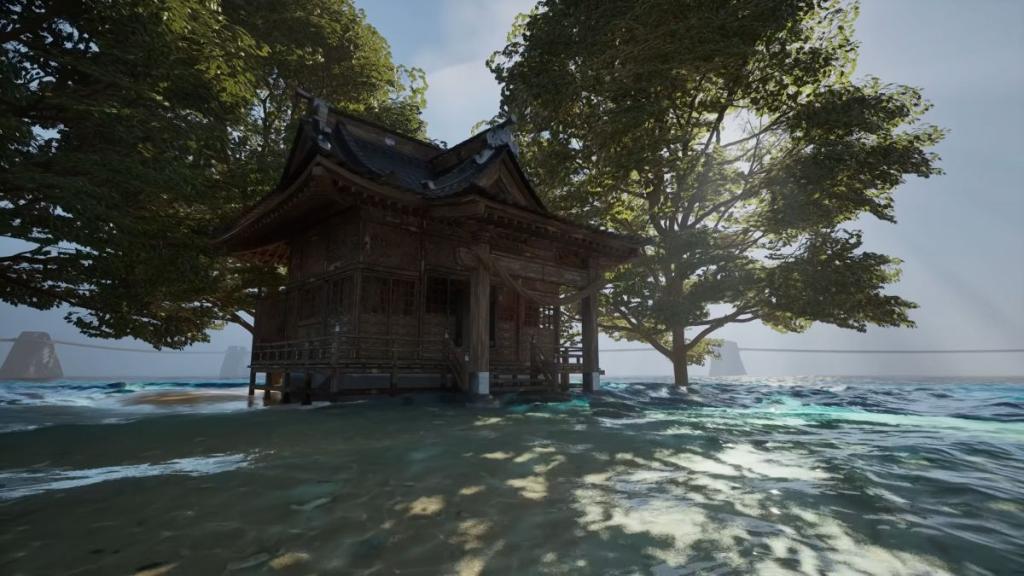
This narrative premise can be interpreted as a potent social commentary, potentially reflecting on the historical and ongoing practices of fishing in Japan and, more broadly, the global suffering inflicted upon marine life. UMIGARI‘s surreal gameplay and narrative serve as a stark illustration of the continuous and, from this perspective, unnecessary exploitation of fish. The game compels players to question the ethics of their actions when the roles are so drastically reversed.
The gameplay loop within UMIGARI centers on fishing, primarily as a means to upgrade the player’s boat. The most critical upgrade is speed, essential for evading a relentless sea spirit that relentlessly pursues the player between locations. However, the addictive nature of the gameplay loop, coupled with the increasing monetary value of fish as the player ventures further, inadvertently pushes the game towards themes of avarice and unsustainable harvesting practices, akin to hunting species to extinction. This creates a deeply unsettling dissonance, as the player is compelled to engage in the hunting and selling of what are, in essence, sentient beings experiencing a form of human suffering.
The narrative further elaborates that the curse was initiated by an omnipotent whale, driven to its actions by its own experiences of being hunted. The fish, imbued with human consciousness, developed an intense hatred and resentment towards sailors, leading to violent and cannibalistic behaviors when their turn came to inhabit human forms. UMIGARI‘s underlying message appears to be a profound exploration of the destruction and suffering caused by the pursuit of monetary gain, particularly in the context of animal exploitation. The game posits that our perception of fishing would be drastically altered if we possessed the ability to communicate with, hear, and truly understand the suffering of aquatic creatures.

The fish-transformed humans are depicted as irrational, driven by madness, and incoherent. Yet, the game subtly suggests that their behavior is not entirely alien to the darker aspects of humanity. The whale, moved by the plight of its kin, enacted the curse to equalize the playing field. However, the adoption of humanity’s worst traits by the fish-turned-humans raises a critical question: are humans inherently evil? This existential inquiry forms the philosophical bedrock of UMIGARI.
The Terrors of the Deep: Monsters and Folklore
UMIGARI populates its nightmarish waters with a variety of formidable entities, drawing heavily from Japanese folklore and the twisted logic of the curse. The most prominent antagonist is the Umiga, a colossal female ocean spirit that lurks in the open waters. This entity is repelled by the sound of bells, necessitating the player’s search for and strategic placement of bells on buoys to ensure safe passage. While the in-game lore surrounding the Umiga is somewhat opaque, its characteristics bear a striking resemblance to the Umi-nyōbō, a creature from Japanese folklore known for luring and hunting humans. Alternatively, the Umiga could be interpreted as a gargantuan manifestation of the Nure-onna. Its terrifying appearance consists of a massive female head that morphs into a gaping maw as it closes in on a pursuing boat, its interior lined with grasping arms intended to drag vessels beneath the waves.
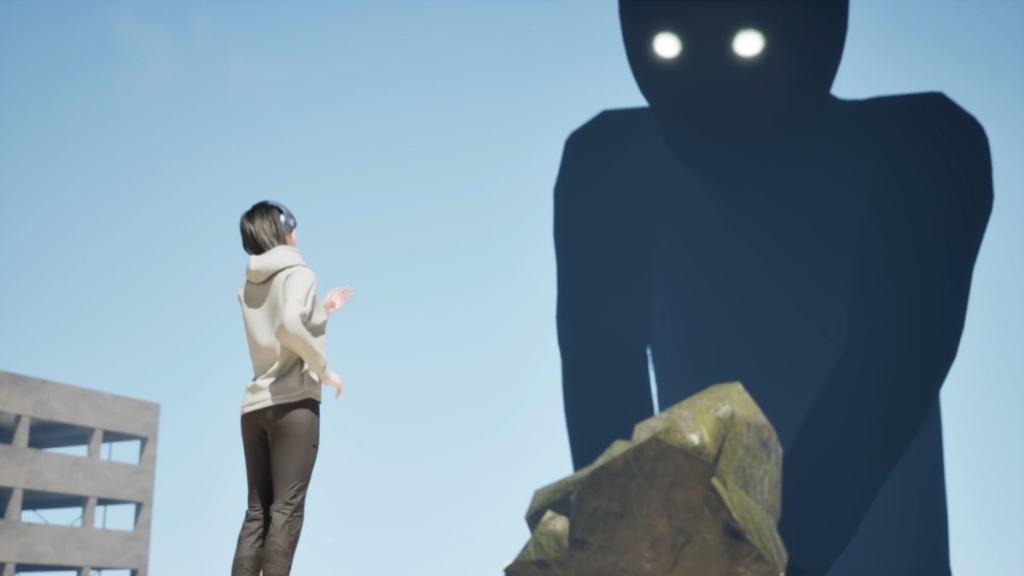
Further complicating the player’s journey is the Umibōzu, a spectral sea giant. This yokai, a colossal shadowy figure, is known for capsizing boats. It makes its appearance in the latter half of the game, posing a significant threat within the confines of the "Suspicious Dome," a location described as having a Spirited Away-esque train. The Umibōzu’s attempt to consume the player within this surreal environment adds another layer of dread to the experience.
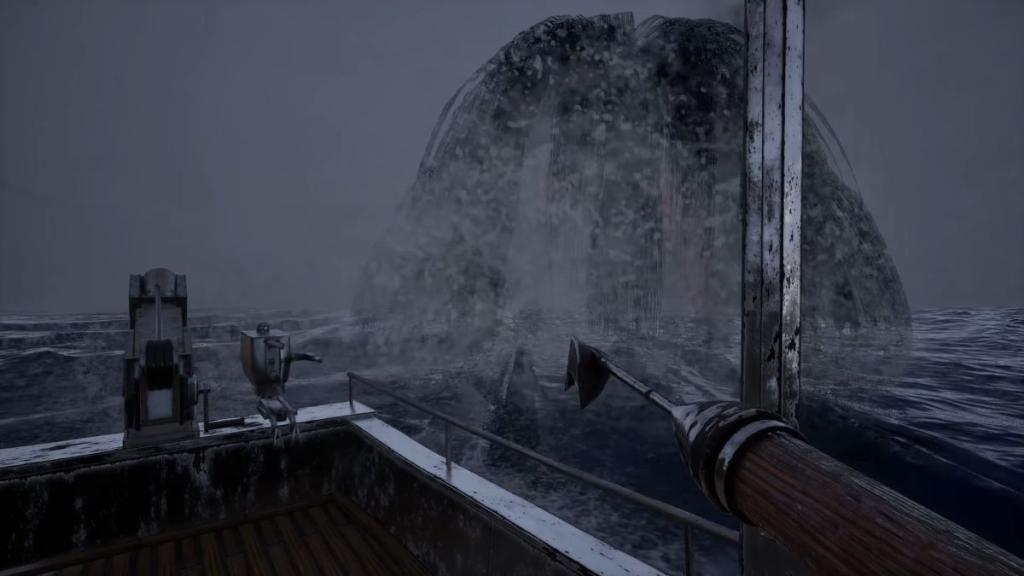
Beyond these primary threats, UMIGARI incorporates other monstrous entities that are direct nods to Japanese mythology. The Nure-onna, a yokai possessing the head of a woman and the serpentine body of a snake, must be hunted for a character known as "Local Granny," located opposite the Umino Maternity Hospital. Additionally, the Ningyo, mermaid-like creatures, are present. While traditionally seen as omens of misfortune, they are also rumored to grant immortality. Yuria, from "Ominous City," tasks the player with hunting Ningyo, ostensibly for the restoration of her eyesight, adding a complex layer of moral ambiguity to these encounters.
The Weight of Choice: Navigating Multiple Endings
UMIGARI offers players two distinct narrative conclusions, each contingent on the player’s responses to the omnipotent whale during a pivotal dialogue sequence. The whale, revealed to be the father of the "Girl in School Uniform"—a character whose plight is central to the player’s motivation to reach the island—poses a direct question: "Were the humans you met evil itself?" The player’s answer to this profound query dictates the fate of the world.
Ending A: The Eradication of Humanity
Choosing to affirm the whale’s implicit accusation by answering "yes" to the question of humanity’s inherent evil results in the curse being lifted. The final cutscene depicts a chilling tableau: the ocean is flooded with the drowned corpses of humanity, signifying their swift and utter eradication. This ending suggests a bleak and cynical outlook on human nature, implying that even if one species replaces another, the inherent flaws of greed, base desires, and violent tendencies will inevitably resurface. In this interpretation, if humanity is inherently evil, then meaningful change is an impossibility, and its removal is the only recourse to prevent further suffering. This conclusion is profoundly disheartening, prompting introspection on the futility of the player’s actions and the grim cyclical nature of existence.
Ending B: A New Era of Coexistence
Conversely, answering "no" to the omnipotent whale’s questions, or choosing not to label humanity as inherently evil, leads to a drastically different outcome. In this scenario, the player suggests that fish and humans can coexist by bestowing upon all aquatic creatures the "power to think." The curse persists, with fish still inhabiting human forms and humans still becoming fish. However, the world transforms into something profoundly altered. The concluding cutscene illustrates an end to overt suffering, depicting fish-humans integrated into society with jobs, communities, and educational institutions. They engage in bartering systems and raise families, while humanity continues to exist in aquatic environments, experiencing a form of ultimate freedom. This ending posits that humanity possesses the capacity for goodness and can forge a new, meaningful existence. The resulting world is one of peace and harmony, a fittingly surreal and thought-provoking conclusion for Chilla’s Art’s most audacious title to date.
The complex narrative and unsettling themes of UMIGARI position it as more than just a fishing simulator. It is a profound, albeit disturbing, exploration of morality, sentience, and the consequences of our actions, challenging players to confront uncomfortable truths about their own species.