


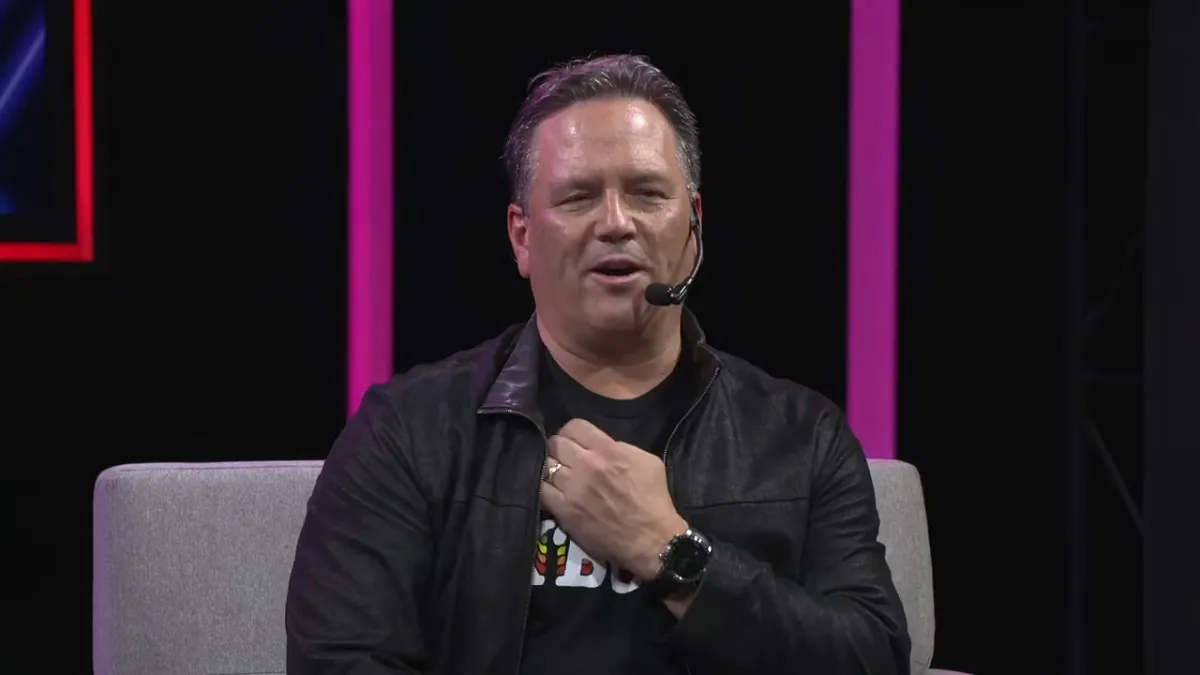
The landscape of the video game industry experienced a seismic shift today with the confirmed departure of Phil Spencer as the long-standing chief executive of Xbox. After a distinguished 25-year tenure at Xbox and over a decade at its helm, Spencer is transitioning from his leadership role. He will be succeeded by Asha Sharma, the current president of Microsoft’s CoreAI division, who joined the tech giant in 2024. This significant leadership change, slated to take effect on February 23rd, marks the end of an era for Xbox and signals a potential new direction for Microsoft’s gaming division.
A Transformative Leadership Era Concludes
Phil Spencer’s tenure at Xbox has been synonymous with a period of significant growth, strategic diversification, and a renewed focus on player experience. His leadership began in 2014, taking over the reins at a crucial juncture for the Xbox brand. Under his guidance, Xbox navigated the transition from the Xbox One generation to the current Xbox Series X/S, oversaw the acquisition of major studios like Bethesda and Activision Blizzard, and championed initiatives such as Xbox Game Pass, which revolutionized the way players access and consume games. Spencer’s advocacy for cross-platform play and his emphasis on community building have been hallmarks of his leadership. His nearly three decades at Microsoft, beginning in 1988, have seen him hold various influential positions, culminating in his pivotal role in shaping Xbox into the powerhouse it is today.
The decision for Spencer to step down was not sudden, according to an internal email. He revealed that he had been contemplating retirement for some time and had openly discussed these thoughts with Microsoft CEO Satya Nadella. "From that moment, we aligned on approaching this transition with intention, ensuring stability, and strengthening the foundation we’ve built," Spencer stated in his internal communication, underscoring a carefully planned and collaborative handover process.
The Ascent of Asha Sharma and Strategic Realignment
Asha Sharma, Spencer’s successor, brings a wealth of experience from her recent role leading Microsoft’s CoreAI division. Her appointment to CEO of Microsoft Gaming signifies a potential pivot, with AI integration and innovation likely to play a more prominent role in the future of Xbox. Sharma’s prior leadership experience includes significant tenures at Meta, where she served as the Vice President of Product and Engineering, and at Intercart, where she held the position of Chief Operating Officer. This background suggests a strong focus on product development, technological advancement, and operational efficiency.
In her internal message to Microsoft staff, Sharma articulated her immediate priorities. She emphasized a commitment to understanding the core strengths of Xbox and protecting them. Her vision is built upon three key pillars: "great games," the "return of Xbox" to its roots, and a forward-looking approach to innovation that avoids simply monetizing existing intellectual property.
"My first job is simple: understand what makes this work and protect it," Sharma stated. "That starts with three commitments. First, great games. Everything begins here. We must have great games beloved by players before we do anything. Unforgettable characters, stories that make us feel, innovative game play, and creative excellence. We will empower our studios, invest in iconic franchises, and back bold new ideas. We will take risks. We will enter new categories and markets where we can add real value, grounded in what players care about most."
This emphasis on foundational game development, coupled with a willingness to explore new territories, suggests a strategic expansion beyond traditional console gaming. Sharma’s commitment to empowering studios and investing in both established franchises and novel concepts signals a desire to foster creativity and push the boundaries of interactive entertainment.
A Renewed Commitment to Core Xbox Values
Sharma’s second commitment, "the return of Xbox," signals a strategic re-engagement with the brand’s core identity and its most dedicated players. "We will recommit to our core Xbox fans and players, those who have invested with us for the past 25 years, and to the developers who build the expansive universes and experiences that are embraced by players across the world," she explained. This sentiment includes a renewed focus on the Xbox console itself, which has been instrumental in shaping the brand’s identity and fostering a deep connection with its player base. "We will celebrate our roots with a renewed commitment to Xbox starting with console which has shaped who we are. It connects us to the players and fans who invest in Xbox, and to the developers who build ambitious experiences for it," Sharma added.
This acknowledgment of the console’s importance is likely to resonate with a significant portion of the Xbox community, who have long cherished the platform as the heart of their gaming experiences. It suggests that while innovation and expansion are key, the foundational element of console gaming will remain a priority.
Navigating the Future: AI, Monetization, and Creative Integrity
Sharma’s third commitment addresses the evolving nature of the gaming industry, particularly concerning monetization and the burgeoning role of artificial intelligence. Her approach diverges from a purely profit-driven model, advocating instead for a platform that empowers creation rather than solely exploiting existing content. "Xbox will not approach the future of gaming and its franchises as ‘static IP to milk and monetize,’ but rather focus on ‘building a shared platform and tools that empower developers and players to create and share their own stories,’" the article stated.
This stance is particularly noteworthy given Sharma’s background in AI. While her expertise in artificial intelligence is a key asset for Microsoft’s future, her commitment to preserving human creativity in game development is a strong declaration. "As monetization and AI evolve and influence this future, we will not chase short-term efficiency or flood our ecosystem with soulless AI slop. Games are and always will be art, crafted by humans, and created with the most innovative technology provided by us," she affirmed. This statement directly addresses concerns within the gaming community about the potential for AI to dilute the artistic integrity of games or lead to the proliferation of lower-quality, algorithmically generated content. Sharma’s promise to prioritize human artistry, supported by advanced technology, suggests a balanced approach to integrating AI into game development.
A Smooth Transition and Evolving Roles
To ensure a seamless handover, Phil Spencer will remain in an advisory capacity to Asha Sharma until at least the summer. This transitional period is crucial for maintaining continuity and leveraging Spencer’s extensive institutional knowledge. His willingness to guide his successor underscores his commitment to the long-term success of Xbox and Microsoft Gaming.
In conjunction with Sharma’s appointment as CEO of Microsoft Gaming, Matt Booty, the current chief of Xbox Game Studios, will be promoted to Chief Content Officer (CCO). In this new role, Booty will work closely with Sharma, likely overseeing the creative direction and content pipeline for Xbox’s extensive portfolio of studios and games. This restructuring suggests a strong emphasis on content creation and strategic partnerships under the new leadership.
Industry Reactions and Implications
The news of Phil Spencer’s departure and Asha Sharma’s ascension has sent ripples through the gaming industry. While official statements from Microsoft have been brief, the internal communications provide a glimpse into the strategic thinking behind this transition. Industry analysts are closely watching this development, with many anticipating a renewed focus on AI integration and potentially a more aggressive approach to content acquisition and platform expansion.
Spencer’s departure marks the end of a significant chapter in Xbox history. His strategic vision and player-centric approach have been widely praised, and his legacy will undoubtedly shape the future of the brand. The success of Asha Sharma’s leadership will hinge on her ability to balance technological innovation, particularly in AI, with the preservation of creative integrity and the cultivation of strong relationships with developers and players. Her background in AI, juxtaposed with her stated commitment to human artistry, presents an intriguing dynamic that will be closely observed as she steers Xbox into its next phase.
The industry is keen to see how Sharma’s vision for "great games" and the "return of Xbox" will translate into concrete strategies and product releases. The integration of AI, a field where Sharma has deep expertise, into game development and player experiences is a particularly exciting prospect, but one that carries with it the responsibility of maintaining the artistic soul of gaming. As Xbox navigates this new leadership landscape, the industry watches with anticipation, ready to witness the evolution of one of its most influential players.