


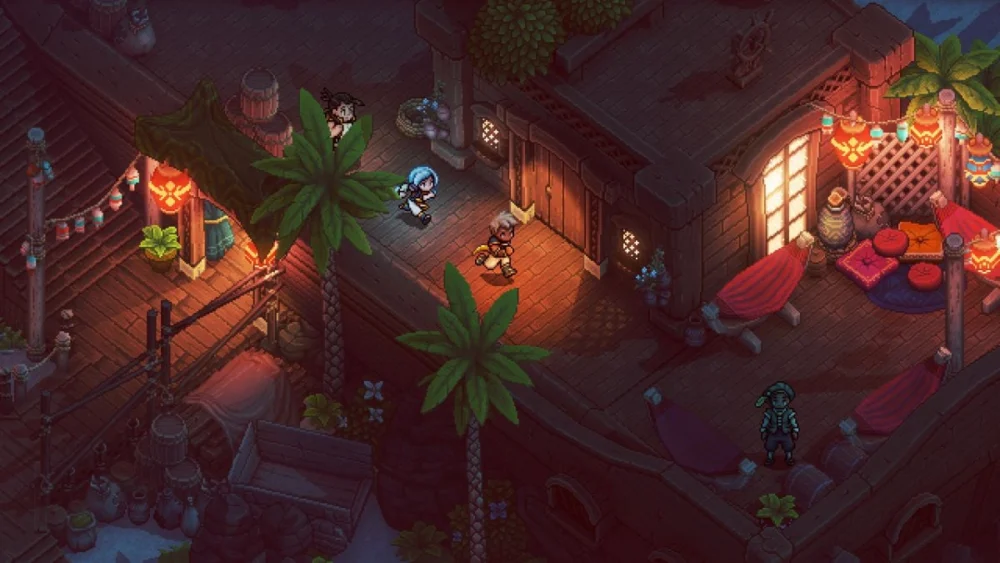
Sabotage Studio’s highly anticipated role-playing game, Sea of Stars, launched this week to significant acclaim, achieving an impressive milestone of 100,000 copies sold on its very first day. This accomplishment is particularly noteworthy given the game’s simultaneous day-one availability on both Microsoft’s Xbox Game Pass and Sony’s PlayStation Plus Game Catalog subscription services, platforms typically associated with reducing direct game purchases. The rapid sales trajectory underscores the game’s immediate critical and commercial appeal, solidifying its position as a standout release in a year already brimming with high-profile RPGs.
The announcement came directly from Sabotage Studio via the official Sea of Stars social media channels, highlighting the overwhelming support from the global gaming community. This swift success positions Sea of Stars alongside major industry titans like Starfield, Baldur’s Gate 3, and Armored Core 6 on the Steam Top Sellers chart, an exceptional feat for an independent studio’s production. The figures suggest a compelling narrative about evolving player purchasing habits and the burgeoning strength of the indie game market.
The Genesis of a Starry Adventure: Sabotage Studio’s Journey
To fully appreciate the significance of Sea of Stars‘ immediate success, it is crucial to understand the trajectory of its developer, Sabotage Studio. Founded in Quebec, Canada, Sabotage first garnered widespread critical acclaim with their debut title, The Messenger, a retro-inspired action-platformer released in 2018. The Messenger was lauded for its innovative gameplay mechanics, particularly its seamless transitions between 8-bit and 16-bit art styles, tight controls, and witty narrative. Its success established Sabotage Studio as a developer capable of delivering high-quality, nostalgic experiences with a modern twist.
Following The Messenger, Sabotage Studio embarked on Sea of Stars, a project envisioned as a prequel set in the same universe. The game was initially revealed in March 2020 and garnered immediate attention for its stunning pixel art, turn-based combat system reminiscent of classic JRPGs, and a soundtrack composed by industry veterans, including Yasunori Mitsuda of Chrono Trigger fame. The development process was notably transparent, with the studio frequently sharing updates and insights with its growing community. A successful Kickstarter campaign further solidified community investment and provided additional funding, showcasing early enthusiasm for the project. The game’s demo, released prior to its full launch, also played a pivotal role, allowing players a substantial glimpse into its world and mechanics, likely converting many into day-one purchasers.
A Market Paradox: Sales Amidst Subscription Availability
The most intriguing aspect of Sea of Stars‘ day-one sales performance is its co-existence with simultaneous inclusion on major subscription services. Xbox Game Pass and PlayStation Plus Game Catalog offer subscribers access to a vast library of games for a monthly fee, often including new releases on day one. Economic models typically suggest that day-one availability on such services might cannibalize direct sales, as players can experience the game without an upfront purchase. However, Sea of Stars‘ performance challenges this conventional wisdom, indicating a more nuanced interaction between subscription models and consumer behavior.
Several factors may contribute to this apparent paradox:
- Desire for Ownership and Longevity: Many players prefer to own a digital copy of a game outright, ensuring permanent access regardless of subscription status or if the game eventually leaves the service. This is particularly true for highly anticipated titles or those with significant replay value, where players envision revisiting the game years down the line.
- Supporting the Developers: A significant segment of the gaming community is increasingly conscious of supporting independent developers. Purchasing a game directly, even when it’s available on a subscription service, is seen as a more direct and impactful way to contribute to the studio’s financial well-being and encourage future projects. This sentiment is often amplified for studios that have cultivated a strong relationship with their fanbase, as Sabotage Studio has.
- Enhanced Experience and Offline Play: While subscription services offer convenience, some players prefer the stability and performance of a directly owned and installed game, especially for titles that might be subject to cloud streaming on certain platforms. The ability to play offline without an active internet connection or subscription verification is also a draw for many.
- The "Demo" Effect of Subscriptions: For some, Game Pass or PlayStation Plus can act as an extended demo. Players might try a game via their subscription, fall in love with it, and then decide to purchase it to own it permanently or to show support, especially if they perceive it as a future classic. The robust pre-launch demo of Sea of Stars likely amplified this effect, creating a strong initial impression that translated into direct sales.
- Collector’s Mentality: A subset of gamers are digital collectors, driven by the desire to build a personal library of games they admire. Sea of Stars‘ immediate critical buzz and nostalgic appeal could have triggered this impulse.
- Multi-Platform Engagement: Players might own multiple gaming platforms and subscribe to different services. While they might access the game on one service, they might choose to purchase it on another platform (e.g., PC via Steam) for specific reasons like modding potential, preferred control schemes, or simply to have it in their preferred digital storefront.
This confluence of motivations suggests that subscription services, rather than solely being sales inhibitors, can also act as powerful discovery and marketing tools, broadening a game’s reach and, in some cases, even driving direct sales from highly engaged players.
A Golden Year for RPGs: Sea of Stars Amidst Giants
The year 2023 has been nothing short of extraordinary for the role-playing game genre. Baldur’s Gate 3 redefined expectations for Western RPGs with its unparalleled depth and player agency, while Starfield delivered a sprawling space epic from a legendary studio. Armored Core 6 reignited a beloved mech action series with critical success. In such a competitive landscape, Sea of Stars‘ ability to carve out a significant commercial niche is a testament to its intrinsic quality and distinct appeal.
Sea of Stars stands apart with its deliberate homage to the 16-bit JRPGs of the 1990s, particularly titles like Chrono Trigger and Super Mario RPG. It features vibrant pixel art, a classic turn-based combat system with active input mechanics (timing button presses for extra damage or defense), an engaging narrative, and a captivating world. This blend of nostalgic aesthetics with modern design sensibilities has resonated strongly with both veteran RPG enthusiasts and new players seeking a refreshing experience. The game’s success underscores that quality, unique artistic vision, and compelling gameplay can thrive even when juxtaposed against projects with significantly larger budgets and marketing campaigns.
Industry Implications and Future Outlook
The early success of Sea of Stars carries several significant implications for the broader video game industry:
- Validation for Indie Developers: It reaffirms that independent studios can achieve significant commercial success with original IPs, even without the backing of a major publisher for extensive marketing. This provides encouragement and a potential blueprint for other smaller teams.
- Evolving Role of Subscription Services: The data suggests that subscription services are not a zero-sum game for direct sales. Publishers and developers can strategically leverage these platforms for broad exposure, potentially converting "trial" players into paying customers or cultivating a strong brand loyalty that encourages future purchases. This might lead to more nuanced discussions and agreements between developers and platform holders regarding day-one inclusion.
- The Power of Quality and Niche Appeal: Sea of Stars‘ success highlights the enduring appeal of well-crafted, genre-specific experiences. Rather than chasing the broadest possible audience with generic designs, focusing on a specific aesthetic or gameplay style can cultivate a dedicated and passionate player base willing to support a title directly.
- Sabotage Studio’s Enhanced Stature: This early commercial triumph significantly elevates Sabotage Studio’s profile. It provides financial stability, potentially enabling them to expand their team, invest in more ambitious future projects, and attract even greater talent. The studio has proven its ability to deliver critically acclaimed and commercially successful titles back-to-back, solidifying its reputation as a rising star in the independent development scene.
Player Reception and Critical Consensus
Beyond sales figures, initial player feedback and critical reception for Sea of Stars have been overwhelmingly positive. Reviewers have praised its stunning visual presentation, meticulously crafted world, engaging characters, and strategic turn-based combat that keeps players actively involved. The game’s soundtrack has been highlighted as a particular strength, evoking a strong sense of nostalgia while offering fresh compositions. Players have also lauded the game’s sense of adventure and discovery, with many appreciating its more focused narrative compared to sprawling open-world epics. The presence of engaging mini-games, such as a "chill fishing minigame," further adds to its charm and replayability, providing delightful reprieves within the grand adventure.
The consensus points towards Sea of Stars being more than just a nostalgic throwback; it is a meticulously designed RPG that stands on its own merits, demonstrating a deep understanding of what makes classic genre entries so beloved while injecting modern sensibilities for a contemporary audience.
Conclusion
Sabotage Studio’s Sea of Stars has not just launched; it has soared, achieving a remarkable 100,000 day-one sales milestone despite its concurrent availability on major gaming subscription services. This achievement is a powerful indicator of the game’s inherent quality, the dedicated community Sabotage Studio has cultivated, and the evolving dynamics of the video game market. It underscores that in an industry increasingly dominated by blockbusters and subscription models, genuine artistic vision, meticulous craftsmanship, and a deep understanding of player desires can still lead to exceptional commercial success for independent developers. Sea of Stars is not merely a successful game; it is a beacon for indie development, signaling a vibrant future where quality and passion continue to triumph.