
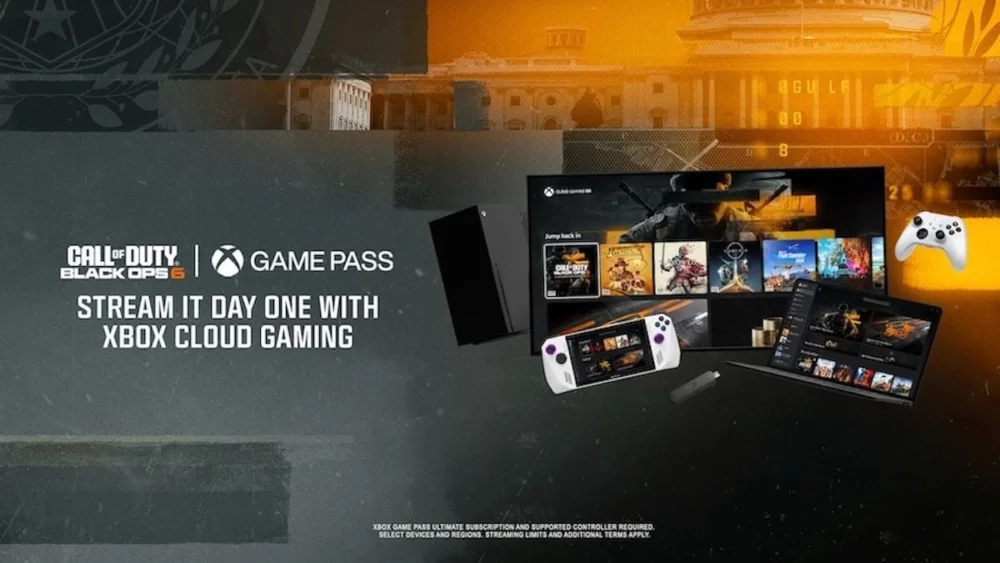
Microsoft has officially confirmed that Call of Duty: Black Ops 6, the highly anticipated next installment in the iconic first-person shooter franchise, will be available for Xbox Cloud Gaming (Beta) on its launch day, October 25, 2024. This significant announcement extends Microsoft’s commitment to delivering its flagship titles across multiple platforms via its subscription service, Xbox Game Pass. In a parallel move, the company also revealed that Call of Duty: Warzone and last year’s Call of Duty: Modern Warfare III will join the Cloud Gaming roster on the same date, providing Game Pass Ultimate members with an expansive library of the franchise’s most popular offerings accessible from a wide array of devices.
The initial revelation that Black Ops 6 would be a Day One release on Xbox Game Pass for console and PC had already sent ripples through the gaming industry, underscoring Microsoft’s aggressive strategy following its landmark acquisition of Activision Blizzard King (ABK). The subsequent confirmation of Cloud Gaming support further solidifies this approach, promising unprecedented accessibility for millions of players globally. This move is a clear demonstration of Microsoft’s vision for gaming, where access to premium content is not dictated solely by ownership of a dedicated console but by a flexible, cloud-powered subscription model.
The Strategic Significance of the Activision Blizzard King Acquisition
The integration of Call of Duty titles into Xbox Game Pass and, critically, Xbox Cloud Gaming, is a direct and profound consequence of Microsoft’s monumental $69 billion acquisition of Activision Blizzard King, which officially closed in October 2023. This acquisition was not merely about expanding Microsoft’s intellectual property portfolio but was a strategic maneuver designed to bolster its position in the rapidly evolving gaming landscape, particularly against competitors like Sony’s PlayStation.
For years, Call of Duty has been a titan of the gaming industry, consistently ranking among the best-selling titles annually. Its widespread appeal and robust player base made it a crucial asset in the console wars, often having exclusive marketing deals with PlayStation. Bringing Call of Duty under the Xbox umbrella, and subsequently into Game Pass, transforms its traditional release model. Instead of solely relying on individual game sales, Microsoft can now leverage the franchise to drive Game Pass subscriptions, offering a compelling value proposition that combines new releases with a vast back catalog.
The regulatory scrutiny surrounding the ABK acquisition was intense and protracted, with concerns raised by antitrust bodies worldwide regarding potential market monopolization, especially concerning Call of Duty. Microsoft’s pledges to keep Call of Duty multiplatform and accessible through services like Game Pass were instrumental in assuaging these concerns and ultimately securing approval. The Day One Cloud Gaming launch for Black Ops 6 is a tangible fulfillment of these promises, demonstrating a commitment to broad player access rather than exclusive platform lock-in.
Xbox Game Pass: A Cornerstone of Microsoft’s Gaming Strategy
Xbox Game Pass has rapidly become a cornerstone of Microsoft’s gaming division. Launched in 2017, the subscription service offers a rotating catalog of hundreds of games for a monthly fee, including all first-party Xbox titles on their release day. With reported subscriber numbers exceeding 34 million as of early 2024, Game Pass has proven to be a significant driver of engagement and revenue for Microsoft. The service is available in several tiers: Game Pass for Console, Game Pass for PC, and Game Pass Ultimate.
Game Pass Ultimate, which includes Xbox Live Gold, Game Pass for both console and PC, EA Play, and crucially, Xbox Cloud Gaming, is the tier that will benefit from this latest Call of Duty expansion. This tiered approach allows Microsoft to cater to different player preferences while pushing its most comprehensive and valuable offering, Game Pass Ultimate, as the premium choice for gamers seeking maximum flexibility and access. The addition of major, high-profile titles like Call of Duty serves to continually reinforce the perceived value of Game Pass, encouraging new subscriptions and retaining existing ones.
This month alone has seen several notable additions to Game Pass, including critically acclaimed titles like Inscryption and Sifu, alongside popular sports simulators such as MLB The Show 24. These additions, while significant in their own right, typically represent mid-tier or older titles. The Day One integration of a tentpole franchise like Call of Duty: Black Ops 6 stands in stark contrast, signaling a new era for Game Pass content. It transforms the service from primarily a library of existing games and smaller new releases into a legitimate alternative to purchasing brand-new AAA titles outright.
Day One Access and the Value Proposition
The concept of Day One access on Game Pass has been a key differentiator for Microsoft since its inception. Previously, this benefit was largely reserved for first-party Xbox Game Studios titles like Halo, Forza, and Gears of War. The inclusion of Call of Duty: Black Ops 6 from the Activision Blizzard King portfolio marks a pivotal expansion of this strategy. For Game Pass Ultimate subscribers, this means they can dive into the latest Call of Duty experience without the traditional $70 price tag, effectively making the game "free" as part of their subscription.
This value proposition is particularly compelling in the current economic climate, where the cost of new video games has steadily risen. For a monthly fee that is often less than a single new game purchase, subscribers gain access not only to Black Ops 6 but also to Warzone, Modern Warfare III, and hundreds of other titles. This model shifts the financial burden from a large upfront payment to a more manageable recurring expense, making high-end gaming more accessible to a broader demographic.
Furthermore, the inclusion of Modern Warfare III and Warzone on Cloud Gaming on the same day as Black Ops 6 reinforces the ecosystem approach. While Modern Warfare III might see reduced player engagement on mobile platforms due to its successor’s simultaneous launch, its availability alongside Warzone ensures that the entire recent Call of Duty universe is accessible through the cloud. This caters to different player preferences and ensures continuity for those who might prefer the familiar maps and modes of older titles or the free-to-play battle royale experience.
Unlocking New Accessibility: The Power of Cloud Gaming
The integration of Call of Duty into Xbox Cloud Gaming represents a significant leap in accessibility for the franchise. Cloud Gaming, still largely in its beta phase, allows users to stream games over the internet, much like streaming a movie or TV show. This technology eliminates the need for powerful local hardware, enabling players to enjoy graphically intensive games on a wide range of devices, including smartphones, tablets, smart TVs, and low-spec PCs, provided they have a stable and sufficiently fast internet connection.
For a demanding title like Call of Duty: Black Ops 6, which typically requires a high-end console or gaming PC, Cloud Gaming dramatically lowers the barrier to entry. A player with an Android phone or an iPhone, a Game Pass Ultimate subscription, and a compatible controller can now engage in the full Black Ops 6 experience without purchasing any additional gaming hardware. This expansion of playable devices aligns with Microsoft’s broader strategy to make gaming available "to everyone, everywhere."
The official Xbox Wire blog post explicitly highlighted this benefit: "We’re thrilled to reveal that Call of Duty: Black Ops 6 will be playable with Xbox Cloud Gaming (Beta) for Game Pass Ultimate members at launch and will begin rolling out to players on October 25, 2024, at 10:00 a.m. PT." This statement underscores the immediate availability and the widespread impact on player access. The ability to play Black Ops 6 on a phone, as suggested in the original announcement, is a transformative experience for a franchise historically tied to high-fidelity console and PC gaming.
Technical Demands and User Experience Considerations
While the promise of playing Call of Duty on a mobile device via the cloud is exciting, it comes with inherent technical considerations. Call of Duty is a fast-paced, competitive first-person shooter where low latency and high frame rates are paramount for an optimal experience. Cloud gaming introduces an additional layer of latency due to data having to travel from the user’s device to Microsoft’s servers and back. This "input lag" can be a critical factor in competitive multiplayer scenarios.
Microsoft has invested heavily in its Azure cloud infrastructure to minimize latency and ensure a smooth streaming experience. However, the quality of the user’s internet connection (bandwidth and stability) will remain the most significant variable. A strong, consistent broadband connection, ideally fiber optic, will be crucial for competitive play. Mobile data connections, especially in areas with weaker signals, may struggle to provide a satisfactory experience.
Furthermore, the interface and control schemes for a complex game like Call of Duty on smaller screens will also be a factor. While external controllers are highly recommended and widely supported, playing with on-screen touch controls might prove challenging for precision aiming and rapid maneuvers in a game designed for gamepad or keyboard and mouse inputs. Despite these challenges, the sheer convenience and accessibility offered by cloud streaming are expected to outweigh these potential drawbacks for a large segment of casual players and those seeking flexibility.
Market Implications and the Competitive Landscape
The Day One Cloud Gaming launch of Call of Duty: Black Ops 6 has significant market implications. It positions Xbox Game Pass Ultimate as an even more formidable competitor in the subscription service space, putting pressure on rivals like Sony’s PlayStation Plus and NVIDIA’s GeForce NOW. While PlayStation Plus offers its own cloud streaming service, PlayStation Plus Premium, its library of new releases and first-party titles on day one is not as extensive as Game Pass. NVIDIA GeForce NOW, while excellent for cloud streaming, requires users to own the games they stream, offering a different value proposition.
This move could accelerate the adoption of cloud gaming technology, pushing more players to experience high-end games without hardware constraints. As internet infrastructure continues to improve globally, the viability and appeal of cloud gaming will only grow. Microsoft’s aggressive push with Call of Duty could serve as a catalyst for this trend, encouraging further investment and innovation in the cloud gaming sector.
Economically, this strategy could shift revenue streams within the gaming industry. While Microsoft foregoes the immediate upfront sale of Black Ops 6 to Game Pass subscribers, it aims to recoup this through increased subscription numbers and long-term engagement. This could have a ripple effect on traditional game publishers and retailers, potentially altering the landscape of how games are monetized and distributed.
The Future Trajectory of Call of Duty and Game Pass
The integration of Black Ops 6 into Xbox Cloud Gaming on Day One is not just a single event; it is indicative of a broader strategic direction for both the Call of Duty franchise and Xbox Game Pass. It signals that future Call of Duty titles under Microsoft’s ownership are highly likely to follow a similar model, establishing Game Pass as the primary gateway for many players to experience new releases.
This consistent availability on Game Pass and through cloud streaming could fundamentally change how players interact with the Call of Duty franchise. It could lead to a more stable and growing player base for each installment, as the barrier to entry is significantly lowered. It also solidifies Microsoft’s commitment to making Call of Duty a central pillar of its gaming ecosystem, leveraging its immense popularity to drive subscriber growth across all Game Pass platforms.
Looking ahead, this strategy could pave the way for even deeper integration of Activision Blizzard King titles into the Game Pass ecosystem. Future releases from franchises like Diablo, Overwatch, and even mobile giant Candy Crush could see similar strategic placements, further expanding the reach and value of Game Pass to diverse gaming audiences across various devices.
Conclusion: A Bold Move for Gaming’s Future
The confirmation that Call of Duty: Black Ops 6, Warzone, and Modern Warfare III will arrive on Xbox Cloud Gaming on October 25, 2024, marks a momentous occasion for Microsoft, the Call of Duty franchise, and the broader gaming community. It is a powerful affirmation of Microsoft’s post-acquisition strategy for Activision Blizzard King, underscoring its commitment to Game Pass as a central pillar and cloud gaming as a key enabler of accessibility. By making one of the world’s most popular gaming franchises available on launch day across a multitude of devices, Microsoft is not only enhancing the value proposition of Game Pass Ultimate but also actively shaping the future of how interactive entertainment is consumed. This bold move is set to redefine expectations for game accessibility and subscription services, making high-fidelity gaming more inclusive than ever before.