

Microsoft Gaming has officially signaled the beginning of a new era in interactive entertainment with the announcement of Project Helix, the codename for its next-generation hardware platform. The revelation, delivered by Microsoft Gaming CEO Asha Sharma, confirms long-standing industry rumors that the company is moving toward a hybrid architecture capable of natively executing both traditional Xbox console software and PC-based titles. While the announcement has generated significant enthusiasm among core enthusiasts, it has also sparked a rigorous debate regarding the device’s market positioning. The central question facing industry analysts and consumers alike is whether Project Helix is destined to be a high-end, niche enthusiast product or a transformative device capable of capturing the mass market.
The strategic pivot represented by Project Helix marks a departure from the traditional "walled garden" approach that has defined the console industry for four decades. By integrating Windows-level flexibility with the streamlined user experience of a console, Microsoft aims to consolidate its gaming ecosystems. However, this level of technological sophistication comes at a time of significant economic volatility in the hardware sector, leading many to speculate that the next-gen Xbox may carry a price tag far exceeding the historical $399 to $499 sweet spot for consumer electronics.
A New Architectural Paradigm: Bridging the Gap Between PC and Console
The technical foundation of Project Helix is centered on the convergence of the Windows operating system and the Xbox dashboard. According to Asha Sharma, the device "will lead in performance," suggesting that Microsoft is targeting a hardware specification that rivals high-end gaming rigs. The ability to play PC games directly on an Xbox console is a functionality that has been requested by the community for years, but implementing it requires a significant leap in processing power and architectural compatibility.
Project Helix is expected to leverage a highly customized version of the Windows kernel, optimized for a controller-first interface while maintaining the background services necessary to run storefronts like Steam, the Epic Games Store, and GOG. This "open" approach is intended to position the Xbox as the definitive hardware for the Microsoft ecosystem, regardless of where a user purchased their software. By removing the barriers between the PC and console libraries, Microsoft is essentially betting that the hardware’s value proposition will outweigh its eventual retail cost.
Chronology of the Xbox Evolution: The Path to Helix
The journey toward Project Helix began several years ago as Microsoft shifted its focus from hardware sales to ecosystem engagement. To understand the current trajectory, one must look at the timeline of Microsoft’s strategic pivots:
- 2017: The Launch of Xbox Game Pass. Microsoft decoupled software access from individual purchases, prioritizing a subscription-based model that spanned both console and PC.
- 2020: The Series X/S Launch. Microsoft introduced a two-tier hardware strategy, offering a high-end 4K machine alongside a more affordable digital-only entry point. This established the precedent for catering to different market segments simultaneously.
- 2023-2024: The Handheld Revolution. The success of the Steam Deck and the ROG Ally demonstrated a massive consumer appetite for portable PC gaming. Microsoft’s collaboration on the ROG Xbox Ally X served as a testing ground for Windows-based gaming on specialized hardware.
- September 2024: The PS5 Pro Impact. Sony’s announcement of a $699.99 mid-gen refresh redefined the ceiling for console pricing. This moved the "premium" tier into a higher bracket, providing Microsoft with the market cover to explore more expensive hardware configurations.
- March 2026: The Project Helix Announcement. Microsoft confirms the next generation will be a PC-compatible powerhouse, aiming to lead the market in raw performance and software flexibility.
The Economic Reality: Component Costs and Global Trade Factors
One of the primary factors that may push Project Helix into a niche category is the rising cost of production. Unlike previous generations where Moore’s Law allowed for significant performance gains at static price points, the cost per transistor has leveled off. Furthermore, the specialized silicon required for high-end ray tracing, AI-driven upscaling (such as an advanced version of Auto SR), and massive unified memory pools has become increasingly expensive.
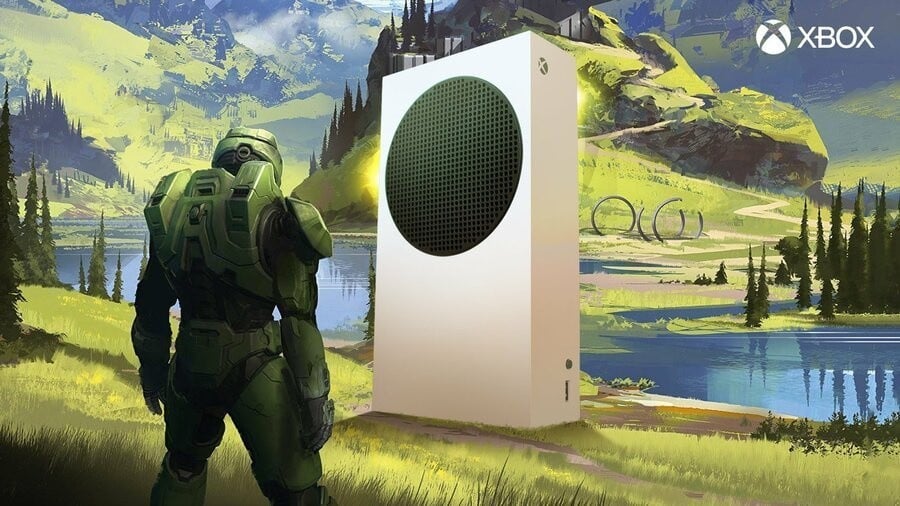
Global economic factors also play a critical role. Continued supply chain complexities, the rising cost of rare earth minerals, and shifting international trade tariffs have made it difficult for manufacturers to subsidize hardware costs. If Project Helix utilizes cutting-edge components to ensure it "leads in performance," analysts suggest a retail price in the range of $799 to $899 is not outside the realm of possibility. At this price point, the device moves away from being a "toy" or a standard household appliance and into the category of premium consumer electronics, similar to high-end smartphones or professional-grade laptops.
Redefining the Value Proposition: The End of Paid Online Play?
To counter the potential "sticker shock" of a high retail price, Microsoft appears to be preparing a shift in its service model. On PC, online multiplayer has traditionally been free, a sharp contrast to the subscription-based models (Xbox Game Pass Core/Ultimate) required on consoles. If Project Helix is fundamentally a PC-Xbox hybrid, maintaining a "pay-to-play" wall for multiplayer would create a logical inconsistency within the device’s own ecosystem.
Industry insiders suggest that Microsoft may leverage the launch of Project Helix to finally abolish the requirement for a paid subscription to access online multiplayer. This would be a massive public relations victory and a significant financial incentive for consumers. By saving users $60 to $120 per year in subscription fees, Microsoft could justify a higher upfront hardware cost. Over a five-year console lifecycle, the lack of a mandatory multiplayer fee could represent a "hidden" saving of $500, effectively offsetting the premium price of the machine.
Competitive Landscape: Valve, Sony, and the Niche vs. Mass Market Divide
Microsoft is not the only player seeking to redefine hardware. Valve has reportedly been working on a successor to its Steam Machine concept, aiming to bring the SteamOS experience to the living room with more powerful, stationary hardware. While Valve has a stronghold on the PC digital storefront market, they lack the decades of console-specific optimization and the deep library of legacy Xbox titles that Microsoft possesses.
Sony, meanwhile, appears to be sticking to a more traditional console philosophy with the eventual PlayStation 6, focusing on bespoke hardware and exclusive first-party experiences. If Sony maintains a more traditional pricing structure while Microsoft moves into the "premium hybrid" space, the market could see a significant divergence.
The risk for Microsoft is that Project Helix could become the "Audi" of gaming—high performance and highly desirable, but owned by a smaller percentage of the population—while competitors capture the "Volkswagen" mass market. However, Asha Sharma’s leadership suggests that Microsoft is comfortable with this potential shift, provided the Xbox software ecosystem continues to grow across mobile, cloud, and third-party platforms.
Supporting Data and Market Analysis
Current market data indicates a shift in consumer spending habits. According to recent hardware surveys, the average selling price of gaming PCs has risen by 18% over the last three years, yet the "enthusiast" segment remains the fastest-growing part of the market. This suggests that while price is a barrier, there is a substantial demographic willing to pay for a "do-it-all" device.

Furthermore, the "open" nature of Project Helix allows for long-term consumer savings. Access to competitive PC storefronts means users can take advantage of Steam Sales, Humble Bundles, and Epic Games Store giveaways. This price transparency and competition at the software level is a powerful tool for mass-market appeal, as it breaks the monopoly the console manufacturer usually holds over digital software pricing.
Future Implications: The Hybridization of Gaming
The implications of Project Helix extend beyond just a single hardware launch. It represents the potential end of the "console generation" as we know it, moving instead toward a more fluid hardware cycle similar to the PC or smartphone markets. If Project Helix successfully integrates PC and console gaming, it could force other manufacturers to follow suit, eventually leading to a world where "platforms" are defined by software shells rather than proprietary hardware architectures.
For developers, Project Helix offers a simplified workflow. Creating a game that scales across a Windows-based Xbox console and a standard Windows PC reduces the engineering overhead currently required to port titles between platforms. This could lead to a higher volume of titles being available on day one for Xbox users, further increasing the device’s appeal.
Conclusion: A Calculated Risk for the Future of Xbox
As Project Helix moves closer to its projected launch window, the balance between its niche technical capabilities and its mass-market potential will become clearer. Microsoft is clearly betting that the modern consumer values flexibility, performance, and long-term savings over a low entry price.
While the "sticker shock" of a premium next-gen console is inevitable, the ability to play an entire Steam library alongside twenty years of Xbox history on a single, high-performance machine is a compelling narrative. Whether Asha Sharma and Team Xbox can successfully communicate this value proposition to the average consumer will determine if Project Helix becomes the new standard for home gaming or a prestigious artifact for the gaming elite. As the industry watches this bold experiment unfold, one thing is certain: the boundary between the PC and the console has never been thinner.