


The fishing simulation genre, often associated with tranquil waters and gentle pursuits, is profoundly redefined by Chilla’s Art’s latest title, UMIGARI. This game plunges players into a world steeped in suffering, where a mysterious curse compels an exploration of its bleak reality and the potential for change, prompting a critical question: is this transformation for the better? UMIGARI stands as a stark departure from conventional cozy gaming experiences, offering a disturbing and thought-provoking narrative that challenges players’ perceptions of morality and existence.
The Perilous Journey to End the Curse
At its core, UMIGARI tasks players with a solemn quest: to locate three ancient tablets. These artifacts are the key to unlocking a sacred shrine, which in turn will reveal the path across the vast, unforgiving ocean to the domain of an omnipotent whale. This colossal creature is believed to hold the power to break the pervasive curse that has twisted the world into its current nightmarish state. However, the journey to this ultimate arbiter is fraught with peril. The flooded landscapes are populated by a menagerie of bizarre and unsettling sea creatures, their forms growing increasingly grotesque the deeper one ventures. The visual tapestry of UMIGARI includes aquatic life that defies natural order: fins fashioned from human limbs, fish adorned in schoolgirl uniforms, hammerhead sharks bearing unsettling lips and enormous eyes, and even fish that engage in conversational dialogue upon being reeled in. Stingrays are grotesquely transformed, their flat bodies plastered with human faces, creating a pervasive atmosphere of dread and unease.

The human element within UMIGARI offers little solace. The remaining human inhabitants exhibit profoundly disturbing behavior, marked by violent outbursts and, in grim instances, acts of cannibalism. This grim portrayal elevates the game beyond typical NPC interactions, making titles like DREDGE and Subnautica, which also explore darker themes within fishing simulation frameworks, appear remarkably serene by comparison. UMIGARI‘s narrative and gameplay are undeniably steeped in a profound sense of the cursed, pushing the boundaries of what players might expect from the genre.
Deconstructing the Curse: A World Turned Upside Down
The central enigma of UMIGARI is the nature of the curse itself. The cataclysmic event transformed fish into humans and, conversely, humans into fish. The newly formed piscine humans, grappling with their altered existence, struggle to comprehend human society. They are overwhelmed by an insatiable hunger and a deep-seated resentment towards humankind, stemming from generations of being hunted and consumed. This narrative arc may serve as a powerful social commentary, reflecting on the historical and ongoing exploitation of marine life in Japan and globally. UMIGARI‘s surreal gameplay and narrative powerfully illustrate the continuous and, from the game’s perspective, unnecessary abuse of aquatic creatures.
The primary impetus for engaging in fishing within the game is the necessity of upgrading the player’s boat. The most critical upgrade identified is an increase in speed, a vital measure for evading the relentless sea spirit that relentlessly pursues the player between distinct locations. Nevertheless, the game’s addictive gameplay loop, coupled with the escalating value of fish the further one travels, subtly encourages a descent into avarice and a pursuit of "farming to extinction." This mechanic forces players into a morally compromised position, as the natural inclination is to feel revulsion at the act of hunting and selling what are, in essence, transformed humans.
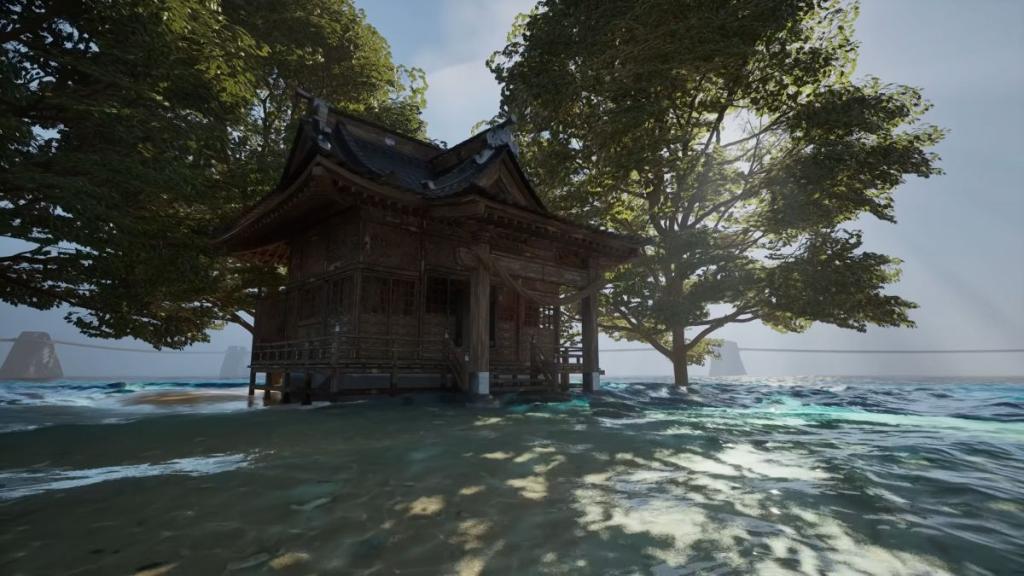
The omnipotent whale, weary of its own species being hunted, is depicted as the architect of this world-altering curse. In its retaliation, fish developed a profound hatred and animosity towards sailors. When their turn came to experience human existence, they resorted to violence and cannibalism, mirroring some of the darkest aspects of humanity. UMIGARI‘s overarching message appears to be a stark exploration of the destruction and suffering inflicted upon animals for economic gain. It suggests that if humans were capable of truly communicating with, hearing, or understanding the suffering of animals, their perspective on fishing and animal consumption would undoubtedly undergo a radical transformation.
The fish-turned-humans in UMIGARI are portrayed as irrational, deranged, and incoherent. However, their behavior is presented as not entirely dissimilar to that of humanity itself. The whale, purportedly acting upon hearing the lamentations of its people, initiated the curse, effectively swapping the roles of fish and humans. Yet, the transformed fish adopted humanity’s most egregious traits, raising a profound philosophical question: are humans inherently evil? This is the central inquiry UMIGARI poses to its players.
Confronting the Terrors of the Deep: The Umiga and Beyond
The primary antagonist and embodiment of the game’s dread is the Umiga, a colossal female ocean spirit that lurks in the open waters. The Umiga is repelled by the sound of bells, which players must locate and strategically place on buoys to create safe passage to new areas. While the game does not offer an exhaustive in-game explanation for the curse’s origins, the Umiga’s depiction draws parallels to Japanese folklore. It is suggested that the Umiga might be analogous to the Umi-nyōbō, a yokai known to prey on humans. Alternatively, she could represent a gargantuan manifestation of the Nure-onna. Her terrifying appearance consists of a massive female head that contorts into a gaping maw as she closes in on a boat, with disembodied arms emerging from within to drag the vessel into the abyss.

Adding to the spectral menagerie is the Umibōzu, a monstrous sea giant. This yokai manifests as a towering, shadowy figure intent on capsizing boats. It appears in the latter stages of the game, attempting to engulf the player within the "Suspicious Dome," a location that bears an uncanny resemblance to the enchanted bathhouse from Hayao Miyazaki’s Spirited Away.
UMIGARI further incorporates other monstrous entities that appear to be drawn from Japanese folklore. The Nure-onna, a yokai characterized by a woman’s head and a serpent’s body, is a creature players are tasked with hunting for a character known as "Local Granny," situated opposite the Umino Maternity Hospital. Additionally, the Ningyo, resembling mermaid-like creatures, are presented as harbingers of ill omen, though they are also rumored to bestow immortality. Yuria, from Ominous City, enlists the player’s aid in hunting Ningyo, ostensibly to restore her failing eyesight.
The Consequential Endings: A Moral Reckoning
UMIGARI presents players with two distinct endings, each contingent upon their responses to the omnipotent whale’s profound inquiries. The whale, revealed to be the father of the "Girl in School Uniform"—a pivotal character whose plight motivates the player’s quest to reach the island—poses a critical question: "Were the humans you met evil itself?" The player’s perception of their actions as a "human hunting fish" directly influences the narrative’s conclusion. Whether the player views their endeavors as inherently evil or recognizes the parallels between their actions and those of the fish-turned-humans will determine the ultimate outcome.
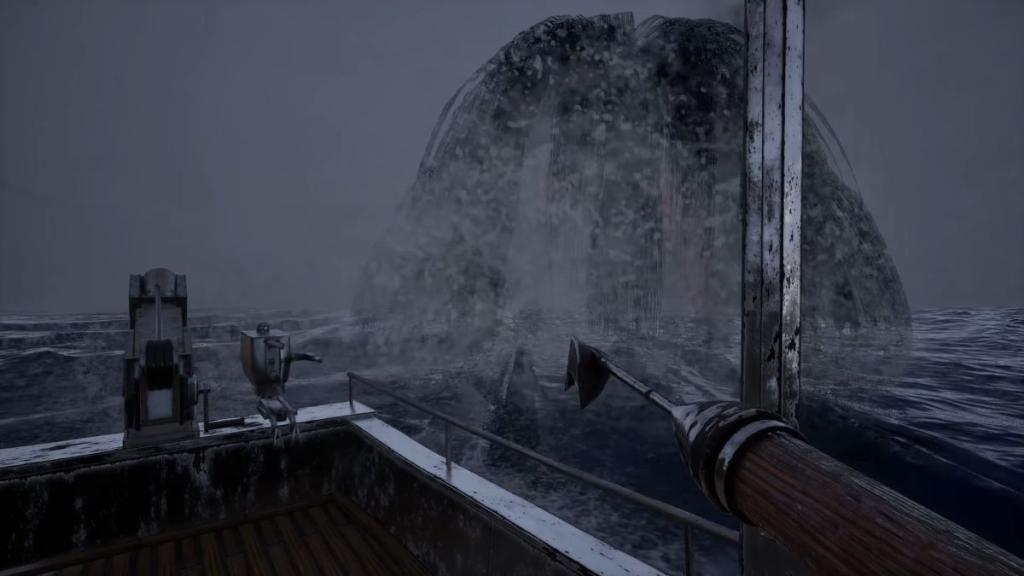
The game posits that, much like humanity, the fish-turned-humans have developed complex values and desires. The Merchant character, for instance, expresses a reluctance to return to their former existence, believing there is still more for him to accomplish in his current form. Conversely, the Girl yearns for the world to revert to its previous state, acknowledging that the protagonist’s actions, despite their intentions, have still resulted in suffering. The transformed beings no longer harbor hatred for mankind, recognizing that their animosity yielded no positive results.
Ending A: The Eradication of Humanity
Choosing to affirm the whale’s assertion that "humans," including the player character, were inherently evil, initiates Ending A. The concluding cutscene depicts the ocean saturated with drowned corpses, signifying the swift and complete eradication of humanity. This ending offers a starkly cynical perspective, suggesting that even if one species were to supplant another, the inherent flaws of greed, base desires, and violent tendencies would inevitably resurface. If humanity is fundamentally evil, then true change is unattainable, rendering its removal the only logical recourse to prevent further suffering. This conclusion is bleak, prompting players to question the ultimate purpose of their journey, a testament to UMIGARI‘s deliberate design.
Ending B: A Symbiotic Coexistence
The alternative, Ending B, is achieved by responding negatively to all of the omnipotent whale’s questions. In this scenario, the player advocates for the potential for coexistence between fish and humans, proposing to grant all aquatic creatures the "power to think." The curse persists, with fish remaining human and humans continuing to fish. However, the resulting world is profoundly altered. The cutscene illustrates the cessation of suffering, depicting fish-humans integrated into society with established jobs, communities, and educational institutions. They possess functioning bartering systems and families, while humanity, now existing in aquatic environments, experiences a form of ultimate freedom. This ending posits that humanity has been granted an opportunity to embrace goodness and discover a new meaning for existence. This wildly imaginative and unconventional conclusion, marked by peace and harmony, is fitting for Chilla’s Art’s most surreal and impactful title to date.