
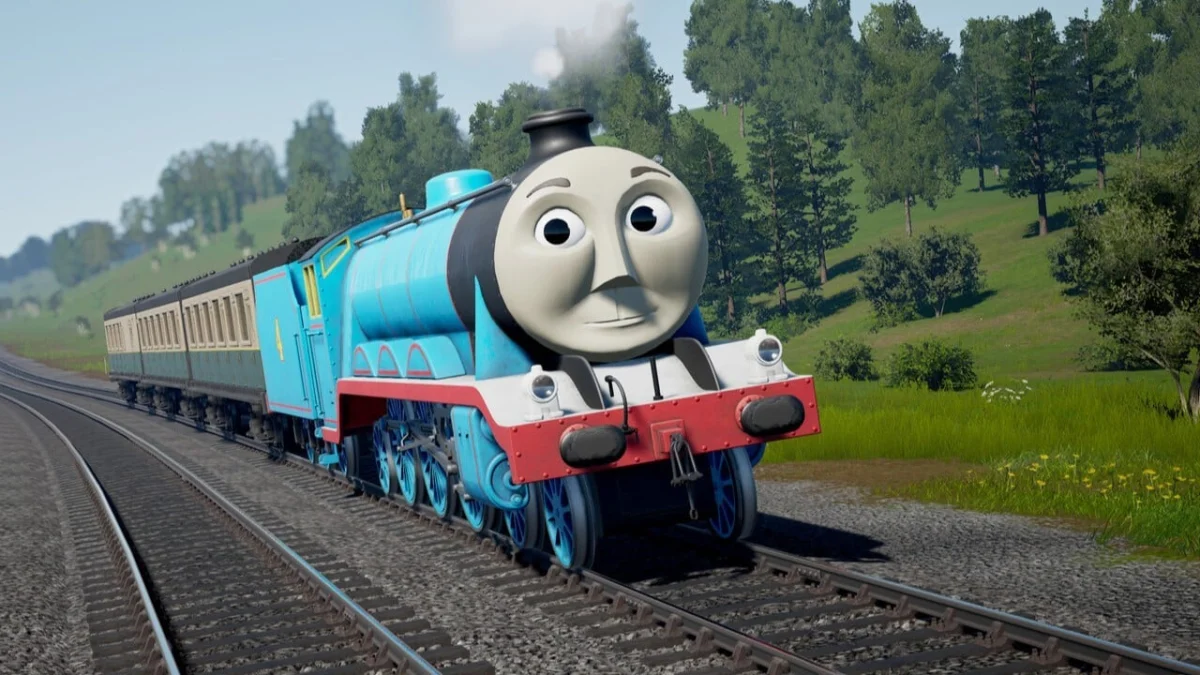
The much-anticipated video game, Thomas & Friends: Wonders of Sodor, has officially launched today across all major platforms, including Xbox One, Xbox Series X, Xbox Series S, PC, and PlayStation. Despite considerable pre-release buzz, the initial wave of critical reviews has been notably sparse and widely varied in its assessments, leaving potential players and industry observers seeking a clearer consensus on the title’s overall quality and target audience appeal. The game, which had garnered significant attention in recent months, is now available for purchase, with early impressions ranging from "very positive" to outright critical.
A Long-Awaited Journey: The Road to Sodor
The release of Thomas & Friends: Wonders of Sodor marks a significant moment for fans of the beloved locomotive franchise, which originated over 75 years ago with Reverend Wilbert Awdry’s "The Railway Series" books. What began as bedtime stories for his son Christopher evolved into a global phenomenon, encompassing a highly successful television series, films, extensive merchandise, and numerous video game adaptations over the decades. The enduring appeal of Thomas the Tank Engine and his friends on the fictional Island of Sodor lies in its universal themes of friendship, hard work, and adventure, resonating with generations of children and adults alike.
This particular title, Wonders of Sodor, piqued interest well before its launch, notably due to what was described as a "viral" presence in early announcements and gameplay snippets. This pre-release excitement stemmed from its ambitious premise: to merge the whimsical world of Thomas & Friends with elements of a detailed train simulation game. Developers aimed to craft an experience that could simultaneously captivate young audiences with familiar characters and narrative, while also offering a degree of operational depth to appeal to seasoned "railfans" – enthusiasts of train simulation. The challenge inherent in this dual appeal, balancing accessibility with realism, appears to be a central point of contention in the early critical discourse.
Navigating the Tracks: Gameplay Mechanics and Developer Intent
While the official developer and publisher have not been explicitly detailed in all pre-release materials, it is understood that the game sought to differentiate itself from previous, often simpler, Thomas & Friends titles. Instead of a purely arcade-style experience, Wonders of Sodor was conceptualized as a more immersive simulation. Players are tasked with managing railway operations, transporting goods and passengers, and exploring the expansive Island of Sodor. The ambition was to provide a sandbox environment rich with activities, allowing players to interact with the iconic engines and locations in a way that felt both authentic to the franchise and engaging as a simulation.
Key features highlighted in promotional materials included a vast open world, intricate railway mechanics, and a story-driven campaign that would allow players to engage with the characters and solve problems unique to Sodor. The emphasis on "hundreds of hours" of content, as noted by some early reviewers, suggests a design philosophy centered on longevity and replayability, moving beyond the typical short-form experiences often associated with licensed children’s games. This approach aimed to position Wonders of Sodor not just as a tie-in product, but as a substantial entry within the train simulation genre itself, albeit one tailored for a broader, family-friendly demographic.
Early Critical Reception: A Divergent Landscape
The initial trickle of reviews, while limited, presents a fascinating and often contradictory picture of Thomas & Friends: Wonders of Sodor. Reviewers, operating across different platforms such as PC and PlayStation (as Xbox reviews are yet to fully materialize), appear to have approached the game with varying expectations, contributing to the wide spectrum of scores and opinions.
-
Netto’s Game Room offered a "Very Positive" assessment, praising the game for "greatly surpass[ing] expectations." The review highlighted its core gameplay as a "full-on simulator that is a railfan’s dream come true!" This perspective emphasizes the depth and quantity of content, noting "hundreds of hours to complete" and suggesting that the game offers "much more than meets the eye." Interestingly, it also observed its suitability for children to watch, while advising that "parents will definitely need to be the ones behind the controls," implying a complexity that might be challenging for very young players. This review seemingly found the balance between simulation and IP appeal to be successful, particularly for enthusiasts of the genre.
-
Movies, Games & Tech awarded the game an 8.5/10, deeming it a "fantastic addition to the genre." This review appreciated its "colourful, fun, and great to play" nature, along with a "slightly refined approach" making it "more approachable for younger gamers." Positive points included the "vibrant design, loud and fun audio, and interesting story." While acknowledging "minor bugs," the reviewer suggested these "shouldn’t put you off too much," indicating a generally polished and enjoyable experience with minor technical imperfections common at launch.
-
Loot Level Chill provided a 7.5/10, recognizing the game as "still a fun game" that effectively leverages "plenty of love and nostalgia." However, this review also noted that it "might be a bit basic for long-time Train Sim World fans," drawing a direct comparison to more hardcore simulation titles. This perspective suggests that while the game succeeds in engaging Thomas fans, it may not fully satisfy the expectations of veteran simulation players seeking hyper-realistic mechanics and operational depth.
-
Alternativa Nerd offered a "Positive" review (translated), succinctly stating: "If you’re looking for a deep rail simulator, this isn’t the right game. But if you want something light, cozy and full of charm, Sodor has its doors open." This review clearly positions Wonders of Sodor as a more casual, accessible experience rather than a hardcore simulation. It appeals to those seeking a relaxed, aesthetically pleasing game centered on the charm of the Thomas & Friends universe.
-
In stark contrast, PlayStation Trophies delivered a critical 5/10, expressing significant disappointment. The review directly compared it to Train Sim World 6, noting that while the latter "makes sense as a complex and detailed simulation," Wonders of Sodor "is a game aimed at a different audience." The primary criticism revolved around the game making "too few compromises for that audience and fails to give you something as simple as a skip button for dialogue is inexcusable." This reviewer felt the game missed its mark for its presumed target demographic, suggesting a lack of user-friendly features often expected in titles catering to children or more casual players. The harsh closing remark, "Wonders of Sodor? Wonders of sod all, more like," underscores a profound dissatisfaction with the user experience and perceived design flaws.
The Spectrum of Opinion: A Deeper Analysis
The disparity in these early reviews highlights a crucial challenge faced by Thomas & Friends: Wonders of Sodor: defining and catering to its primary audience. The developers’ ambition to bridge the gap between a beloved children’s IP and the niche genre of train simulation appears to have resulted in a product that elicits strong, differing reactions depending on the reviewer’s expectations.
Those who approached the game as a casual, charming experience or were genuinely surprised by its simulation depth (like Netto’s Game Room) found much to appreciate. They likely valued the extensive content, the familiar characters, and the opportunity to engage with the world of Sodor in a new, interactive way. The "railfan’s dream" aspect, even if simplified compared to ultra-realistic simulators, still offered enough operational engagement to satisfy.
Conversely, reviewers like Loot Level Chill and Alternativa Nerd, while positive, acknowledged that the game might not fully meet the demands of hardcore simulation enthusiasts. Their comments suggest that while the game has elements of a simulator, it prioritizes accessibility and charm over granular detail and complex mechanics, which is a fair trade-off for many.
The criticism from PlayStation Trophies, however, points to a potential misstep in user experience design. If the game is indeed "aimed at a different audience" (presumably younger or more casual players), then a lack of basic quality-of-life features such as a dialogue skip button can significantly detract from engagement. This specific critique suggests that in attempting to offer depth, the game might have overlooked fundamental usability principles crucial for its broader appeal, potentially frustrating the very demographic it sought to attract. This oversight could manifest as a cumbersome experience for children or parents trying to navigate the game, despite its otherwise vibrant presentation.
Technical Considerations and Xbox Play Anywhere
Beyond the gameplay and thematic discussions, the technical performance and platform-specific features also warrant attention. The mention of "minor bugs" by Movies, Games & Tech suggests that like many modern game launches, Wonders of Sodor may require some post-release patching to address initial glitches. Performance across different Xbox consoles (Xbox One, Series X|S) and PC will be a key factor for players, with expectations for smoother frame rates and higher resolutions on the current-generation hardware.
A significant value proposition for Xbox players is the inclusion of Thomas & Friends: Wonders of Sodor in the Xbox Play Anywhere program. This means that a single digital purchase on either the Xbox console or the Microsoft Store for PC grants access to both versions of the game. This initiative, a cornerstone of Microsoft’s gaming ecosystem strategy, offers considerable flexibility and value, allowing players to seamlessly switch between playing on their console in the living room and on their gaming PC. This feature enhances the accessibility of the title, potentially broadening its reach to a wider audience within the Xbox and PC gaming communities. It also demonstrates Microsoft’s continued commitment to providing a unified gaming experience across its platforms, further enticing consumers to invest in their digital ecosystem.
The Path Forward: Community and Future Prospects
Given the limited and conflicting nature of professional reviews, the role of community feedback will be paramount in shaping the public perception of Thomas & Friends: Wonders of Sodor. Players are encouraged to monitor user reviews on platforms like Steam and the Xbox Store, as these will likely populate rapidly in the coming days and offer a more diverse, real-world perspective on the game’s strengths and weaknesses. These aggregate user scores often provide a robust indicator of a game’s reception, particularly when initial critical consensus is elusive.
The success of Wonders of Sodor will ultimately depend on its ability to satisfy its intended audience and, potentially, to iterate on its design based on feedback. The "viral" anticipation prior to launch indicates a strong underlying interest in the concept, suggesting a dedicated player base waiting to engage. Developers may consider post-launch updates to address reported bugs, implement quality-of-life improvements (such as a dialogue skip button), or even expand content through DLC, much like other simulation titles. The balance between maintaining the charm of the Thomas & Friends brand and delivering a satisfying, functional simulation experience will be crucial for the game’s long-term viability.
For those interested in experiencing the game firsthand, Thomas & Friends: Wonders of Sodor is currently available on the Xbox Store for £29.99 / $39.99, with a Deluxe Edition also on offer for a slightly higher price point. The Xbox Play Anywhere benefit ensures that purchasers receive both the console and PC versions, adding significant value to the investment. As the tracks of Sodor open to players worldwide, the journey to a definitive verdict on this ambitious title has only just begun, promising further discussion and engagement from its diverse fanbase.