

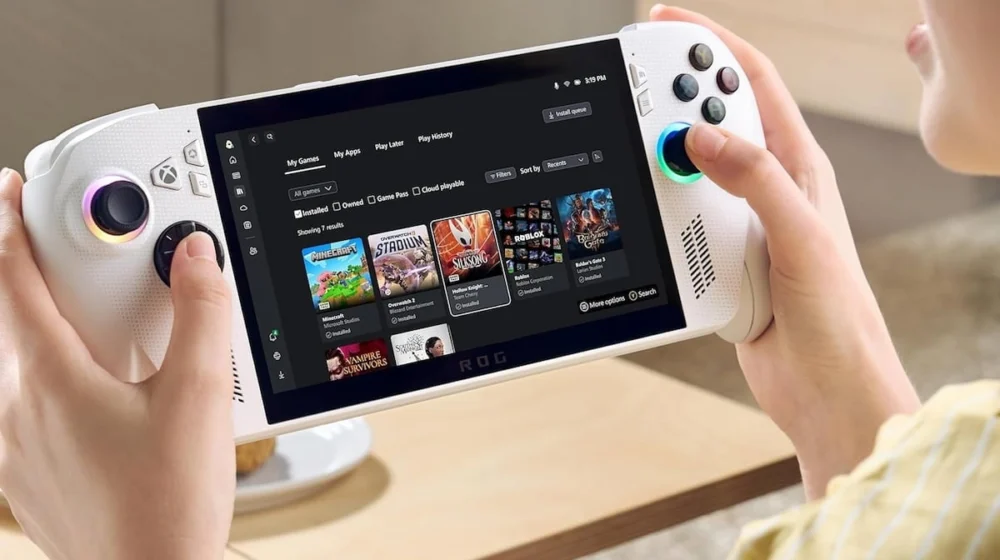
The highly anticipated ASUS ROG Xbox Ally handheld gaming PC has officially entered the market, and initial sales figures suggest a strong consumer appetite for the device, even at its premium price points. The standard ROG Ally model is retailing for $599, while the enhanced ROG Ally X variant commands a higher price of $999. Reports indicate rapid sell-outs across multiple major retailers, including the official Xbox Store and the ASUS store, highlighting significant consumer interest despite the substantial investment required.
Market Entry and Initial Sales Frenzy
The launch of the ASUS ROG Xbox Ally marks a significant collaboration between two major players in the gaming industry: Microsoft’s Xbox and ASUS’s Republic of Gamers (ROG) division. This partnership has resulted in a portable computing device designed to bring PC gaming, particularly the Xbox ecosystem, into a handheld format. The device’s immediate sell-out on key online platforms is a testament to the growing market for premium handheld gaming PCs, a segment that has seen increasing interest following the success of competitors like Valve’s Steam Deck.
The Xbox Store reportedly sold out of its initial allocation within approximately one hour of the device’s availability. Similarly, ASUS’s own online store experienced rapid depletion of its stock. While the base model of the ROG Ally appears to have some limited availability remaining on Amazon, sources suggest these quantities are also diminishing quickly. This swift sell-out suggests that consumer demand has, at least initially, outpaced supply, a common occurrence for highly anticipated electronics releases.
Understanding the ASUS ROG Xbox Ally
At its core, the ASUS ROG Xbox Ally is engineered to function as a versatile, all-in-one gaming solution. It aims to bridge the gap between traditional PC gaming and the convenience of a handheld console. The device runs on a Windows operating system, granting users access to a wide array of PC game storefronts. This includes not only the Xbox app and its vast Game Pass library but also popular platforms such as Steam, the Epic Games Store, and others. This multi-store compatibility is a key selling point, allowing gamers to consolidate their libraries and play titles regardless of their original platform of purchase, including Xbox Play Anywhere titles that offer cross-play and cross-save functionality between Xbox consoles and Windows PCs.
The ROG Ally X, the higher-priced variant, is understood to offer enhanced specifications over the base model. While specific details of the "X" model’s improvements were not extensively detailed at launch, such upgrades typically involve more powerful processors, increased RAM, larger storage capacities, or enhanced display technologies. The $400 price difference between the two models suggests significant internal upgrades designed to appeal to users seeking the absolute best performance and features in a handheld PC.
Strategic Implications of the Xbox Partnership
Microsoft’s involvement with ASUS on the ROG Ally can be interpreted as a strategic move to expand the reach of the Xbox brand and its associated services, most notably Xbox Game Pass. The strategy, described by some observers as "everything is an Xbox," aims to make Xbox content and experiences accessible across a broader spectrum of devices and platforms. By partnering with a reputable PC hardware manufacturer like ASUS, Microsoft can leverage existing expertise in PC component design and manufacturing to create a dedicated gaming handheld that complements its console offerings.
This approach aligns with broader industry trends toward platform agnosticism and the increasing importance of subscription-based gaming services. For gamers who are already invested in the Xbox ecosystem or are considering subscribing to Game Pass, the ROG Ally presents an opportunity to enjoy their games on the go without the need for a dedicated gaming console. This is particularly appealing for individuals who travel frequently or have limited space for traditional gaming setups.
A Competitive Handheld PC Landscape
The launch of the ASUS ROG Xbox Ally occurs within an increasingly competitive handheld PC market. Valve’s Steam Deck, released in 2022, has been a significant catalyst in popularizing this category. The Steam Deck, which runs on Valve’s proprietary SteamOS (a Linux-based operating system), offers a robust platform for playing games from the Steam library. While the Steam Deck has garnered considerable acclaim for its performance and value, the ROG Ally’s adoption of Windows offers a distinct advantage in terms of software compatibility and broader application support.
The price point of the ROG Ally, particularly the $999 for the Ally X, places it in direct competition with other high-end portable gaming devices and even some entry-level gaming laptops. While a $999 price tag is substantial for a handheld device, the demand suggests that a segment of the gaming community is willing to pay a premium for the convergence of PC gaming power and portable convenience. This willingness to invest indicates a maturing market that is moving beyond budget-friendly options towards more feature-rich and powerful portable gaming solutions.
Potential for Broader Market Impact
The success of the ASUS ROG Xbox Ally could have several implications for the future of PC and console gaming. Firstly, it could signal a stronger commitment from major console manufacturers to the handheld PC segment. If the ROG Ally continues to perform well, it might encourage other console makers to explore similar partnerships or develop their own dedicated handheld PC gaming devices.
Secondly, the emphasis on Game Pass integration highlights the growing importance of subscription services in the gaming landscape. As more gamers opt for subscription models that offer access to a large library of games, devices that seamlessly integrate these services are likely to gain traction. The ROG Ally’s ability to serve as a gateway to the extensive Game Pass library could further drive subscriptions and solidify its position as a key platform for Microsoft’s service.
Furthermore, the demand for high-end handheld PCs like the ROG Ally suggests a potential shift in how and where gamers play. The traditional notion of gaming being confined to a living room console or a dedicated desktop PC is being challenged by devices that offer flexibility and portability without significant compromises in performance. This trend could lead to further innovation in hardware design and software optimization for portable gaming experiences.
Technical Considerations and User Experience
The ASUS ROG Ally is powered by AMD Ryzen Z1 processors, specifically designed for gaming on the go. The device features a 7-inch 1080p 120Hz touchscreen display, offering a visually impressive experience for supported games. The integration of Windows 11 provides a familiar interface for PC users, allowing for easy navigation and management of games and applications.
However, running a full Windows operating system on a handheld device also presents unique challenges. Users may encounter optimization issues with certain games, longer loading times compared to dedicated consoles, and battery life limitations, especially when running demanding titles at high settings. The $999 ROG Ally X is expected to address some of these concerns with potentially improved battery life and enhanced performance capabilities, making it a more compelling option for extended gaming sessions.
The versatility of the ROG Ally, allowing it to connect to external displays and peripherals, further blurs the lines between handheld and traditional PC gaming. This adaptability enhances its appeal to a wider range of users, from those who primarily game on the go to those who wish to use it as a secondary gaming PC.
Future Outlook and Consumer Engagement
The sustained demand for the ASUS ROG Xbox Ally will be a key indicator of its long-term success. As more users acquire the device and share their experiences, it will provide valuable insights into its strengths and weaknesses. The gaming community’s feedback, particularly regarding performance, battery life, software optimization, and overall value proposition, will be crucial for ASUS and Xbox in refining future iterations.
The question of whether the $999 price point for the ROG Ally X is justifiable will likely remain a topic of discussion among consumers and industry analysts. For many, a thousand dollars is a significant expenditure, and the decision to purchase such a device will depend on individual gaming habits, budget, and the perceived value of the integrated features and services. The availability of alternatives like the Steam Deck, which offers a more budget-friendly entry point into handheld PC gaming, further complicates this price-value equation.
As the market for premium handheld gaming PCs continues to evolve, the ASUS ROG Xbox Ally stands as a significant entrant, representing a collaborative effort to redefine portable gaming. Its initial sell-out performance suggests a strong market reception, but its enduring success will hinge on its ability to consistently deliver a compelling gaming experience that justifies its premium price tag and meets the diverse expectations of the modern gamer. The company’s strategy to cater to a broad audience by offering both a $599 and a $999 option demonstrates an understanding of varying consumer needs and financial capabilities within the enthusiast gaming segment. The coming months will reveal whether this ambitious venture can maintain its momentum and solidify its place in the competitive landscape of portable gaming.