

The release of Tales of Berseria Remastered, developed by D.A.G Inc. under the publication of Bandai Namco Entertainment, marks a significant effort to preserve one of the most narratively ambitious entries in the long-running "Tales of" franchise. Originally launched in 2016 for the PlayStation 3 and PlayStation 4 in Japan, and subsequently brought to Western audiences in early 2017, the title serves as a critical bridge in the series’ history. This remaster seeks to refine the technical foundations of a game that was praised for its dark, emotionally charged storytelling while addressing the hardware limitations of its era. As a prequel set roughly 1,000 years before the events of Tales of Zestiria, Berseria offers a unique perspective on the series’ lore, focusing on themes of emotion versus reason and the cost of absolute order.

Historical Context and Development Timeline
To understand the significance of Tales of Berseria Remastered, one must examine the state of the franchise during its original development. Following the polarized reception of Tales of Zestiria in 2015, which faced criticism for its camera systems and narrative choices, Bandai Namco sought to revitalize the brand.
The development timeline of the original Berseria was relatively swift, utilizing an evolved version of the engine used for Zestiria. However, the game was a transitional title, designed to run on the aging PlayStation 3 hardware in its home market while targeting the PlayStation 4 for global distribution. This dual-generation focus resulted in certain environmental compromises that the remaster attempts to mitigate through higher resolutions and stabilized performance metrics.

- August 2016: Original Japanese launch on PS3 and PS4.
- January 2017: Western release on PS4 and PC via Steam.
- 2021: The release of Tales of Arise, which modernized the series’ visual identity.
- 2025-2026: Development and release of the Remastered edition by D.A.G Inc., focusing on modern console integration.
Narrative Architecture: The Anti-Hero’s Journey
Tales of Berseria distinguishes itself from its predecessors through its protagonist, Velvet Crowe. Unlike the idealistic heroes typical of the JRPG genre, Velvet is driven by a singular, destructive desire for vengeance. The narrative begins with a traumatic event known as "The Advent," where Velvet’s brother-in-law and mentor, Artorius Collbrande, sacrifices her younger brother to save the world from a plague known as Daemonblight.
This prologue establishes the central conflict: the clash between Velvet’s raw, chaotic emotion and Artorius’s cold, calculated logic. Velvet is transformed into a "Therion," a daemon capable of consuming other daemons, and is imprisoned for years before escaping to hunt down Artorius, who has since become the "Shepherd" and savior of the Holy Midgand Empire.

The supporting cast mirrors this unconventional approach. The party includes Rokurou Rangetsu, a daemon swordsman seeking to kill his brother; Magilou, an eccentric witch with hidden depths; Eizen, a pirate afflicted by a curse of bad luck; Eleanor Hume, an idealistic exorcist forced to question her faith; and Laphicet, a Malak (a spiritual being) who gains sentience and agency through his travels with Velvet. This ensemble of outcasts provides a cynical yet deeply human perspective on the world of Desolation.
Combat Systems: Evolution of the Liberation-LMBS
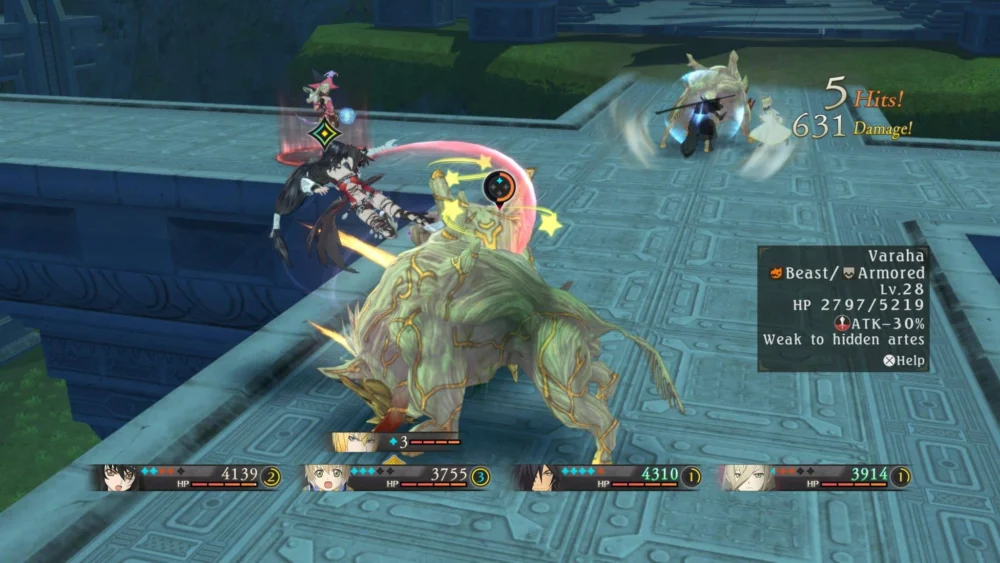
The "Tales of" series is renowned for its "Linear Motion Battle System" (LMBS), and Berseria introduced the "Liberation-LMBS," which removed the traditional movement restrictions of earlier entries. In the remastered version, these mechanics are rendered at a fluid 60 frames per second, enhancing the responsiveness of the input-heavy combat.

The Soul Gauge System
The core of Berseria’s combat is the Soul Gauge (SG). Unlike traditional mana or stamina systems, the SG dictates the length of a player’s combos. Every "Arte" (special attack) consumes a portion of the gauge. Players start with a set number of souls and can steal more from enemies by inflicting status ailments or knocking them unconscious. Conversely, being stunned or afflicted by an ailment causes the player to lose souls.
Velvet’s Therion Form
Velvet’s unique mechanic involves her "Consuming Claw." By spending one soul, she enters a Therion state, granting her temporary invincibility and access to powerful finishing moves. However, this state constantly drains her health, creating a high-risk, high-reward gameplay loop that encourages aggressive, relentless pressure on the enemy.

Cooperative Play and AI Management
A hallmark of the series preserved in this remaster is the support for local cooperative play. By connecting additional controllers, up to four players can take command of the party members during combat. For solo players, the AI customization menu remains robust, allowing for detailed instructions on when characters should heal, which enemies to prioritize, and at what threshold they should utilize their "Mystic Artes."
Technical Analysis of the Remastered Enhancements
The remaster, handled by D.A.G Inc., focuses on visual clarity and quality-of-life improvements. While the core geometry of the world remains largely unchanged from the 2016 original, several key upgrades are evident:

- Resolution and Framerate: The title now targets a native 4K resolution on modern platforms, with a locked 60 FPS that significantly improves the "fighting game" feel of the combat encounters.
- Texture Filtering: High-resolution assets have been applied to character models and key environmental textures, reducing the blurriness present in the original PS3/PS4 versions.
- The Arte Shop: A notable addition to the remaster is the immediate availability of the "Arte Shop" or Grade Shop modifiers. Traditionally reserved for "New Game Plus," these modifiers allow players to customize their experience from the start, adjusting difficulty, experience gains, and item drop rates.
- Loading Times: Utilizing modern SSD architecture, the transition between the overworld and combat encounters is nearly instantaneous, a significant improvement over the original hardware.
World Design and Environmental Critique
Despite the technical polish, Tales of Berseria Remastered still carries the architectural DNA of the PlayStation 3 era. The world of Midgand is divided into interconnected zones and dungeons that often feel linear and sparsely populated. The level design frequently relies on "corridor-style" layouts, where players move from one arena to the next with minimal environmental interaction.
The dungeons, in particular, have been a point of critique. Many lack distinctive visual landmarks or complex puzzles, leading to a sense of "autopilot" navigation. However, the remaster’s improved draw distances and lighting effects help to make the larger outdoor environments, such as the snowy reaches of Figahl Icecaps or the lush Galles Lake Road, feel more expansive than they did in the previous decade.

Audio-Visual Presentation and Social Systems
The "Skit" system remains a primary vehicle for character development. These are optional, animated 2D portraits that trigger throughout the journey, allowing the cast to discuss plot points, share backstory, or engage in comedic banter. These skits help to fill the void left by the somewhat static overworld, providing the "soul" of the experience.
The English voice cast delivers a commendable performance, particularly Erica Lindbeck as Velvet Crowe. Her portrayal captures the transition from a gentle village girl to a hardened warrior consumed by rage. While some minor characters exhibit inconsistent vocal direction, the core chemistry of the party remains a highlight of the JRPG genre. The musical score, composed by series veteran Motoi Sakuraba, utilizes his signature blend of progressive rock and orchestral arrangements, though some critics argue the dungeon themes can become repetitive during longer play sessions.

Broader Impact and Implications for the Franchise
Tales of Berseria is often cited by fans as the turning point that saved the franchise from a decline in relevance. By leaning into a darker narrative and refining the combat mechanics, it set the stage for the massive commercial success of Tales of Arise. The decision to remaster Berseria suggests that Bandai Namco recognizes the enduring popularity of Velvet Crowe and the "anti-hero" archetype.
From an industry perspective, this remaster serves as a case study in "preservation-focused" development. Rather than reimagining the game entirely—which would require a massive overhaul of its aging world design—D.A.G Inc. has opted to enhance the existing framework to ensure accessibility on modern hardware. This approach allows the game’s narrative strengths to shine without being hindered by the technical obsolescence of the Seventh Generation consoles.

Conclusion
Tales of Berseria Remastered is a definitive version of a pivotal JRPG. While it does not hide its aged environmental design, it compensates with a combat system that remains deep and engaging, supported by one of the most compelling narratives in modern JRPG history. For returning fans, the technical upgrades and early access to gameplay modifiers provide a fresh way to experience Velvet’s quest for vengeance. For newcomers, it offers a dark, sophisticated entry point into the "Tales of" universe that challenges the traditional tropes of the genre. As the industry continues to move toward more action-oriented role-playing games, the return of Berseria serves as a reminder of the power of character-driven storytelling and the enduring appeal of the Linear Motion Battle System.