
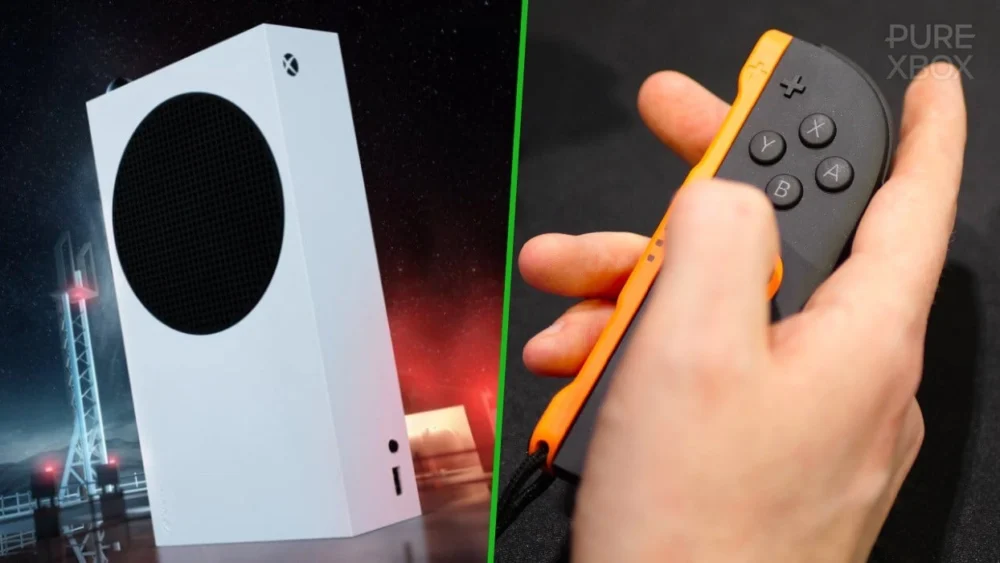
The technical landscape of modern gaming has reached a pivotal juncture where raw hardware specifications often clash with sophisticated software reconstruction techniques. This phenomenon is most recently highlighted in a comprehensive technical breakdown by Digital Foundry regarding Capcom’s latest survival horror entry, Resident Evil Requiem. The analysis provides a granular look at how the game scales across different hardware architectures, specifically comparing the entry-level Microsoft console, the Xbox Series S, with Nintendo’s newly released successor to the Switch. The findings underscore a significant divergence in development priorities, pitting the high-frame-rate stability of the Xbox ecosystem against the advanced image reconstruction capabilities afforded by Nvidia’s Deep Learning Super Sampling (DLSS) technology on Nintendo’s hybrid platform.
The release of Resident Evil Requiem marks another milestone for Capcom’s proprietary RE Engine, a versatile toolset that has powered the franchise’s resurgence since 2017. While the Xbox Series X and PlayStation 5 versions of the game aim for 4K resolutions and ray-tracing features, the focus of the enthusiast community has shifted toward the "budget" and "portable" ends of the spectrum. For the first time in a major cross-platform release of this magnitude, the industry is witnessing the practical implications of DLSS in a handheld environment versus the traditional spatial upscaling methods employed on the Xbox Series S.
The Performance Advantage of Xbox Series S
In the hierarchy of ninth-generation hardware, the Xbox Series S has long occupied a unique position. Designed as a 1440p-capable machine that often targets 1080p in practice, its primary strength in the Resident Evil Requiem port lies in its fluidity. According to the data provided by Digital Foundry, the Xbox Series S version of the game maintains a remarkably consistent 60 frames per second (FPS). This performance target is critical for the Resident Evil series, which has increasingly leaned into action-oriented combat mechanics that require low input latency and smooth visual feedback.
The Xbox Series S achieves this stability by utilizing a native 720p internal resolution. While this is lower than the 1080p or 1440p targets seen in earlier RE Engine titles on the platform, the trade-off ensures that the frame time remains at a steady 16.6 milliseconds. For players who prioritize "gameplay feel" over absolute visual clarity, the Series S emerges as the superior option in this comparison. The consistency of the 60FPS output means that even during intense combat sequences involving multiple enemies or complex particle effects—such as the atmospheric fog and lighting common in Requiem—the Xbox hardware does not falter.
The Visual Paradox of the Nintendo Switch 2
The most surprising revelation from the technical analysis is the visual superiority of the Nintendo Switch 2 version, despite its significantly lower native resolution. Digital Foundry reports that the Switch 2 version of Resident Evil Requiem runs at a native internal resolution of just 540p when docked. Under traditional circumstances, a 540p image upscaled to a 4K or even a 1080p display would result in a soft, blurred image with significant aliasing (jagged edges).
However, the Switch 2 leverages Nvidia’s DLSS technology, an AI-driven temporal upscaler that uses dedicated Tensor cores to reconstruct lower-resolution images into higher-fidelity outputs. The result is an image that Digital Foundry describes as "better" than the native 720p output of the Xbox Series S. The DLSS implementation manages to resolve finer details, such as the texture of clothing, the sharpness of environmental foliage, and the clarity of distant objects, with fewer visual artifacts than the upscaling solutions used on the Xbox.
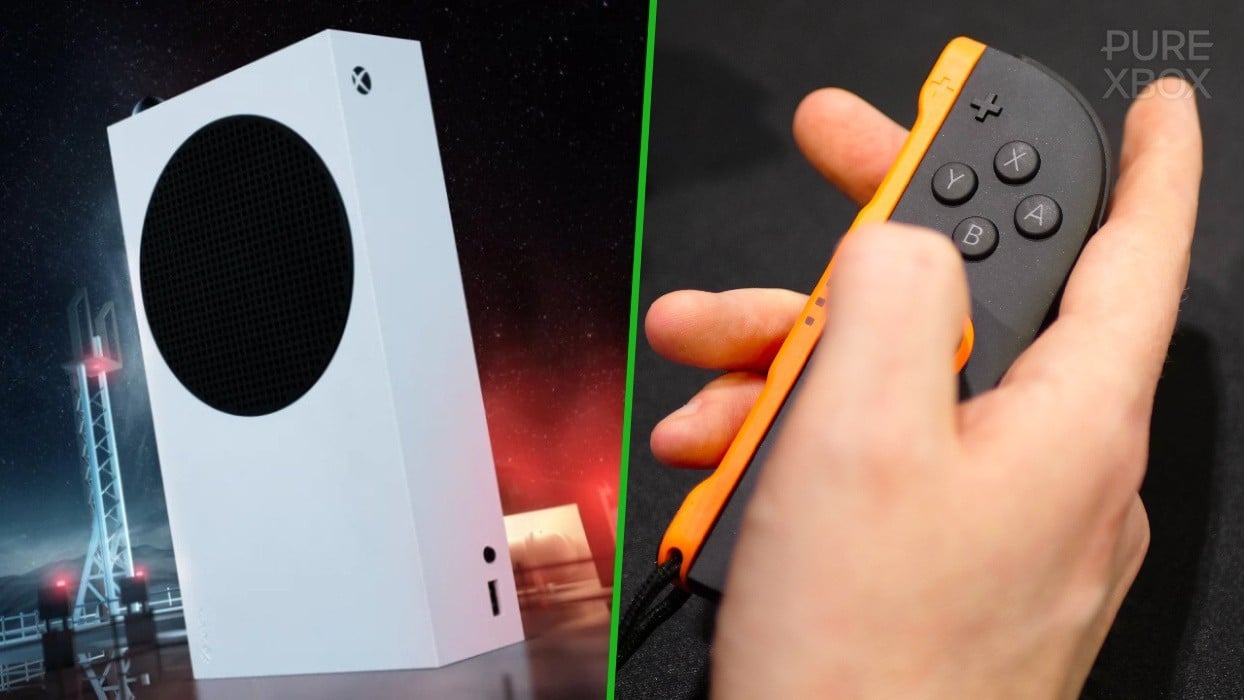
This creates a paradox in the current market: the less powerful hardware (in terms of raw TFLOPS and pixel-pushing power) is delivering a cleaner, more "high-definition" look than its more powerful rival. This highlights the growing importance of "smart" software over "brute-force" hardware.
Performance Variability on Nintendo Hardware
While the Switch 2 wins the battle of image quality, it struggles significantly in the realm of performance. Unlike the Xbox Series S, which targets and largely hits a 60FPS ceiling, the Switch 2 version of Resident Evil Requiem operates with an unlocked frame rate. This decision by Capcom allows the hardware to push as many frames as possible, but the results are highly inconsistent.
In docked mode, the frame rate frequently fluctuates, often hovering around the 30FPS mark but rarely maintaining it with the same frame-time stability found on Xbox. The situation becomes more precarious in handheld mode. When removed from its dock, the Switch 2 sees the frame rate dip into the 20s during demanding scenes. For a modern title, sub-30FPS performance is often considered a significant drawback, particularly in a game that requires precise aiming and quick reflexes. The unlocked frame rate also introduces "judder," a visual phenomenon where the timing between frames is uneven, leading to a perceived lack of smoothness even when the average frame rate appears acceptable.
Comparative Technical Specifications and Reconstruction Tech
To understand why these differences exist, one must look at the underlying architecture of both machines. The Xbox Series S is built on AMD’s RDNA 2 architecture. While highly capable, it lacks the specialized hardware required for Nvidia’s proprietary DLSS. Instead, the Series S typically relies on AMD’s FidelityFX Super Resolution (FSR) or Capcom’s in-engine spatial upscaling. While FSR has improved significantly with its 2.0 and 3.0 iterations, it generally requires a higher base resolution to produce an image that rivals DLSS.
In contrast, the Switch 2’s integration of Nvidia’s Ampere or Blackwell-based architecture (depending on the final silicon specifications) allows it to utilize the AI-driven reconstruction that has become a staple of PC gaming. The 540p-to-DLSS pipeline on the Switch 2 is more efficient at "guessing" what the missing pixels should look like compared to the 720p-to-Upscale pipeline on the Series S.
The following data summarizes the findings:
- Xbox Series S: Native 720p, 60FPS Target (Stable), Spatial/FSR Upscaling.
- Switch 2 (Docked): Native 540p, Unlocked Frame Rate (~30FPS average), DLSS Reconstruction.
- Switch 2 (Handheld): Native 540p (or lower), Unlocked Frame Rate (20s-30FPS), DLSS Reconstruction.
Developer and Industry Implications
Capcom’s approach to this port suggests a strategic decision to showcase the visual potential of Nintendo’s new hardware at the expense of performance. By enabling DLSS, Capcom is effectively marketing the Switch 2 as a device capable of delivering "next-gen" visuals in a portable form factor. For many casual consumers, a sharp, clean image on a small handheld screen is more immediately impressive than a high frame rate that is harder to perceive without side-by-side comparisons.

However, industry analysts suggest that this "visuals-first" approach may face pushback from the core gaming demographic. The Resident Evil community, in particular, has grown accustomed to the high-performance standards set by the RE Engine on other platforms. The decision to leave the frame rate unlocked on the Switch 2 is also a point of contention; a locked 30FPS mode might have provided a more consistent, albeit slower, experience than the current fluctuating output.
While Capcom has not issued an official statement regarding future patches, historical data suggests that the developer is proactive in optimizing titles post-launch. Previous entries like Resident Evil Village and the Resident Evil 4 Remake received several updates that adjusted resolution scaling and performance stability on consoles. It is possible that a future "Performance Mode" for the Switch 2 version could lower the DLSS target to achieve a more stable 30FPS or even 40FPS on supported displays.
The Evolution of the RE Engine and Cross-Platform Challenges
The technical disparity between these two versions of Resident Evil Requiem also sheds light on the challenges of modern game development. As the gap between high-end PCs and entry-level consoles widens, developers are forced to make difficult compromises. The RE Engine has been lauded for its scalability—running on everything from the iPhone 15 Pro to the RTX 4090—but Requiem represents a new tier of graphical complexity.
The game features high-density geometry, advanced sub-surface scattering for character skin, and a complex global illumination system. On the Xbox Series S, these features are maintained but rendered at a lower fidelity to preserve the 60FPS mandate. On the Switch 2, the AI reconstruction allows these features to "pop" more effectively, even if the underlying hardware is working harder to keep up with the logic and physics of the game engine.
Conclusion: Choosing the Right Platform
For consumers, the choice between the Xbox Series S and the Nintendo Switch 2 version of Resident Evil Requiem comes down to a fundamental preference: performance versus portability and clarity.
The Xbox Series S remains the "pro" choice for budget-conscious gamers who demand a responsive, smooth experience. It serves as a reminder that native resolution and raw power still provide a baseline of stability that is hard to replicate. On the other hand, the Switch 2 version serves as a technical showcase for the future of handheld gaming. It proves that with the help of AI and DLSS, portable devices can punch far above their weight class in terms of image quality, even if they cannot yet match the sustained performance of a dedicated home console.
As the industry moves further into this generation, the "DLSS vs. Native Power" debate will likely become a central theme. For now, Resident Evil Requiem stands as a fascinating case study in how two different philosophies of hardware design can result in two vastly different, yet equally valid, ways to experience the same nightmare.