

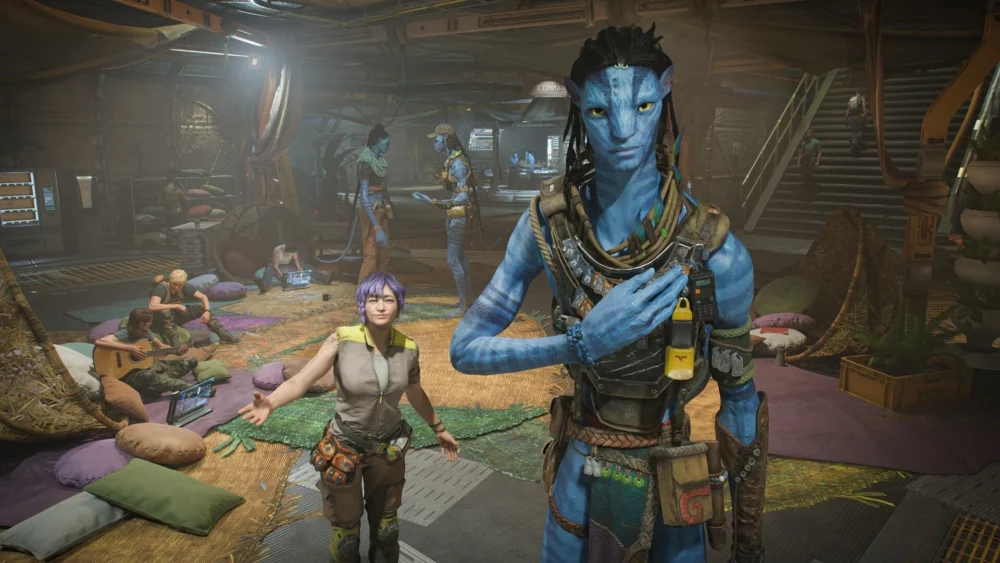
The inclusion of Avatar: Frontiers of Pandora in the subscription service comes at a strategic time for Ubisoft, as the company seeks to maintain engagement with its catalog titles while preparing for future expansions. For subscribers on Xbox Series X and Series S, the game serves as a technical benchmark, utilizing the latest iteration of the Snowdrop engine to deliver a dense, reactive environment that pushes the capabilities of current-generation hardware. As players begin their journey as a Na’vi rediscovered after years of RDA captivity, the gaming community has begun to weigh in on whether the title’s mechanical depth matches its undisputed visual splendor.
Development History and Chronological Context
The journey of Avatar: Frontiers of Pandora began long before its 2023 release. Ubisoft first announced a partnership with Lightstorm Entertainment in 2017, signaling a long-term commitment to the Avatar intellectual property. However, the project remained in a state of quiet development for several years as Massive Entertainment refined the Snowdrop engine to handle the immense geographical scale and biological complexity required for Pandora.
A formal reveal occurred during E3 2021, showcasing the game’s first-person perspective and lush environments. Originally slated for a 2022 release to coincide with the theatrical debut of Avatar: The Way of Water, the game faced internal delays to ensure the "most immersive experience possible." It eventually launched on December 7, 2023, for Xbox Series X|S, PlayStation 5, and PC. The decision to skip previous-generation consoles like the Xbox One was a deliberate move to ensure that the game’s "Micro-instancing" and global illumination systems were not compromised by older hardware.
Following its launch, the game received several post-launch updates aimed at performance optimization and the introduction of new features, such as a robust photo mode and quality-of-life improvements to the crafting and combat systems. Its entry into Xbox Game Pass Ultimate in mid-2024 represents the final stage of its initial lifecycle, transitioning from a premium-priced standalone product to a featured title in a subscription ecosystem.
Technical Achievement and Visual Fidelity on Xbox Series X|S
One of the primary points of discussion regarding Frontiers of Pandora is its status as a visual showpiece. On the Xbox Series X, the game offers two primary modes: Quality and Performance. The Quality mode targets a native resolution higher than its counterparts, utilizing ray-traced reflections and shadows to ground the bioluminescent forests and floating mountains of Pandora. The Performance mode, meanwhile, leverages AMD’s FSR 3 technology to maintain a stable 60 frames per second, a necessity for the game’s high-speed aerial combat and parkour-heavy movement.
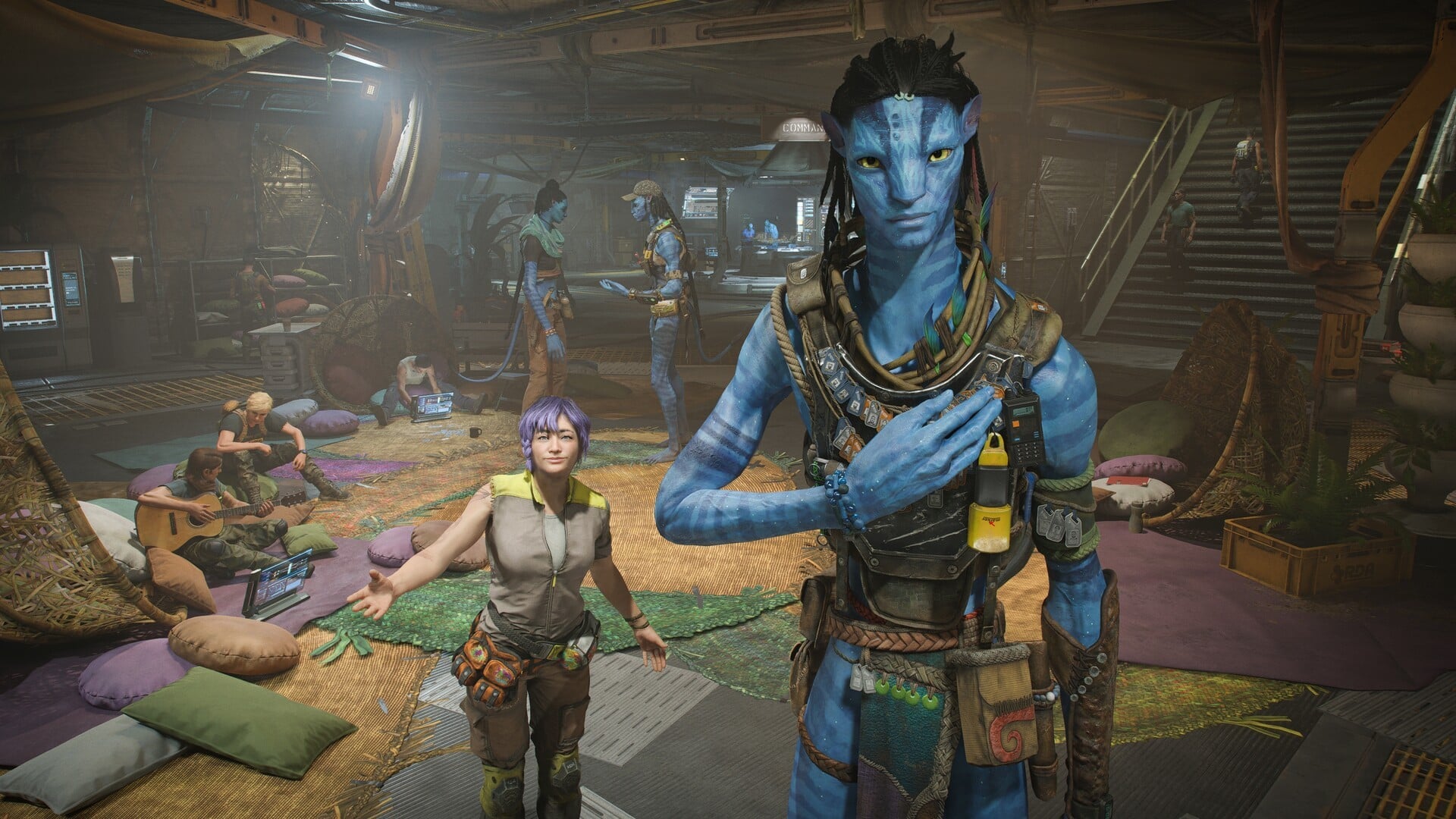
The Snowdrop engine’s implementation of "automated placement" allowed the developers to create a world where every plant and creature reacts to the player’s presence. When moving through the undergrowth, foliage bends and reacts dynamically, while the game’s weather system—ranging from torrential tropical storms to hazy, sun-drenched afternoons—drastically alters the lighting and atmosphere. For many Xbox Game Pass users, the game serves as the first "true" next-generation experience they have encountered, moving away from the cross-generation constraints that defined the early years of the Series X|S era.
Supporting data from technical analyses indicates that Frontiers of Pandora utilizes a complex object-density system that is significantly more advanced than Ubisoft’s previous open-world efforts, such as Far Cry 6. This density is essential for the "Na’vi Senses" mechanic, which highlights harvestable resources and tracks enemy scents through a cluttered, multi-layered environment.
Critical Reception and Initial Player Feedback
At the time of its 2023 launch, critical reception for Avatar: Frontiers of Pandora was generally positive but tempered by critiques of its narrative structure. Reviewers praised the world-building and the sensation of flight provided by the Ikran (Banshee) mounts, but some felt the story followed a traditional "Ubisoft formula" that lacked the innovation seen in the game’s visuals.
The narrative follows a Na’vi protagonist who was abducted as a child by the Resources Development Administration (RDA) and raised under the "TAP" program. After being placed in cryosleep and waking up fifteen years later, the player must reconnect with their heritage while leading a resistance against the human invaders. While the premise provides a strong emotional hook, critics noted that the mission design often defaulted to clearing enemy outposts and collecting resources, which some felt was a missed opportunity given the unique setting.
In the Pure Xbox community and among the broader Game Pass audience, the "first impressions" poll indicates a divided but largely appreciative player base. Early data from the poll shows that a significant portion of players would rate the experience between a 7 and an 8 out of 10. The most common praises include the sense of scale and the fluid movement system, while the most common complaints involve the steep learning curve of the combat and the complexity of the crafting menus.
The Strategic Partnership Between Ubisoft and Microsoft
The arrival of Avatar: Frontiers of Pandora on Game Pass is not an isolated event but part of a broader strategic alignment between Ubisoft and Microsoft. Unlike Electronic Arts, which integrates its EA Play service directly into Game Pass Ultimate, Ubisoft offers a tiered approach. While "Ubisoft+ Classics" is available to PlayStation Plus members, Microsoft’s partnership allows for specific high-profile titles to rotate into the Game Pass library or be made available via the Ubisoft+ multi-access subscription.

This partnership has become increasingly important as the cost of game development rises. By placing a title like Avatar on Game Pass roughly six months after its launch, Ubisoft can capture a "second wave" of players who may have been hesitant to pay the full $70 retail price. This strategy also boosts the player count for the game’s online components and potential DLC sales. For Microsoft, the inclusion of a high-fidelity, licensed IP like Avatar strengthens the value proposition of Game Pass Ultimate, especially as the service faces competition from other streaming and subscription models.
Broader Industry Implications and Future Content
The success or failure of Avatar: Frontiers of Pandora on subscription services will likely influence how Ubisoft handles its future licensed properties, including the highly anticipated Star Wars Outlaws. If the data shows a high retention rate and strong engagement on Game Pass, it reinforces the "live service" model where initial sales are supplemented by long-term subscription revenue.
Furthermore, the game’s story is far from over. Ubisoft has already detailed a robust post-launch roadmap. The first story pack, titled The Sky Breaker, is scheduled for release in Summer 2024, followed by Secrets of the Spires in Fall 2024. These expansions will introduce new regions of Pandora and continue the narrative of the Na’vi resistance. By bringing the base game to Game Pass now, Ubisoft is effectively building a massive install base just in time for these paid expansions.
From an industry perspective, Frontiers of Pandora serves as a case study in "environmental storytelling." The game relies less on traditional cutscenes and more on the player’s interaction with the ecosystem. This shift toward immersive simulation elements—where the player must manage energy levels, bond with animals, and respect the environment to gain benefits—suggests a new direction for the open-world genre.
Conclusion: A New Frontier for Subscribers
As Xbox Game Pass Ultimate subscribers continue to download and explore Avatar: Frontiers of Pandora, the conversation remains centered on the balance between style and substance. While the "Ubisoft open-world" tropes are present, they are wrapped in a package of such high technical quality that many players find them easier to overlook. The game stands as a testament to Massive Entertainment’s ability to build worlds that are not just large, but deeply detailed and atmospheric.
Whether the game will be remembered as a classic or merely a visual benchmark remains to be seen. However, its current status as a "free-to-play" title for millions of subscribers ensures that the Western Frontier of Pandora will be more populated than ever. As players cast their votes and share their impressions, it is clear that the game has succeeded in one vital area: it has brought the sheer scale of James Cameron’s cinematic universe to the home console in a way that was previously thought impossible. For those looking to test the limits of their Xbox Series X or simply escape into a meticulously crafted alien world, the trip to Pandora appears to be well worth the investment of time.